
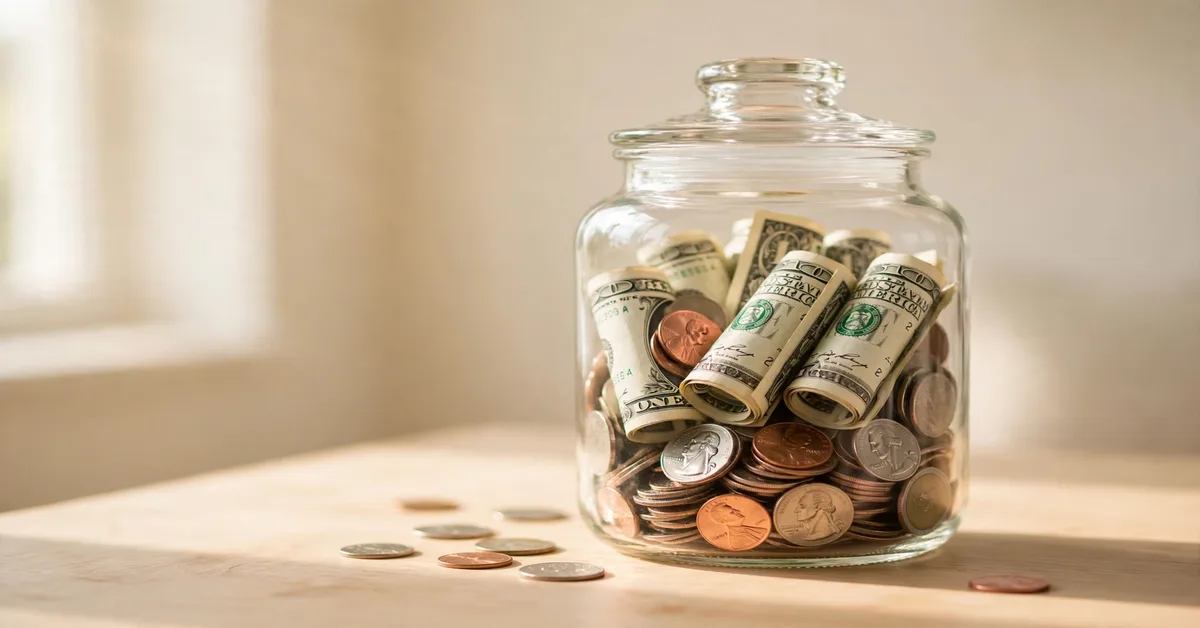
Your savings account might be costing you hundreds of dollars a year. If your cash sits in a traditional savings account at a big bank, it is probably earning around 0.01% to 0.39% interest, so $10,000 grows by about one dollar in a whole year. A high yield savings account changes that math completely. In October 2026, the best online high yield savings accounts pay 4.00% to 4.27% APY, more than ten times the national average. That same $10,000 would earn around $400 a year instead of one dollar, with the same safety and easy access.
Key Takeaways
- A high yield savings account (HYSA) is an FDIC-insured savings account that pays far higher interest than a regular savings account, usually from an online bank.
- In October 2026, top HYSA rates run 4.00% to 4.27% APY versus a national average of about 0.37%, so $10,000 earns roughly $400 a year instead of $1.
- Opening one takes about 15 minutes online with an ID and a linked checking account.
- A HYSA is the ideal home for your emergency fund and short-term savings goals.
What Is a High-Yield Savings Account?
Short answer: A high yield savings account (HYSA) is a federally insured savings account that pays a much higher interest rate than a traditional savings account. Most HYSAs come from online-only banks, which pass their lower operating costs to you as higher APYs. “High yield” is not an official banking category. It is simply the label for accounts paying well above the national average rate. HYSAs work like any savings account in every other way. Your money stays liquid, interest is calculated daily and paid monthly, and your balance grows automatically through compounding.
How Does a High-Yield Savings Account Work?
Short answer: You open the account online, link your checking account, and transfer money in. Interest is calculated daily and paid monthly, so your balance grows through compounding. Withdrawals go back to your linked account in one to three business days.
Here is what that looks like in practice. Move $5,000 into a high yield savings account paying 4.20% APY and leave it alone for a year, and you would have about $5,214 without adding a single dollar. Add $200 a month through an automatic transfer and the balance reaches roughly $7,730 after a year, with about $130 of that being free interest.
High-Yield Savings Account vs Regular Savings Account: What’s the Difference?
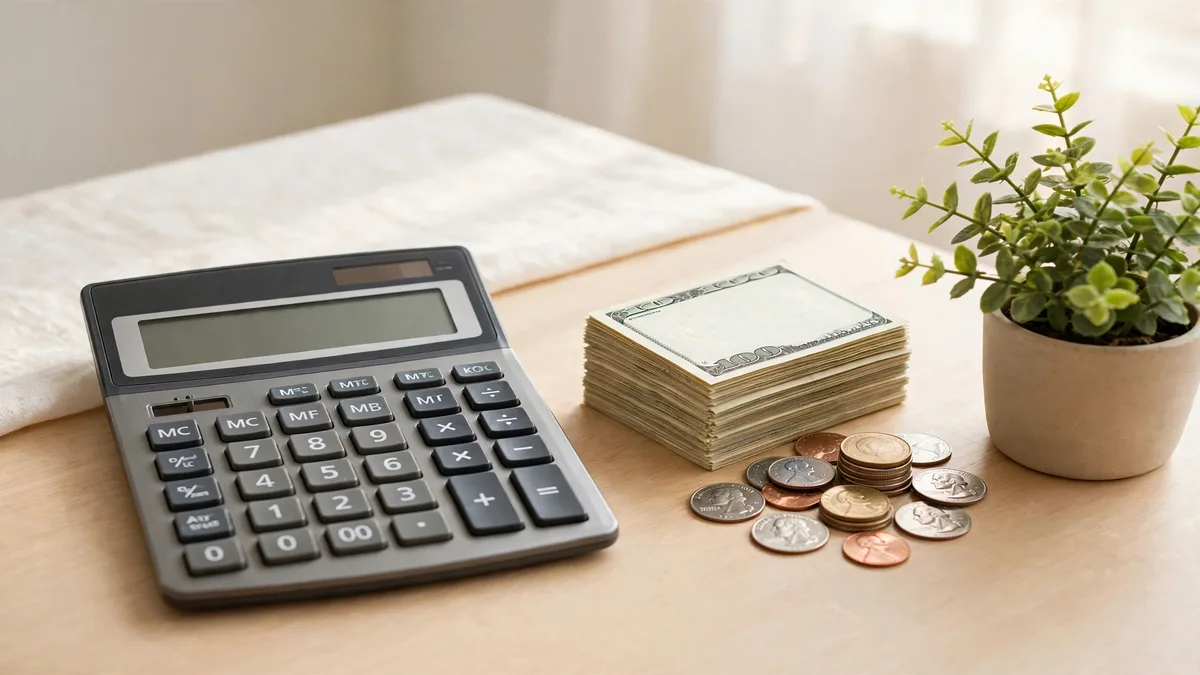
Short answer: A high yield savings account pays roughly 10 to 12 times more interest than a regular savings account, usually charges no monthly fees, and requires no minimum balance. Regular savings accounts at big banks pay near-zero rates and sometimes charge $5 to $12 a month unless you keep a minimum balance. Both are FDIC insured up to $250,000.
The one trade-off is convenience. With a regular account you can walk into a branch or use an ATM. With most HYSAs, everything happens through online transfers that take a day or two. For money you should not touch often, like an emergency fund, that slight delay is actually a feature, since it adds friction that stops impulse spending.
Are High-Yield Savings Accounts Safe?
Short answer: Yes. High yield savings accounts at banks are insured by the FDIC up to $250,000 per depositor, per bank, and credit union accounts carry the same protection through the NCUA. Your deposits are protected even if the bank fails, as long as your total stays under the insurance limit.
A HYSA is not an investment, so there is no market risk. Unlike stocks or crypto, the balance cannot drop. Before you open an account, confirm it is FDIC insured by searching the bank’s name on the FDIC’s BankFind tool. Be careful with fintech apps that are not banks themselves: they are fine only if they clearly name the FDIC-insured partner bank holding your money.
Are High-Yield Savings Accounts Worth It?
Short answer: Yes, for almost every saver. Moving $10,000 from a 0.01% account to a 4.20% high yield savings account earns you roughly $420 in a year instead of $1, with no extra risk and no fees. The total cost is about 15 minutes to open the account and a day or two for transfers to clear.
The math holds at smaller balances too. A $1,000 starter emergency fund earns about $43 a year at 4.20% APY versus about 10 cents at 0.01%. Even $500 earns around $21 a year. One caveat: HYSA rates are variable and follow the Federal Reserve’s benchmark rate, but top online accounts have consistently paid many times the national average for years.
What Is the Best High-Yield Savings Account? (How to Choose One)
Short answer: The best high yield savings account has a competitive base APY, no monthly fees, no minimum balance, easy online transfers, and FDIC insurance. Always compare the rate that applies after any introductory promotion ends.
Compare the base rate, not the promo. Many banks advertise rates near 5.00% APY that only last a few months or require direct deposits and high balances. As of October 2026, solid no-strings rates sit around 4.00% to 4.27% APY. A stable 4.20% with no conditions beats a 5.00% teaser that falls to 3.00% after six months.
Avoid fees and minimums, and check access. The best accounts charge no monthly fee, require no minimum balance to earn the advertised rate, and move money to your linked checking account in one to three business days. Skip accounts with withdrawal or inactivity fees, since those quietly eat your interest.
Confirm FDIC insurance. Real banks list their FDIC membership clearly, and you can verify them on the FDIC BankFind tool. Keeping all your cash in a checking account that earns nothing is one of the most common money mistakes beginners make, and this check is the last step before fixing it.
How to Open a High-Yield Savings Account (in About 15 Minutes)
Short answer: Opening a high yield savings account takes about 15 minutes online. You choose a bank, enter your personal details, verify your identity, link your checking account, and make your first deposit. Most applications are approved the same day, and the account is ready to use within one to two business days.
Step 1: Pick your bank. Compare two or three online banks on base APY, fees, and reviews. Any account in the 4.00%+ range with no fees and FDIC insurance is an excellent choice.
Step 2: Gather your information. Have your Social Security number or ITIN, a photo ID, your address, and your checking account and routing numbers ready.
Step 3: Apply and verify your identity. Fill in the bank’s online form, link your checking account for the initial deposit, and complete the identity check (security questions, a code to your phone, or a photo of your ID). This is normal and takes a few minutes.
Step 4: Make your first deposit. Transfer your opening deposit from your linked checking account. Many accounts open with $0, but depositing even $25 or $100 right away gets the habit started.
Step 5: Set up automatic transfers. Schedule a transfer from checking to your HYSA for the day after each payday. Even $50 per paycheck becomes $1,300 a year without a single decision, and automation is one of the most powerful ways to save money every month.

Where Does a High-Yield Savings Account Fit in Your Money Plan?
Short answer: A high yield savings account is the ideal home for money you will need within one to three years: your emergency fund and short-term goals like a vacation or a down payment. Money you will not touch for five or more years belongs in investments, where it can grow faster.
The number one job for a HYSA is holding your emergency fund: three to six months of essential expenses in a separate, easy-to-reach account that pays you around 4% while it waits. If you are still building your emergency fund, open the HYSA first and build the fund directly inside it. If you follow the 50/30/20 budget rule, your 20% savings bucket can flow straight into the HYSA automatically.

4 Mistakes to Avoid With a High-Yield Savings Account
- Leaving your cash in a 0.01% account out of inertia. On $10,000, each month in a 0.01% account instead of a 4.20% HYSA costs you about $35 in lost interest.
- Chasing the highest promo rate every few months. Moving from 4.00% to 4.25% on $10,000 earns an extra $25 a year. Switch for better features or a much better rate, but do not chase every 0.10% move.
- Using it like a checking account. Frequent withdrawals defeat the purpose. Keep spending money in checking and savings money in savings.
- Skipping automation. The interest is a bonus. The real wealth builder is the money you move in every payday.
Frequently Asked Questions
How much interest will a $1,000 high yield savings account earn?
At 4.20% APY, about $43 in one year. At a big bank’s typical 0.01%, about 10 cents.
Can you lose money in a high yield savings account?
No. A HYSA is not invested in the market, so the balance cannot drop, and deposits are FDIC insured up to $250,000 per depositor per bank. The rate can change, but your principal is safe.
How often do high yield savings account rates change?
HYSA rates are variable and usually move with the Federal Reserve’s benchmark rate. Banks can adjust them at any time, so compare a bank’s long-term rate history, not just today’s number.
Do high yield savings accounts charge monthly fees?
The best ones do not. Most top HYSAs charge no monthly fee and require no minimum balance. If an account charges a fee to earn its advertised rate, keep shopping.
Should I switch banks for a slightly higher rate?
Usually not for small differences. Moving from 4.00% to 4.25% on $10,000 earns an extra $25 a year. Pick a strong account once and let automation do the rest.
The Bottom Line
A high yield savings account is one of the simplest upgrades in personal finance: same safety and access as a regular savings account, but 10 to 12 times more interest. On a $10,000 balance, that is roughly $400 a year for 15 minutes of setup.
Your move this week: compare two or three FDIC-insured online banks, open an account, and set up an automatic transfer for the day after your next payday. Then let it run while your emergency fund and short-term goals quietly grow in the background.
Note: This article is for general information only and is not financial advice. Rates change over time, so always confirm the current APY on the bank’s website before opening an account.
[…] and divide by 12. If your annual total is $2,400, save $200 per month in a separate savings pot. A high-yield savings account is a great place to park this money because it earns interest while it waits for its […]
[…] There is no market risk and you can withdraw anytime. Not sure how they work? This guide explains what a high-yield savings account is and how to open one in […]