

Last updated: October 2026
Written by Emma for Savvy Cash Flow.
Introduction
A business you can start with $1,000 is a small service, digital, or local business that needs no shop rent, no large stock order, and no costly machine to make its first sale. The $1,000 covers a domain name, basic tools, small supplies, local permits, and first marketing, while the owner supplies the main work. This guide lists 10 business ideas you can start with $1,000, shows how to split the budget, compares service businesses with product businesses, and gives a 30-day launch plan. You will learn which idea fits your skills, what each idea costs to start, how to find the first 3 paying customers, and which mistakes drain a small budget fast. The 10 ideas cover freelance services, local services, and digital products, so a beginner can pick one idea and start with a clear first step.
Key Takeaways
- Service businesses stretch $1,000 the furthest, because the owner sells skill and time before buying stock.
- Split the budget before you spend it: tools, supplies, marketing, permits, and a cash reserve each get a fixed share.
- One narrow offer beats 5 vague offers when you look for your first paying customers.
- Repeat buyers make a small business last, so pick an idea with repeat demand, such as cleaning, bookkeeping, or tutoring.
- Test demand with 3 paid jobs before you spend the rest of the budget on branding or stock.
Table of Contents
- What Is a Business You Can Start With $1,000?
- How Should You Split Your $1,000 Startup Budget?
- What Are the 10 Best Business Ideas You Can Start With $1,000?
- Service Business vs Product Business: Which Fits $1,000 Better?
- How Do You Get Your First 3 Paying Customers?
- What Mistakes Waste a $1,000 Startup Budget?
- Your First 30 Days: A Simple Launch Plan
- Conclusion
- FAQs
What Is a Business You Can Start With $1,000?
A business you can start with $1,000 is a small business that reaches its first paying customer with $1,000 or less in startup spending. A small business is a business with a small number of employees and lower annual revenue than a large company, and many small businesses start as sole proprietorships, partnerships, or small corporations. The $1,000 limit rules out a shop lease, a large stock order, and costly machines. The $1,000 limit leaves room for 3 business types: a skill service, a local service, and a digital product. A skill service sells writing, design, bookkeeping, or tutoring. A local service sells cleaning, detailing, pet care, or lawn care in one town. A digital product sells a template, a printable, or a short course online.
A $1,000 business works when 3 tests pass. First, a buyer pays before the owner buys more stock or gear. Second, the owner can deliver the work with tools the owner already owns, plus under $300 in new gear. Third, the owner can reach buyers without paid ads, through local groups, referrals, and one simple web page. A business fails the $1,000 test when rent, stock, or licenses eat the full budget before the first sale. One pattern I notice in beginner budgets: the logo gets funded before the first customer is found.
How Should You Split Your $1,000 Startup Budget?
To split a $1,000 startup budget, put $100 into a domain and web page, $150 into tools and software, $250 into equipment or supplies, $200 into marketing, $100 into registration and insurance, and $200 into a cash reserve. The reserve matters most, because a first refund, a broken tool, or a slow first month can stop a business with no cash left. Spend the marketing share on direct customer contact, such as flyers, local group posts, and sample work, not on a logo pack. Buy gear in 2 rounds: basic gear first, better gear after 3 paid jobs prove demand.
| Budget item | Amount | What it covers |
|---|---|---|
| Domain and web page | $100 | Domain name, one-page site, business email. |
| Tools and software | $150 | Design, bookkeeping, or scheduling software. |
| Equipment or supplies | $250 | Cleaning gear, craft materials, or a basic kit. |
| Marketing | $200 | Flyers, samples, local listings, small ads. |
| Registration and insurance | $100 | Local registration, basic liability cover. |
| Cash reserve | $200 | Refunds, repairs, and slow weeks. |
| Total | $1,000 | A full starter budget with a safety net. |

A service business often spends less than $250 on gear, so the leftover gear money moves into marketing or the reserve. Check local permit rules before you buy gear, because permit costs differ by town and by service type.
What Are the 10 Best Business Ideas You Can Start With $1,000?
The 10 best business ideas you can start with $1,000 are freelance writing, virtual assistance, social media management, bookkeeping, online tutoring, residential cleaning, mobile car detailing, pet sitting and dog walking, digital products, and print on demand. Each idea below lists a startup cost range, the first offer to sell, and the fastest route to a first paying customer. Pick the idea that matches a skill you already hold, because a known skill cuts training cost and speeds up the first sale.
1. Freelance Writing
Freelance writing is a business that sells blog posts, web pages, and emails to businesses, and it starts for $100 to $300. The startup spend covers a domain, a portfolio page, and one writing tool. The first offer is 1 paid sample post or 1 web page rewrite for a local business.

2. Virtual Assistance
Virtual assistance is a business that sells admin help, such as inbox sorting, calendar booking, and data entry, and it starts for $100 to $400. The startup spend covers a portfolio page, a scheduling tool, and a headset. The first offer is a 5-hour weekly admin pack for one small business owner.
3. Social Media Management
Social media management is a business that plans, posts, and replies for small business accounts, and it starts for $100 to $500. The startup spend covers a scheduling tool, a design tool, and a portfolio page with 3 sample post sets. The first offer is 1 month of posts for 1 local business, such as a restaurant, a salon, or a gym.
4. Bookkeeping
Bookkeeping is a business that records income, bills, and receipts for small businesses, and it starts for $200 to $600. The startup spend covers accounting software, a training course, and a professional web page. The first offer is 1 month of books for 1 small business at a flat monthly fee.
5. Online Tutoring
Online tutoring is a business that teaches one subject over video calls, and it starts for $100 to $300. The startup spend covers a web page, a video tool, and teaching materials. The first offer is a 4-lesson starter pack in 1 subject you know well, such as math, English, or coding.
6. Residential Cleaning
Residential cleaning is a business that cleans homes on a weekly or biweekly plan, and it starts for $200 to $800. The startup spend covers cleaning supplies, a vacuum, a mop system, gloves, and basic insurance. The first offer is a 2-hour standard clean at an intro price for 1 home.
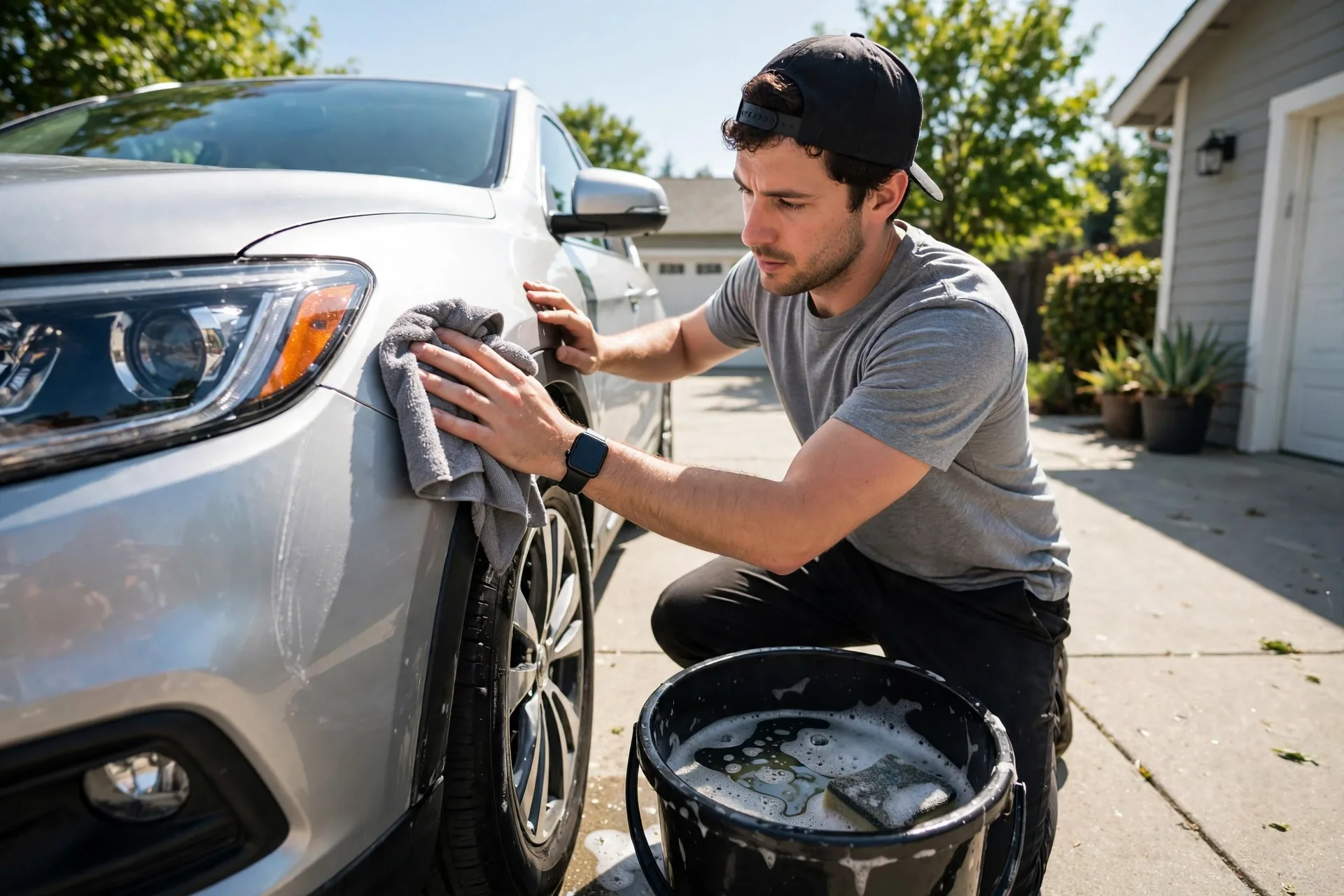
7. Mobile Car Detailing
Mobile car detailing is a business that washes and details cars at the customer home or office, and it starts for $300 to $1,000. The startup spend covers wash chemicals, towels, brushes, a vacuum, and a portable water tank. The first offer is a basic interior plus exterior package for 1 car.
8. Pet Sitting and Dog Walking
Pet sitting and dog walking is a business that feeds pets, walks dogs, and checks homes while owners travel, and it starts for $100 to $400. The startup spend covers insurance, a booking page, leashes, and waste bags. The first offer is a 5-walk weekly pack for 1 dog owner.
9. Digital Products
Digital products are files you create once and sell many times, such as budget planners, resume templates, and checklists, and they start for $100 to $500. The startup spend covers a design tool, a shop page, and sample mockups. The first offer is 1 product that solves 1 clear problem, such as a monthly budget planner. A passive income ideas for beginners guide shows how digital products fit a wider income plan.

10. Print on Demand
Print on demand is a business that sells shirts, mugs, and tote bags printed only after a customer orders, and it starts for $100 to $500. The startup spend covers a shop page, design tools, and small test ads. The first offer is 1 design set in 1 niche, such as dog owners, teachers, or gym fans.
Explore side hustles you can start this weekend to pick a fast first offer.
Service Business vs Product Business: Which Fits $1,000 Better?
A service business fits a $1,000 budget better than a product business, because a service business earns from skill and time while a product business must pay for stock before each sale. A service business can start with gear the owner already owns and win a first client in week 1. A product business must design, list, and drive traffic before the first sale, and traffic costs money. A product business can still work on $1,000, when the product is digital or print on demand, because both models avoid large stock orders.
| Factor | Service business | Product business |
|---|---|---|
| Startup spend | $100 to $800 | $100 to $1,000 plus stock risk. |
| Time to first sale | Days to 2 weeks | 2 to 6 weeks. |
| Repeat income | High with weekly clients | High with a winning product. |
| Main risk | Hours cap income | Unsold stock eats cash. |
| Best for | Skill holders | Designers and makers. |
Use this rule to pick: pick a service business, if you hold a sellable skill now. Pick a digital product business, if you want income without booking more hours. Pick a local service business, if you want fast cash in your own town.
How Do You Get Your First 3 Paying Customers?
To get your first 3 paying customers, offer 1 clear service to 20 named people, follow up once, and ask each buyer for 1 referral. A vague post that says “I do everything” wins no replies. A clear post wins replies, because the reader sees the service, the price, and the result in one line.

Follow these 5 steps to find the first 3 buyers:
- List 20 people who know your work: past bosses, friends, neighbours, and local shop owners.
- Send each person a short message with 1 offer, 1 price, and 1 start date.
- Post the same offer in 2 local groups and on 1 freelance platform.
- Offer the first 3 buyers a small intro price in exchange for a written testimonial.
- Ask each buyer for 1 referral on the day you finish the job.
What Mistakes Waste a $1,000 Startup Budget?
The mistakes that waste a $1,000 startup budget are spending on branding before demand, buying stock before a first sale, renting space too early, and running broad ads with no clear offer. A logo, a brand kit, and business cards feel like progress, but none of them bring a buyer. Stock feels like progress, but unsold stock locks cash that marketing needs. Rent feels like progress, but a home base or a mobile model serves the first 20 customers well.
Avoid these 5 budget traps:
- Spending over $100 on a logo before 3 paid jobs exist.
- Buying a full stock range instead of 1 small test batch.
- Paying for 4 software tools when 1 free tool covers week 1.
- Running ads to a page with no price and no booking step.
- Mixing business cash with personal cash, so true profit stays hidden.
Your First 30 Days: A Simple Launch Plan
A simple 30-day launch plan has 4 weeks: pick and price in week 1, build a page and samples in week 2, contact 20 buyers in week 3, and deliver, collect testimonials, and fix the offer in week 4.

- Days 1 to 7: pick 1 idea, name 1 offer, set 1 price, and check local permit rules.
- Days 8 to 14: build a one-page site, write 3 samples, and set up payment.
- Days 15 to 21: message 20 people, post in 2 groups, and book 3 intro jobs.
- Days 22 to 30: deliver the jobs, collect 3 testimonials, and raise the price for job 4.
Keep $200 in reserve through day 30, even when early sales tempt you to spend it. The reserve funds week 5 marketing, a tool repair, or a refund without stress.
Conclusion
Business ideas you can start with $1,000 work best when the owner sells a clear skill or a repeat local service, splits the budget before spending, and wins 3 paid jobs before buying more gear. Freelance writing, virtual assistance, tutoring, cleaning, detailing, pet care, bookkeeping, social media help, digital products, and print on demand all fit the budget, but the right pick depends on your skill, your town, and your hours. Start with 1 idea, 1 offer, and 1 price. Contact 20 named people this week, deliver well, and let referrals fund the next step. More practical money guides live on Savvy Cash Flow, and the Business Ideas & Side Hustles guides cover side income in more depth.
FAQs
Can you really start a business with only $1,000?
Yes, you can start a real business with $1,000, when the business needs no shop rent and no large stock order. Service businesses, digital products, and print on demand fit the budget, because the owner sells skill or files instead of stock.
Which business idea makes money the fastest with $1,000?
Local services make money fastest with $1,000, because local buyers pay on the day of the job. Cleaning, detailing, pet sitting, and lawn care can win a first paid job in week 1 through local groups and referrals. Freelance services follow close behind, while digital products take longer, because traffic and trust build over weeks.
Do I need a business license to start with $1,000?
Yes, many towns ask for a basic business registration or a license, and the cost differs by town and service type. Food, childcare, and some home services need extra permits and checks. Check your town rules before you take a paid job, and keep $100 of the budget for registration and basic insurance.
How much of the $1,000 should I keep as a reserve?
Keep $200 of the $1,000 as a cash reserve through the first 30 days. The reserve covers a refund, a broken tool, or a slow first month without stopping the business. Spend the reserve only after 3 paid jobs prove demand, and refill it from early profit before you buy better gear.
Is print on demand or freelancing better with $1,000?
Freelancing pays faster with $1,000, while print on demand scales better over time without more hours. Freelancing turns a skill into cash in days, but income stops when work stops. Print on demand earns slowly at first, then sells without extra hours per sale. Many beginners start with freelancing for cash, then build print on demand beside it.
What is the safest first business with $1,000?
The safest first business with $1,000 is a service built on a skill you already hold, sold to people in your own town or network. A known skill cuts training cost, local buyers trust referrals, and repeat bookings give steady income. Test demand with 3 paid jobs before you spend the rest of the budget on gear or ads.
[…] you want a low-cost start outside print on demand, read 10 Business Ideas You Can Start With $1,000 and compare cash needs before you pick a niche. Pick one niche for your first 30 listings, to reuse […]
[…] dog walking with other low-cost service businesses. Dog walking fits the low-cost pattern in 10 Business Ideas You Can Start With $1,000, where skill and time sell before stock. Keep $200 in reserve after launch […]