

Smart ways to save money on groceries are simple habits that cut your food bill without cutting the food you enjoy: plan meals around weekly sales, shop with a list, buy store brands, compare unit prices, and waste less food. Together, these habits cut a typical grocery bill by 15 to 25 percent.
This guide covers 15 smart ways to save money on groceries, ranked from the biggest savings to the smallest, with the real monthly math, a 7-day weekly routine, a price book method that catches fake sales, and small-household tactics most guides skip. Pick 3 ways this week and add one more each week.
Key Takeaways
- Smart ways to save money on groceries cut a typical bill by 15 to 25 percent, which is $150 to $300 a month for a family of four.
- Planning around weekly sales and shopping with a list are the two biggest money savers, and they cost nothing to start.
- Store brands cost 20 to 30 percent less than name brands on staples, and most shoppers cannot taste the difference.
- A 20-item price book and a 10-second shrinkflation check stop fake sales from eating your savings.
- A simple 7-day weekly routine turns 15 separate tips into one system you can run in about 30 minutes a week.
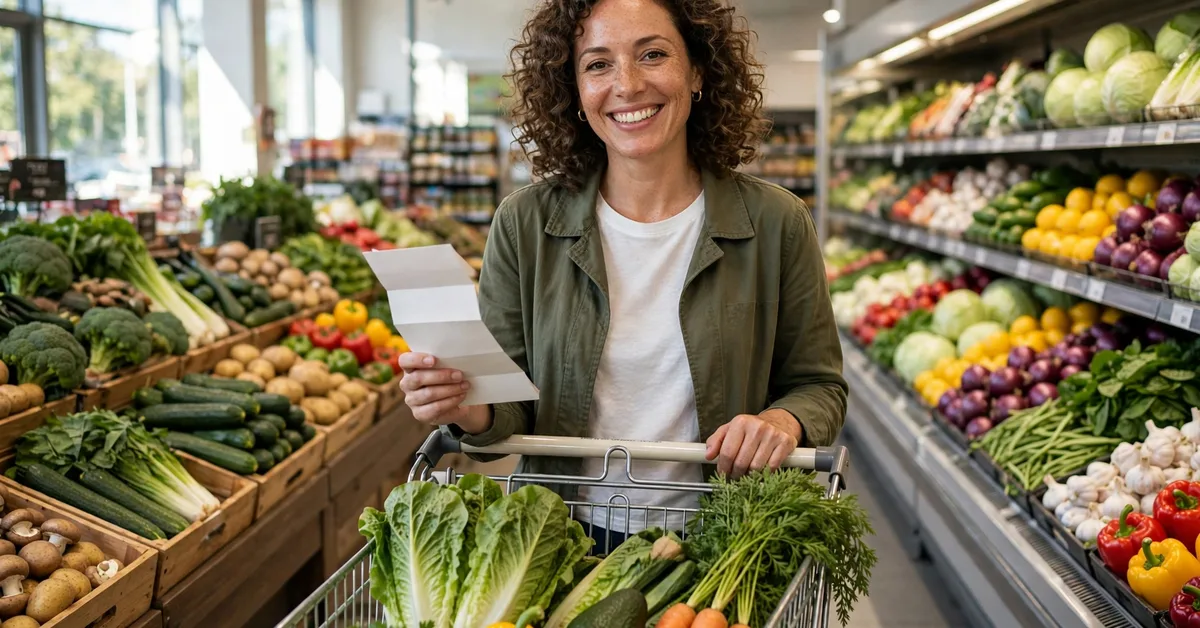
What Are Smart Ways to Save Money on Groceries?
Smart ways to save money on groceries are planned shopping habits that lower the cost of food you buy to eat at home, without lowering the quality of your meals. The 15 ways in this guide fall into 5 groups: planning before you shop, choices inside the store, cooking and storage, discounts and cashback, and tracking what you spend. Each way works alone, and the savings stack when you combine 3 or more.
A smart way to save money on groceries is a habit that repeats every week, not a one-time coupon hunt. Meal planning, a written list, store brands, and unit price checks work on every trip, in every store, and for every household size. The Budgeting & Saving guides on Savvy Cash Flow treat groceries as the fastest win in a tight budget, because the savings show up on the very next receipt.
How Much Can You Save on Groceries Each Month?
You can save $150 to $300 a month on groceries as a family of four by cutting 15 to 25 percent from a $1,000 to $1,200 monthly food bill, and a single adult can save $32 to $65 a month from a $214 to $258 thrifty food plan. The USDA moderate-cost food plan puts a family of four at $1,000 to $1,200 a month on food at home, while the USDA thrifty food plan puts a single adult at $214 to $258 a month (Source: USDA (2026)). A 15 percent cut on the family plan is $150 to $180 a month, or $1,800 to $2,160 a year.
| Household | Monthly food at home | Save 15% | Save 25% |
|---|---|---|---|
| Family of four (moderate plan) | $1,000 to $1,200 | $150 to $180 | $250 to $300 |
| Single adult (thrifty plan) | $214 to $258 | $32 to $39 | $54 to $65 |
Run your own math: take last month’s grocery total and multiply by 0.15 for your first-month target. If last month was $800, a 15 percent cut is $120 back, or $1,440 a year.
Plan Before You Shop: 3 Ways That Save the Most
Planning before you shop saves the most money on groceries because most overspending happens before you reach the checkout, in the form of duplicate ingredients, impulse extras, and takeout ordered when no plan exists for dinner. These 3 ways take about 30 minutes a week and cost nothing.
1. Plan meals around weekly sales, not cravings. Check the weekly flyer or store app first, see what is on sale, then build 4 to 5 dinners around those items. If chicken thighs are on sale, plan stir-fry on Monday, wraps on Wednesday, and soup on Friday from the same pack. Plan 4 to 5 dinners, not 7. Leftovers and a clean-out-the-fridge night fill the gaps.
2. Shop your pantry, fridge, and freezer first. Before you write a list, take 90 seconds to scan what you already own. Most kitchens hide half a meal: pasta, rice, canned beans, frozen chicken, a half bag of onions. Build meals around those items first, then buy only what is missing. The USDA Economic Research Service estimates the average American household discards roughly $1,500 of food a year (Source: USDA Economic Research Service (2026)).
3. Write a list and set a spending limit. Write the list from your meal plan, organize it by store section, and set a dollar limit before you leave home. Keep a running total on your phone calculator as you shop. Eat a snack before you shop, because hungry shoppers fill carts with snacks and bakery items they never planned to buy. If an item is not on the list, it does not go in the cart, with one exception: a genuine sale on a staple you always use, like coffee or rice, and only if you will finish it before it expires.

How Do Store Brands and Unit Prices Cut Your Bill?
Store brands and unit prices cut your grocery bill by 20 to 30 percent on staples, because store-brand products often come from the same factories as name brands, and the unit price on the shelf tag shows the true cost per ounce or pound. These 2 ways need no coupons and no extra trips.
4. Switch to store brands on staples first. Store brands, also called private labels, cost 20 to 30 percent less than name brands on most staples. Start where taste differences are smallest: flour, sugar, rice, pasta, canned tomatoes, canned beans, spices, frozen vegetables, milk, and cleaning supplies. Buy the store brand once. Keep it if you like it, and switch back only for the few items where you notice a real difference. On a $600 monthly grocery budget, moving half your cart to store brands saves $60 to $90 a month.
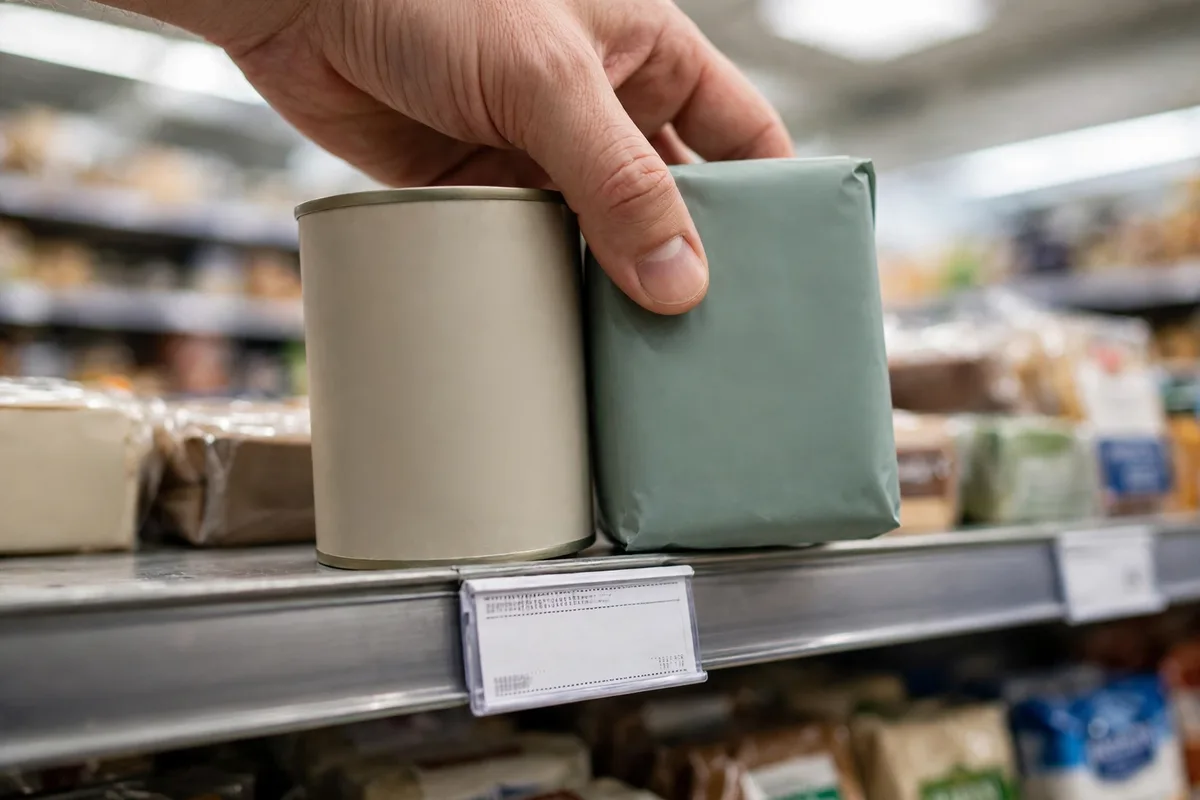
5. Compare unit prices, not package prices. The unit price is the cost per ounce, pound, or 100 grams, printed in small text on the shelf tag below the product. A bigger package is often cheaper per unit, but not always: a sale on the smaller size can win, and some family-size packs cost more per ounce than the regular size. Learn more about how the unit price works, then check it on 3 items per trip until the habit sticks.
Where Should You Shop to Pay Less?
Where you shop matters as much as what you buy, because discount grocers and warehouse clubs charge less for the same staples, and grocery pickup removes the impulse aisles that inflate a normal trip. These 2 ways need one change of habit, not a change of diet.
6. Buy staples at a discount grocer. Chains like ALDI and Lidl run smaller stores with fewer brands and more private labels, and their prices run 10 to 20 percent lower on a like-for-like basket. You do not need to switch stores fully. Buy rice, pasta, canned goods, frozen vegetables, eggs, and dairy at the discount grocer, and pick up specialty items at your regular store.
7. Use grocery pickup to skip impulse aisles. Ordering online for pickup lets you see your total before you pay, and you never walk past end caps, bakery smells, or checkout displays. Free store pickup usually saves more than delivery, because delivery adds fees and tips. Check the pickup prices first: some apps charge more per item than the shelf price.
How Can Cooking and Storage Habits Save You Money?
Cooking and storage habits save money on groceries by turning food you already paid for into meals instead of trash, because takeout and spoiled food are the two biggest leaks in a food budget. These 3 ways cut waste first and cost second.
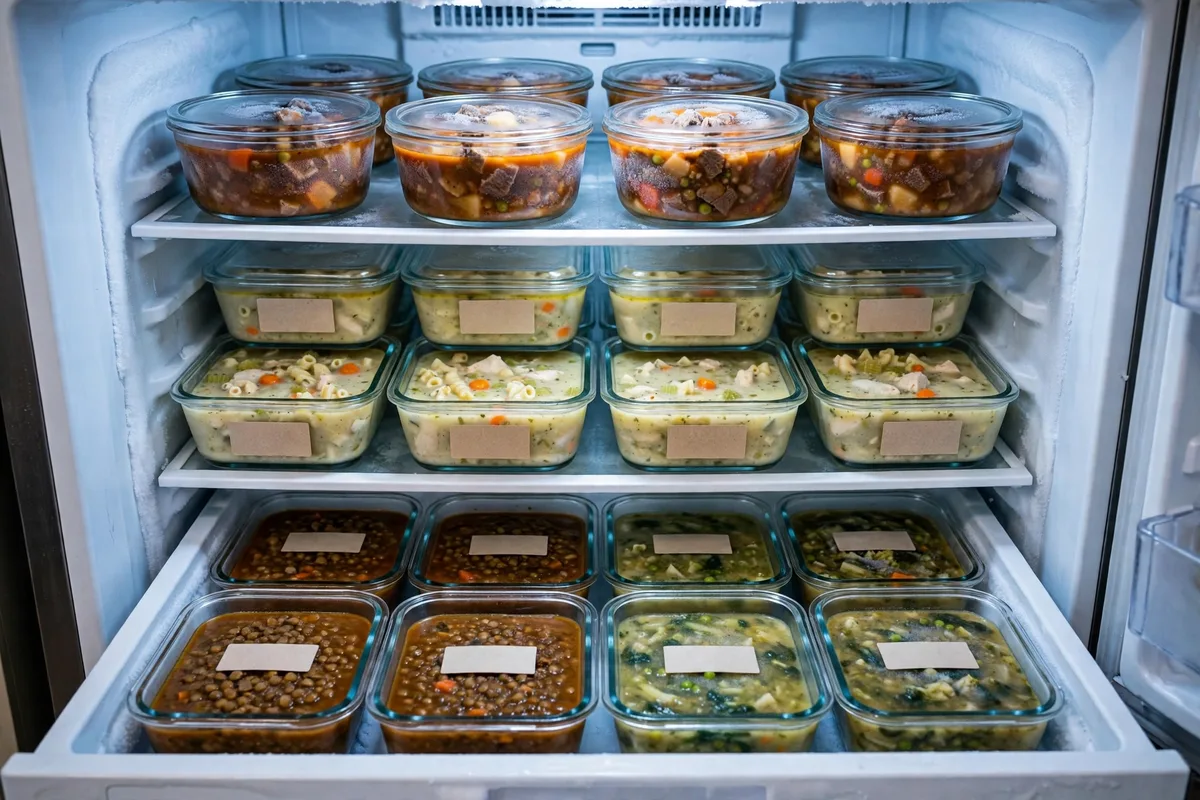
8. Batch cook once a week. Cook a large pot of chili, soup, stew, or pasta sauce on Sunday and eat it twice during the week. One $12 pot of lentil soup makes 6 to 8 servings at about $1.50 to $2 a serving, against $15 or more for a single delivery meal. Portion the extra servings into containers the same day you cook, label each with the date, and freeze what you will not eat in 3 days.
9. Freeze food before it goes bad. Freezing is the simplest way to stop waste. Bread, cooked rice, soups, sauces, cooked beans, and most leftovers freeze well for months. Portion food before freezing so you thaw only what you need. Food waste is food that is discarded or lost uneaten, and about one-third of the world’s food is thrown away (Source: Wikipedia (2026), citing UN figures). Read more about food loss and waste to see where most household waste happens.
10. Eat cheaper proteins 3 nights a week. Meat is often the most expensive part of the cart. Swap in beans, lentils, eggs, chickpeas, tofu, or chicken thighs a few nights a week. Try meatless Monday, or use half meat and half beans in tacos, chili, and pasta sauce. A $1.50 bag of dried lentils makes about 10 servings of soup, which is about 15 cents a serving before add-ins. Keep the meals you already like and change only the protein.
How Do Loyalty Programs, Coupons and Cashback Stack Up?
Loyalty programs, coupons, and cashback stack up to 5 to 15 percent extra savings on purchases you were making anyway, but only when you load the deals before you shop and buy nothing extra to chase a rebate. These 2 ways are the smallest savers on this list, so treat them as a top-up on the bigger habits, not as a starting point.
11. Join store loyalty programs and load digital coupons. Most big grocery chains run free loyalty programs with member-only prices and digital coupons. Sign up for every store you shop at, because the member price is often 10 to 20 percent lower on weekly featured items. Load digital coupons in the store app before you shop, and only for items already on your list. A coupon for something you would not buy is not a saving, it is a new expense.
12. Stack cashback apps on purchases you already make. Cashback apps pay a small amount back on groceries you were buying anyway. Popular options include Ibotta and Fetch in the US and Checkout 51 in Canada, and availability changes, so check what works where you live. Upload the receipt after the trip, and never buy an item just to earn a rebate. The return is usually 1 to 5 percent, so cashback earns $5 to $15 a month on a $500 grocery budget.
For a fuller monthly system that pairs these grocery tactics with bills and impulse spending, read the guide to save money on groceries every month.
What Is a Grocery Price Book and How Does It Beat Shrinkflation?
A grocery price book is a simple list of the 20 items you buy most, with the lowest price you have paid for each, and it beats shrinkflation by showing you the real price per ounce so a fake sale or a smaller pack cannot fool you. None of the top 10 guides on this topic explain the price book in full, and only 2 mention shrinkflation at all.
13. Keep a 20-item price book. Write down the 20 items you buy every week: milk, eggs, bread, rice, coffee, chicken, and the rest of your regulars. Next to each item, note the store, the size, and the unit price. After 4 weeks you know your true lowest price for every staple. A sale price above your recorded low is not a sale. I keep my price book in a notes app on my phone, and last month it caught a coffee “sale” price that was 40 cents higher per bag than the regular price I paid in October.
14. Spot shrinkflation in 10 seconds. Shrinkflation is when a product keeps the same price but quietly shrinks in size: a 16-ounce box becomes 14 ounces, a 12-pack becomes a 10-pack. Check 2 numbers before you buy: the size on the pack and the unit price on the shelf tag. If the pack got smaller and the price stayed the same, your cost per ounce went up. Compare the unit price with your price book entry for the same item. If the unit price rose more than 5 percent since your last entry, try the store brand or a different size before you buy.
How Do You Save on Groceries When You Live Alone?
You save on groceries when you live alone by buying small, cooking in small batches, and freezing single portions, because bulk packs and family-size deals cost a single person money when half the food spoils. Most grocery guides assume a family of four, so the tactics for one person differ.
15. Shop small and cook for one without waste. Buy loose produce instead of bagged packs, so you take 2 apples, not 6. Buy meat in small packs or ask the butcher counter to split a pack. Cook 2 portions, eat one tonight, and pack one for lunch tomorrow. Keep a stocked freezer of single portions: soup, rice, cooked beans, and pasta sauce all freeze in one-serving containers. A single adult on the USDA thrifty food plan spends $214 to $258 a month (Source: USDA (2026)).

Your Weekly Grocery Savings Routine
Your weekly grocery savings routine is a 7-day system that runs in about 30 minutes a week: check sales on Wednesday, plan on Sunday, shop once, and review the receipt. A routine beats willpower, because the decisions happen once, at home, instead of 20 times in the aisles.
- Wednesday: check the weekly flyer or store app and note the 5 best sales.
- Sunday morning: scan the fridge, freezer, and pantry, and list what needs using up.
- Sunday afternoon: plan 4 to 5 dinners around the sales and the food you already own.
- Sunday evening: write the list by store section and set a spending limit for the trip.
- Monday: shop once, with the list, after a snack, and keep a running total on your phone.
- Monday evening: portion and freeze leftovers, and move older food to the front of the fridge.
- Monday night: check the receipt for price mistakes, record the weekly total, and move the money saved into a separate savings account.
Run the routine for 4 weeks, then compare your 4 weekly totals with the month before you started. Most households see a 15 to 25 percent drop by week 3. If the drop is smaller, check the 2 leaks first: takeout nights and food thrown away. For a plan that turns the grocery savings into a full monthly target, read the guide to save $500 a month on a tight budget.

Store Brand vs Name Brand: When to Use Which
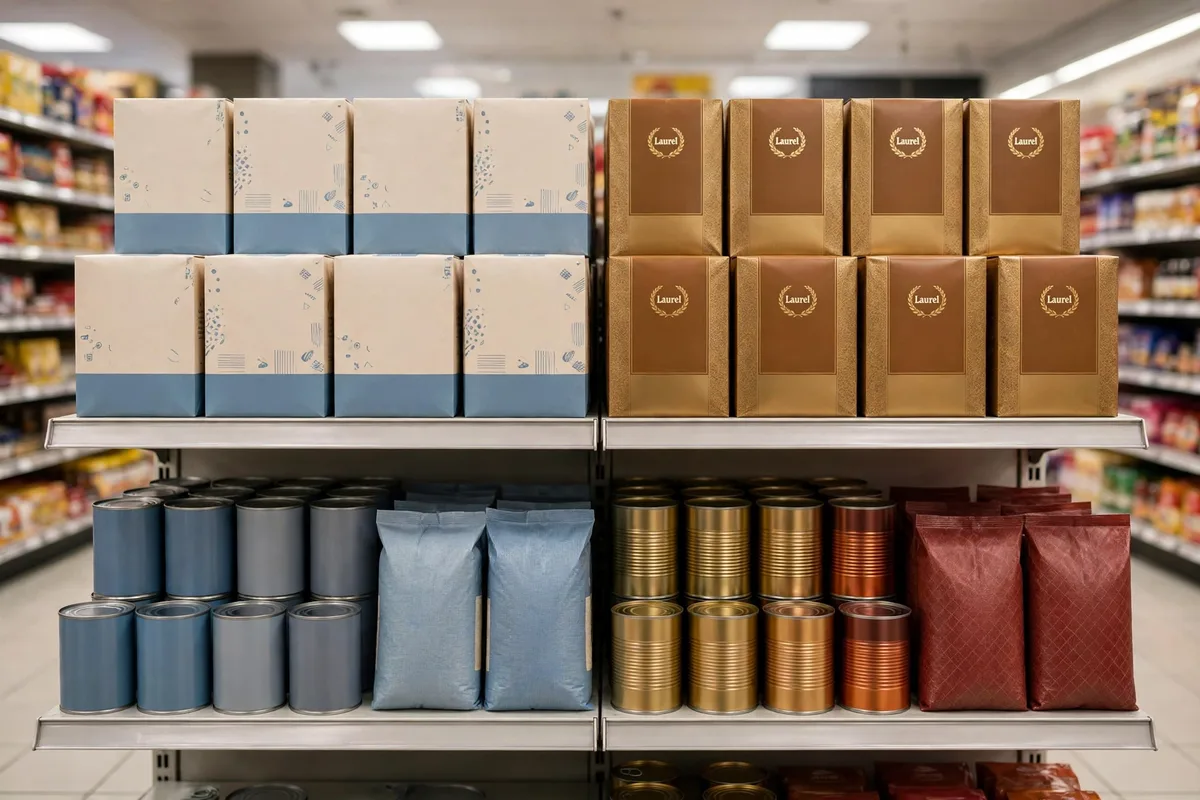
Store brands win on staples and simple ingredients, and name brands win only where taste or a special recipe makes a real difference, so the smart move is to switch the staples and keep the few name brands you truly notice. Use the table below as a quick guide.
| Item | Use store brand | Keep name brand |
|---|---|---|
| Flour, sugar, rice, pasta | Yes, same ingredients, 20 to 30 percent less | Rarely, only for a special bake |
| Canned tomatoes and beans | Yes, taste difference is tiny | Rarely |
| Frozen vegetables and fruit | Yes, frozen at peak ripeness either way | Rarely |
| Milk, butter, eggs | Yes, quality rules are the same | Only if you taste a difference |
| Spices and cleaning supplies | Yes, biggest percentage saving | Rarely |
| Coffee and snacks | Try both, then decide | Yes, if the taste gap matters to you |
| Baby formula | Yes, federal nutrition standards are the same | Only on a doctor’s advice |
Run a store brand week: swap everything you can for 7 days, and switch back only for the items your household truly misses. Most families keep the store brand on 8 or 9 of every 10 items they test. That one week of testing locks in a permanent 20 to 30 percent saving on staples, with no coupons and no extra trips.
Frequently Asked Questions
What is the smartest way to save money on groceries?
Planning meals around weekly sales and shopping with a list are the smartest ways to save money on groceries. Together, they stop impulse buys, cut food waste, and make sure you buy only what you will cook. Most households save 15 to 25 percent from these 2 habits alone.
How much should a family of four spend on groceries?
A family of four spends $1,000 to $1,200 a month on food at home on the USDA moderate-cost food plan (Source: USDA (2026)). A 15 percent cut saves $150 to $180 a month. Your own target depends on location and household size, so track one month of spending first, then set the budget.
Are store brands as good as name brands?
Yes, store brands are as good as name brands for most staples. Flour, sugar, rice, pasta, canned goods, frozen vegetables, and dairy often come from the same factories as name brands. Keep the name brand only where you taste a real difference, which is usually coffee, snacks, or a special recipe.
Does meal planning really save money?
Yes, meal planning saves money by cutting the 2 biggest grocery leaks: impulse buys and food waste. Households that plan meals typically cut grocery spending by 20 to 30 percent. On a $600 monthly budget, that is $120 to $180 back every month for about 30 minutes of planning a week.
How can I save money on groceries without coupons?
You can save money on groceries without coupons by planning meals around sales, shopping with a list, buying store brands, comparing unit prices, and freezing food before it goes bad. These 5 habits need no coupons and save 15 to 25 percent on a typical bill, which beats coupon clipping for most households.
How do I save money on groceries when I live alone?
Buy loose produce instead of bagged packs, cook 2 portions at a time, and freeze single servings of soup, rice, and pasta sauce. Skip warehouse clubs for perishables, and keep a 20-item price book so you know a real sale from a fake one. A single adult on the USDA thrifty food plan spends $214 to $258 a month (Source: USDA (2026)).
Conclusion: Start With 3 Smart Ways This Week
Smart ways to save money on groceries work best when you start small: pick 3 ways this week, add one more each week, and let the savings stack into $150 to $300 a month for a family of four. Start with the 3 biggest wins: plan meals around weekly sales, shop with a list and a spending limit, and switch staples to store brands. Those 3 habits alone cut most bills by 15 to 25 percent, with no coupons and no extra trips.
Then add the system: a 20-item price book, a 10-second shrinkflation check, and the 7-day weekly routine. The routine takes about 30 minutes a week, and it turns 15 separate tips into one habit you can run for years. Move the money you save into a separate savings account on the same day you shop, so the saving is real and visible, not just a smaller receipt. Smart ways to save money on groceries are not about eating worse food or spending Sundays clipping coupons. They are about buying what you will actually eat, paying the true lowest price for it, and wasting less of it. For more practical money guides like this one, visit Savvy Cash Flow.
Note: This article is for general information only and is not financial advice. Your numbers will differ, so adjust the plan to fit your own income and household.