

Introduction
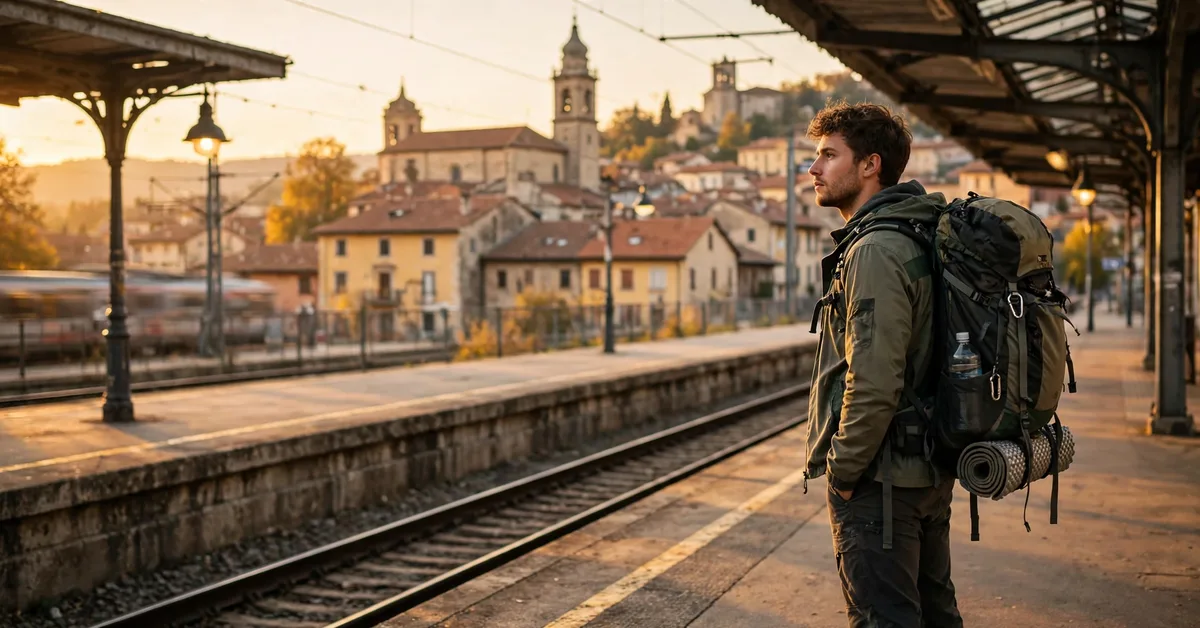
Backpacking Europe on a budget means traveling with one pack, sleeping in hostel dorms, and using trains, buses, and budget flights to cross countries for €35 to €90 a day, depending on the region. This guide gives real 2026 daily costs by region, the best months to travel, 3 routes that work for first-timers, honest rail pass math, cheap places to sleep, a food plan that costs €15 to €25 a day, the new 2026 border rules, and a full 2-week plan with a sample budget. It also names the 7 money mistakes that break most Europe backpacking budgets and lists what to pack so you stop buying things on the road.
Key Takeaways
- Backpacking Europe on a budget costs €35 to €90 a day on the ground, with the Balkans cheapest and the Nordics dearest.
- Shoulder season, May to mid-June and September to mid-October, cuts dorm and flight prices by 20% to 50% against peak summer.
- Book intercity trains weeks ahead, since the same leg can cost €29 early or €120 at the station.
- A rail pass pays for flexibility, not savings, and it loses money on slow routes with few long legs.
- The Schengen Area caps visa-exempt stays at 90 days in any 180-day period, and the Entry/Exit System (EES) now tracks every entry and exit.
What Is Backpacking Europe on a Budget?
Backpacking Europe on a budget is a style of travel that uses a carry-on sized pack of 40 to 50 liters, hostel dorms, and public transport to visit several European countries for €35 to €90 a day. The pack holds clothes for 2 to 3 weeks, a padlock, a power bank, and layers for cold nights. The trip runs on 3 rules: sleep in dorms, cook some meals, and book transport early. A budget backpacker stays 2 to 3 nights in each city, moves by train or bus, and caps paid sights at 1 or 2 per city. The style suits first-timers, students, and anyone with 2 to 4 weeks and a fixed trip fund. It does not suit travelers who want a private room every night or a fixed hotel in one city, since those choices double the daily cost. The Budget Travel guides on Savvy Cash Flow use the same cost-first method for every trip, and this guide applies it to Europe.
How Much Does Backpacking Europe Cost in 2026?
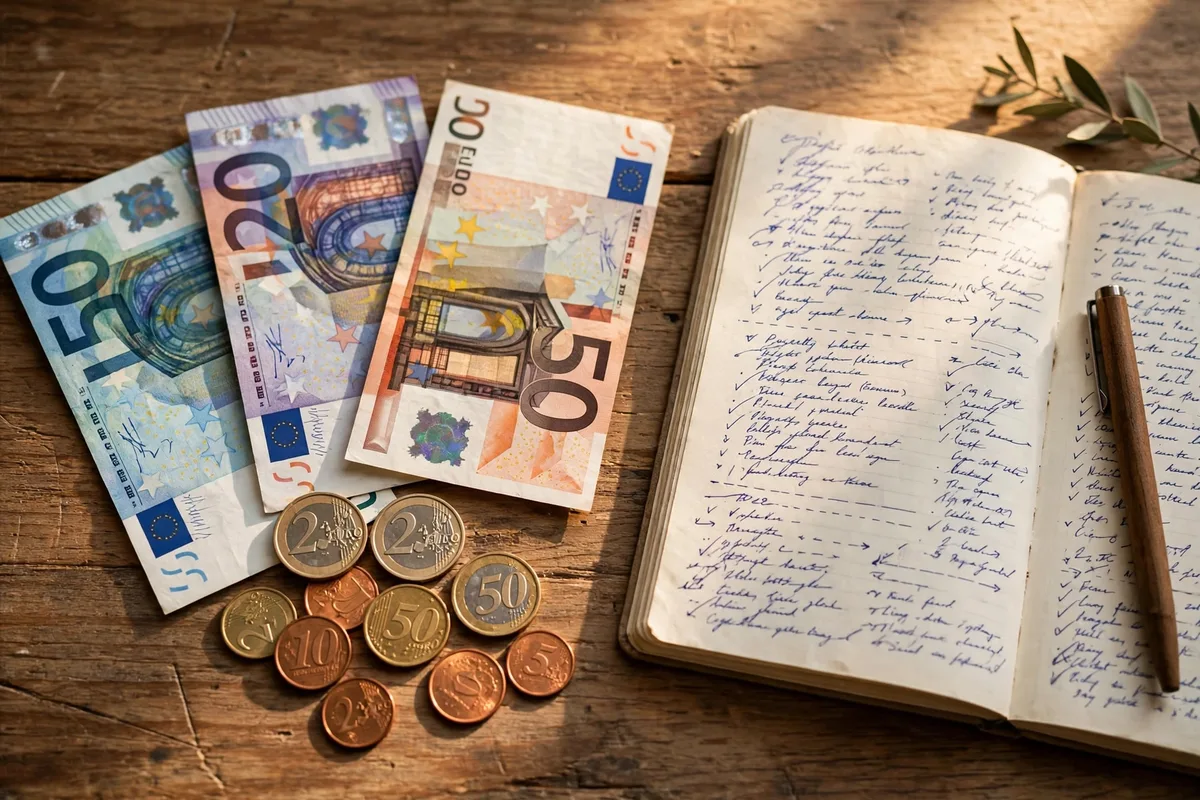
Backpacking Europe on a budget costs €60 to €90 a day in Western Europe, €50 to €70 a day in Central Europe, €35 to €55 a day in the Balkans and Eastern Europe, and €90 to €130 a day in the Nordics in 2026. These ranges cover a dorm bed, food, local transport, and 1 paid sight every other day, and they exclude flights to Europe and intercity transport. Season, exchange rates, and your own choices swing each number by about 20% in either direction, so build your plan around a per-country number, not one figure for the whole continent.
| Region | Daily cost per person | Dorm bed per night | Best for |
|---|---|---|---|
| Western Europe (France, Germany, Netherlands, UK) | €60 to €90 | €25 to €45 | First-timers, icons, rail density |
| Southern Europe (Spain, Portugal, Italy, Greece) | €50 to €75 | €18 to €35 | Beaches, food, shoulder-season value |
| Central Europe (Czechia, Poland, Hungary, Slovakia) | €40 to €60 | €12 to €25 | Low costs with big-city sights |
| The Balkans (Albania, Bosnia, North Macedonia) | €30 to €50 | €10 to €18 | Longest runway for your savings |
| Scandinavia and Iceland | €90 to €140 | €35 to €60 | Nature splurges, short stays |
City prices show the same split. Median hostel dorm prices over the last 12 months were $55 a night in Paris, $60 in Rome, $36 in Prague, $30 in Budapest, and $25 in Krakow (Source: Hostelz (2026)). A fortnight in the east buys a week in the west, so route choice matters more than any single saving trick.
The daily total breaks into 4 lines. A standard backpacker on a mixed route spends €25 to €40 a night on a bed, €20 to €25 a day on food, €5 to €8 a day on local transport, and €10 to €15 a day on sights and fun, for a daily total of €60 to €85. A shoestring traveler who cooks most meals, walks everywhere, and picks free sights lands at €30 to €50 a day. Add intercity transport as a separate line, and budget €15 to €25 per hop by bus or booked-early train. On a one-month trip with 10 city changes, standard-backpacker math lands at €2,100 to €2,600 on the ground, which matches the range most 2026 budget surveys report.
When Is the Best Time to Backpack Europe on a Budget?
The best time to backpack Europe on a budget is shoulder season, May to mid-June and September to mid-October, when dorm prices run 20% to 50% below peak summer and the weather stays mild. Shoulder season gives open-everything weather without August’s triple hit: peak dorm prices, peak crowds, and southern heatwaves that have made 35 degree city sightseeing common in recent summers. Flights can drop by up to 40% against peak July and August prices, and hostels often cut rates by 30% to 50%.
| Season | Months | Dorm prices | Weather | Crowds |
|---|---|---|---|---|
| Shoulder (best value) | May to mid-Jun, Sep to mid-Oct | 20% to 50% below peak | Mild, 18 to 25 degrees in most cities | Moderate |
| Peak summer | Jul to Aug | Highest, Paris and Amsterdam dorms hit €50 to €60 | Hot, 30 degrees or more in the south | Heavy, long queues |
| Winter | Nov to Feb | 40% below peak in many cities | Cold, short days | Light, quiet museums |
Summer still works when it is your only window. Aim north and to altitude in July and August: Scandinavia, the Baltics, Scotland, and the Alps are at their best when the Mediterranean is at its worst, and white nights in the north stretch sightseeing past 10pm. Winter is the quiet discount season, and the Christmas market circuit makes Central Europe one of the cosiest budget trips of the year. For a low-cost autumn trip, see the best places to visit in November on a budget for 9 more picks with mild weather and low hotel rates.
Which Backpacking Europe Routes Work Best for First-Timers?
The 3 backpacking Europe routes that work best for first-timers are the Classic Loop for icons, the Value Crescent for low costs, and the Iberian Arc for sun, and each one fits a different budget and pace. The rule for all 3 routes is the same: minimum 2 nights everywhere, 3 nights in the big capitals, and never more than 4 travel days a week. Every overnight move costs half a day, €20 or more, and more energy than most first-timers expect.
| Route | Cities | Days | Ground cost per person | Best for |
|---|---|---|---|---|
| Classic Loop | London, Paris, Amsterdam, Berlin, Prague, Budapest, Vienna, Venice, Florence, Rome | 21 to 28 | €2,400 to €3,000 | First-timers who want the icons |
| Value Crescent | Krakow, Budapest, Ljubljana, Zagreb, Sarajevo, Mostar, Kotor, Tirana | 21 to 28 | €1,400 to €1,800 | Tight budgets, big scenery |
| Iberian Arc | Porto, Lisbon, Lagos, Seville, Granada, Valencia, Barcelona | 14 to 21 | €1,200 to €1,900 | Sun, food, beaches |
The Classic Loop starts expensive in London, Paris, and Amsterdam, then tapers into cheaper, warmer territory through Prague, Budapest, and Rome. If you only have a fortnight, cut the loop at Vienna and fly home from there instead of compressing all 11 stops into 14 days. The Value Crescent costs about half of the Classic Loop, with dorms at €10 to €18 and buses at €8 to €20 a hop through the Balkans. The Iberian Arc works best in May to June or September to October, when Spain and Portugal stay warm while the classic route is mobbed. Leave 20% of your nights unbooked on any route, since the best parts of a backpacking trip tend to happen in the slack. Families who want the same cost-first method at home can use the cheap family vacation destinations guide, which prices 12 trips for a family of 4.
Trains, Buses or Budget Flights: How Do You Get Around Europe Cheaply?
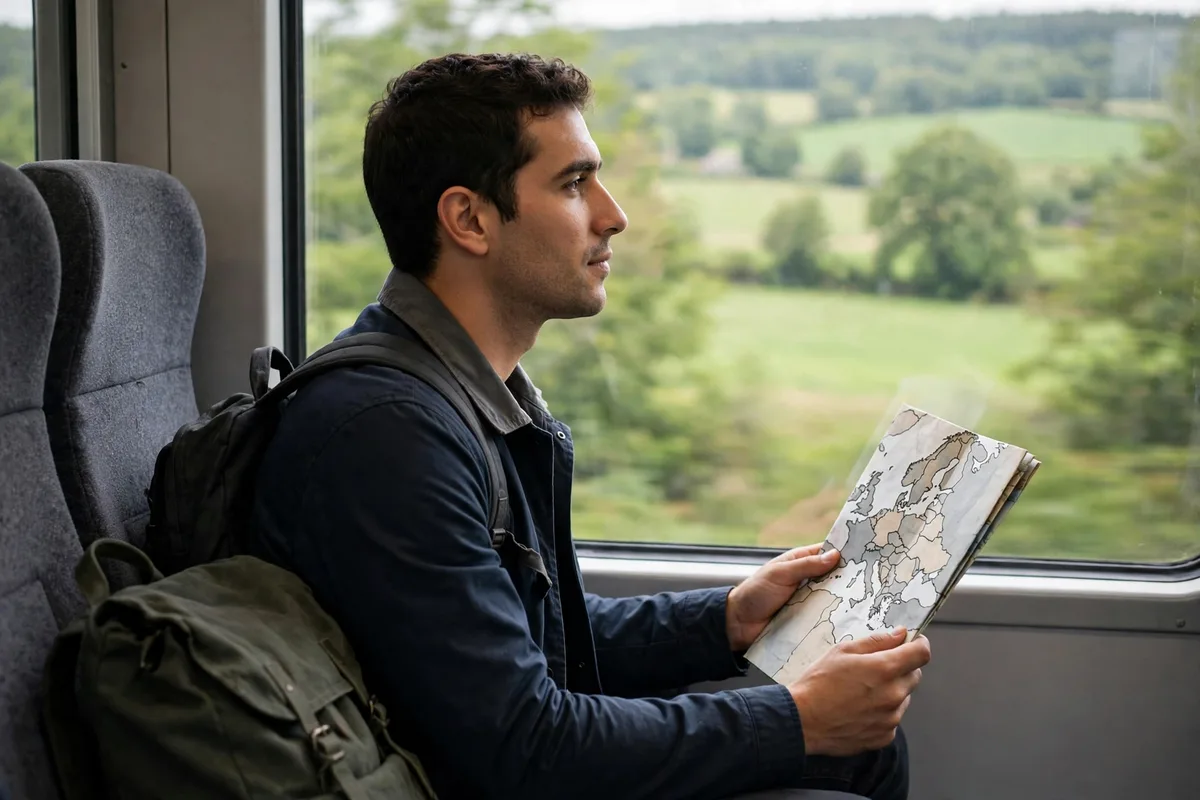
Trains, buses, and budget flights each win on different legs, so the cheapest way to get around Europe is to match the transport to each leg instead of using one pass or one airline for the whole trip. Trains booked weeks ahead are often competitive with flights once you add airport transfers and baggage fees, and they drop you in the city center. Budget flights only win when you travel with a personal item only, book early, and accept out-of-town airports. Buses beat trains on price almost everywhere and beat them on coverage in the Balkans, where rail is thin.
| Transport | Typical cost per leg | Best for | Watch out for |
|---|---|---|---|
| Point-to-point train, booked early | €19 to €40 | Fixed dates, city center to city center | Walk-up fares of €120 or more |
| Interrail Global Pass, 7 days in 1 month | €381 adult, €286 under 28 (Source: Europeantourism.org (2026)) | Fast moves, 5 or more long legs, flexible plans | Seat reservation fees on top |
| FlixBus and long-distance bus | €5 to €40 | Short hops under 6 hours, Balkan routes | Slow on long legs, 8 hours or more |
| Budget flight | €20 to €60 with fees | Long jumps, such as Barcelona to Rome | Baggage fees, airport transfers, early departures |
| Night train couchette | €49 to €69 | Overnight legs that replace a hostel night | Book 360 days ahead, prices move with demand |
The rail pass question has a clear answer: buy the pass for flexibility, not savings. An Interrail Global Pass with 7 travel days in 1 month costs €381 in adult second class and €286 for under-28s in 2026, which is about €54 per travel day as an adult and €41 as a youth (Source: Europeantourism.org (2026)). Point-to-point tickets booked early are usually cheaper: Deutsche Bahn runs Berlin to Prague from €19.99, while the pass charges a full travel day for the same leg. The pass pays off when you are under 28, moving fast with 5 or more long legs, and want to decide each morning where to go. It loses money when your route is fixed, when you stay in 1 or 2 countries, or when your legs run through France, Spain, and Italy, where premium trains demand seat reservations on top of the pass, such as €29 in second class on TGV Lyria. Many ordinary trains in Germany, Austria, Switzerland, and Benelux need no reservation at all.
Night trains deserve a special mention. A couchette berth costs roughly €49 to €69, and it replaces a hostel night and a travel day at once, which makes the effective price competitive with a bus-and-hostel combo. Night buses do the same job for less: a night departure on FlixBus saves a bed and moves you while you sleep. I once paid €120 for a Paris to Barcelona train at the station after a €29 fare sold out online, and that single ticket cost more than 3 hostel nights in Prague, so book the long legs first and leave the short hops flexible.
Where Do You Sleep Cheap in Europe? Hostels and Alternatives
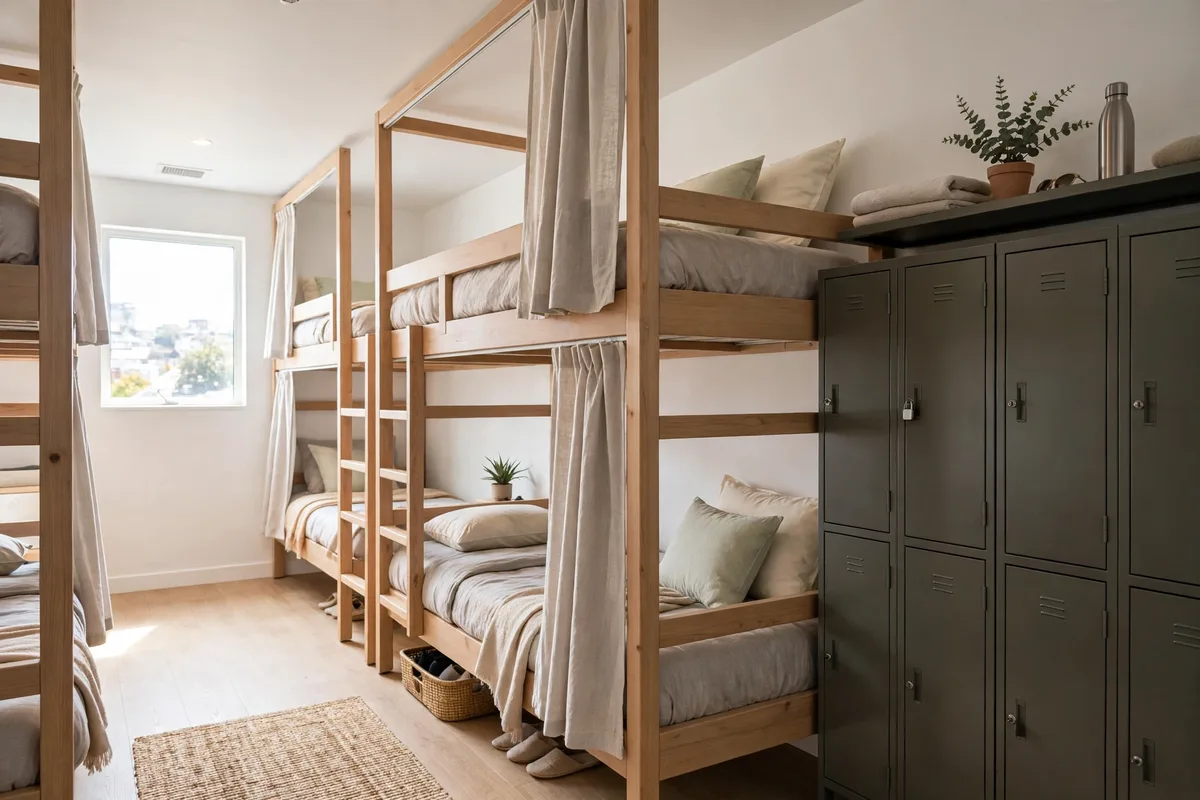
The cheapest place to sleep in Europe is a hostel dorm with a kitchen, lockers, and a location near the sights, and dorm beds run €10 to €18 in the Balkans, €12 to €25 in Central Europe, and €25 to €45 in Western Europe. Hostels grew up in the last few years. The grim 20-bed dorms still exist, but design-led chains now compete on comfort, with privacy curtains, security lockers, and common rooms that double as trip-planning hubs. Pick a hostel for kitchen, locker, and location rather than just price, since a kitchen saves more than a €5 cheaper bed in a bad location ever will. Three supermarket meals cost less than 1 restaurant meal, free breakfast cuts the morning spend to zero, and a locker lets you skip the luggage-storage fee on checkout day.
Compare prices before you book. Booking platforms surface prices across hundreds of properties, but always check the hostel’s own site too, because smaller independents often offer a better rate direct. Read recent reviews to gauge how safe and social the place feels, and skip non-refundable rates while your route is still loose, since a locked booking costs the full price when plans shift. Book the first 2 or 3 nights before you fly, and reserve beds in big cities a few days ahead during peak season. Off-season and smaller towns give room to walk in and negotiate.
Hostels are not the only cheap option. Guesthouses and budget hotels give a private room without resort prices, and they suit travelers who want a quieter base for 2 or 3 nights. Work-exchange stays trade a few hours of help a day for a free bed, which stretches a long trip by weeks. For a longer trip, mix the 3: dorms in big cities, a private room once a week to recharge, and a work-exchange week in the middle to reset the budget.
How Do You Eat Well in Europe for €15 to €25 a Day?
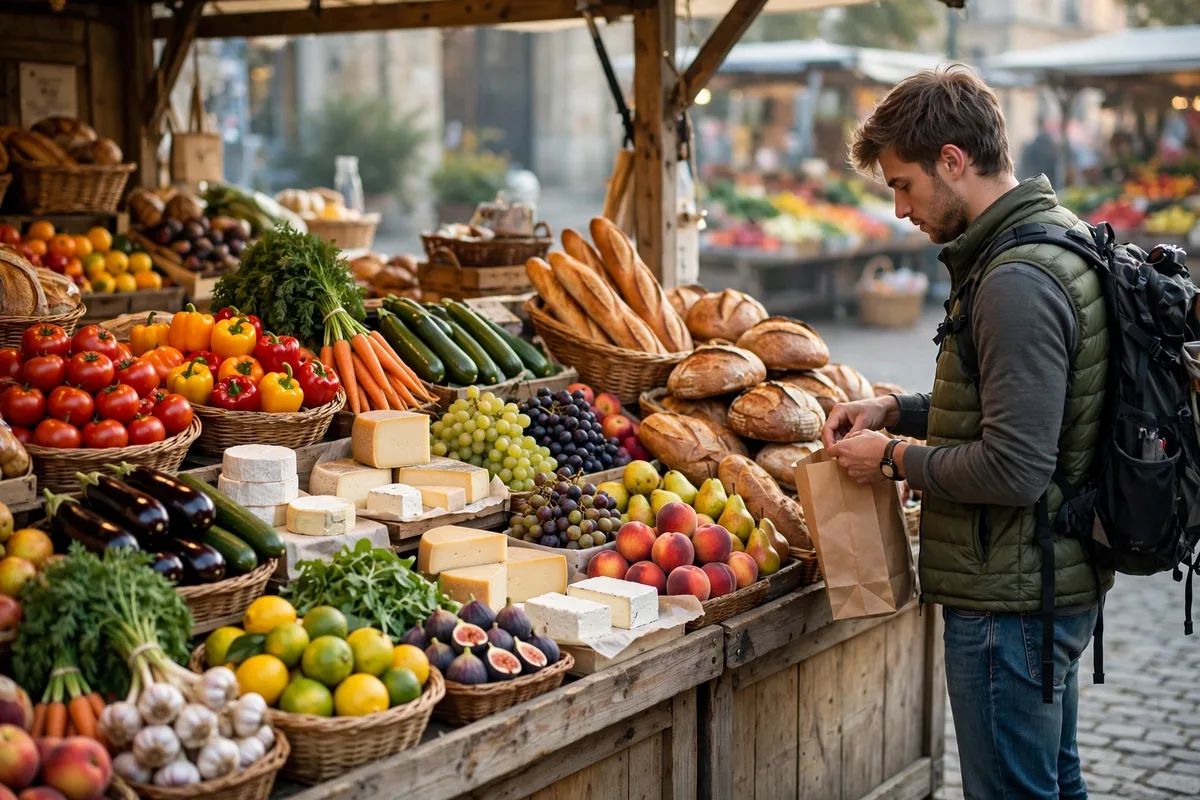
You eat well in Europe for €15 to €25 a day with a supermarket-and-lunch-menu pattern: supermarket breakfast and picnic supplies, 1 budget lunch from a bakery, market, or fixed-price lunch menu, and a simple dinner cooked in the hostel kitchen or bought from a food market before closing time. The fixed-price lunch menu is one of Europe’s great bargains, and in Spain the menu del dia runs €12 to €16 for 2 or 3 courses with a drink. Tap water is drinkable in most of Western and Central Europe, so a reusable bottle saves money and plastic, and museums, fountains, and station taps keep it topped up.
Two rules keep food from wrecking the budget: never eat 3 restaurant meals a day, and never buy snacks at tourist prices. Walk 1 street away from the main square and prices visibly drop. A bakery lunch costs €4 to €7, a market picnic costs €5 to €8, and a hostel-kitchen dinner of pasta, sauce, and vegetables costs €3 to €5 per person. Food is the daily line most first-time backpackers underestimate, and it is also the easiest to control, since every meal is a fresh choice. Meal planning works on the road the same way it works at home, and the guide to save money on groceries shows how a 7-day plan cuts a grocery bill by 20% to 30% with the same habits: plan around what you own, repeat ingredients, and shop with a list.
What Are the 2026 Border Rules? Schengen, EES and ETIAS
The 2026 border rules for backpacking Europe are the Schengen 90-day limit, the Entry/Exit System (EES) that logs every crossing, and the European Travel Information and Authorisation System (ETIAS), which is not yet in force. The Schengen Area covers 29 European countries that have abolished border controls at their common borders (Source: Wikipedia (2026)). Citizens from around 60 visa-exempt nations can enter the area without a visa for up to 90 days within any 180-day period, and the clock counts backward, so on any given day the system looks at the past 180 days and tallies the days spent inside. The UK, Ireland, Turkey, and most of the Balkans do not count toward those 90 days, which gives long trips a legal way to reset the clock outside the zone.
The EES is the digital replacement for the old passport stamp. It has been fully operational since April 2026 across 29 European countries, and it logs your face, your fingerprints, and the date and place of every entry and exit (Source: ETIAS.com (2026)). Internal trips between EES countries do not reset the clock, and days spent in Cyprus sit in their own separate tally. ETIAS is a separate pre-travel authorization for visa-exempt visitors, and it is scheduled to come into force in 2027, a year after the Entry/Exit System (EES) (Source: Wikipedia (2026)). The fee will be €20 for travelers aged 18 to 70, and an approved authorization will be valid for 3 years or until the passport expires. Check the live status before you fly, since the start date has moved several times already, and carry the exact passport you applied with, since mismatched details mean refused boarding. Keep your passport valid for at least 3 months beyond your planned departure and issued within the last 10 years.
How Do You Plan a 2-Week Backpacking Europe Trip Step by Step?
To plan a 2-week backpacking Europe trip, set a total budget, pick 1 route, book the first 3 nights, buy transport early, sort money and paperwork, pack light, and leave the last 3 nights open. Follow the 7 steps below in order, and use the sample budget to check your own numbers before you book anything.
- Set a total budget of €1,100 to €1,600 on the ground for 14 days, plus flights, then split it into beds, food, transport, and sights.
- Pick 1 route and 4 to 5 cities, with 2 to 3 nights in each city and no more than 4 travel days in the trip.
- Book the first 3 nights in hostels with kitchens and free cancellation, and confirm the total price with taxes and fees.
- Buy intercity trains and buses now for the fixed legs, and compare the rail pass against point-to-point prices before you pay for either.
- Sort money and paperwork: set up a fee-free travel card, buy a local eSIM, check your 90-day count, and check whether the European Travel Information and Authorisation System is live for your travel dates.
- Pack a 40 to 50 liter bag with layers, a padlock, a power bank, and packing cubes, and weigh it before you leave.
- Leave the last 3 nights open, and keep a €200 buffer for missed trains, last-minute beds, and the night out you did not plan.
A realistic 14-day sample budget for a mixed route through Central Europe in shoulder season looks like this:
| Line | Cost per person |
|---|---|
| 14 hostel nights at €22 average | €308 |
| Food at €20 a day | €280 |
| Intercity transport, 5 hops booked early | €110 |
| Local transport and walking tours | €90 |
| Paid sights, 1 every other day | €100 |
| Buffer for surprises | €150 |
| Total on the ground | €1,038 |
The same 14 days through Western Europe in shoulder season runs about €1,400 to €1,600, while the Balkans run about €700 to €900. When the budget slips, use the rescue plan: move east for 3 days, cook every meal, swap paid sights for free walking tours, and take a night bus instead of a paid bed. Three rescue days save €60 to €120, which covers most overruns. For a full trip-cost test at home first, read the best budget travel destinations in the USA guide, which ranks 15 places by daily cost with the same method.
7 Money Mistakes That Break a Europe Backpacking Budget
The 7 money mistakes that break a Europe backpacking budget are booking transport late, eating 3 restaurant meals a day, paying ATM and conversion fees, stacking too many cities, skipping travel insurance, buying a rail pass for a slow route, and ignoring city entry fees. Each one costs €50 to €200 per trip, and 2 or 3 together can add €500 to a 2-week total.
- Booking trains at the station instead of weeks ahead, which turns a €29 fare into a €120 fare.
- Eating 3 restaurant meals a day, which adds €25 to €40 a day against a hostel-kitchen plan.
- Withdrawing cash with a foreign ATM fee on every withdrawal, and accepting dynamic currency conversion at card terminals, which adds a markup of several percent.
- Stacking too many cities, since every overnight move costs half a day and €20 or more in transport.
- Skipping travel insurance, since 1 hospital visit or missed connection costs more than a whole month of hostels.
- Buying a rail pass for a slow route with few long legs, where point-to-point tickets cost less.
- Ignoring city entry fees, such as the Louvre at €22 for EEA citizens and residents and €32 for everyone else since January 2026 (Source: Europeantourism.org (2026)).
What Should You Pack to Save Money on the Road?
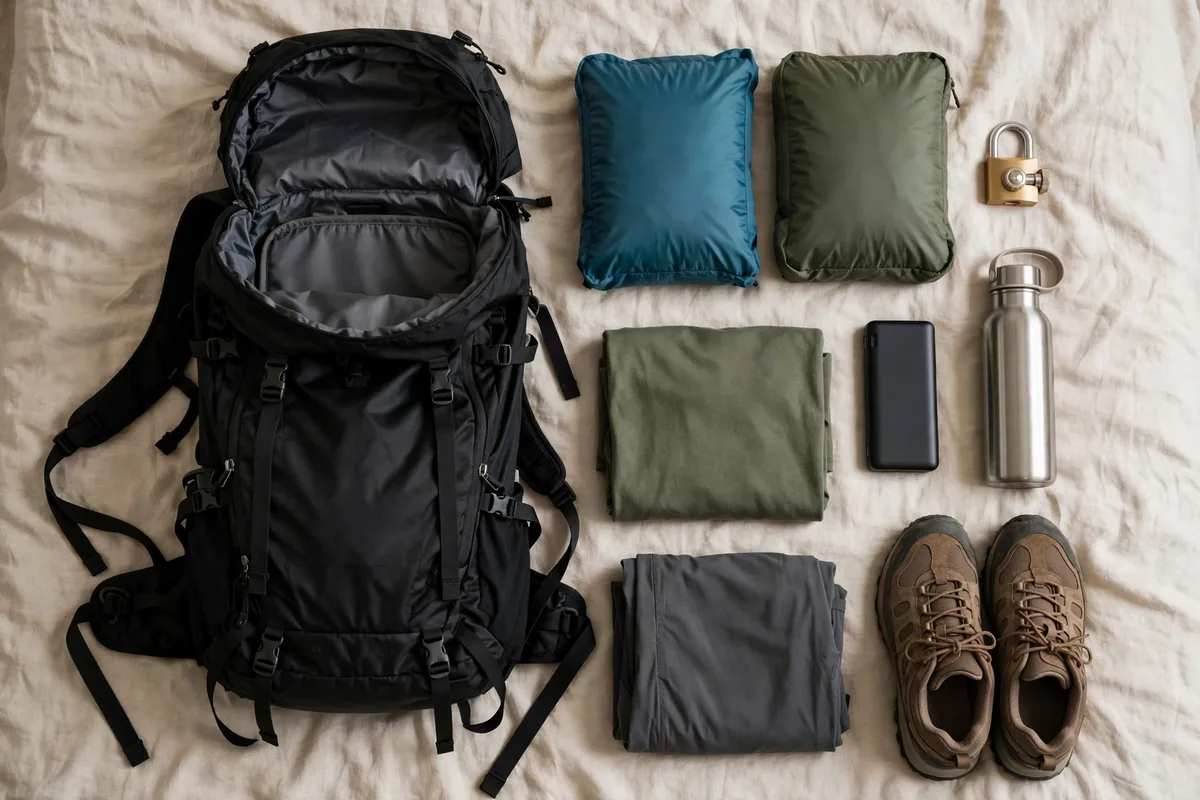
You should pack a 40 to 50 liter bag with layers, a padlock, a power bank, packing cubes, and a reusable bottle, since each item stops a purchase or a fee on the road. A light bag also keeps you mobile when plans change fast, whether you are sprinting for a train or walking from the station to your hostel. Try the pack loaded before you fly, since a bag that rides well on your hips saves your back on long walks.
| Item | What it saves |
|---|---|
| Padlock for hostel lockers | Locker rental fees and lost gear |
| Power bank | Paid charging and missed bookings on long transit days |
| Reusable water bottle | €2 to €4 a day on bottled water |
| Packing cubes | Time and repacking fees, since a tidy bag fits carry-on limits |
| Layers, not 1 bulky coat | Baggage weight and a new jacket in a cold snap |
| Comfortable walking shoes | Taxi and metro fares, since walking is free |
Leave the third pair of shoes, the bulky towel, and the full-size toiletries at home. You will find shops everywhere, even in smaller cities like Krakow, so anything cheap and common can wait until arrival. Most overpacking comes from just-in-case items you never touch, and a bag under carry-on limits dodges the €40 cabin-bag check at the gate on budget airlines.
Frequently Asked Questions
How much money do I need to backpack Europe for 2 weeks?
You need €1,100 to €1,600 on the ground for 2 weeks of backpacking Europe, plus flights to Europe, when you stay in hostel dorms, cook some meals, and book transport early. Central Europe runs about €1,038 for 14 days in shoulder season, Western Europe runs €1,400 to €1,600, and the Balkans run €700 to €900. Add a €200 buffer for surprises.
Is a Eurail pass worth it for backpacking Europe?
A Eurail pass is worth it for backpacking Europe when you are under 28, moving fast with 5 or more long legs, and want to decide each morning where to go. The 7-days-in-1-month pass costs €381 as an adult and €286 under 28 in 2026. It loses money on slow routes, fixed plans, and routes through France, Spain, and Italy, where seat reservation fees add up.
Do I need a visa to backpack Europe?
Most visitors from the US, UK, Canada, Australia, and around 60 visa-exempt nations need no visa to backpack Europe for up to 90 days in any 180-day period in the Schengen Area. The Entry/Exit System (EES) has logged every entry and exit since April 2026. The ETIAS authorization is not yet in force and is scheduled for 2027, so check the live status before you fly.
What is the cheapest country to backpack in Europe?
The cheapest countries to backpack in Europe are Albania, Bosnia, North Macedonia, and Bulgaria, where €30 to €50 a day still feels generous. Dorm beds run €10 to €18, a filling breakfast costs about €2, and buses cost €8 to €20 a hop. Poland, Hungary, Romania, and non-island Greece come next at €40 to €60 a day.
Can I backpack Europe with only a carry-on?
Yes, you can backpack Europe with only a carry-on if you pack a 40 to 50 liter bag with layers, packing cubes, and travel-size toiletries. A carry-on sized bag slips under most budget airline limits and dodges the €40 cabin-bag check at the gate. Leave the third pair of shoes and the bulky towel at home, and buy full-size toiletries on arrival.
Is Europe safe for solo backpackers?
Yes, Europe is safe for solo backpackers who pick well-reviewed hostels, keep their passport and cards in a money belt or locker, and stay alert on crowded public transport. Pickpockets work fast on busy metros and at major sights, so use a padlock on hostel lockers and keep copies of your passport and bookings in your email. Travel insurance covers the rare big problem, such as a hospital visit or a missed connection.
Conclusion
Backpacking Europe on a budget costs €35 to €90 a day on the ground in 2026, and the trip works when 5 decisions are made before you leave: a per-country daily budget, early-booked transport, hostels picked for kitchens and lockers, a route checked against your pace, and a fee-free way to pay once you are there. Shoulder season, the Value Crescent for tight budgets, and the supermarket-and-lunch-menu food pattern give the biggest savings, while the 90-day Schengen clock and the new EES checks set the hard limits on long trips. Use the 2-week plan and the sample budget to build your own numbers with real dates and prices, then book the lodging first, since it sells out fastest. Savvy Cash Flow covers budget travel with real costs in every guide, so start with the numbers here and plan the trip that fits your fund.
This article is for general information only and is not financial advice. Prices are planning estimates from 2026 travel guides and change by date, demand, and season, so check live prices before booking.