
Introduction
You avoid rug pulls in crypto by running 7 checks before you buy any new token: verify the liquidity lock, read the holder list, scan the contract for mint and pause powers, test the sell, verify the team, read the audit, and reject guaranteed returns. A token that fails any check stays out of your wallet.
A rug pull in crypto is an exit scam that drains buyers in minutes, and this guide explains what a rug pull is, the 4 types of rug pulls, how rug pulls work step by step, the 7 checks that catch most scams before you buy, how a rug pull differs from a honeypot and a pump and dump, the best rug pull checker tools, and what to do if you already got rugged.
Key Takeaways
- A rug pull is an exit scam where token creators drain liquidity or dump hidden supply, and holders keep tokens that cannot be sold or hold no value.
- The 7 checks are: liquidity lock, holder distribution, contract powers, sell test, team check, audit check, and promise check.
- A safe liquidity lock lasts 6 to 12 months or more, and a lock under 30 days is a warning sign.
- Top 10 wallets that hold more than 30 percent of supply create dump risk, and a deployer wallet that holds more than 5 percent needs an explanation.
- A sell tax over 10 percent or a sell simulation that fails means the token is a honeypot, so do not buy it.
- Free tools such as RugCheck, Token Sniffer, Honeypot.is, and Bubblemaps run most checks in under 5 minutes.
What Is a Rug Pull in Crypto?
A rug pull in crypto is an exit scam that happens when the creators of a token attract buyers, then remove the liquidity, dump a hidden token supply, or use contract code to drain funds, so holders keep tokens that cannot be sold or hold no value.
A rug pull is a fraud that does its damage at the token level. Developers create a token, list it on a decentralized exchange (DEX), and pair the token with a real asset such as Ethereum (ETH), Solana (SOL), or a stablecoin in a liquidity pool. A liquidity pool is a smart contract that holds two tokens and lets traders swap one for the other. Buyers swap real assets into the pool, the token price rises, and the creators then remove the paired assets in one transaction. The token price falls to near zero in minutes, and the creators move the drained funds through mixers within hours.
Wikipedia defines an exit scam as a fraud where the originator absconds with participant funds, and a rug pull is the token version of that fraud. The scale is large: crypto rug pulls drained about 1.8 billion dollars from investors in 2025, and that figure excludes the disputed Mantra OM collapse (Source: DappRadar, 2025). More than 300,000 scam tokens have been created since the decentralized finance (DeFi) era began, and those tokens defrauded more than 2 million investors (Source: Solidus Labs, 2024). Browse the Cryptocurrency guides to compare crypto basics before you go deeper.
A rug pull drains buyers in minutes, so the check must happen before the buy.
What Are the 4 Types of Rug Pulls?
The 4 types of rug pulls are liquidity pulls, insider dumps, malicious contract code, and slow rugs, and each type needs a different check, so one check alone cannot catch all 4 types. Each type leaves a different on-chain signal, so check the signal that matches the type.
A liquidity pull is the most common type. The deployer creates a trading pair, attracts buyers, then calls the remove liquidity function on the DEX pool and walks away with the paired ETH, SOL, or USDT. The token price falls to near zero in seconds. The on-chain signal is LP tokens that still sit in the deployer wallet, with no lock or burn recorded on a verifiable locker contract.
An insider dump is a soft rug. The contract itself may be clean, and the problem is allocation. The founding team or early wallets hold a large, undisclosed share of supply, wait for organic buying to push the price up, then sell the full position into that demand. Holders watch the chart fall and find no contract exploit to point to. A founding team and early investors that control more than 50 percent of supply with short vesting periods can sell fast after launch.
Malicious contract code gives insiders hidden powers. A mint function can create new tokens and dilute holders. A sell tax that can rise to 100 percent can make a token unsellable. A blacklist can block specific wallets from selling. A pause function can freeze all transfers. An upgradeable proxy lets the team change the contract logic after launch.
A slow rug plays out over weeks or months. Development activity stops, the treasury drains in small steps, and the team reduces its presence bit by bit. Holders notice a falling holder count, thin liquidity, and a price that bleeds rather than crashes. By the time the project is clearly dead, insiders have already exited.
| Type | How it works | What buyers see | On-chain signal to check |
|---|---|---|---|
| Liquidity pull (hard rug) | Deployer removes paired assets from the DEX pool | Instant price collapse, sells fail | LP tokens in deployer wallet, no lock or burn |
| Insider dump (soft rug) | Team sells a hidden allocation into rising demand | Gradual then sharp price drop | Top-holder concentration, fresh wallets funded by deployer |
| Malicious contract code | Mint, tax, blacklist, or pause functions exploited | Sells revert or cost near 100 percent in tax | Callable mint, upgradeable proxy, extra owner powers |
| Slow rug or abandoned project | Treasury drained, development stops over time | Prolonged price bleed, no updates | Steady creator-wallet outflows, falling holder count |
Real cases show the same pattern. The Squid Game token (SQUID) rose from about 0.01 dollars to 2,861.80 dollars in late 2021, then became unsellable, and the developers took about 3.38 million dollars (Source: CoinGecko, 2025). AnubisDAO raised 60 million dollars in 20 hours in October 2021, and a single wallet drained all funds hours later (Source: CoinGecko, 2025). The LIBRA token surged to 5.20 dollars within 50 minutes in February 2025, the creators held 70 percent of total supply, and they sold at the peak for about 87 million dollars, so the price fell by 85 percent (Source: CoinGecko, 2025).
A rug pull leaves holders with tokens that cannot be sold.
How Do Rug Pulls Work Step by Step?
A rug pull works in 5 steps: creators deploy a token contract with paired liquidity on a DEX, marketing drives buyers in, the pool grows as buyers deposit real assets, creators use hype or fake audits to speed growth, and creators then remove the liquidity or dump hidden supply in one move.
- Creators deploy a token contract and pair the token with ETH, BNB, or SOL on a DEX.
- Marketing drives users to buy, and the liquidity pool grows as buyers deposit real assets.
- Creators may use influencer pumps, fake audits, or false partnerships to speed growth.
- At a target pool size, often 500,000 dollars to 5 million dollars, creators execute the exit.
- The pool empties, the token price crashes by 99.9 percent, and creators move drained funds through a mixer within hours.
The scale of the problem is measurable. Researchers studied 332,265 BNB Smart Chain token pools and found that about 81 percent of one-day-lifetime tokens matched the rug-pull pattern (Source: Cernera et al., 2023). New tokens on BNB Smart Chain carry the highest rug-pull density, while Uniswap on Ethereum has lower rates because deployment costs are higher, and Raydium on Solana sits between the two. The 2026 surge in Solana memecoins produced its own wave of rug pulls, and most of those launches follow the same 5 steps.
Every rug pull follows the same 5 steps, so the same 7 checks catch most of them.
How to Avoid Rug Pulls in Crypto: The 7 Checks
You avoid rug pulls in crypto by running 7 checks that take about 30 minutes per token: check the liquidity lock, read the holder list, scan the contract powers, test the sell, verify the team, read the audit, and judge the promises, and you skip any token that fails even one check.
If you have never bought a coin, read how to buy your first crypto safely first, then run the 7 checks below. Run every check on the contract address copied from the project official website or documentation, never from a Telegram group, a social post, or a search result. A single-character difference sends you to a different contract.
The 7 checks take about 30 minutes per token.

Check 1: Verify the liquidity lock
To verify the liquidity lock, open the trading pair in a DEX aggregator and confirm that LP tokens are burned to a dead address or locked in a verifiable locker contract with a release date you can confirm on-chain, and walk away when LP tokens still sit in the deployer wallet.
Liquidity is what lets you sell a token. When a new token launches on a DEX, the developer creates a liquidity pool by pairing the token with ETH, SOL, or a stablecoin. A liquidity lock sends the LP tokens to a time-locked smart contract, so the developer cannot withdraw them before the lock expires. Legitimate projects lock liquidity for 6 to 12 months at least, and often longer. A lock under 30 days is a warning sign, and no lock at all is a stop signal. Check the lock on Unicrypt, PinkSale, or Team.Finance, and confirm that the lock expiry date is months away, not days away. Some scammers use short locks of 7 to 14 days and rug the moment the lock expires, so a short lock is not a pass.
LP tokens in the deployer wallet mean the developer can drain the pool at any time.
Check 2: Read the holder distribution
To read the holder distribution, open the token holder page on Etherscan, BscScan, or Solscan and confirm that no single wallet holds a dangerous share of supply, because a small group of wallets can crash the price by selling at once.
Exclude known pool, locker, burn, and exchange addresses first, then look at the remaining concentration. If the deployer wallet retains more than 5 percent of total supply, ask why. If the top 10 non-exchange wallets hold more than 30 percent, the concentration creates dump risk. If fewer than 10 wallets control more than 30 percent of circulating supply, the math is plain: those wallets can crash the price whenever they choose to sell. The WOLF token on Solana is a clear case: over 82 percent of supply sat in insider wallets at launch, and insiders drained the pool after early buying pushed the price up. Watch for fresh wallets funded from the deployer address, and for wallets that show synchronized buy timing, because both patterns point to coordinated insider holdings. Bubblemaps draws wallet clusters as a picture, so connected wallets are easy to spot.
Check 3: Scan the smart contract for mint, pause, and blacklist powers
To scan the smart contract, confirm that the source code is verified on the block explorer, then read the contract functions for mint, pause, blacklist, and tax powers, because any of those powers lets the team change the rules after you buy.
An unverified contract hides its code, so a project with no verified source code fails this check at once. A mint function lets the owner create new tokens and dilute holders. A pause function lets the owner freeze all transfers. A blacklist function lets the owner block specific wallets from selling. A sell tax that the owner can raise to 100 percent makes the token unsellable for everyone except the owner. An upgradeable proxy lets the team swap the contract logic after launch, so an audit that predates a proxy upgrade may no longer cover the live code. On Solana, check that mint authority and freeze authority are revoked, because an active mint authority lets the creator print new tokens, and an active freeze authority can block holders from trading.
Check 4: Test the sell with a simulator before you buy
To test the sell, run the contract address through Honeypot.is or the GoPlus security API, because both tools simulate a sell transaction without risking real funds, and a sell that fails in simulation will fail with real money too.
A honeypot is a token that lets anyone buy but blocks ordinary sells, so the chart can rise while holders cannot exit. The most common honeypot trick is a blacklist system where every buyer address gets added to a blocked list while the deployer wallet stays whitelisted. Other variants use a sell tax set to 99 or 100 percent for everyone except the owner. If the simulation shows the sell will fail or the sell tax exceeds 10 percent, do not buy the token. The test takes 30 seconds, and it would have saved every victim of the 9 honeypot scams that one operator ran in February 2024 for 3.2 million dollars in total.
Read our guide on how to avoid crypto scams before you send money to any new project.
Check 5: Verify the team behind the project
To verify the team, search the founder names on LinkedIn and GitHub, check for prior projects with a real record, and reverse-image search the profile photos, because a team with no verifiable human behind it leaves you no recourse when the project fails.
Anonymous founders are not proof of a scam on their own. Satoshi Nakamoto built Bitcoin without revealing an identity. The difference is that pseudonymous builders who ship code in public for years leave a record, while an anonymous team that runs a token launch with no prior history leaves none. In 80 percent of documented rug pulls, the team had zero verifiable identity (Source: Solidus Labs, 2024). A legitimate team shows months or years of GitHub commit history, while a rug pull team shows a repo created days before launch with minimal activity and forked boilerplate code. Fake team photos are common, so a reverse image search that shows stock photos or other people faces is a fail. If the project claims a partnership with a major protocol, verify that claim on the partner official channels.
Check 6: Read the audit report at the auditor site
To read the audit, find the audit report at the auditor own website, confirm that it covers the deployed contract address and version, and read the findings, because a project that only claims an audit without a report link has no audit you can trust.
A smart contract audit from a named firm such as CertiK, PeckShield, or Halborn is evidence worth examining. Audits classify the bugs they find by severity, and critical issues left unresolved mean the contract can be exploited by the team or by outside attackers. An audit does not guarantee safety: audits check code at one point in time, and teams can still dump tokens, make malicious upgrades, or abandon projects after the audit date. A project with no audit at all carries higher risk, and memecoins often have no audit, so the other 6 checks matter more for those tokens. Never accept a project claim of “audited” without opening the report yourself.
Check 7: Judge the promises and the hype
To judge the promises, ask where the money comes from, because a project that promises 500 percent APY or a guaranteed 10x with no explained source of yield is paying early buyers with new depositors money, and that model fails every time.
Legitimate yield in DeFi comes from sources you can trace: lending protocols earn yield from borrower interest, DEX liquidity pools earn yield from trading fees, and staking rewards come from network inflation plus transaction fees. When project docs say “innovative yield generation” or “proprietary algorithm” without explaining the actual source, the yield comes from new depositors capital. Paid influencer posts without disclosure are part of the same pattern: many influencers accept payment to promote tokens, and the promotion creates urgency so buyers skip the checks. Countdown timers, “buy now or miss out forever” warnings, and celebrity posts all push the same button. If the community reacts with anger when you ask about locked liquidity or wallet concentration, that reaction is its own red flag.
Rug Pull vs Honeypot vs Pump and Dump: Which Check Catches Each One?
A rug pull, a honeypot, and a pump and dump differ in who takes the money and how, so the liquidity lock check catches a rug pull, the sell simulation catches a honeypot, and the holder distribution check catches a pump and dump.
A rug pull is run by the project creators or privileged insiders, who remove liquidity, dump supply, or exploit contract code. Holders can sometimes sell, but only after a severe price collapse. A honeypot is run by the contract creator, who blocks or penalizes ordinary sells while creator wallets exit freely. Holders generally cannot sell at all, because the sell tax can reach 100 percent. A pump and dump is run by promoters or insiders who bought early, who hype the token, then sell into inflated demand. Holders can sell, but only after a sharp collapse.
Bitcoin has no team that can pull liquidity, and our What Is Bitcoin? guide explains how established coins differ from new tokens. New tokens carry all 3 risks at once, so run all 3 checks on every new token, not just one.
| Scheme | Who takes the money | How it works | Can you sell? | Check that catches it |
|---|---|---|---|---|
| Rug pull | Project creators or privileged insiders | Remove liquidity, dump supply, or exploit contract | Sometimes, but after severe price collapse | Liquidity lock check |
| Honeypot | Contract creator | Blocks or penalizes ordinary sells while creator wallets exit | Generally no, sell tax can reach 100 percent | Sell simulation check |
| Pump and dump | Promoters or insiders who bought early | Coordinated hype, then sell into inflated demand | Yes, but after sharp collapse | Holder distribution check |
What Are the Best Rug Pull Checker Tools?
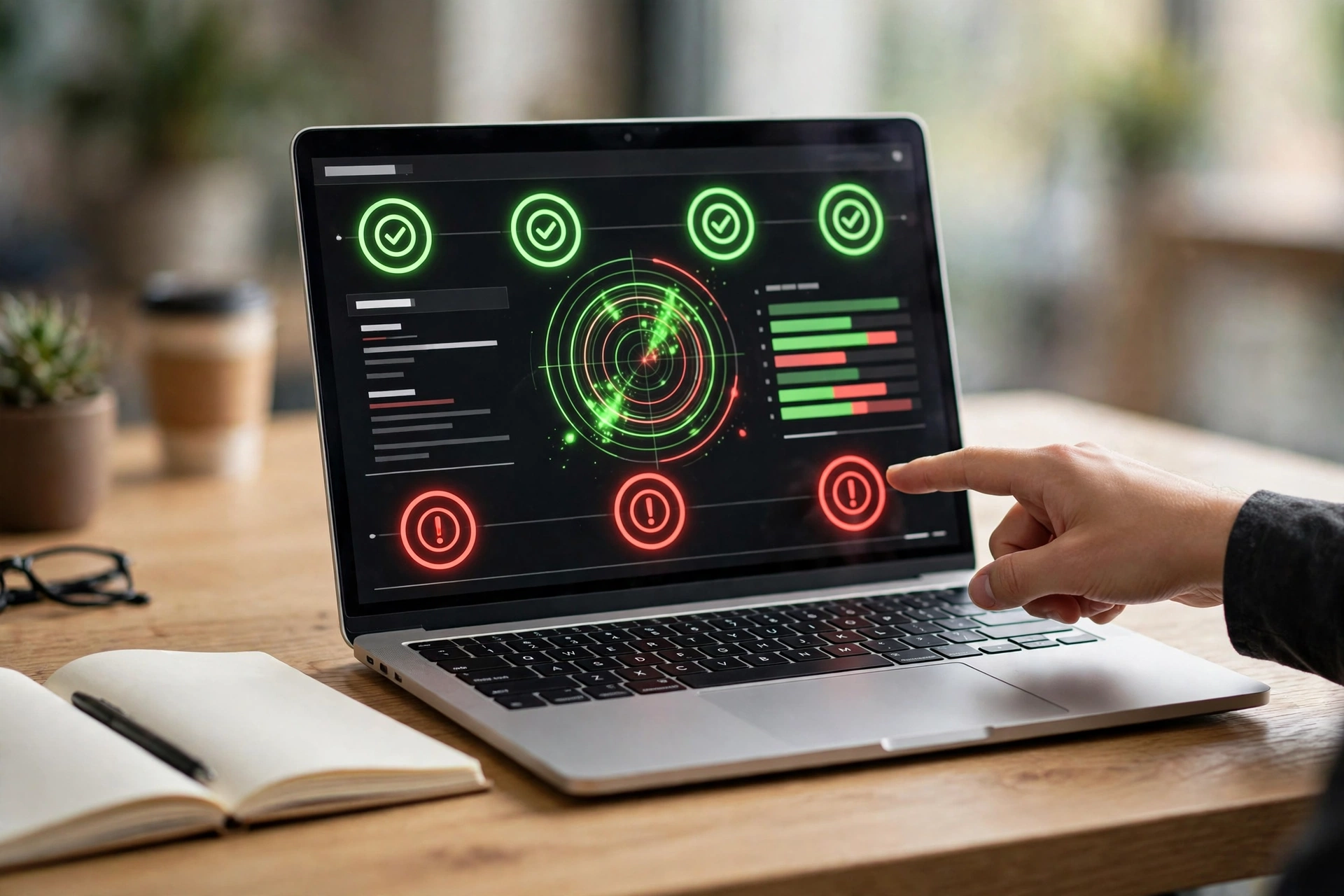
The best rug pull checker tools are RugCheck for Solana tokens, Token Sniffer for Ethereum tokens, Honeypot.is for sell simulations, and Bubblemaps for holder clusters, and running at least 2 tools on every new token takes under 5 minutes.
No single scanner catches everything, so run at least 2 tools and compare the results. A clean scan is preliminary evidence, not a pass, so keep checking. When I ran my first token check, the holder list showed 3 wallets holding 62 percent of the supply, and I closed the tab without buying. The tools below cover the full 7-check routine.
Two scanners take under 5 minutes and catch most amateur scams.
| Tool | What it checks | Best for |
|---|---|---|
| RugCheck | Liquidity locks, mint authority, freeze authority, holder concentration | Solana tokens |
| Token Sniffer | Contract similarity, known scam patterns, audit scores, honeypot flags | ERC-20 tokens on Ethereum |
| Honeypot.is | Simulated sell transactions, hidden tax functions | Honeypot detection on EVM chains |
| Bubblemaps | Visual wallet clustering, insider connection mapping | Supply concentration analysis |
| GoPlus Security | Contract risks, owner privileges, honeypot detection | Multi-chain quick scans |
| Etherscan, BscScan, Solscan | Source code, transactions, holder list, approvals | Verifying holder distribution and contract code |
| De.Fi Scanner | Contract audit, risk scoring, wallet permissions | Multi-chain risk scores |
| DEX Screener | Pool depth, trading history, price chart | Checking liquidity depth |
A 30-minute pre-buy routine uses the tools in order: 5 minutes on Token Sniffer or RugCheck for contract flags, 5 minutes on a block explorer for holder distribution, 5 minutes on Unicrypt, PinkSale, or Team.Finance for the liquidity lock, 5 minutes searching the team identities, and 10 minutes reading the project docs to judge whether the promises are realistic. The cost of skipping the routine is the full position.
What Should You Do If You Already Got Rugged?
If you already got rugged, revoke approvals at once, disconnect the malicious dApp, save every record, report the scam to the FBI Internet Crime Complaint Center (IC3), and warn the community, because fast reporting is the only path that sometimes helps.
- Revoke approvals at once. An unlimited approval can stay exploitable if that wallet address is funded again, so cancel outstanding approvals with Revoke.cash.
- Disconnect the malicious dApp from your wallet to stop further interaction.
- Do not touch refund tokens or surprise airdrops. Unsolicited tokens that tell you to “claim” funds are almost always a second-stage scam.
- Save records: screenshots, transaction hashes, wallet addresses, chat logs, and the time of the first unauthorized transaction.
- Report to the FBI IC3 at ic3.gov, report the token to the exchange and the DEX, and keep the report numbers.
- Warn the community on Reddit, X, and Discord, with the contract address and the evidence.
- Accept the loss and learn from it. Blockchain transfers are irreversible, and funds are rarely recovered.
Recovery odds are low, because a confirmed transfer is hard to reverse and a scammer wallet can move funds fast. Some victims have recovered funds through legal action when developers are identified and hold recoverable assets, but that is the exception. The Frosties NFT case shows that arrests do happen: the creators were charged by the US Department of Justice in 2022 after raising about 1.1 million dollars, and it was described as the first criminal case over an NFT rug pull (Source: CoinCreate, 2026).
Save every record first, then report fast.

Frequently Asked Questions
What is the fastest way to check if a token is a rug pull?
The fastest way to check a token is to run the contract address through RugCheck for Solana tokens or Token Sniffer for Ethereum tokens, because both tools give an instant risk score that covers liquidity locks, mint authority, holder concentration, and known scam code patterns. If the score is poor, skip the token.
Can a token still be a rug pull if liquidity is locked?
Yes, a token can still be a rug pull with locked liquidity, because some scammers use short lock periods of 7 to 14 days and rug the moment the lock expires, while others use upgradeable proxy contracts that let them change the contract logic after deployment. Demand a verified, non-upgradeable contract with a 6-month lock.
Are rug pulls illegal?
Yes, rug pulls are fraud in most jurisdictions, and regulators have pursued cases against rug pull operators under fraud statutes, with several operators receiving prison sentences. Enforcement is slow, though, and recovery rates for victims are extremely low, so prevention beats prosecution every time.
How common are rug pulls in 2026?
Rug pulls are still common in 2026, with fewer incidents but higher average loss per incident, and DappRadar recorded 7 rug-pull incidents in 2025 versus 21 in the same 2024 period, while reported losses rose from 90 million dollars to nearly 6 billion dollars (Source: DappRadar, 2025). The 2026 surge in Solana memecoins produced its own wave of rug pulls.
Are all anonymous teams scams?
No, not all anonymous teams are scams, because Bitcoin creator Satoshi Nakamoto is anonymous, and some legitimate projects have anonymous teams. Anonymity raises risk a lot, though, because you have no recourse when something goes wrong, so an anonymous team needs a long public record of shipped code to earn trust.
Does an audit guarantee safety?
No, an audit does not guarantee safety, because audits check code at one point in time, and teams can still dump tokens, make malicious upgrades, or abandon projects after the audit date. Audits reduce risk but do not remove it, so an audit is one check among 7, never a pass on its own.
Conclusion
How to avoid rug pulls in crypto comes down to one habit: run the 7 checks before you buy any new token, and skip the token when any check fails, because a confirmed crypto transfer is hard to reverse.
Start with the liquidity lock, read the holder list, scan the contract powers, test the sell, verify the team, read the audit at the auditor site, and reject guaranteed returns. The routine takes about 30 minutes, and the money you do not lose to scams compounds just as powerfully as the money you make on real trades. Savvy Cash Flow covers crypto basics and beginner investing plans for readers who want a plain plan. This article gives general information only, and this article is not financial advice.