

Introduction
Should I buy Bitcoin now? No single date is the right date to buy Bitcoin, and the honest answer depends on your money, your time frame, and your stomach for loss. Bitcoin trades near $62,000 in November 2026, about 51% below its record high of $126,080, while fear runs high. A small, planned buy can fit a long-term plan, and a rushed buy can hurt.
Bitcoin has fallen hard in 2026, and that fall is exactly why beginners ask the question now. This guide starts with what Bitcoin is, then shows where the price stands today, the 5 signals investors watch, the pros, the risks, and a plain sizing rule. It then compares buying now with buying in pieces, gives 5 buy steps, compares an exchange with an ETF (exchange-traded fund), and ends with storage, tax records, 7 mistakes, and answers to 6 common questions.
Key Takeaways
- Should I buy Bitcoin now has no yes or no answer that fits everyone, because the right choice depends on your emergency fund, your debts, your time frame, and your loss tolerance.
- Bitcoin trades near $62,000 on November 20, 2026, about 51% below its record high of $126,080 from October 6, 2025 (Source: CryptoSignalApp, 2026).
- Bitcoin has fallen more than 70% twice in the last 10 years and recovered both times, so a buyer must plan for a deep fall (Source: Motley Fool, 2026).
- Most advisors keep crypto below 5% of a portfolio, and a beginner should start with a small test amount, not a large lump sum (Source: Bitwise and VettaFi, 2026).
- A written plan beats a guess: set your amount, your buy method, your storage, and your sell rules before you place the first order.
What Is Bitcoin?
Bitcoin is a decentralized digital currency that lets two people transfer value directly over the internet without a bank in the middle, and Bitcoin is the first decentralized cryptocurrency. Bitcoin (BTC) exists only in digital form, Bitcoin transactions are recorded on a public ledger called a blockchain, and Bitcoin supply is capped at 21 million coins.
Bitcoin started in 2009, after a person or group using the name Satoshi Nakamoto published the Bitcoin white paper in 2008 (Source: Wikipedia, 2026). Bitcoin has no CEO, no head office, and no central bank. Bitcoin miners are specialized computers that check transactions and add them to the blockchain in blocks, and miners earn a block reward of 3.125 BTC per block as of 2026 (Source: Wikipedia, 2026). One Bitcoin divides into 100 million satoshis, so a beginner can buy a fraction of one coin. Read our guide on What Is Bitcoin? for the full basics before you weigh a buy.
Should I Buy Bitcoin Now? The Short Answer
Should I buy Bitcoin now? Buy Bitcoin now only if 4 checks pass: your emergency fund covers 3 to 6 months of costs, your high-interest debt is under control, you can hold for 5 years or more, and you can lose the full amount without harm to daily life. If any check fails, fix that check first, and return to Bitcoin later.
Timing tools give a mixed read on November 20, 2026. Flicker rates Bitcoin a Hold, with extreme fear at 14 out of 100 and a downtrend in place (Source: Flicker, 2026). CryptoSignalApp rates Bitcoin a Sell, with a score of 23.55 out of 100 and very strong bearish momentum (Source: CryptoSignalApp, 2026). At the same time, the same fear that drives those scores is what long-term buyers watch: past Bitcoin lows arrived when fear was highest. No signal can tell you where the price goes next, so the decision rests on your plan, not on a gauge.
Where Does Bitcoin Stand in November 2026?
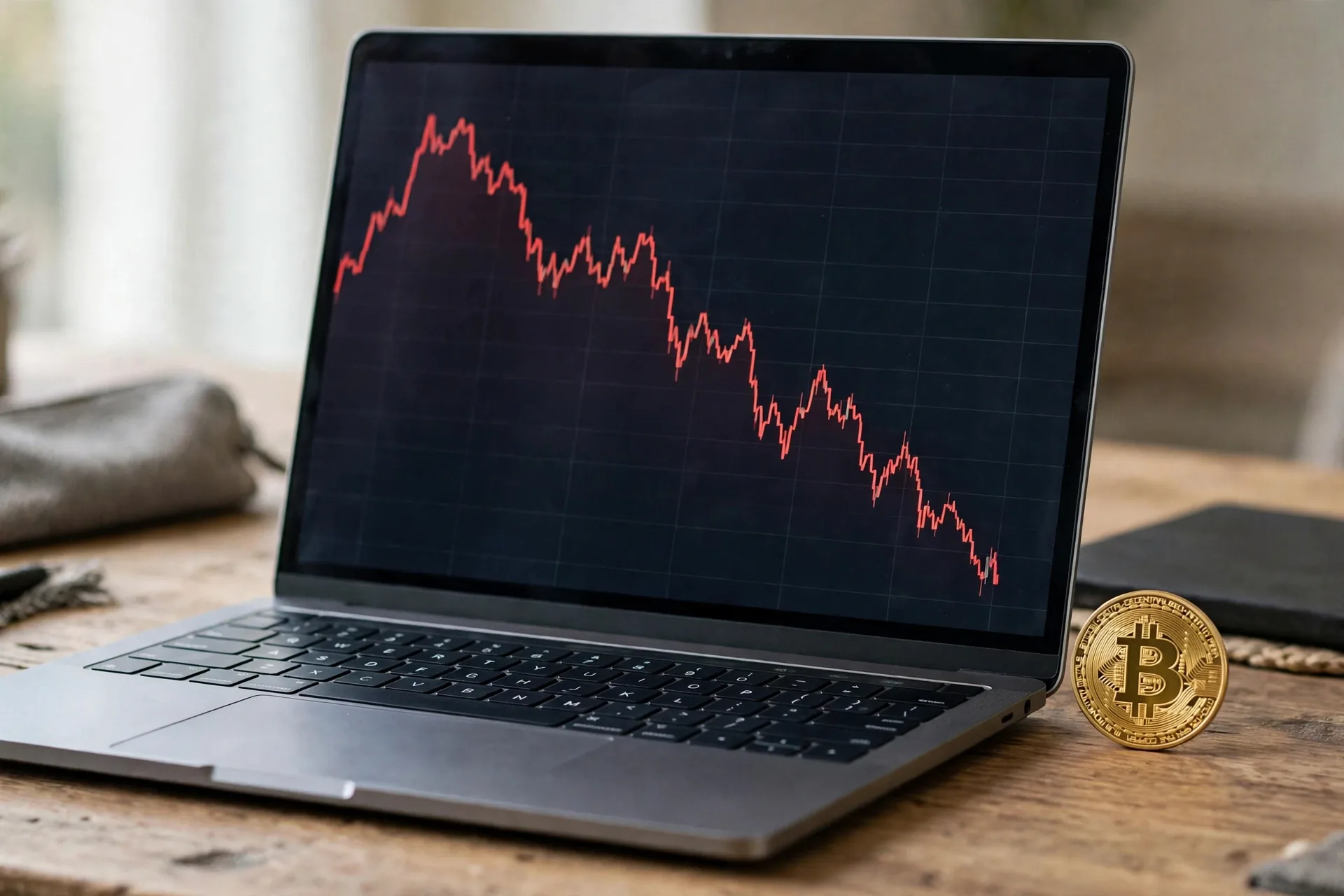
Bitcoin stands about 51% below its record high in November 2026, after a rough year that cut the price from near $97,000 in January to near $62,000 in November. Bitcoin closed 2025 at $87,648.54, reached its highest daily close of 2026 at $96,945.75 on January 14, fell to a low close of $58,628.64 on June 30, and stood at $65,351.87 on November 15, down 25.4% for the year so far (Source: MEXC, 2026).
| Bitcoin price point | Price | Date |
|---|---|---|
| Record daily close | $124,752.53 | October 6, 2025 |
| 2025 year-end close | $87,648.54 | December 31, 2025 |
| 2026 high daily close | $96,945.75 | January 14, 2026 |
| 2026 low daily close | $58,628.64 | June 30, 2026 |
| Mid-November 2026 | $65,351.87 | November 15, 2026 |
| November 20, 2026 | About $62,000 | November 20, 2026 |
Bitcoin also closed 6 straight weekly candles in the red before mid-November, a run that has happened only a handful of times since 2013 (Source: TradingView, 2026). The Crypto Fear and Greed Index sat at 13 out of 100, in Extreme Fear territory (Source: Medium, 2026). A 51% fall from the high sounds like a sale, and it can also be the middle of a larger fall, because Bitcoin fell 83.4% from its December 2017 record close and 76.6% from its November 2021 record close before each low (Source: MEXC, 2026).
What Are the 5 Signals Investors Watch Before Buying Bitcoin?
The 5 signals investors watch before buying Bitcoin are distance from the record high, ETF (exchange-traded fund) and company holdings, the halving schedule, interest rates, and futures positioning, and none of the 5 predicts where the price goes next. Each signal describes conditions, and each one can stay in place for months while the price moves the other way.
| Signal | What it shows now | What it cannot do |
|---|---|---|
| Distance from record high | About 51% below the record high; past falls ran 83.4% and 76.6% (Source: MEXC, 2026) | A deep discount is not a floor |
| ETF and company holdings | iShares Bitcoin Trust held 783,448 BTC on November 13, 2026 (Source: MEXC, 2026); fund outflows pressured price in 2026 (Source: SimpleMining, 2026) | Holdings show past buys, not future buys |
| Halving schedule | 95.8% of supply mined; next halving expected around April 2028 (Source: MEXC, 2026) | New supply is known, demand is not |
| Interest rates | The Federal Reserve sets the rate backdrop for every risk asset | A rate change alone says little about timing |
| Futures positioning | Funding rates and open interest show crowded leverage | Crowded positions can stay crowded for a long time |
What Are the Pros of Buying Bitcoin Now?
The pros of buying Bitcoin now are a lower entry price than the record high, a fixed supply that no government can print, deep liquidity that trades 24 hours a day, and regulated ETF access that did not exist a few years ago. Each pro has a limit, and the limits matter as much as the pros.
Bitcoin has returned 9,510% over the last 10 years, more than every major asset class over the same span (Source: Motley Fool, 2026). That return came with two falls of more than 70%, so the gain belongs to holders who stayed through the drops. Bitcoin supply is capped at 21 million coins, and about 95.8% of that supply is already mined, so no new flood of coins can dilute holders the way a company can issue new shares (Source: MEXC, 2026). Bitcoin trades around the clock, unlike stocks that trade only during market hours. Spot Bitcoin ETFs now put exposure inside an ordinary brokerage account, and BlackRock recommended investors allocate up to 2% of a portfolio to Bitcoin in December 2024 (Source: Wikipedia, 2026).

What Are the Risks of Buying Bitcoin Now?
The risks of buying Bitcoin now are extreme volatility, no cash flow, custody mistakes that can lock a wallet for good, shifting rules, and scams that copy real exchanges and wallets. A buyer must accept each risk before the first order, because no feature of Bitcoin removes them.
Bitcoin fell 84% after its 2017 peak and 77% after its 2021 peak to about $15,500, and drops of 20% in a single week happen in ordinary years (Source: SimpleMining, 2026). Bitcoin pays no dividend, issues no interest, and has no earnings, so Bitcoin price rests on demand for a fixed supply, not on cash flow. A lost seed phrase means lost coins, with no way to recover them, and a transfer sent to a wrong address is hard to reverse after confirmation. The CLARITY Act, a sweeping regulatory framework for cryptocurrencies, has been working its way through Congress in recent months, and roadblocks in Washington can cause selloffs (Source: NerdWallet, 2026). Scams add a separate risk: the FBI counted 181,565 crypto-related complaints and 11.4 billion dollars in reported losses in the United States in 2025 (Source: FBI, 2026). Learn the warning signs in our guide on how to avoid crypto scams before you send any money. Browse the Investing & Wealth guides on Savvy Cash Flow to compare Bitcoin with other beginner investing plans.
How Much Bitcoin Should a Beginner Buy?
A beginner should buy a small amount of Bitcoin that fits inside 1% to 5% of a portfolio, with a first test buy of $25 to $100, and a beginner should never use rent money, bill money, or emergency fund money. Most advisors suggest a 1% to 5% allocation, and 83% of crypto-exposed advisor portfolios keep crypto below 5% (Source: Bitwise and VettaFi, 2026). NerdWallet suggests capping all risky assets, including Bitcoin, at 10% of a portfolio (Source: NerdWallet, 2026).
| Test amount | Bitcoin at $62,000 | What it teaches |
|---|---|---|
| $25 | About 0.0004 BTC | The order screen and the fee screen |
| $100 | About 0.0016 BTC | A real buy, a wallet transfer, and record keeping |
| $500 | About 0.0081 BTC | A small position with real price moves |
| $1,000 | About 0.0161 BTC | A starter position inside a 1% to 5% plan |
Dollar-cost averaging (DCA) is the most common beginner method: buy the same dollar amount on a set schedule, such as $100 each month, no matter the price. A $100 monthly buy at $62,000 buys about 0.0016 BTC per month, or about 0.019 BTC in 12 months if the price stays flat, before fees. If the price falls to $31,000 during those months, each $100 buys twice as much Bitcoin. DCA does not remove losses: a $1,200 stake bought at $62,000 is worth about $600 if the price halves, so DCA only smooths the entry price.
Should I Buy Bitcoin Now or Wait and Buy in Pieces?
Buy Bitcoin in pieces with a set schedule when you cannot decide on timing, and buy in one lump sum only when the amount is small, the money is spare, and a 50% fall would not change your plans. No study can tell a beginner which choice wins next month, so the choice should match your nerves, not a forecast.
| Method | How it works | Best for | Main drawback |
|---|---|---|---|
| Lump sum | Buy the full amount at once | Small amounts, long horizons, calm holders | A fall the next week hits the full amount |
| Dollar-cost averaging | Buy the same dollars on a set schedule | Beginners, large amounts, nervous buyers | A fast rise leaves part of the money uninvested |
| Wait for a dip | Hold cash until a set price | Patient buyers with a written trigger price | The dip may never come, and cash sits idle |
| Split buy | Buy half now, half on a schedule | Buyers torn between now and later | Neither the best entry nor the smoothest ride |
A split buy suits most beginners who ask “should I buy Bitcoin now”: buy half the planned amount now, then buy the other half in equal weekly or monthly slices. Write the dates down, set the orders, and stop checking the price each day. When I tracked the Bitcoin price each morning for a week before my first small buy, the daily swings taught me more about my own nerves than any chart did, and that week is what fixed my amount at a small test size instead of a large one. New to crypto? Read how to buy your first crypto safely before your first order.
How Do You Buy Bitcoin in 5 Steps?
You buy Bitcoin in 5 steps: choose a regulated exchange, verify your identity, add a low-fee payment method, place a small market order, and move long-term holdings to a wallet you control. Each step has one check, and a failed check means you stop and fix it before you move on.
- Choose a regulated exchange. Pick a platform that operates legally in your country, shows clear fees, and offers customer support. Type the exchange address yourself, and never open an exchange from a link in a message, an email, or a social post.
- Verify your identity and secure the account. Upload a government photo ID, set a long unique password, and turn on app-based two-factor authentication (2FA) with an authenticator app.
- Add a low-fee payment method. Link a bank account for a bank transfer (ACH) when low cost matters more than speed, and check the fee and the clearing time before you send funds. A card buy often costs more and can count as a cash advance.
- Place a small market order. Enter a small dollar amount such as $25 or $50, pick a market order, and check the coin amount, the fee, and the total cost before you confirm.
- Move long-term holdings to a wallet you control. Copy the wallet address with care, send a tiny test amount first, check that the test amount arrived, and then send the rest. Write the 12-word or 24-word recovery phrase on paper, store the paper in a safe place, and never share the phrase with any person or website.
Should You Buy Bitcoin on an Exchange or Through an ETF?
Buy Bitcoin on an exchange when you want the coins themselves and full control, and buy Bitcoin through a spot ETF when you want simple brokerage access with no wallet setup. Neither route is right for every beginner, and the table below shows the trade.
| Factor | Exchange | Spot Bitcoin ETF |
|---|---|---|
| What you own | Bitcoin itself | Shares of a fund that holds Bitcoin |
| Private keys | You control them with self-custody | The fund controls them, not you |
| Trading hours | 24 hours a day, 7 days a week | Stock market hours only |
| Ongoing costs | Trading fees, spreads, withdrawal fees | Expense ratio plus brokerage costs |
| Tax records | You track every buy and sale | Brokerage statements track the shares |
| Best for | Holders who want the asset itself | Beginners who want exposure in a brokerage account |
Twelve US spot Bitcoin ETFs trade today, and most launched in January 2024 (Source: SimpleMining, 2026). An ETF suits a retirement account, because the IRS treats digital assets as property, and a sale can produce a capital gain or a capital loss (Source: IRS, 2026). An exchange suits a holder who wants to send Bitcoin on the network or hold the keys. Pick one route for your first buy, and learn it well before you try the other.
What Should You Do After You Buy Bitcoin?
After you buy Bitcoin, secure the wallet, write down your sell rules, set aside tax money from each sale, and keep a record of every transaction from the first buy. A buy with no after-plan is a guess, and guesses fail when the price moves fast.
First, move long-term holdings off the exchange into a wallet you control, and keep only a small trading amount on the exchange. A hot wallet connects to the internet and suits small amounts, while a cold wallet stays offline and suits larger amounts. Second, write your exit plan before the price moves: pick 3 price levels or percentage gains, assign a fixed slice to each level, and place limit orders so the plan runs on its own. Our guide on how to take profits from crypto step by step shows a staged sell plan with real numbers. Third, keep records of every transaction: the coin, the date and time, the number of units, the price in dollars, the fee, and your cost basis. The IRS states that income from digital assets is taxable and that you must report transactions whether or not they result in a gain, and brokers must report gross proceeds on Form 1099-DA for transactions on or after January 1, 2025 (Source: IRS, 2026). Check the IRS digital assets page for the current rules before tax season.
7 Mistakes Beginners Make When Buying Bitcoin
The 7 mistakes beginners make when buying Bitcoin are buying with bill money, buying a large lump sum on a hot tip, skipping two-factor authentication, leaving coins on an exchange for years, chasing the top, panic selling in a dip, and forgetting the tax bill. Each mistake has a plain fix, and the fix costs less than the mistake.
- Buying with bill money. A buy funded by rent or bill money forces a sale at the worst moment. Fund buys only from spare money after bills and savings.
- Buying a large lump sum on a hot tip. A tip from a stranger, a video, or a group chat is not research. Use a small test buy and your own written plan.
- Skipping two-factor authentication. A password alone is weak, and a hacked email can open an exchange account. Use app-based 2FA on the exchange and on the tied email account.
- Leaving coins on an exchange for years. An exchange can be hacked or closed, and a long-term holding belongs in a wallet you control. Move it with a test transfer first.
- Chasing the top. A fast rise tempts buyers to enter at the peak, and Bitcoin has punished top buyers with falls of 50% or more. Use DCA and a set schedule.
- Panic selling in a dip. A 20% weekly fall feels like a crash, and a sale in panic locks in the loss. Follow a written plan and review monthly, not daily.
- Forgetting the tax bill. A sale that gains $1,000 can owe several hundred dollars in tax. Set the tax share aside the same day the sale fills, and keep records from the first buy.

Frequently Asked Questions
Is now a good time to buy Bitcoin?
No one can know in advance whether today is a good time to buy Bitcoin, because its price has swung by tens of thousands of dollars within a single year. Judge what the market shows now, check your own finances, and buy only a small amount you can afford to lose in full. A written plan matters more than the date.
How much Bitcoin should I buy with $100?
A $100 buy at $62,000 gives about 0.0016 BTC before fees, and $100 suits a first test buy for a beginner. You do not need to buy one whole coin, because one Bitcoin divides into 100 million satoshis. Start with $100 or less, learn the order screen and the wallet transfer, and grow the amount only when the process feels clear.
Is Bitcoin a good investment for beginners in 2026?
Bitcoin can be a reasonable high-risk allocation for some investors, but Bitcoin is not a necessary investment and Bitcoin is not right for everyone. Bitcoin now has stronger market infrastructure and easier institutional access than it did several years ago, and Bitcoin still carries severe price swings, custody risk, and platform risk. Build an emergency fund first.
Can Bitcoin go to zero?
Yes, Bitcoin can go to zero in theory, because Bitcoin has no earnings, no government backing, and no guaranteed buyer at any price. Bitcoin has recovered from every past crash to set a new record high, and that history does not promise a future recovery. Treat any Bitcoin amount as money you can lose in full.
Should I buy Bitcoin or Ethereum first?
Bitcoin suits a first buy better than Ethereum for most beginners, because Bitcoin has the longest record, the deepest trading, and the widest exchange support. Ethereum is the second large cryptocurrency, and Ethereum adds smart contract risk that Bitcoin does not carry. Learn one coin well before you add a second coin.
Do I pay tax when I sell Bitcoin?
Yes, you pay tax when you sell Bitcoin in the United States, because the IRS treats digital assets as property, and a sale can produce a capital gain or a capital loss. A gain on an asset held for 1 year or less is taxed as ordinary income, while a gain on an asset held for more than 1 year gets lower capital gains rates. Keep records of every buy and sale.
Conclusion
Should I buy Bitcoin now? Buy Bitcoin now only when your emergency fund is set, your high-interest debt is under control, your time frame runs 5 years or more, and the amount is small enough to lose in full. Bitcoin trades near $62,000 in November 2026, about 51% below its record high, while fear runs high and momentum points down. That mix can reward a patient buyer with a plan, and it can punish a rushed buyer with no plan.
Start small, buy in pieces, store the coins in a wallet you control, write your sell rules before the price moves, and keep tax records from the first buy. Savvy Cash Flow covers Bitcoin basics and beginner investing plans for readers who want a plain plan. This article gives general information only, and this article is not financial advice.