

Introduction
Solo travel on a budget for women is a trip taken alone by a woman who keeps daily costs low through hostels, public transport, street food, and free activities while using clear safety habits. A first solo trip works best with a safe first destination, a daytime arrival, a female-only dorm or a well-reviewed guesthouse, a daily budget of $30 to $90, and a simple check-in routine with someone at home. This guide covers the real costs, the safest first destinations, budget stays, 7 daily safety habits, a light packing list, and ways to meet people without spending much, so you can plan with confidence. Savvy Cash Flow covers budget travel guides that help women plan trips with clear numbers and honest trade-offs.
Key Takeaways
- Solo travel on a budget for women costs $30 to $90 a day in most budget regions, with hostels, public transport, and market food doing the heavy lifting.
- Pick the neighborhood first, then the price. A bed near transit and lit streets beats a cheaper bed in a dark, far-off area.
- Arrive in daylight and book the first 2 to 3 nights in advance. The arrival is the riskiest part of any solo trip.
- Use 5 daily safety habits: a morning check-in, live location sharing, two money sources in two places, offline maps, and a door lock or wedge.
- Start with a gentle first destination such as Lisbon, Tokyo, or Bangkok, and keep the first trip to 7 to 10 days.
- Travel insurance is part of the budget, not an extra. It covers medical bills, trip delays, and lost bags when no travel partner can help.
What Is Solo Travel on a Budget for Women?
Solo travel on a budget for women is travel by one woman alone, planned around low daily costs and clear safety routines. Solo travel on a budget for women combines 3 parts: a trip with no travel partner, a daily budget that favors hostels, buses, trains, and local food, and a safety plan that covers stays, transport, money, and contact with home.
A solo trip differs from a group trip in one clear way: every choice is yours, and every cost lands on one person. Hotels, tours, and cruises often price rooms for 2 people, so solo travelers sometimes pay a single supplement of 10% to 50% on tours (Source: Vacaber, 2026). Hostels, room-share tours, and private rooms in hostels remove most of that penalty.
Solo travel is growing fast. A Harris Poll for Mastercard found that 39% of international travelers had already taken a trip on their own (Source: Harris Poll, 2026). An Intrepid Travel survey of 8,000 adults in 4 countries found that 69% planned to travel solo or were open to it within the next year (Source: Intrepid Travel, 2026). On Hostelworld, solo guests rose from 57% of customers in 2021 to 63% in 2024 (Source: Hostelworld, 2024).
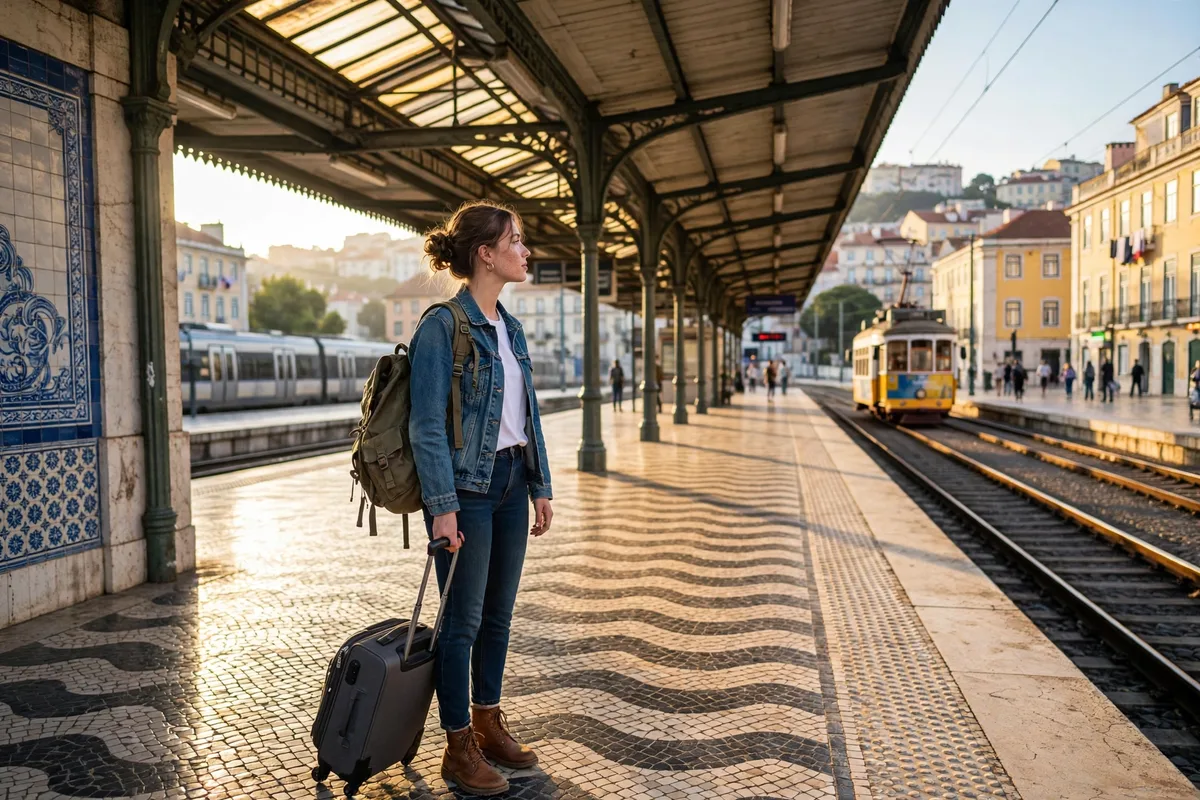
Is Solo Travel on a Budget Safe for Women?
Yes, solo travel on a budget is safe for women who choose safe destinations, stay in well-reviewed places, arrive in daylight, and keep a daily check-in habit. Safety is never a promise in any city, at home or abroad, but millions of women travel alone each year with no serious problems, and the same 5 habits protect most trips: research the destination, book a safe stay, share your location, keep your phone charged, and trust your gut.
Risk comes from 4 sources: an unsafe neighborhood, a late-night arrival, an unvetted ride or stranger, and a drained phone with no map. Each one has a fix that costs little or nothing. Pick a stay near transit and lit streets. Land in daylight or book a pre-paid transfer. Use ride apps or official taxi ranks instead of street hails at night. Download offline maps and carry a power bank. A 2026 survey by the Solo Female Travelers community found that 68% of women named higher costs a top concern, the same share that named safety (Source: Solo Female Travelers, 2026).
Government travel advice helps you sort destinations. The US State Department rates countries from Level 1 (normal precautions) to Level 4 (do not travel), and a level can apply to one region only. Read the advice for your exact region, register your trip with the Smart Traveler Enrollment Program (STEP) if you are a US citizen, and share your itinerary with a trusted person at home.
How Much Does Solo Travel on a Budget Cost for Women?
Solo travel on a budget for women costs $30 to $90 a day in most budget regions, not counting flights. Daily costs run $18 to $35 in Vietnam, Thailand, and Indonesia, $25 to $45 in Mexico and Colombia, $55 to $85 in Portugal and much of Central Europe, and $60 to $120 in Japan, South Korea, Australia, and New Zealand (Source: Vacaber, 2026). A 7-day trip to Thailand can total $210 to $490 on the ground, while 7 days in Portugal runs $385 to $595 on the ground.
The daily budget has 4 parts: a bed, food, transport, and activities. The table below shows typical daily ranges for a budget destination such as Thailand or Vietnam, plus a mid-range European stop such as Lisbon.
| Cost item | Budget destination (per day) | Lisbon, Portugal (per day) |
|---|---|---|
| Bed (hostel dorm) | $8 to $15 | $30 to $45 |
| Food (markets and street food) | $10 to $20 | $15 to $30 |
| Local transport | $2 to $6 | $3 to $8 |
| Activities (free and paid mix) | $5 to $15 | $5 to $20 |
| Total | $25 to $56 | $53 to $103 |
Three costs hit solo travelers harder than couples: the room, the taxi, and the tour. A private room costs the same for 1 person as for 2, a taxi fare has no one to split it, and a private driver costs the same for 1 as for 4. The fixes are simple: book a dorm bed or a room-share tour, use buses and trains, and join group day trips that split the cost of a boat or a driver. Eat your main meal at lunch, when set menus often cost half the dinner price. Check a Budget Travel guide before you set your daily target, and track spending each night in a notes app.
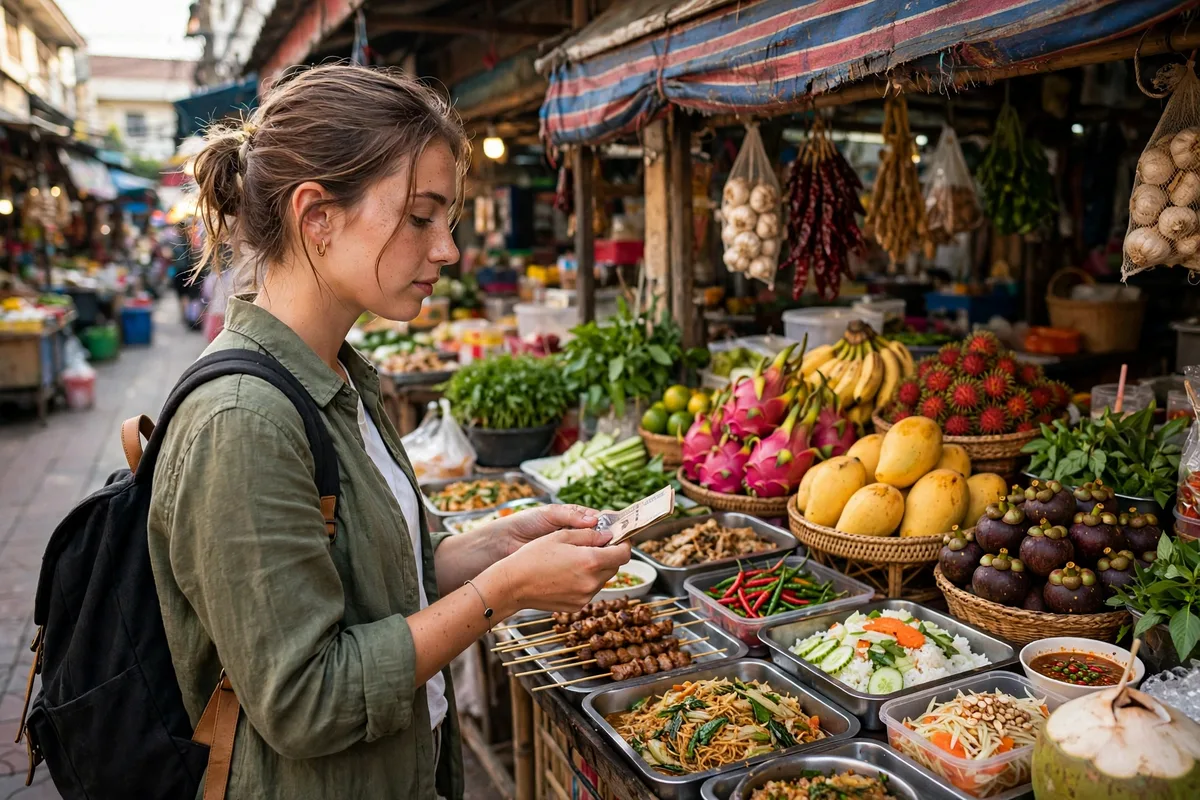
How to Choose a Safe Destination for Your First Solo Trip
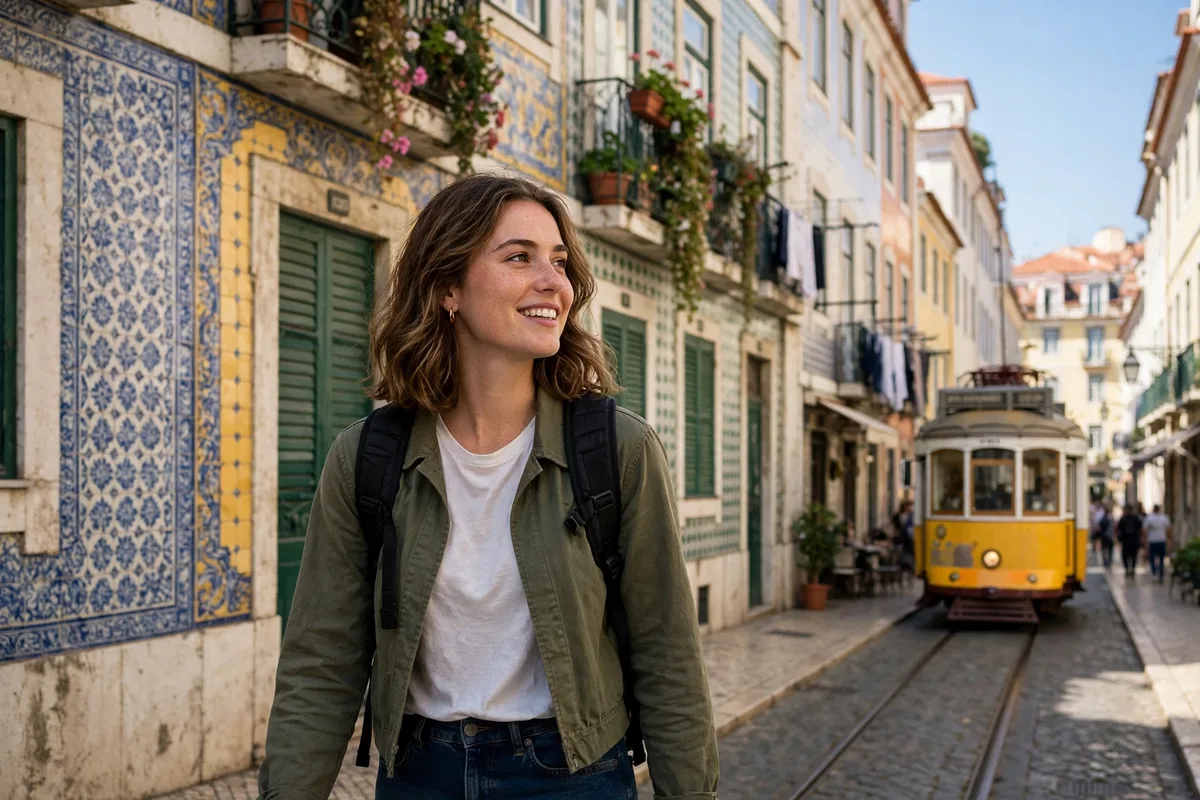
Choose a first solo destination that scores well on 4 tests: low crime, easy public transport, a strong traveler scene, and clear English signage or widely used translation apps. Lisbon, Tokyo, Edinburgh, Copenhagen, and Singapore pass all 4 tests, and they suit first-time solo women travelers well.
The Global Peace Index 2026 puts Iceland, New Zealand, Switzerland, Slovenia, Ireland, Austria, Portugal, Singapore, Finland, and Japan in its top 10 (Source: Global Peace Index, 2026). Safe does not mean cheap, so pair the safety list with a budget list. The best first trips for women on a budget are Portugal ($60 to $100 a day), Thailand ($40 to $70 a day), Vietnam ($35 to $60 a day), and Japan ($80 to $130 a day).
Start small if a long-haul flight feels like too much. A first solo trip can be a weekend in the next city or state, and the skills transfer directly: booking a bed, reading a map, eating alone, and handling a missed bus. Keep the first international trip to 7 to 10 days, with 2 bases at most. Read recent reviews from other solo women before you book, and search the comments for the words safe, alone, and late. Check our guide to the best budget travel destinations in the USA if you want a first trip close to home. For a longer low-cost route across many countries, read our backpacking Europe on a budget guide.
How to Pick Safe Budget Accommodation
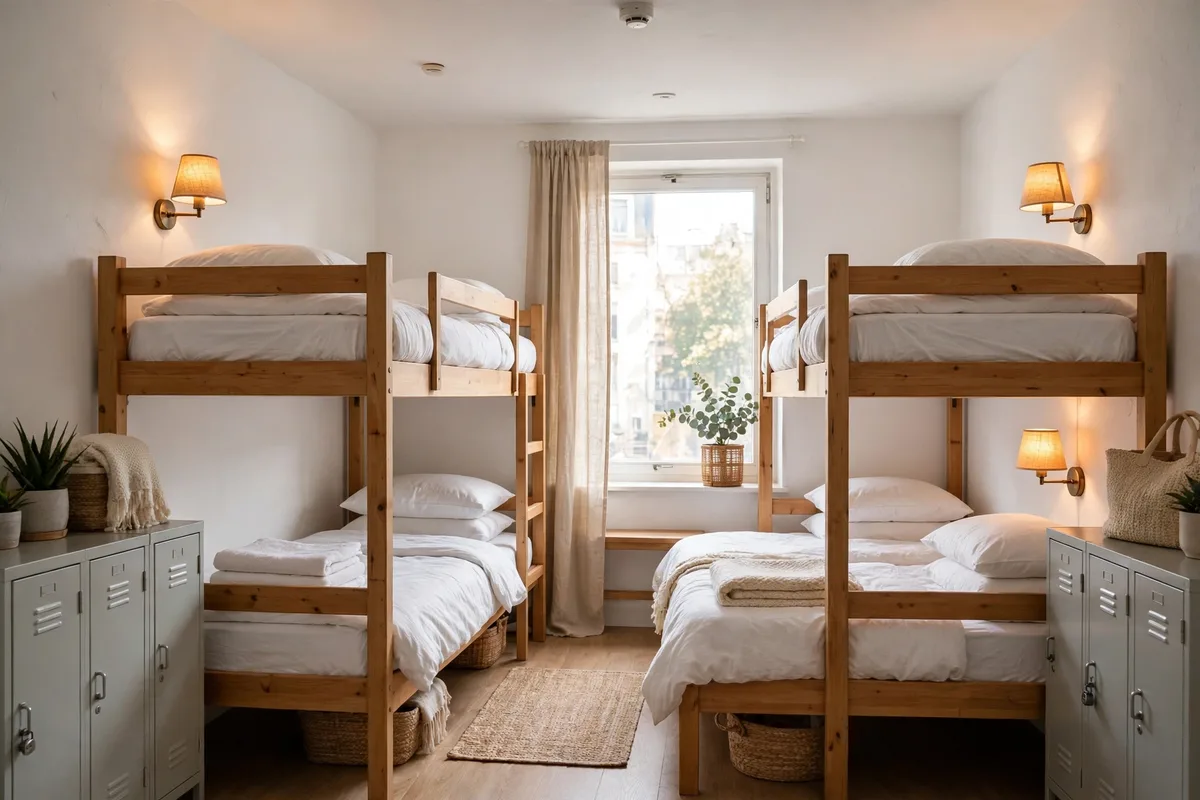
Pick safe budget accommodation by checking the neighborhood first, the reviews second, and the price third. A bed near transit, cafes, and lit streets beats a cheaper bed in a dark, far-off district, because the cheap bed adds taxi fares and lost sleep.
Female-only dorms are the best value for most solo women travelers. A female-only dorm costs the same as a mixed dorm, sleeps 4 to 8 women, and gives you a room where you can change and rest without performing around strangers. Hostel dorm beds in Europe averaged $9 a night in Brasov, $30 in Budapest, $37 in Prague and Berlin, $38 in Lisbon, and $55 in Paris in 2026 (Source: Vacaber, 2026). In Southeast Asia and Latin America, dorm beds often cost well under $15 a night.
Use this 6-point check before you book any stay:
- Read at least 10 recent reviews, and search them for safe, alone, and late.
- Check the map: the stay sits within a 10-minute walk of transit and an open cafe.
- Confirm a 24-hour front desk or a clear self-check-in with a lockbox code.
- Confirm lockers or a safe big enough for a laptop and a passport.
- Confirm the room has a working lock, a window lock, and a curtain or blind.
- Book the first 2 to 3 nights only, then extend if the place feels right.
Private rooms in modern hostels are the middle option: a small room with its own bathroom for far less than a hotel. Avoid any stay with no reviews, no photos of the room, or a host who asks you to pay outside the booking platform.
How to Stay Safe on the Road: 7 Daily Habits
Stay safe on the road with 7 daily habits: a morning check-in, live location sharing, 2 money sources in 2 places, offline maps, a charged phone, a door lock, and a clear head about drinks. Each habit takes under 5 minutes, and together they cover the most common problems solo women face.
- Send a 60-second check-in each morning. Text one person your plan for the day and your bed for the night. Use a fixed time so a missed message means something.
- Share your live location. WhatsApp and Google Maps share live location with a trusted contact, and ride apps let you share a trip link with up to 5 people.
- Split your money. Carry one card and a small amount of cash in your wallet, and keep a backup card plus $100 in your locked bag or hostel safe.
- Download offline maps for every city. Google Maps and Maps.me work without data, so a dead signal never leaves you lost.
- Keep your phone charged. Carry a power bank with at least 20,000 mAh and charge it each night.
- Lock your door from the inside. A portable door lock or wedge weighs about 3 ounces, costs about $8, and adds a physical barrier to any door.
- Guard your drink. Never leave a drink alone, never take a drink from a stranger, and keep your limits clear so you can judge people and streets well.
Land in daylight when you can, and book a pre-paid airport transfer if you land late. Learn 5 local phrases before you go: hello, thank you, help, no, and leave me alone. If a stranger asks whether you are alone, say a friend is back at the hotel.
Travel insurance belongs in the budget. Travel insurance covers emergency medical care, trip cancellation, lost luggage, and flight delays, and US travelers spent $5.56 billion on travel insurance in 2024, with 86.97 million people protected (Source: USTIA, 2024). Buy it before you leave and save the emergency number in your phone.
How to Pack Light and Smart for Solo Travel
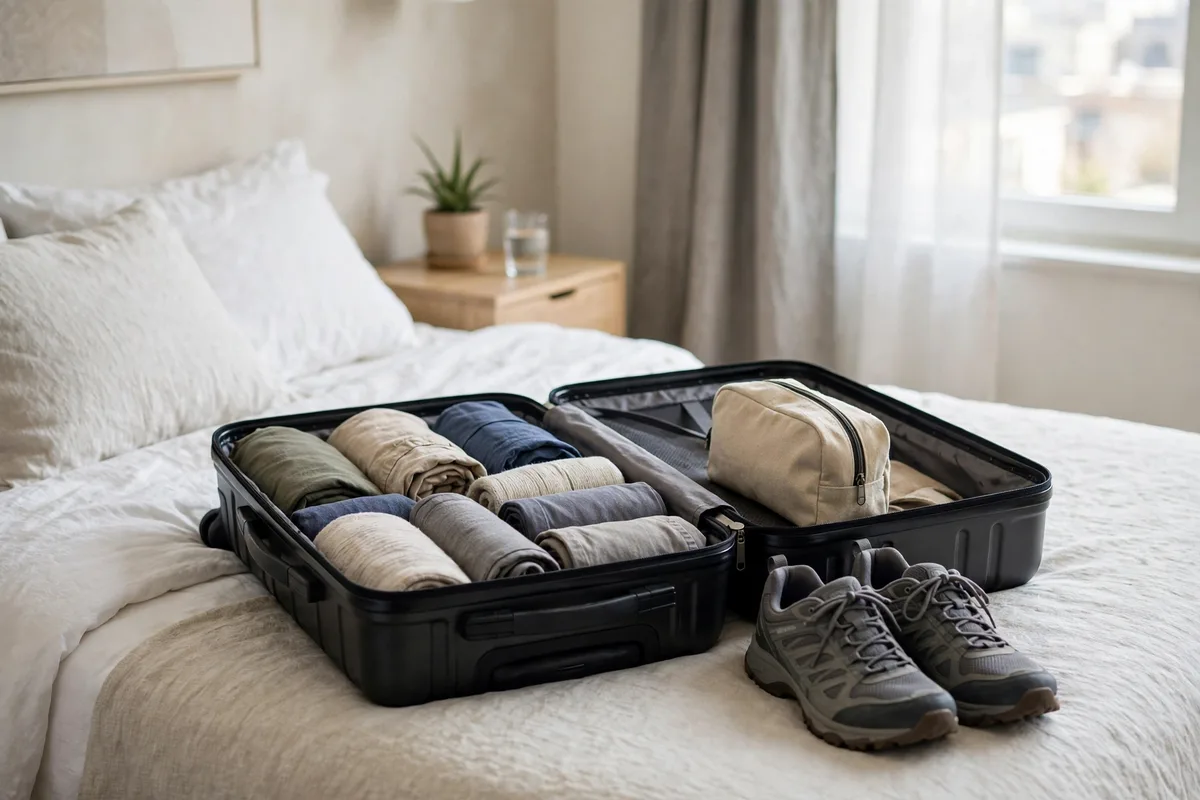
Pack light and smart for solo travel by taking one carry-on and one personal item that you can lift, roll, and carry up stairs alone. You are the only porter on a solo trip, so every extra kilo slows you down at stations, on buses, and on cobbled streets.
Pack 5 days of clothes for a 10-day trip and wash halfway. Choose layers in 2 matching colors so each top works with each bottom. Pack 3 pairs of shoes at most: walking shoes, sandals, and one smart pair. Roll clothes instead of folding them to save space and cut wrinkles. Keep sleep clothes and a change of underwear in your personal item, so a delayed bag never leaves you with nothing.
The packing list below fits a 7 to 10 day trip in one carry-on:
| Item | Why it earns its place |
|---|---|
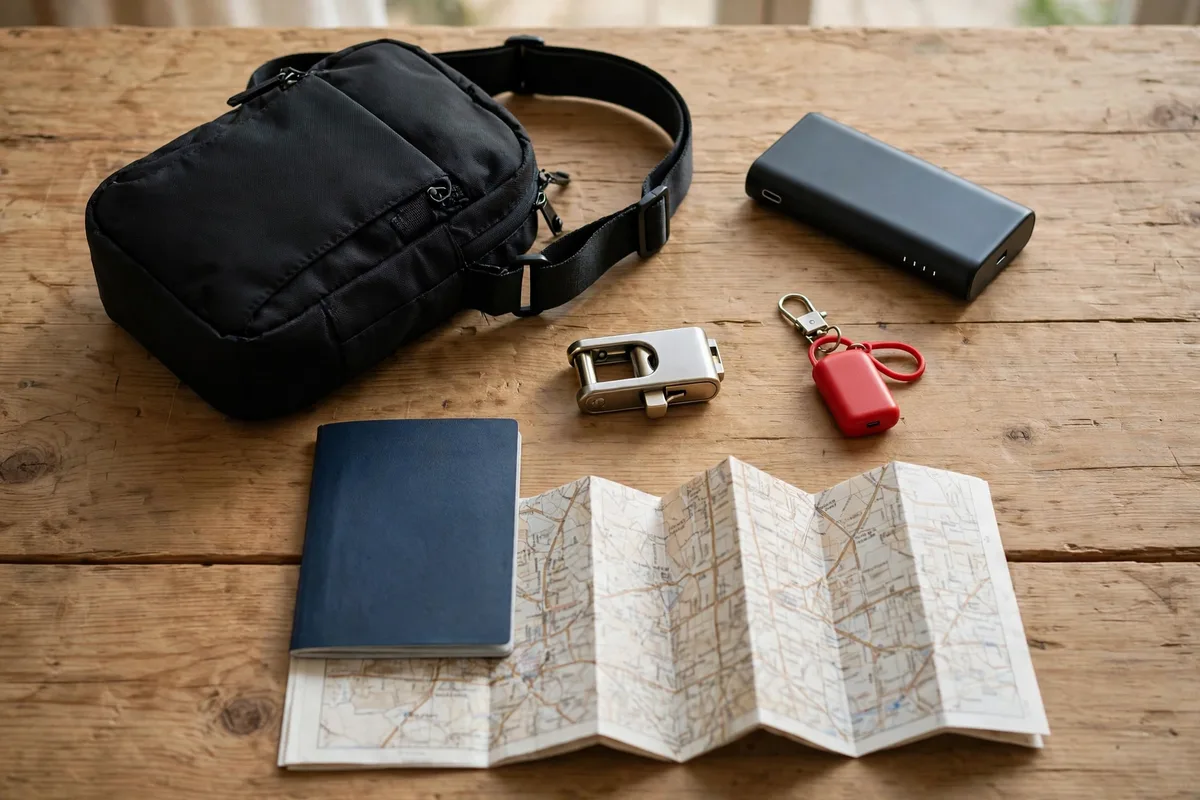
| Crossbody anti-theft bag | Keeps cash, cards, and phone in front of you in crowds |
| Portable charger (20,000 mAh) | Keeps your phone and maps alive all day |
| Universal adapter | Charges devices in any country on the trip |
| Personal alarm or whistle | Draws attention fast and weighs almost nothing |
| Portable door lock or wedge | Adds a lock to any hotel or hostel door |
| Digital and paper document copies | Speeds up a passport replacement at an embassy |
Leave jewelry, extra gadgets, and more than 2 books at home. Buy toiletries at your destination instead of carrying full bottles. On my first solo weekend trip, I booked a daytime train into Lisbon and walked to my hostel in daylight, and that one choice set the tone for the whole trip: I learned the streets, found the nearest market, and slept well on night one.
How to Meet People and Beat Loneliness on a Solo Trip
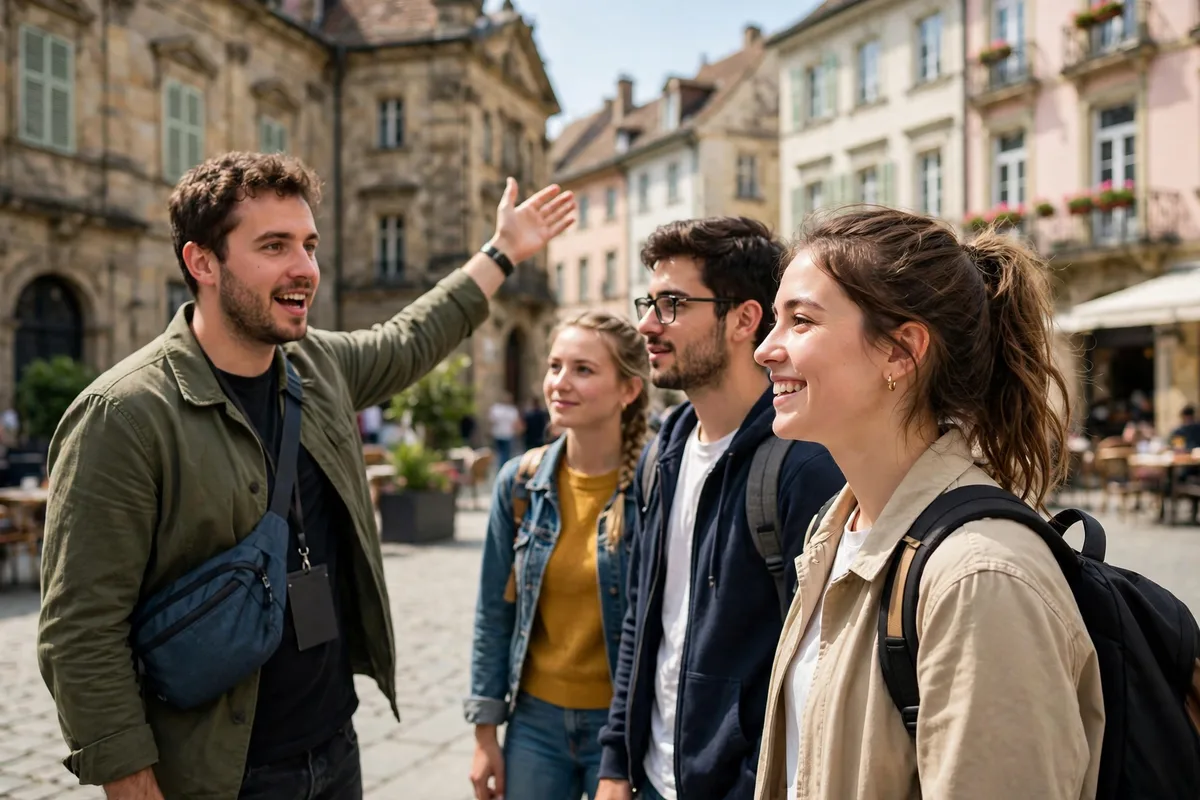
Meet people on a solo trip by staying in social hostels, joining free walking tours, and booking small group day trips. Loneliness worries many first-time solo travelers, yet a Hostelworld survey found that fewer than 4% of solo travelers who looked for company ended up meeting no one (Source: Hostelworld, 2024). Company is easy to find when you put yourself where other travelers gather.
Social hostels run free events, family dinners, and pub crawls, and their apps let you chat with other guests before you arrive. Free walking tours gather 10 to 20 travelers for 2 hours, and a tip of $5 to $10 is the only cost. Cooking classes, day hikes, and boat trips put you with the same people for hours, which turns small talk into real plans. Apps such as Meetup list local events, and women-only travel groups on Facebook connect you with other solo women before you land.
Eat at the bar or at a shared hostel table instead of alone in your room. Put the phone away, ask one open question about the city, and let the talk flow from there. Plan 2 to 3 group activities per week and keep the rest of the days free. A short call home every 2 to 3 days keeps homesickness low without pulling you out of the trip.
Solo Travel on a Budget for Women vs Group Travel: Which Fits You?
Solo travel on a budget for women fits travelers who want full control and low costs, while group travel fits travelers who want built-in company and a fixed plan. The table below compares the two on the points that matter most to women planning a first trip.
| Point | Solo travel on a budget | Group travel |
|---|---|---|
| Daily cost | $30 to $90, you control every line | $80 to $200, set by the operator |
| Schedule | Fully yours, change it any morning | Fixed, set by the guide |
| Company | You choose it, day by day | Built in, same group all trip |
| Safety net | Your habits, insurance, and check-ins | Guide, group, and operator support |
| Single supplement | Avoided with dorms and room-share | Often 10% to 50% extra |
| Best for | Confident planners, slow travel, saving money | First-timers who want a guide |
A middle path works well for many women: travel solo for most of the trip and join a small-group tour for 2 to 3 days in the middle. You keep the freedom and the low budget, and you gain a guide, a driver, and a ready group for the hardest leg, such as a desert trip or a mountain hike. Many operators now pair solo travelers with a roommate of the same gender, so no single supplement applies. Read our how to find cheap flights step by step guide before you book, because flight timing sets both the price and the arrival hour.
Frequently Asked Questions
Is solo travel on a budget safe for women?
Yes, solo travel on a budget is safe for women who pick safe destinations, stay in well-reviewed places, arrive in daylight, and keep a daily check-in habit. No place is risk-free, but millions of women travel alone each year with no serious problems.
How much money do I need for a solo trip as a woman?
You need $30 to $90 a day on the ground for most budget trips, plus flights and travel insurance. A 7-day trip to Thailand runs about $210 to $490 on the ground, while 7 days in Portugal runs about $385 to $595. Add a $200 emergency buffer that you do not plan to spend.
What is the best first solo trip destination for a woman?
Lisbon, Portugal is the best first solo trip destination for a woman on a budget. Lisbon pairs low crime, easy trams, English-friendly service, hostel beds near $30 to $45 a night, and daily costs of $55 to $85. Tokyo and Bangkok are strong picks too.
Should I stay in a hostel as a solo female traveler?
Yes, a female-only hostel dorm is a safe and social stay for a solo woman traveler. Female-only dorms cost the same as mixed dorms, give you lockers and a 24-hour desk, and put you among other travelers. Read recent reviews from solo women before you book any hostel.
Do I need travel insurance for a solo trip?
Yes, buy travel insurance before every solo trip, because no travel partner can pay a hospital bill or book you a flight home. A policy covers emergency medical care, trip delays, and lost bags, and some countries ask for proof of medical cover at entry.
How do I meet people when traveling solo as a woman?
Meet people by staying in social hostels, joining free walking tours, and booking small group day trips. Hostel events, cooking classes, and women-only travel groups connect you with other solo women fast, and fewer than 4% of solo travelers who look for company meet no one (Source: Hostelworld, 2024).
Conclusion
Solo travel on a budget for women works when you spend on safety and save on the rest. Pick a safe first destination such as Lisbon, Tokyo, or Bangkok, book a female-only dorm near transit, land in daylight, and keep 7 daily habits: a morning check-in, live location sharing, split money, offline maps, a charged phone, a door lock, and a clear head. A daily budget of $30 to $90 covers a bed, market food, buses, and a mix of free and paid activities in most budget regions, and travel insurance protects the trip when plans break. Start with a short trip, keep the first week simple, and let confidence grow with each day on the road. Solo travel on a budget for women is a skill you build one trip at a time, and the first trip teaches you more than any guide can. Plan it well, pack light, and go. More practical money and travel guides like this one live on Savvy Cash Flow.