

Introduction
Learning how to buy clothes frugally and still look good means setting a monthly clothing budget, auditing the closet, buying secondhand or on clearance, choosing a small capsule wardrobe, and judging each item by cost per wear. Good style comes from fit, fabric, and a clear color palette, not from a high price tag.
This guide defines frugal buying, sets a monthly clothing budget by household type, and shows a 20-minute closet audit before any purchase. It lists the best places to buy cheap clothes, teaches thrift-store inspection, builds a 14-piece capsule wardrobe, and compares where to spend and where to save. It covers fit, tailoring, and cost per wear, builds a work outfit for under $100, lists 7 budget mistakes, and ends with a care routine.
Key Takeaways
- Set a $40 to $75 monthly clothing budget for one adult.
- Audit the closet for 20 minutes and list gaps.
- Buy secondhand or on clearance, and check fabric and fit first.
- Build a 14-piece capsule wardrobe for 30 outfits.
- Judge every buy by cost per wear.
- Wash cold, air dry, and repair small damage early.
How to Buy Clothes Frugally and Still Look Good: What It Means
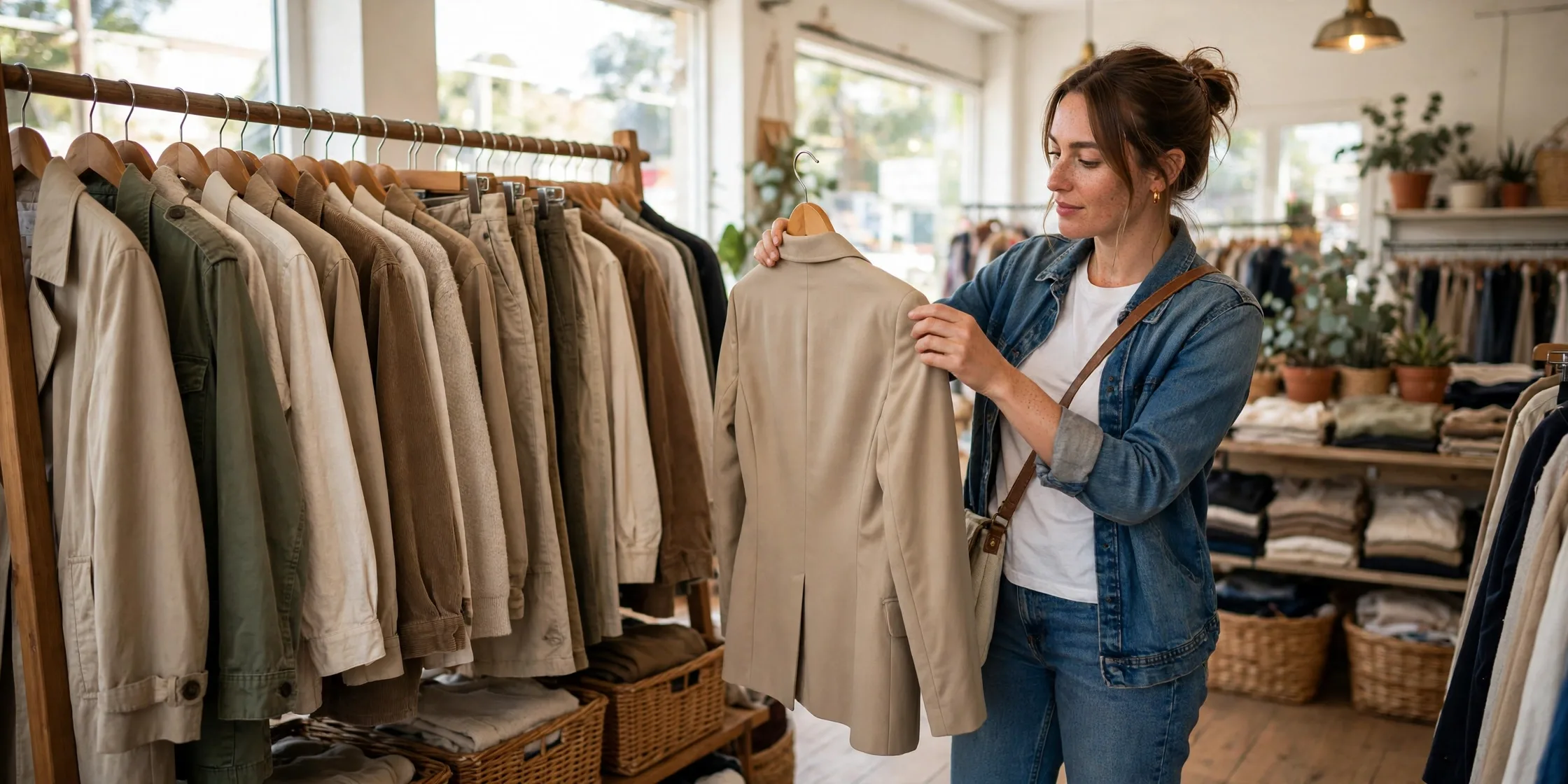
Buying clothes frugally and still looking good means spending less per outfit by planning each purchase, choosing pieces that mix and match, and judging quality by fabric and fit rather than by brand name or price tag, so a small wardrobe still gives many polished looks each week.
Frugal fashion is a buying method that gets the most outfits from the fewest dollars by planning purchases, buying secondhand or on sale, and checking cost per wear before paying full price. Frugal fashion is not the same as buying the cheapest item on the rack. A $5 shirt with a broken zipper costs more after repairs than a $12 shirt in perfect shape, so frugal buying means paying less for the same quality, not accepting poor quality to save a few dollars.
At Savvy Cash Flow, frugal living means small daily choices that add up, and clothing is one of the easiest places to start.
How Much Should You Spend on Clothes Each Month?
A single adult can spend $40 to $75 a month on clothes, a couple can spend $75 to $125 a month, and a family of four can spend $100 to $200 a month, with amounts adjusted for income, climate, and work dress codes.
| Household | Monthly budget | Annual total |
|---|---|---|
| Single adult | $40 to $75 | $480 to $900 |
| Couple | $75 to $125 | $900 to $1,500 |
| Family of four | $100 to $200 | $1,200 to $2,400 |
Many budgets give clothes 3 to 5 percent of take-home pay, so $4,000 of take-home pay gives clothes $120 to $200 a month. Pick the lower number when debt payoff or savings come first, and pick the higher number only when the closet has real gaps, such as a new job with a dress code.
More Frugal Living guides on this site cover food, home, and daily spending with the same plain-dollar method. For families, frugal living tips for families on one income show how one income covers clothes, food, and savings together.
The 30-day clothing reset
- Freeze all clothing purchases for 30 days.
- Write down every clothing item owned.
- Sort items into keep, repair, donate, or replace piles.
- Set a monthly amount from the table above.
- Buy only listed gaps after day 30.
How Do You Audit Your Closet Before You Buy Anything?
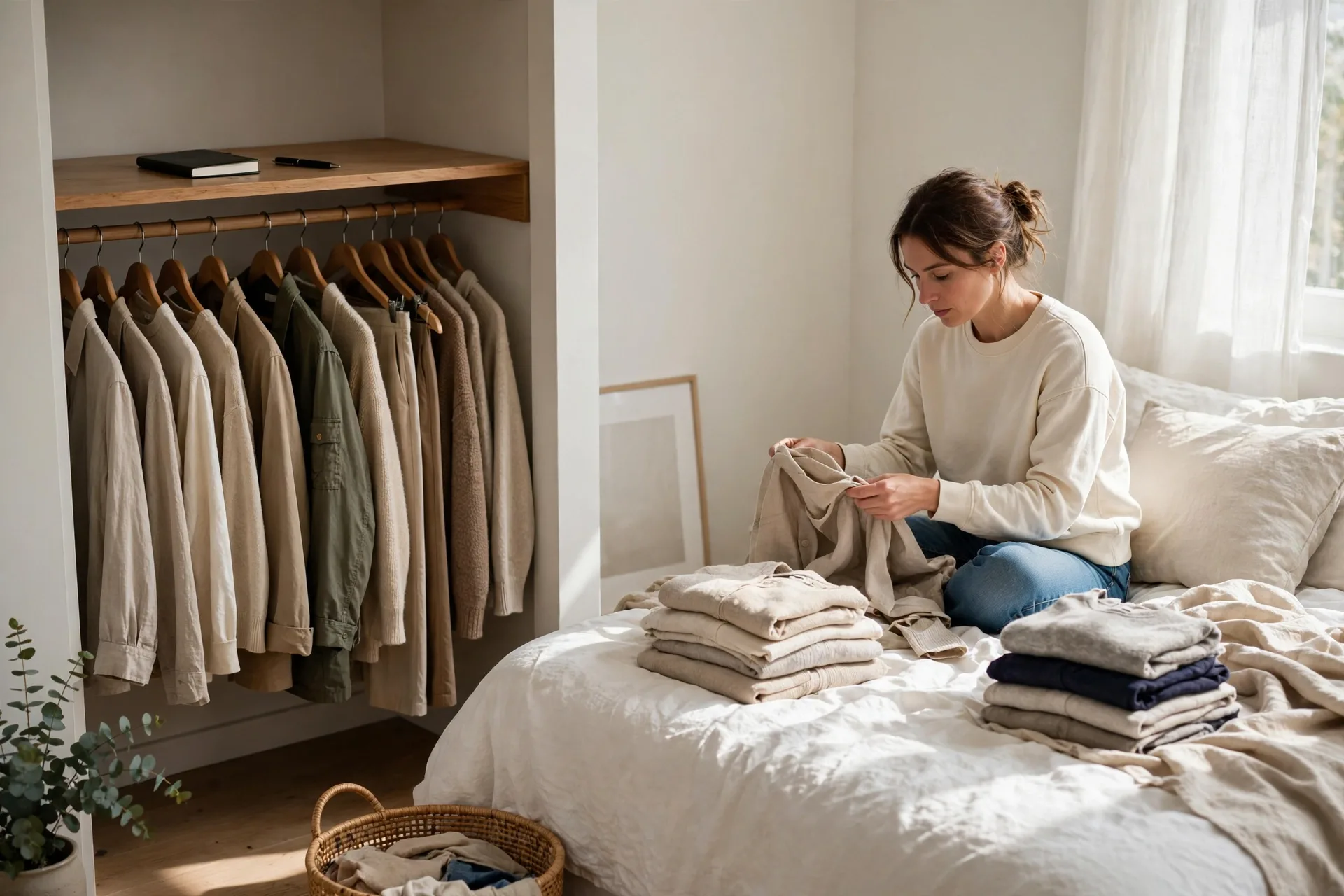
A closet audit is a 20-minute review that sorts every item into keep, repair, donate, or replace piles, lists the gaps, and stops new purchases until the list of gaps is complete, and gives a clear buy list so the next shopping trip buys only missing pieces in the right sizes and colors.
To audit a closet, follow these steps in order.
- Pull every item out of the closet and drawers.
- Try on each item and check fit, fabric, and condition.
- Sort items into keep, repair, donate, or replace piles.
- Count items by type and note duplicates.
- Write a gap list with sizes and colors.
- Photograph outfits that work.
During my own closet audit last spring, I found 11 tops with tags still on them and 3 pairs of jeans in the same wash. The audit stopped me from buying 4 more tops, and the gap list sent me to the thrift store for one black blazer.
Where Can You Buy Clothes Frugally?
Frugal shoppers buy clothes at thrift stores, resale apps, clearance racks, factory outlets, and clothing swaps, because each source sells quality pieces for 50 to 90 percent less than full retail price when the shopper checks fabric, fit, and condition before paying, and shops with a written list.
Thrift stores
Thrift stores sell donated clothing at low prices, and the best pieces hide among the racks. Shop on weekday mornings when new stock hits the floor.
Resale apps
Resale apps such as Poshmark, ThredUp, and Vinted let shoppers search by brand, size, and fabric. Savvy Cash Flow readers often start with resale apps because the search box beats hours of rack browsing.
Clearance racks and outlets
Clearance racks hold last-season pieces at 50 to 75 percent off. Check the fabric label on outlet pieces, since some outlet lines use thinner fabric than the main line. Buy clearance only when the piece sits on the gap list.
Clothing swaps
Clothing swaps trade good pieces with friends or community groups for free. Bring 5 clean pieces in good shape and take 5 pieces home.
Seasonal buying calendar
| Month | Best buys | Discount |
|---|---|---|
| January | Winter coats, holiday wear | 50 to 70 percent off |
| July | Summer clothes, swimwear | 40 to 60 percent off |
| November | Black Friday basics | 30 to 60 percent off |
Track prices in a phone note and buy at 50 percent off.
How Do You Thrift Clothes Like a Pro?
Thrifting like a pro means shopping with a written list, checking every seam, zipper, and fabric label, and rejecting any piece with stains, holes, or stretched fabric, even when the price looks tempting, because a $5 shirt with a broken zipper costs more after repairs than a $12 shirt in perfect shape.
Thrift stores sell donated used goods at low prices, and secondhand shopping keeps growing. Online second-hand shopping rose 23% from 2023 to 2024, with a projected $367 billion global market value in 2029, and 53% of British young adults began thrifting as a budget-friendly alternative during the UK cost of living crisis (Source: Wikipedia (2026)).
Thrift inspection checklist
- Check seams for loose threads.
- Test zippers and buttons.
- Hold fabric up to light for thin spots.
- Smell the garment for smoke or mildew.
- Read the fabric label for fiber content.
Reject rules
- Reject stains that survive a wash test.
- Reject holes in visible areas.
- Reject stretched collars or cuffs.
- Reject missing buttons with no spare.
- Reject warped zippers.
Search by fabric and measurement, not by size label alone. Try strings such as “wool blazer 38R”, “100% cotton shirt medium”, “leather shoes size 9”, and “linen dress size 8”. Ask the seller for flat measurements when the listing lacks them.
How Do You Build a Capsule Wardrobe on a Budget?
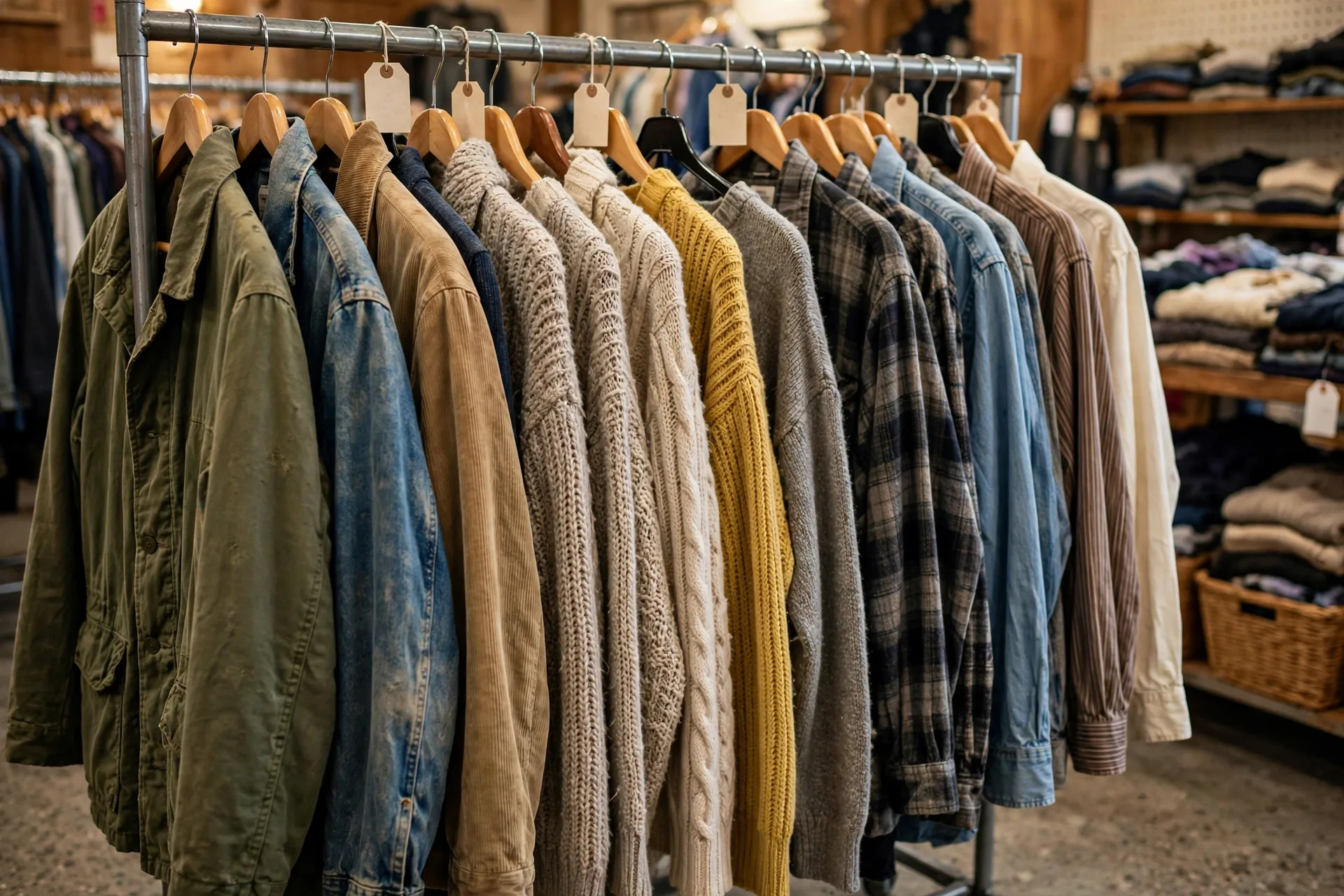
A budget capsule wardrobe is a set of 14 mix-and-match pieces in two neutral colors plus one accent color that creates more than 30 outfits, so one small wardrobe covers work, weekends, and evenings without new purchases for three months or longer.
The 14 pieces are: blazer, white tee, black tee, button shirt, knit sweater, dark jeans, black trousers, midi skirt, black dress, cardigan, flats, ankle boots, scarf, and coat.
Pick two neutrals first, such as black and gray, then add one accent color, such as rust or teal. Every top must pair with every bottom, and every layer must work over every top.
Outfit formulas
- Blazer plus white tee plus dark jeans plus flats equals a work-ready outfit.
- Knit sweater plus midi skirt plus boots equals a weekend outfit.
- Black dress plus scarf plus heels equals an evening outfit.
Try these frugal habits that save thousands a year to free more money for the pieces that matter.
Where Should You Spend and Where Should You Save?
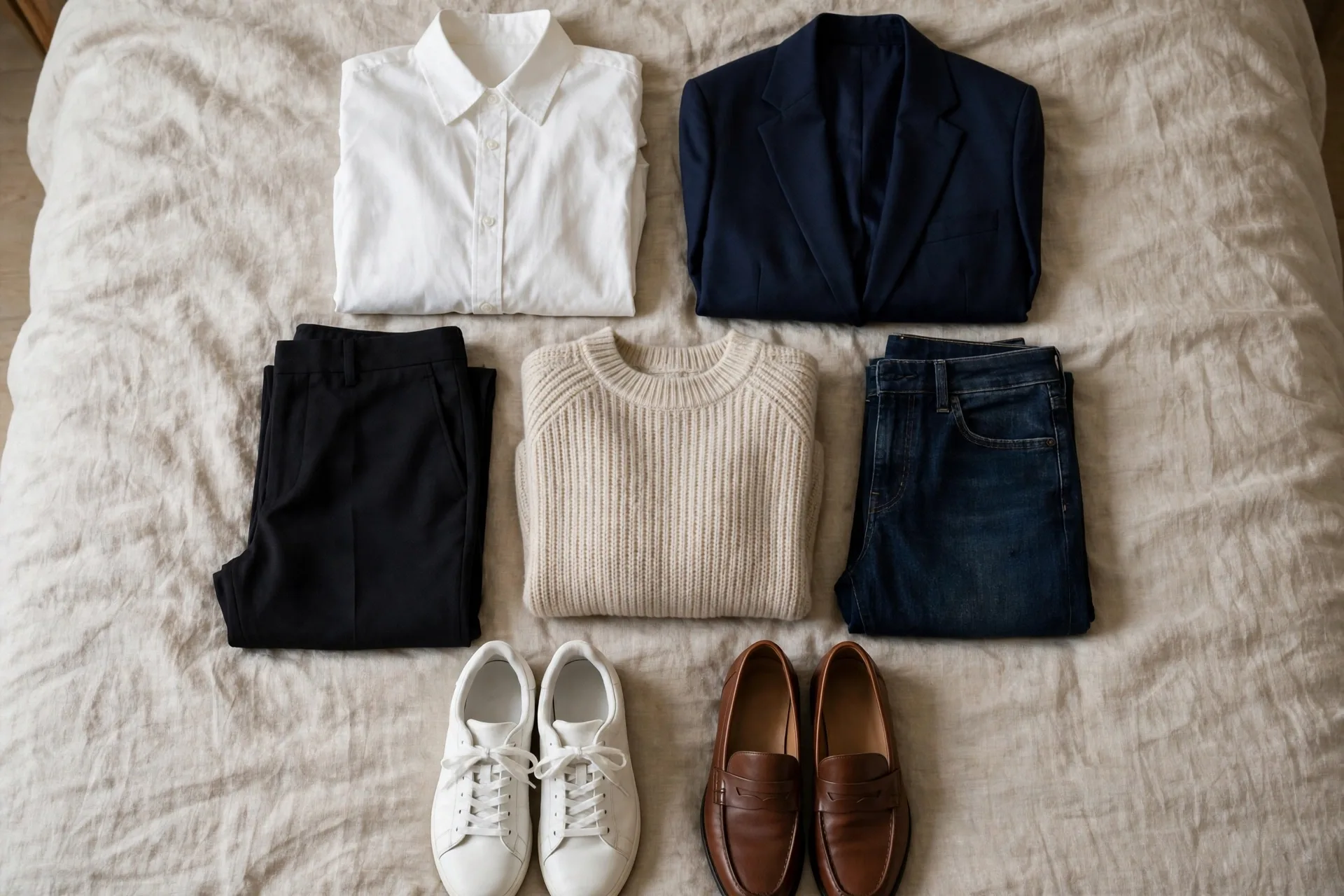
Frugal shoppers spend more on shoes, coats, and work trousers, and save on trend pieces, basic tees, and accessories, because shoes and coats carry daily wear and set the look of an outfit, while trend pieces change each season and cost little to replace when the trend ends.
| Item | Spend or save | Reason |
|---|---|---|
| Shoes | Spend | Daily wear, comfort, long life |
| Winter coat | Spend | Sets the look, lasts years |
| Work trousers | Spend | Fit and fabric show at work |
| Basic tees | Save | Easy to replace, low wear cost |
| Trend pieces | Save | Trends change each season |
| Accessories | Save | Small cost, big look change |
One good coat lifts every outfit under it. Save on trend pieces, since a $12 trend top dates just as fast as a $60 one. These choices fit frugal living tips that do not feel like sacrifice, because saving on trend pieces never means giving up style.
How Do You Make Cheap Clothes Look Expensive?
Cheap clothes look expensive when the fit is right, the fabric holds its shape, and the outfit uses one clean color palette with simple accessories, because fit and fabric signal quality more than a label does, and a $15 alteration often changes a $30 garment more than a $100 brand name changes it.
Fit checks for different body shapes
- Straight shape: add a belt to define the waist.
- Pear shape: choose A-line skirts and structured shoulders.
- Apple shape: choose V-necks and empire waists.
- Hourglass shape: choose wrap tops and fitted waists.
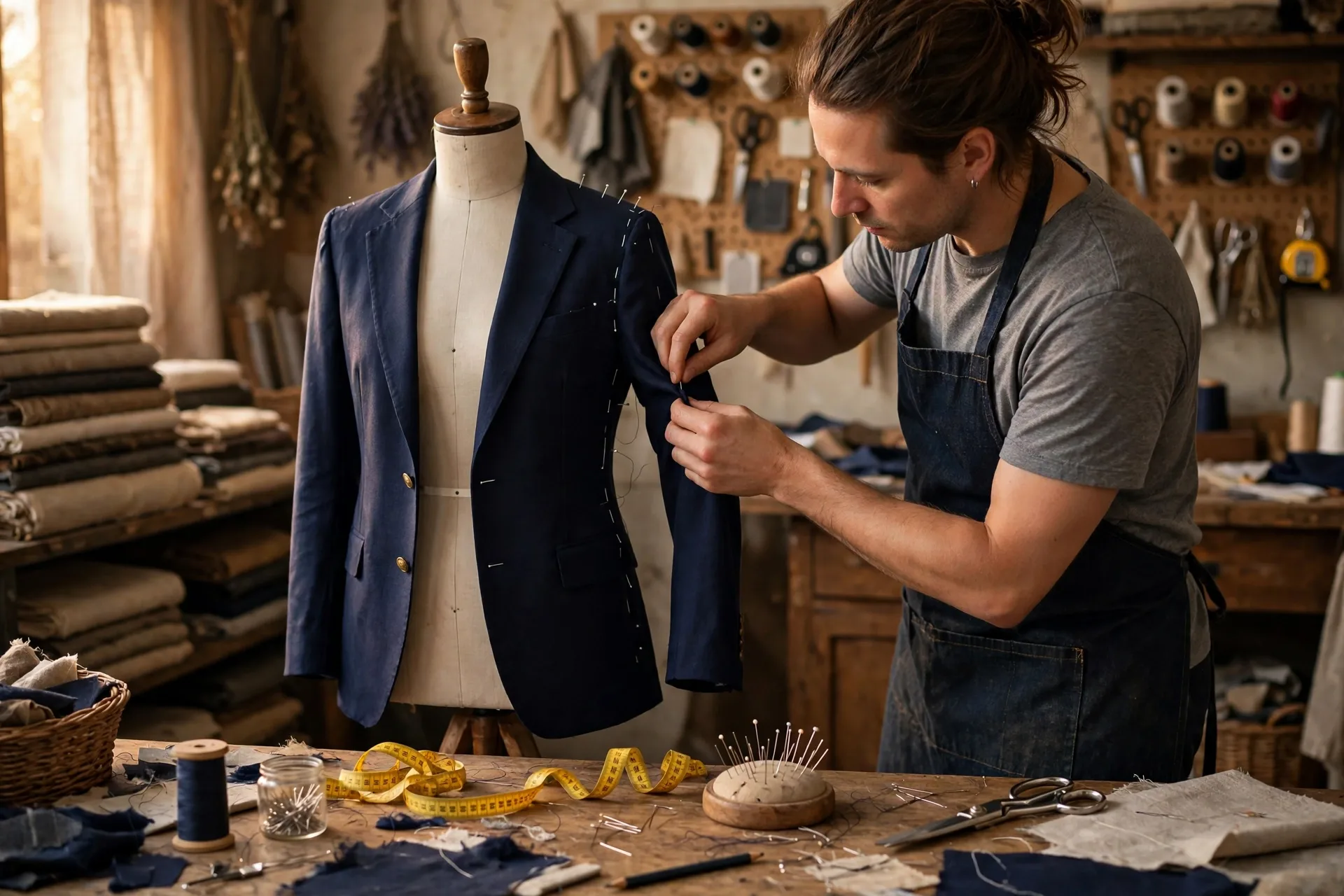
Fit beats brand every time. A $25 blazer that fits the shoulders beats a $150 blazer with drooping shoulders. Check the shoulder seam and sleeve length before buying.
Tailoring prices
| Alteration | Typical price |
|---|---|
| Hem trousers | $10 to $15 |
| Take in waist | $15 to $20 |
| Taper legs | $15 to $25 |
| Shorten sleeves | $12 to $18 |
Press each outfit before wearing it, and match metals: gold with gold, silver with silver.
What Is Cost Per Wear and How Do You Use It?
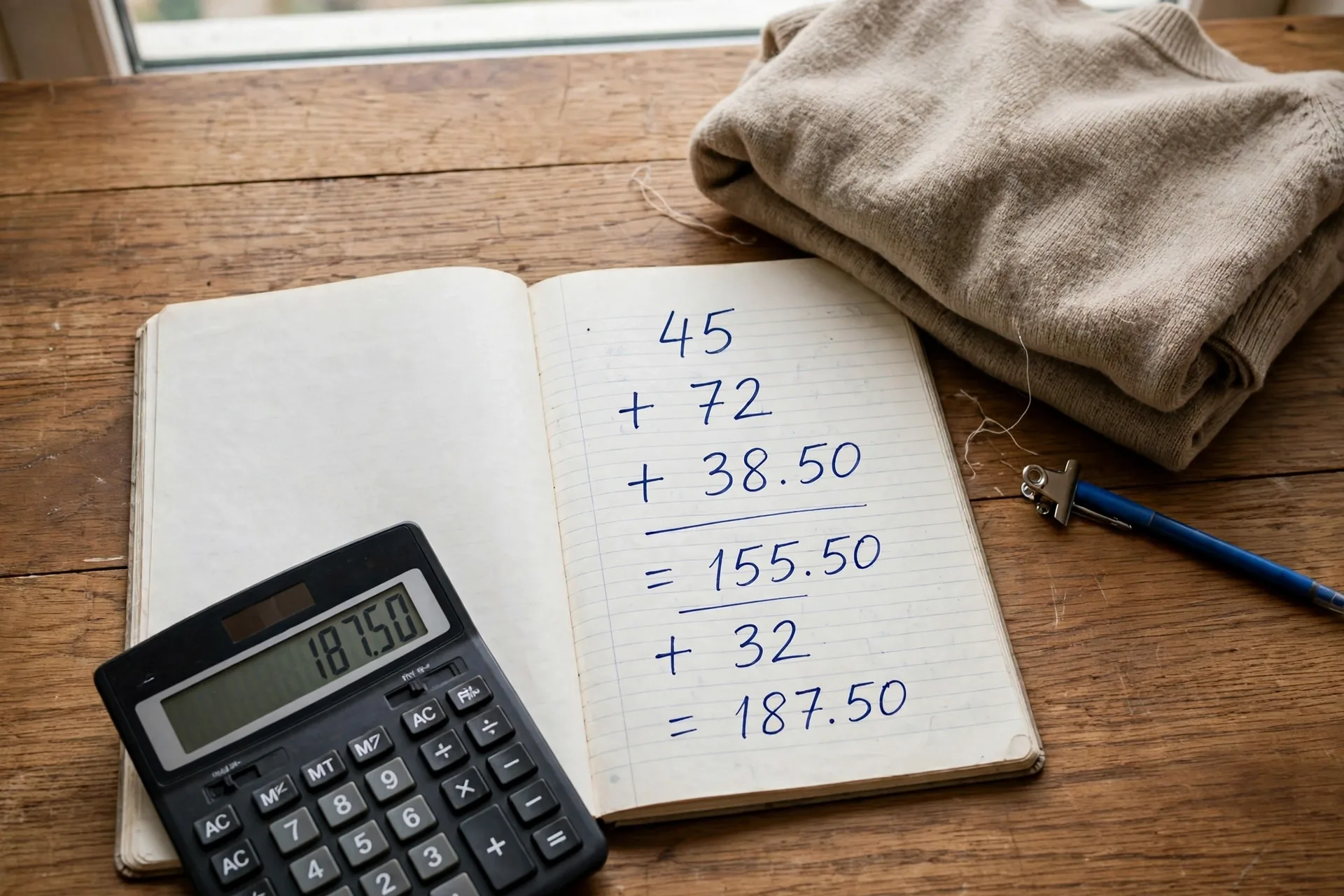
Cost per wear is a simple number that divides the price of a garment by the number of times it gets worn, and a lower cost per wear means a better buy even when the price tag is higher at checkout.
| Item | Price | Wears | Cost per wear |
|---|---|---|---|
| Coat | $60 | 60 | $1.00 |
| Jeans | $45 | 90 | $0.50 |
| Trend top | $20 | 2 | $10.00 |
| Work shoes | $70 | 140 | $0.50 |
To use cost per wear, divide the price by the planned wears before buying. Buy basics when cost per wear lands under $1, and skip trend pieces when it passes $5. Track wears with a phone tally for one month.
How Do You Dress Well for Work on a Small Budget?
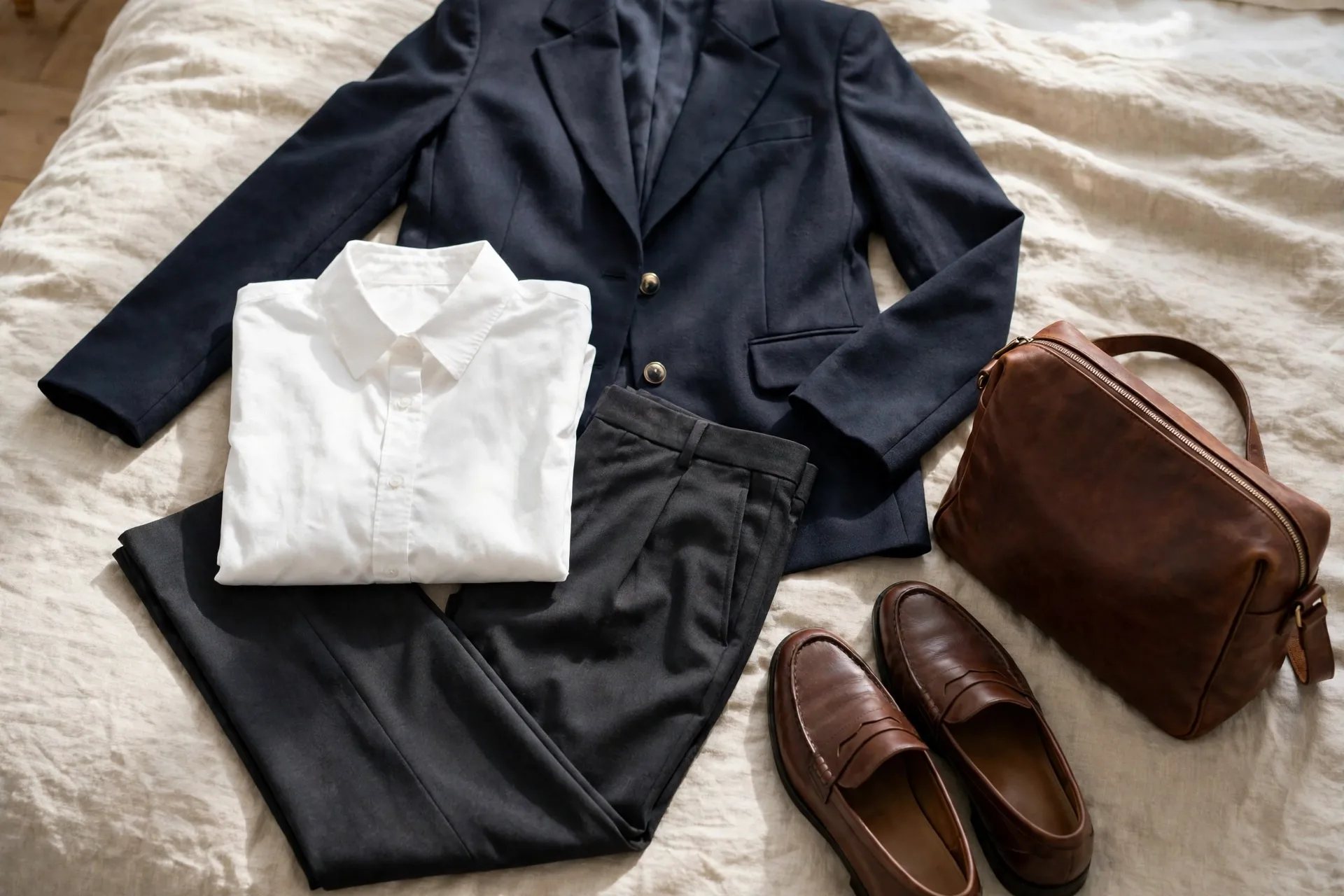
A polished work outfit costs less than $100 when the shopper buys a thrifted blazer for $15 to $25, fitted trousers for $20 to $30, a plain blouse for $10 to $15, and simple shoes for $20 to $30 in total.
| Item | Source | Price |
|---|---|---|
| Blazer | Thrift store | $15 to $25 |
| Trousers | Clearance rack | $20 to $30 |
| Blouse | Resale app | $10 to $15 |
| Shoes | Outlet | $20 to $30 |
| Total | $65 to $100 |
Build the outfit in neutral colors: black, navy, or gray. One blazer and two trousers cover five workdays. For an interview, add a pressed white shirt and clean shoes.
7 Mistakes That Waste Your Clothing Budget
The biggest clothing budget waste comes from buying sale items with no planned use, buying the wrong size, and buying duplicates of pieces already owned, because each mistake locks money into clothes that stay unworn, while a short written list and a 24-hour wait stop most of these buys.
- Buying sale items with no planned outfit in mind.
- Buying the wrong size and hoping it fits later.
- Buying duplicates of pieces already owned.
- Buying dry-clean-only clothes on a tight budget.
- Shopping without a list or a spending limit.
- Ignoring fabric labels and buying thin material.
- Keeping unworn clothes instead of reselling them.
Wait one full day before buying any item not on the list.
How Do You Care for Clothes So They Last Longer?
Clothes last longer when they are washed in cold water, air dried, folded or hung by type, and repaired at the first loose thread, because heat, rough drying, and small damage left alone shorten the life of fabric by months or years.
- Wash clothes in cold water on a gentle cycle.
- Air dry clothes on a rack or line.
- Fold knits and hang shirts and trousers.
- Repair loose threads and buttons at once.
- Store off-season clothes in clean, dry bins.
- Rotate shoes and let each pair rest a day.
Fix the loose hem the day it appears.
Frequently Asked Questions
How much should I spend on clothes each month?
Spend $40 to $75 a month as a single adult, $75 to $125 as a couple, and $100 to $200 as a family of four, then adjust for income, climate, and work dress codes. Track each purchase and roll unspent money forward.
Is thrifting really cheaper than buying new clothes?
Yes, thrifting is cheaper than buying new clothes when the shopper checks quality first, because thrift stores sell donated used goods at low prices and online second-hand shopping rose 23% from 2023 to 2024 (Source: Wikipedia (2026)). A $10 thrifted blazer in good shape beats a $40 new blazer in thin fabric.
How many clothes do I need for a capsule wardrobe?
Fourteen pieces cover needs: 2 bottoms, 4 tops, 2 layers, 1 dress or suit, 2 pairs of shoes, 2 accessories, and 1 coat, all in two neutral colors plus one accent color. This set creates more than 30 outfits for work, weekends, and evenings.
How can I make cheap clothes look expensive?
Make cheap clothes look expensive with good fit, a clean color palette, and simple accessories, because fit and fabric signal quality more than a label. Press each outfit before wearing it, keep shoes clean, and spend $10 to $20 on hems or waist adjustments.
What is cost per wear?
Cost per wear is the price of a garment divided by the number of times it gets worn, and a lower number means a better buy. A $60 coat worn 60 times costs $1 per wear, while a $20 top worn twice costs $10 per wear, so the coat is the better buy.
How do I build a work wardrobe on a small budget?
Build a work wardrobe on a small budget with one thrifted blazer, two trousers, three blouses, and one pair of shoes, all in black, navy, or gray, for less than $100 in total. Add one scarf or belt to change the look, and keep the palette narrow.
Conclusion
Learning how to buy clothes frugally and still look good comes down to five habits: set a monthly clothing budget, audit the closet, buy secondhand or on clearance, build a capsule wardrobe, and judge each item by cost per wear. Fit, fabric, and a clear color palette do the work that a high price tag cannot do. Start with the 30-day reset and buy only the missing pieces. More money guides from Savvy Cash Flow help each dollar stretch further, and a small wardrobe that fits well beats a full closet of clothes that never get worn.