


If you are juggling four debts, four due dates, and four interest rates, you know how exhausting debt can feel. This guide to debt consolidation for beginners explains the idea in plain language, so you can decide whether combining your debts into one payment will actually save you money, or just make your bills look tidier.
Debt consolidation for beginners starts with one simple idea: instead of paying several debts separately, you take out one new loan or payment plan to pay them off, then you repay that single debt. You still owe the money, but you deal with one monthly payment, one interest rate, and one due date.
Key Takeaways
- Debt consolidation combines several debts into one monthly payment, usually through a personal loan, a balance transfer card, or a debt management plan.
- It helps most when the new rate is clearly lower than your current rates and the payment fits your budget comfortably.
- It does not erase debt, and it can backfire if you run up the old credit cards again after consolidating.
- A balance transfer card works best for smaller balances you can repay during the 0% intro period, usually 12 to 21 months.
- A debt management plan through a nonprofit credit counselor can lower rates without a new loan, but it usually takes 3 to 5 years.
- Before you consolidate, list every debt, compare the total cost, and keep a small $500 to $1,000 emergency cushion in place.

What Is Debt Consolidation?
Short answer: Debt consolidation is a strategy that rolls multiple debts into a single new debt with one monthly payment. You use the new loan, card, or plan to pay off your old balances, then you focus on repaying just the new account until it reaches zero.
Say you owe $4,000 on a credit card at 24%, $2,500 on a store card at 27%, and $3,500 on a personal loan at 14%. That is $10,000 across three accounts, with three minimums and three due dates. With consolidation, you might borrow $10,000 at 11% and pay off all three. Now you have one $10,000 loan at 11% and one payment to track.
That change can lower your interest bill, simplify your budget, and give you a clear finish date. It does not reduce what you owe on day one. If the new rate is not lower, or the payment stretches for many extra years, consolidation can cost you more, even though it feels simpler.
How Does Debt Consolidation Work?
Short answer: You list every debt, apply for one consolidation option, use that money to pay off the old debts in full, then repay the new debt on a fixed schedule while keeping the old accounts at zero.
Here is a real-numbers example. Imagine $12,000 in credit card debt at an average rate of 23%, with combined minimums of about $300 a month. Paying only minimums could take more than 15 years and cost over $10,000 in interest.
Now imagine a debt consolidation loan of $12,000 at 12% for 4 years. Your payment would be about $316 a month, and total interest would be roughly $3,170. Same debt, similar monthly payment, but you finish in 4 years instead of 15, and you save thousands in interest. That is the math that makes consolidation worth considering.
What Are the 4 Main Types of Debt Consolidation?
Short answer: The four main options are a personal loan, a balance transfer credit card, a home equity loan or line of credit, and a debt management plan. A personal loan is the most common beginner-friendly choice, while a balance transfer suits smaller balances.
1. Debt consolidation loan
A debt consolidation loan is a fixed-rate personal loan used to pay off other debts. You borrow a lump sum, repay the old debts, then repay the loan in equal monthly payments over 2 to 5 years. Rates in 2026 typically range from about 8% for strong credit to 20% or more for weaker credit, plus a possible origination fee of 1% to 8%.

2. Balance transfer credit card
A balance transfer card lets you move balances onto a new card with a 0% intro APR, usually for 12 to 21 months. You pay a transfer fee, typically 3% to 5%. Moving $6,000 costs $180 to $300 in fees, but it can save over $700 in interest if you repay it during the intro period. After that period, the rate often jumps to 22% or more, so have a payoff plan first.

3. Home equity loan or HELOC
A home equity loan or line of credit uses your home as collateral, which often means a lower rate. The risk is serious: if you cannot repay, you could lose your home. For most beginners, avoid this unless you have stable income and a strict plan.
4. Debt management plan
A debt management plan is arranged through a nonprofit credit counseling agency. The agency negotiates lower rates with your creditors, you make one monthly payment to the agency, and it pays your creditors for you. Plans usually last 3 to 5 years and charge a setup fee plus a monthly fee, often $25 to $75.

What Are the Pros and Cons of Debt Consolidation?
Short answer: The biggest pros are one payment, a potentially lower rate, and a fixed finish date. The biggest cons are fees, the risk of a longer loan term, and the temptation to run up the old cards again.
Pros: one payment and one due date, which means fewer missed payments; a lower rate that can save hundreds or thousands; a fixed term that gives you a real debt-free date; and lower credit utilization after payoff, which can help your score over time.
Cons: origination, transfer, or monthly plan fees add cost; a longer term can mean more total interest, even at a lower rate; you need decent credit to get a good rate; and the biggest risk is behavioral, because if you keep spending on the old cards, you end up with the new loan plus new card debt.
When Does Debt Consolidation Make Sense, and When Does It Not?
Short answer: Consolidation makes sense when your new rate is at least a few points lower, the payment fits your budget with room to spare, and you can commit to zero new card debt. It does not make sense when the rate is barely lower, the term is much longer, or you cannot afford the payment.
It makes sense if your card rates are 20% or more and you qualify for a loan at 12% or less, your total debt is repayable within 5 years, and you have steady income. It does not make sense if the new rate is only 1 or 2 points lower and fees eat the saving, if you would need 7 years to repay what a focused plan could clear in 4, or if you are already missing minimum payments and need hardship help instead.
If you are struggling to afford minimums, call creditors about hardship programs first, or speak with a nonprofit credit counselor. Our guide to paying off debt on a low income walks through that order, and our debt snowball vs debt avalanche comparison shows how a focused payoff order can beat consolidation for some households.
How to Choose the Right Option in 5 Steps
Short answer: List your debts, check your credit, get quotes for at least two options, compare total cost (not just the monthly payment), confirm the payment fits your budget, then automate it and keep the old cards at zero.
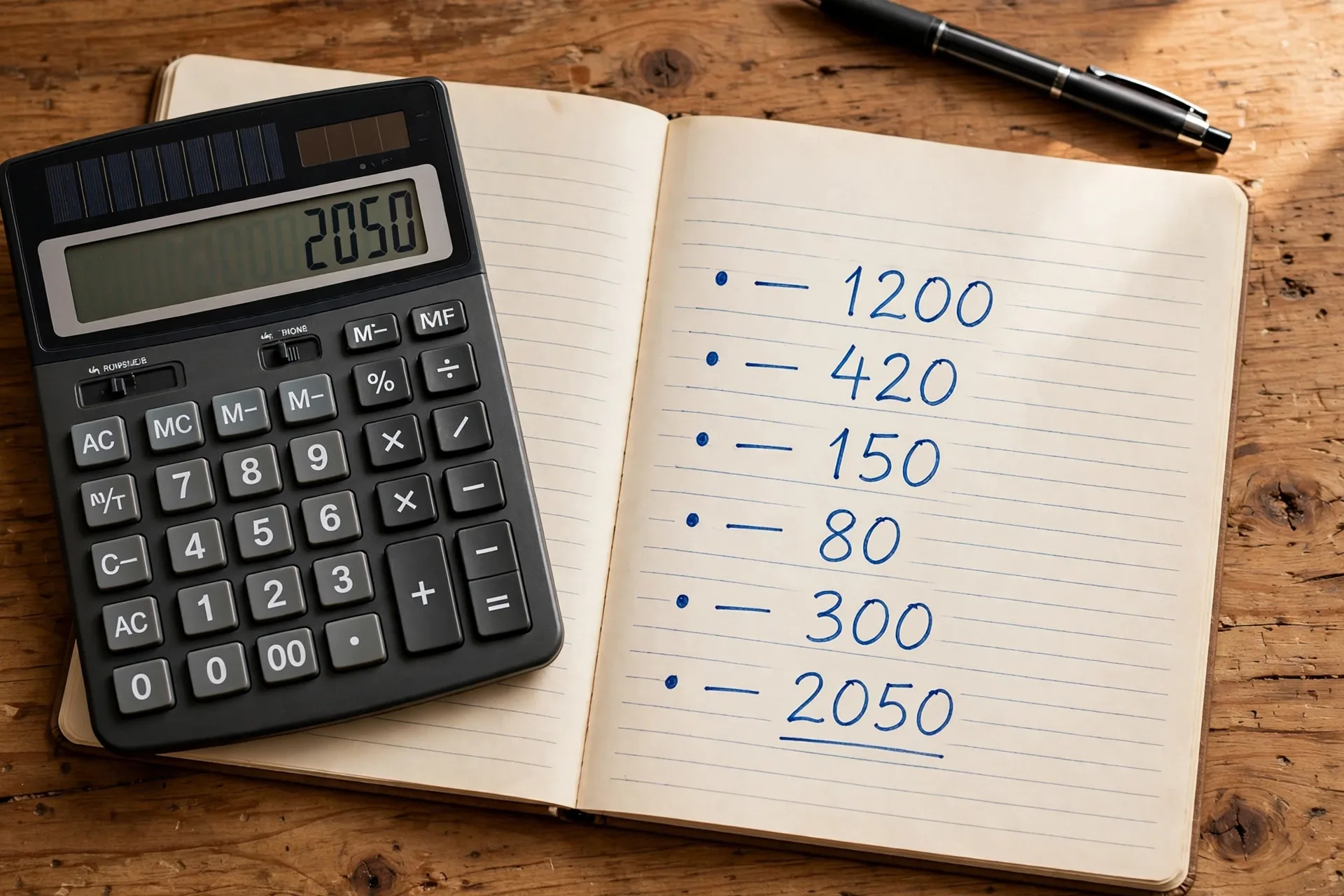
Step 1: List every debt with its balance, APR, minimum, and due date, then total them. Most people underestimate their total by 15% to 20%, so use statements, not memory. Step 2: Check your credit score. A score of 670 or higher usually unlocks the best loan rates.
Step 3: Compare at least two options on four numbers: rate, fees, monthly payment, and total interest over the full term. A $300 payment for 7 years can cost more than a $380 payment for 4 years. Step 4: Test the payment in your budget as a non-negotiable bill, and keep a starter cushion first: how to build an emergency fund from scratch shows why $500 to $1,000 set aside stops the next surprise from landing back on a card.
Step 5: Pay off the old debts in full, confirm zero balances in writing, then automate the new payment for payday. Update balances monthly and watch the total fall. A 12-month credit card payoff plan mindset helps here too: a fixed payment, a fixed finish line, and no new charges while you work through it.

How Much Does Debt Consolidation Cost?
Short answer: Costs depend on the option: personal loans may charge a 1% to 8% origination fee, balance transfers charge 3% to 5%, and debt management plans charge a setup fee plus $25 to $75 a month. Always add fees to interest to find the true total cost.
| Option | Typical cost | Best for |
|---|---|---|
| Personal loan | 8% to 20% APR, plus 1% to 8% fee | $5,000 to $20,000, repaid in 2 to 5 years |
| Balance transfer card | 0% for 12 to 21 months, then 22% or more, plus 3% to 5% fee | Smaller balances cleared during the intro period |
| Debt management plan | Lower negotiated rates, plus $25 to $75 monthly fee | Weak credit, need structure, 3 to 5 year horizon |
| Home equity loan | Lower rate, but your home is collateral | Only with stable income and a strict plan |
If the total cost of the new debt is not clearly lower than staying put, consolidation is not saving you money, it is just reorganizing it.
Frequently Asked Questions
Does debt consolidation hurt your credit score?
It can dip briefly, because an application triggers a hard inquiry and a new account lowers your average account age. Over time, on-time payments and lower utilization usually raise your score. Keep old card accounts open after payoff to protect your history, just do not use them.
Is debt consolidation the same as debt settlement?
No. Consolidation repays your debts in full through one new payment. Debt settlement asks creditors to accept less than you owe, usually after you stop paying, which severely damages your credit and can create a tax bill on forgiven debt. Avoid settlement companies that charge large upfront fees.
How long does debt consolidation take?
A balance transfer plan should finish within the 0% period, usually 12 to 21 months. A personal loan usually takes 2 to 5 years. A debt management plan usually takes 3 to 5 years. Pick the shortest term whose payment you can afford comfortably every month.
Can I consolidate debt with a low credit score?
Yes, but options narrow. A debt management plan does not require a new loan, so it is often the best route below a 670 score. A high-rate personal loan that barely beats your card rates is rarely worth it. Improving your score by a few dozen points first can unlock a much better rate.
What is the biggest mistake beginners make with debt consolidation?
The biggest mistake is consolidating and then running the old cards back up. That leaves you with the new loan plus fresh card debt, which is worse than where you started. The fix is simple: zero new card charges until the consolidation debt is fully paid off.
The Bottom Line
Debt consolidation for beginners is not magic, it is a tool. Used well, it turns several high-rate payments into one lower-rate payment with a clear finish date, and it can save you thousands in interest. Used carelessly, it stretches debt out, adds fees, and tempts you back into spending.
Your first move this week is small: list every debt with its balance, rate, and minimum, then get one loan quote and one balance transfer offer and compare total costs, not just monthly payments. If the new deal is clearly cheaper and the payment fits your budget, consolidate, automate it, and keep the old cards at zero. A year from now, that single payment could be the reason your debt list is finally shrinking instead of spinning.
This article is for general information only and is not financial advice. Your situation may differ, so consider speaking with a nonprofit credit counselor or qualified professional for personalized guidance.
[…] if you keep the old cards open at zero and do not run them up again. Read our beginner guide to debt consolidation explained to compare loan, balance transfer, and debt management options before you choose. Either way, keep […]