
Last updated: October 2026
Written by Emma for Savvy Cash Flow.
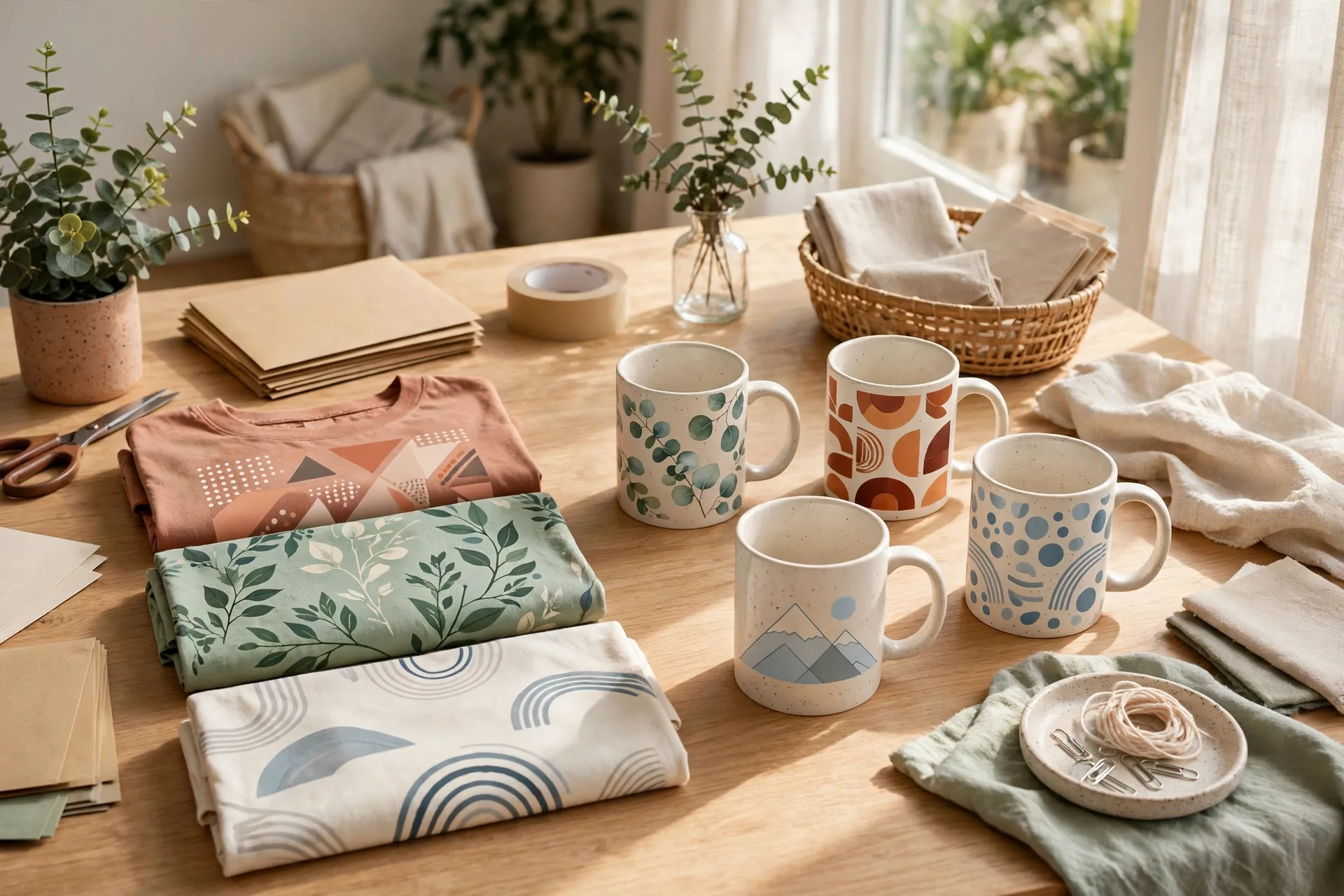
Print on Demand for Beginners means you can sell custom shirts, mugs, and wall art online without buying stock in advance. A buyer orders a design, a printing partner prints one item, and the partner ships that item to the buyer. You focus on designs, listings, and buyers, while the partner handles printing, packing, and shipping.
This guide explains what print on demand means, how profit per sale works, and how to pick a niche with real buyer demand. It compares marketplaces with an own store, shows design steps for people with no design training, and sets out pricing and listing steps. It closes with a 30-day first-sale plan, 5 mistakes that slow first sales, and answers in the Frequently Asked Questions (FAQ) section, and a short closing checklist.
Key Takeaways
- Price from sale price minus base cost and fees, with real numbers before you list.
- Validate a niche with marketplace search before you spend time on designs.
- Start on a marketplace for built-in buyers, or use an own store for control.
- Check phrases and images for trademark and copyright risk before you publish.
- Publish on a steady schedule, then track views and sales for 30 days.
Table of Contents
- What Is Print on Demand for Beginners?
- How Much Money Can Print on Demand for Beginners Make?
- How to Pick a Print on Demand Niche That Sells
- Marketplace or Your Own Store: Which Route Fits Beginners?
- How to Create Print on Demand Designs Without Design Skills
- How to Price Print on Demand Products for Profit
- How to List Products So Buyers Find Them
- Your 30-Day Plan to Your First Print on Demand Sales
- 5 Print on Demand Mistakes That Delay First Sales
- FAQs
- Conclusion
What Is Print on Demand for Beginners?
Print on Demand (POD) is a retail model that prints a custom product only after a buyer places an order and ships that product directly to the buyer. The seller holds no stock, pays no printing cost before a sale, and lets a printing partner handle production and delivery.
Print on demand starts with a design. You place the design on a product mockup, list the product, and set a sale price. When a buyer orders, the printing partner prints one unit, packs the unit, and ships the unit to the buyer. You keep the sale price minus base cost and fees.
A print on demand business can sell shirts, mugs, hoodies, tote bags, posters, and phone cases, each with a separate listing and a clear mockup. The how print on demand works link describes the same order, print, and ship sequence. Savvy Cash Flow focuses on side hustles with low cash outlay, and print on demand fits that test.
How Much Money Can Print on Demand for Beginners Make?
Print on demand for beginners can earn a small profit per sale at first, and total profit depends on profit per sale times the number of sales in a month. A shirt that leaves $8.29 after costs needs 61 sales to reach $500 in profit, so listing count and buyer traffic matter more than one high price.
Profit per sale equals sale price minus base cost, platform fees, and payment fees.
The table below shows worked examples only. The numbers are not market averages, and real fees vary by platform, product, and location.
| Product | Sale price | Base cost plus fees | Profit per sale |
|---|---|---|---|
| T-shirt | $24.99 | $16.70 | $8.29 |
| Mug | $16.99 | $10.40 | $6.59 |
| Hoodie | $44.99 | $29.10 | $15.89 |
Divide a profit target by profit per sale to find the sales count you need: $500 at $8.29 per shirt needs 61 sales. You can compare this model with other Make Money Online category ideas before you commit cash to one route.
How to Pick a Print on Demand Niche That Sells
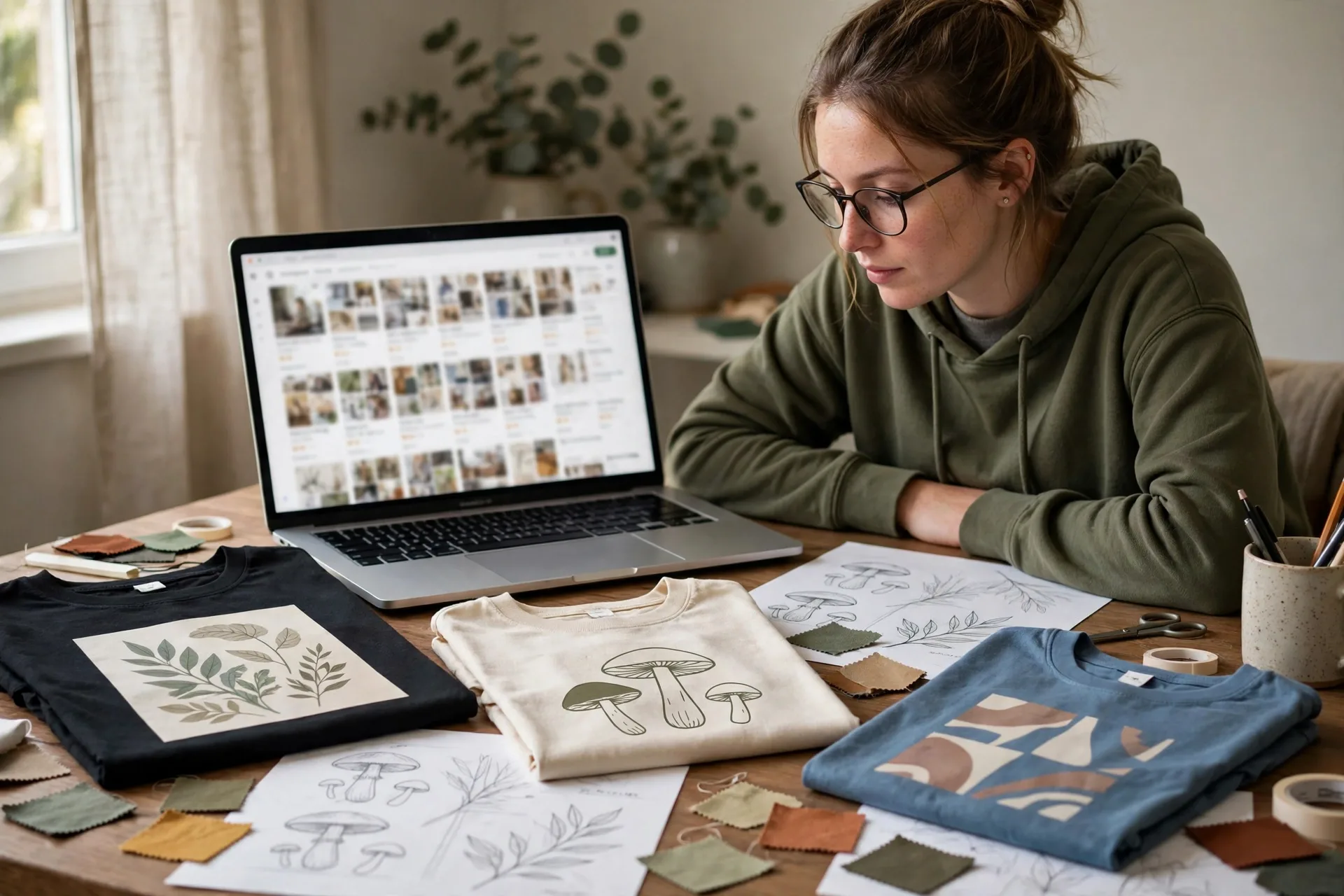
Print on demand niche research works when you pick a narrow buyer group, check live marketplace search results for demand, and confirm that buyers already buy similar designs before you create new art. A narrow group gives your listings a clear buyer, a clear message, and less direct competition than a broad topic.
A print on demand niche is a narrow buyer group with a shared interest, job, hobby, or life event, such as night shift nurses or new homeowners. A broad topic such as funny shirts gives buyers no clear reason to pick your listing.
Validate a niche in 30 minutes: search the niche phrase, open the top 20 listings, note prices and review counts, read reviews for buyer requests, and list 10 design ideas that answer those requests. Steady reviews and clear buyer requests pass a first demand test.
If you want a low-cost start outside print on demand, read 10 Business Ideas You Can Start With $1,000 and compare cash needs before you pick a niche. Pick one niche for your first 30 listings, to reuse research, fonts, and buyer words across listings.
Marketplace or Your Own Store: Which Route Fits Beginners?
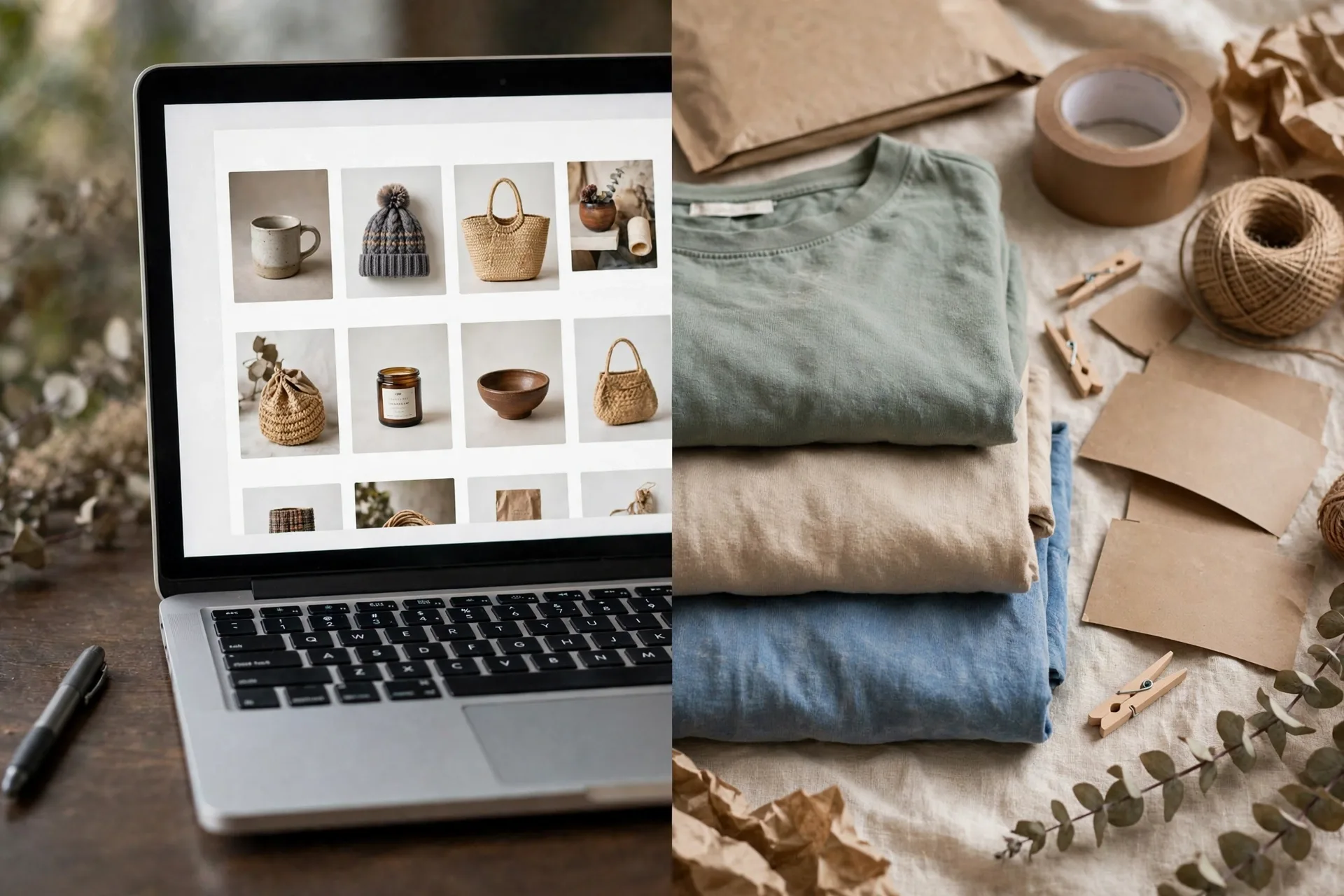
Beginners get faster buyer traffic on a marketplace, while an own store gives more control over branding, pricing, and buyer data, so the best first route depends on whether you need traffic or control more at the start. Most beginners start on a marketplace, learn what sells, and add an own store later.
A marketplace route lists products where buyers already search for gifts and custom goods, and Redbubble and Etsy give beginners built-in traffic and buyer trust. An own store route uses Shopify with Printful or Printify, and the seller must bring buyer traffic.
| Feature | Marketplace route | Own store route |
|---|---|---|
| Buyer traffic | Built-in marketplace search | Seller must bring traffic |
| Setup effort | Low, list and sell | Higher, build store pages |
| Fees | Listing and sale fees vary by platform | Plan plus printing costs vary |
| Branding control | Limited shop branding | Full branding and store design |
| Best for beginners | Faster first views | More control after first sales |
A marketplace route suits a beginner who wants first views with no store build. An own store route suits a beginner with an audience or a need for full control. Check current fee and plan pages before you pick a route.
How to Create Print on Demand Designs Without Design Skills
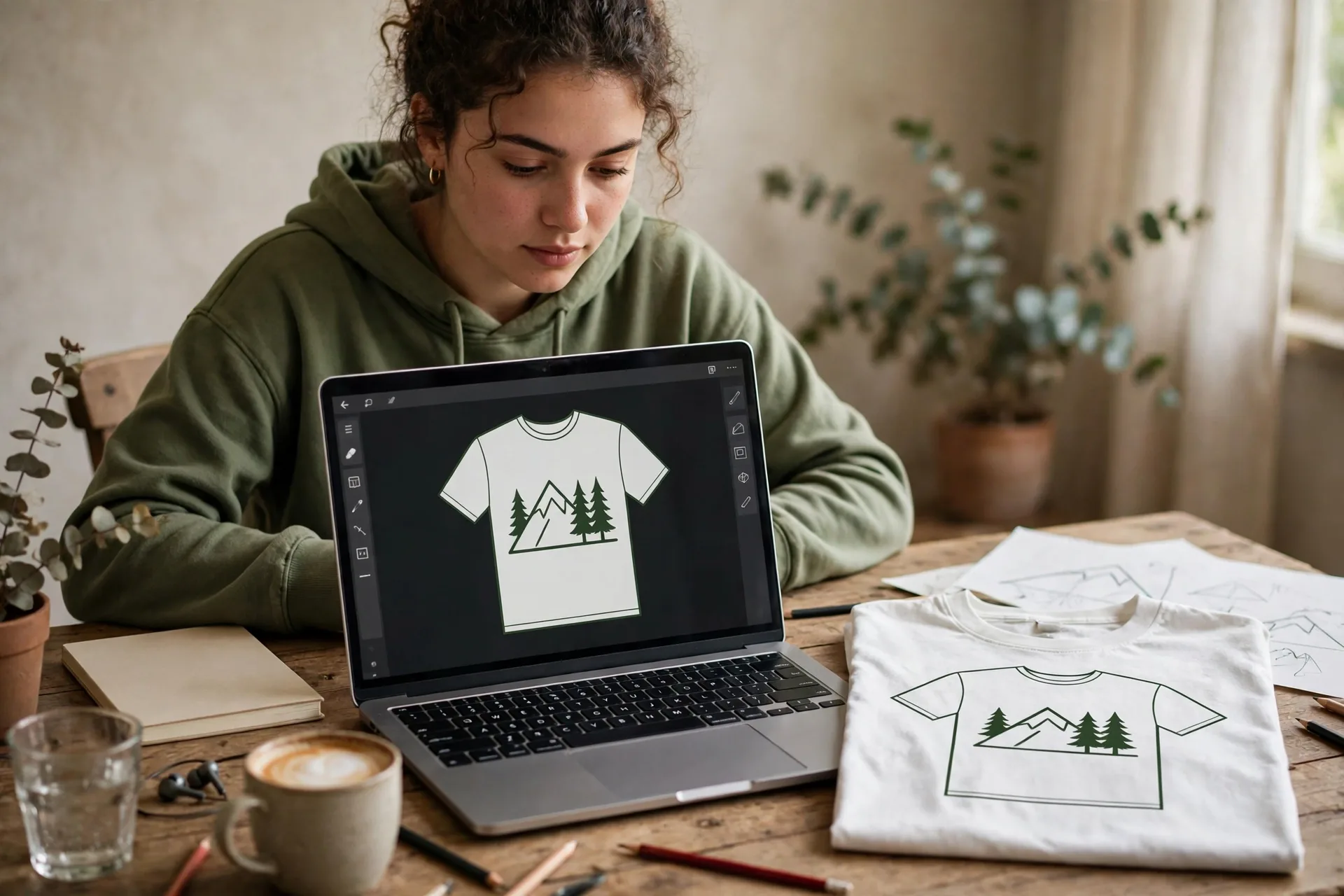
Print on demand designs for beginners start with simple text, clear shapes, and one clear idea per product, because buyers read a design in seconds and buy the message before they study fine detail. You can build that kind of design with free design tools, clean fonts, and a test print before you list.
To create a design, follow 6 steps: pick one message for one buyer group, pick 2 fonts at most, use high contrast, keep text under 8 words, export a large transparent file, and order a sample before you list.
I ordered one sample shirt before listing a design, and the print colors looked darker on cotton than on screen, so I lightened the art before I listed the shirt.
Check trademark and copyright risk before you publish: search the exact phrase in a trademark database, avoid brand logos, celebrity names, song lyrics, and book quotes, and use only art you made or art with a clear license.
How to Price Print on Demand Products for Profit
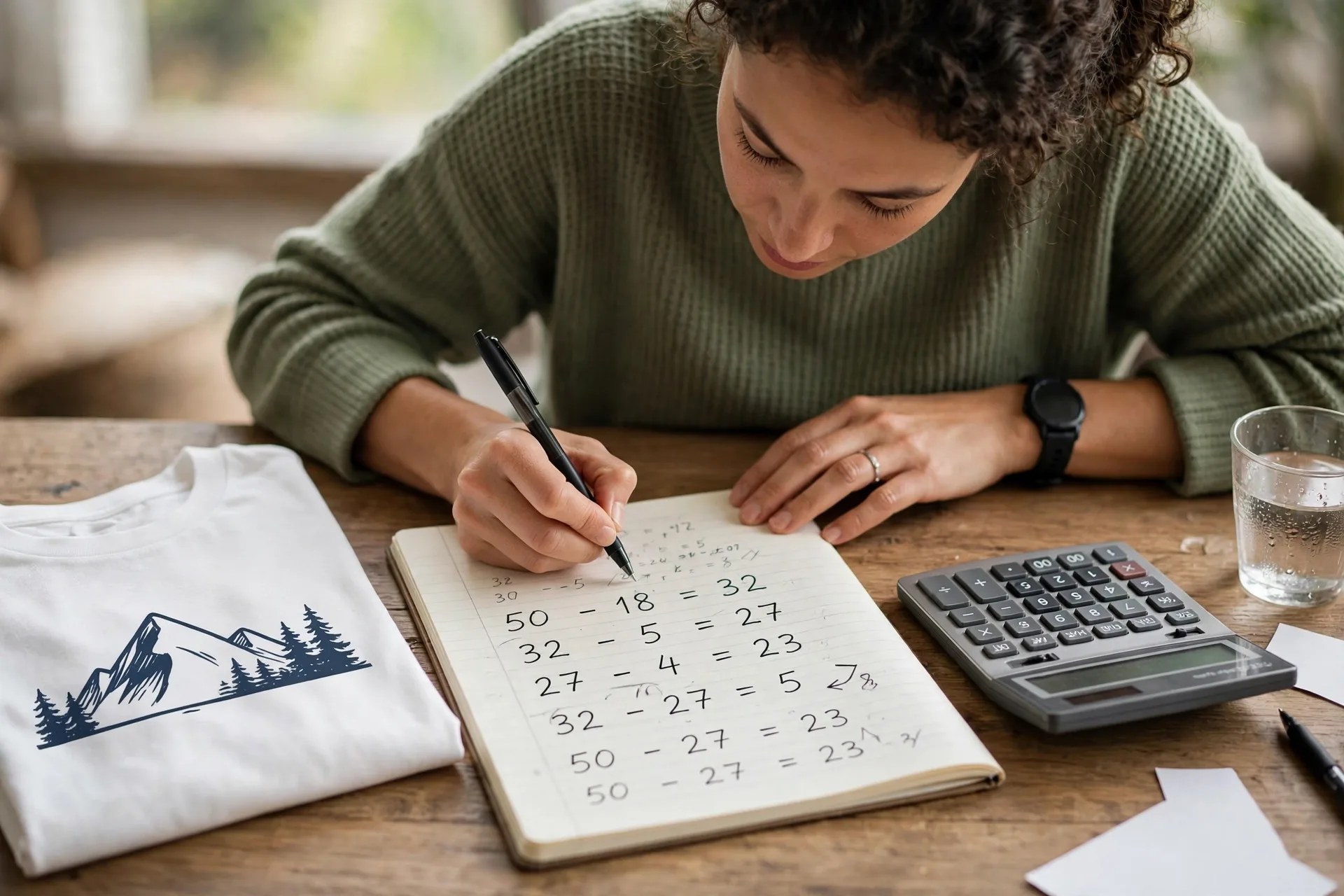
Print on demand pricing works when sale price covers base cost, platform fees, payment fees, and tax handling, and still leaves a profit margin you can state as a dollar amount per sale. Set the price from costs first, then check rival listings, and never set a price from a rival price alone.
Sellers who ask how to price print on demand shirts can use this formula: base cost plus fees plus target profit equals a base sale price. A worked example uses $13.50 in base cost, $3.20 in fees, and $8.00 in target profit, for a $24.70 sum and a $24.99 rounded price that leaves $8.29 in profit.
To price a product, follow 5 steps: add base cost and all fees, add a target profit in dollars, add a small buffer for discounts and returns, round the total to a clean sale price, and recheck profit after rounding. Review prices each month, because costs and fees change over time.
Read How to Start a Freelancing Business From Zero to compare another low-cost income route.
How to List Products So Buyers Find Them
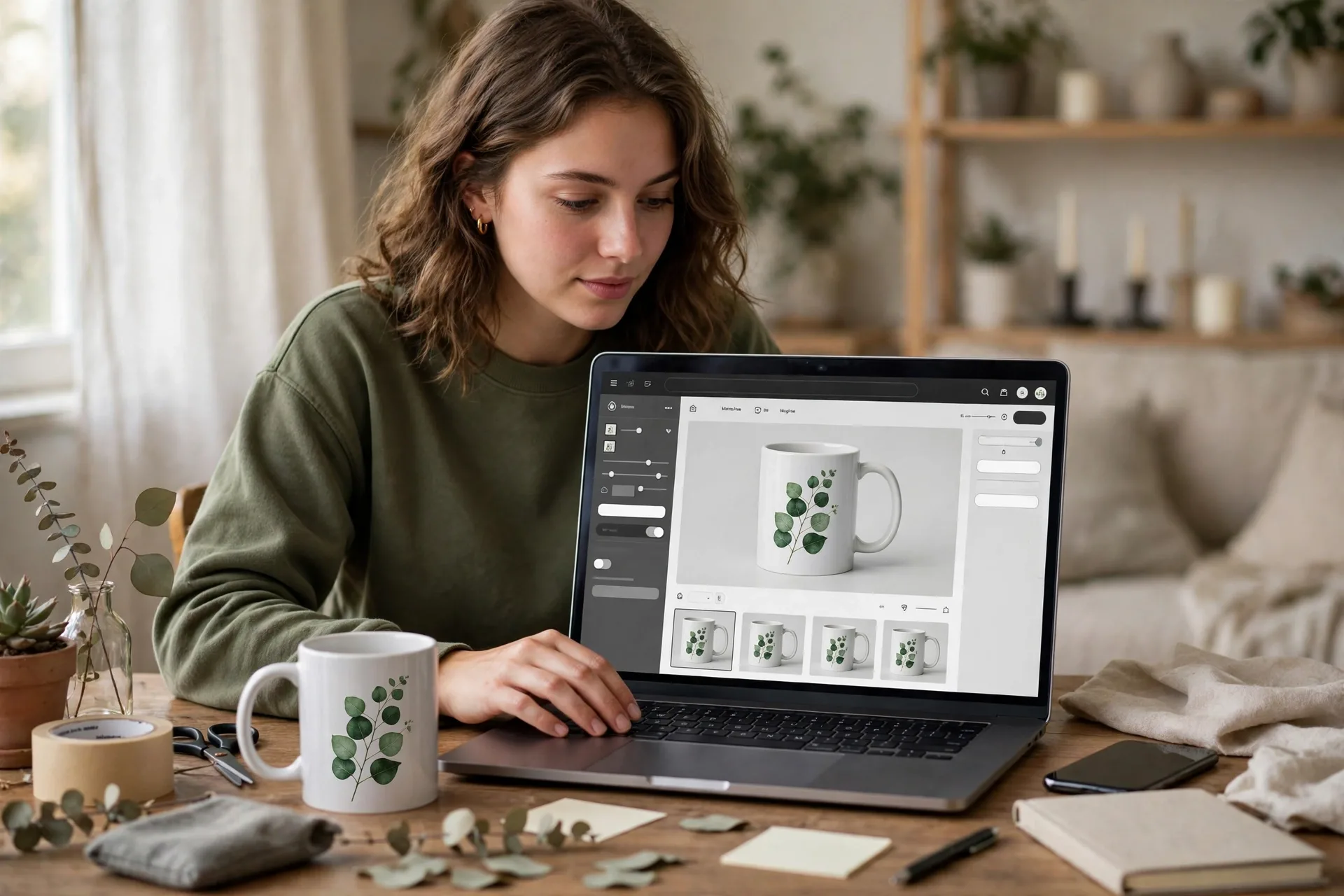
Search Engine Optimization (SEO) for print on demand listings means writing titles, tags, and descriptions with the exact words buyers type in marketplace search, so the marketplace can match a listing to a buyer search query. A clear title, relevant tags, and a plain description give more search matches than a clever title that no buyer searches for.
A print on demand Etsy shop needs a title that states design theme, product, and buyer or occasion in plain words, such as “Funny Nurse T-Shirt for Night Shift Nurses”. Tags must repeat buyer words from the title and add occasion, gift, and job words that buyers type.
To write a listing, follow 5 steps: write a title with theme, product, and buyer, add tags with buyer search words, write a first description line with the main benefit, list sizes and care steps, and add a clear mockup photo for each color. Savvy Cash Flow covers listing and pricing guides for side hustles, and the same title rule applies to each new product. Check spelling in titles and tags.
Your 30-Day Plan to Your First Print on Demand Sales
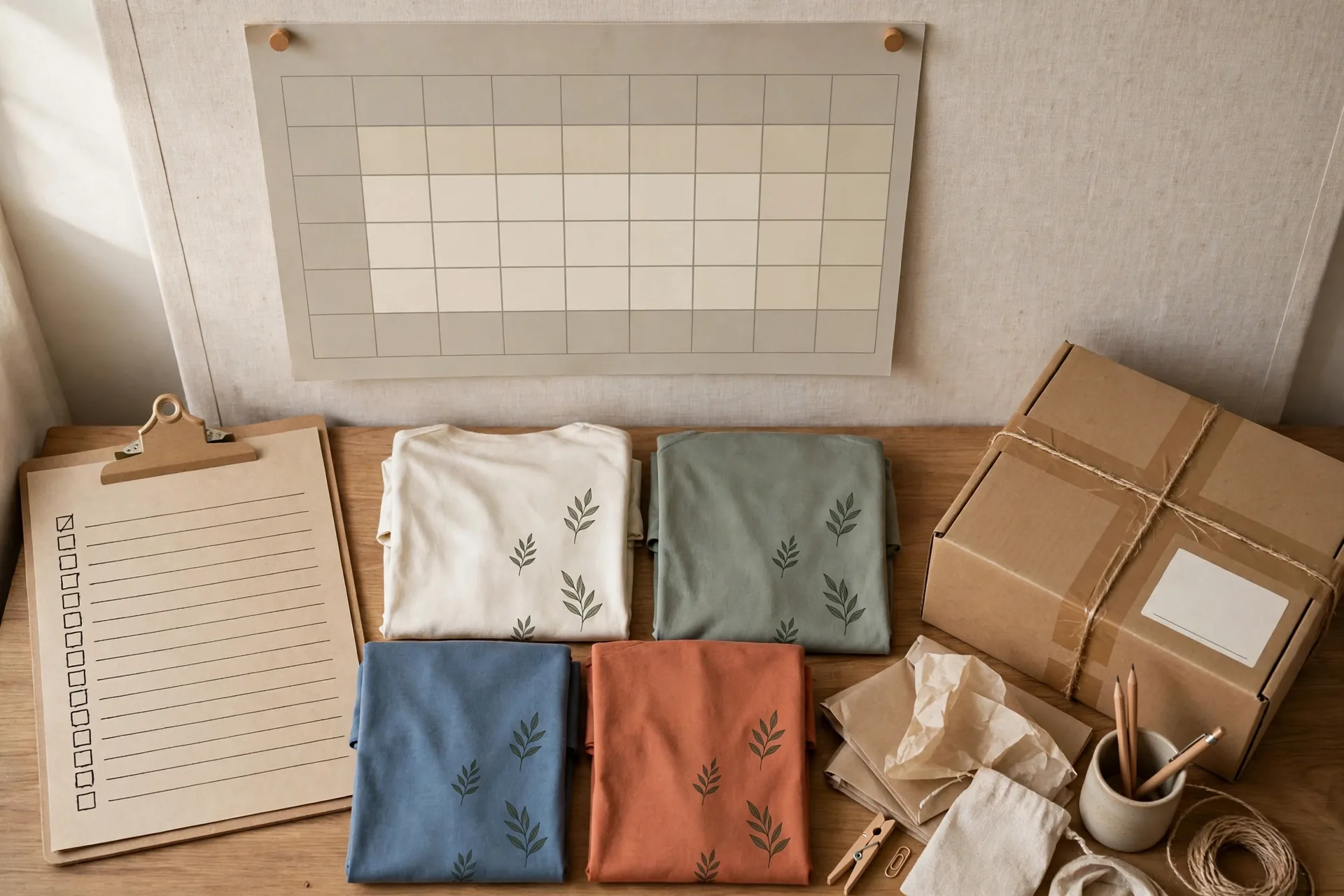
A 30-day print on demand first-sale plan works when you publish listings on a steady schedule, check search traffic each week, and fix weak titles, tags, or mockups instead of waiting for one listing to sell on its own. This plan sets a daily task, a weekly review, and a clear listing target for 30 days.
The plan target is 30 listings in 30 days, or one listing per day, which keeps work in a daily routine and gives search data across a full month.
| Week | Main tasks | Listing target |
|---|---|---|
| Week 1 | Pick a niche, open a shop, publish first listings | 7 listings |
| Week 2 | Publish daily, order one sample, check print quality | 7 listings |
| Week 3 | Fix weak titles and tags, share listings | 8 listings |
| Week 4 | Review data, add listings in the best niche, remove weak designs | 8 listings |
Keep order records from day one: record sale price, base cost, fees, profit, order date, and product for each sale in a simple spreadsheet. Returns policies vary by platform, so read your platform policy before you list, and keep tax records in the same spreadsheet.
5 Print on Demand Mistakes That Delay First Sales
Print on demand mistakes delay first sales when sellers copy trademarked phrases, price from rival prices alone, list too few products, skip sample checks, and stop publishing after the first week with no sales. Each mistake has a direct fix, and each fix turns a shop with no sales into a shop with testable listings.
- Copying trademarked phrases: a copied phrase can force removal, so search each phrase before you publish.
- Pricing from rival prices alone: a rival price hides rival costs, so price from your own base cost and fees first.
- Listing too few products: 3 listings give few entry points, so publish daily to reach 30 listings.
- Skipping sample orders: a skipped sample hides color and placement errors, so order one sample for each new product type.
- Stopping after one quiet week: one quiet week gives almost no data, so complete the 30-day plan before you judge a niche.
FAQs
Print on demand for beginners raises the same questions about cost, time, skills, and profit, and the answers in this section give direct, practical replies you can use before you open a shop. Read each answer with your niche, budget, and listing plan in mind.
How much money do I need to start print on demand?
You need $0 for stock at the start, because printing partners charge only after a buyer places an order. You may still pay for a sample order, a domain name, or ads if you choose those extras. Start on a marketplace.
How long does it take to get a first print on demand sale?
Set a 30-day test with one listing per day, and judge results at the end of that test. A first sale depends on listing count, niche demand, and buyer traffic. A shop with 30 listings has a better chance than a shop with 3 listings.
Do I need design skills to start print on demand?
No, you do not need design training to start print on demand, because simple text designs sell well in many niches. Use clean fonts, high contrast, and one clear message per product. Order a sample to check print quality before you list.
Is print on demand profitable for beginners?
Yes, print on demand can earn a small profit per sale for beginners, if sale price covers base cost and fees with profit left over. Profit stays low at first. Profit grows when listing count, search traffic, and repeat buyers grow.
Can I sell print on demand on Etsy without a website?
Yes, you can sell print on demand on Etsy with no own website, because Etsy provides shop pages, search traffic, and checkout tools. You still need a printing partner, product listings, and prices that cover Etsy fees and printing costs.
What products should print on demand beginners start with?
Beginner-friendly products include T-shirts, mugs, tote bags, and posters, because each product takes simple art and clear mockups. A nurse buyer wants different products than a new homeowner buyer. Test one type first, then add a second type after first sales.
Conclusion
Print on demand for beginners works best as a low-cost test: pick one narrow niche, publish listings on a steady schedule, price from real costs, and fix weak listings from real search data. That test gives you proof about demand before you spend more time or cash on a wider product range.
Start with one niche this week, publish one listing per day for 30 days, and review views and sales each week. Keep learning from Savvy Cash Flow guides as you test listings and prices.
[…] related income path fits many new bloggers: Print on Demand for Beginners shows how a blog reader can sell custom products with no stock, and a blog post about that method […]