


Last updated: October 2026
Written by Emma for Savvy Cash Flow.
To avoid crypto scams, check 7 red flags before you send money: a guaranteed return, a rushed deadline, a seed phrase request, contact you did not start, a fake app, a crypto ATM instruction from a stranger, and a coin with no clear team. Stop when any flag appears.
A crypto scam is a fraud that uses fake investments, fake support, fake apps, or fake giveaways to move crypto to a scammer wallet. This guide explains what a crypto scam is, the size of the problem, the 7 red flags, a 10-minute check, the main scam types, what to do after a bad send, and daily protection. Savvy Cash Flow covers crypto guides.
Key Takeaways
- How to avoid crypto scams starts with 7 red flags: guaranteed returns, rushed deadlines, seed phrase requests, unsolicited contact, fake apps, crypto ATM instructions, and unclear coins.
- A crypto scam moves money one way: a confirmed transfer is hard to reverse, so check before you send.
- No real support team asks for a seed phrase: a seed phrase request is a stop signal on its own.
- A 10-minute check beats a fast reply: verify the platform, the team, the app source, and the wallet address first.
- A recovery offer that charges a fee is often a second scam: report the first scam and send no more money.
- Daily protection is simple: app-based two-factor authentication, official apps only, a paper seed phrase backup, and test sends.
Table of Contents
- What Is a Crypto Scam?
- How Big Is the Crypto Scam Problem in 2025?
- What Are the 7 Red Flags of a Crypto Scam?
- How Do You Check a Crypto Platform in 10 Minutes?
- Which Crypto Scam Type Fits Which Red Flag?
- What Should You Do If You Already Sent Crypto to a Scammer?
- How Do You Protect Your Wallet and Accounts Every Day?
- Frequently Asked Questions
- Conclusion
What Is a Crypto Scam?
A crypto scam is a fraud that uses a fake investment, a fake giveaway, a fake support message, or a fake app to trick a person into sending crypto or sharing wallet keys, so the scammer gains control of funds that are hard to recover after transfer.
Crypto scam is the short name for cryptocurrency scam. Cryptocurrency is a digital asset on a blockchain ledger. A crypto wallet holds keys, not coins: a private key signs a transfer, and a seed phrase is a list of 12 or 24 words that restores a wallet. A scammer with a private key or a seed phrase can restore the wallet and move the funds.
A crypto scam differs from a market loss: a market loss follows a price fall on a real platform, while a crypto scam follows a false promise.

How Big Is the Crypto Scam Problem in 2025?
The crypto scam problem in 2025 is large: the FBI Internet Crime Complaint Center (IC3) counted 181,565 crypto-related complaints and 11.4 billion dollars in reported losses in the United States in 2025, and crypto investment fraud alone accounted for 7.2 billion dollars of that total (Source: FBI, 2026).
Crypto ATM (automated teller machine) losses show one fast-growing path. The FBI counted more than 388 million dollars in reported crypto ATM losses in 2025, a 58 percent rise over the prior year (Source: FBI, 2026). A crypto ATM converts cash into crypto for an address typed in at the machine, and a scammer who controls that address keeps the funds.
The reported total understates the real total, because many victims never report a loss. The CFTC virtual currency risk advisory warns that no guaranteed investment exists and buyers should check a platform before they share payment details.
What Are the 7 Red Flags of a Crypto Scam?
The 7 red flags of a crypto scam are a guaranteed return, a rushed deadline, a seed phrase or private key request, contact you did not start, a fake app or fake support message, a crypto ATM or gift card instruction from a stranger, and a coin with no clear team, purpose, or audit.
Red flag 1: A guaranteed, doubled, or risk-free return
A guaranteed return is a promise of a set profit with no risk. Crypto prices move up and down, and no real investment can remove that price risk. A “double your Bitcoin” offer fails the same test: the return is fixed and the payout depends on new money. Walk away when the return is guaranteed.
Red flag 2: A rushed deadline or a countdown timer
A rushed deadline is a short timer or a warning that an account will close in one hour. Scammers use speed to block a check. A real support team does not demand an instant transfer to save an account. Pause when pressure rises, and verify the claim on the official site, typed by hand in a browser.
Red flag 3: A request for a seed phrase, private key, or password
A seed phrase request is a request for the 12-word or 24-word backup, a private key, a password, or a two-factor authentication (2FA) code. No real exchange, wallet team, or support team asks for those items. Share no seed phrase, no private key, no password, and no 2FA code with any person, form, or chat.
Red flag 4: Contact you did not start
Contact you did not start is a cold message, a cold call, a new online friend, or a “mentor” who finds you first. Legit firms do not cold-call strangers on social apps with a crypto plan. A new friend who moves fast to a trading platform is running a trust-building scam. Fraud reports call it a pig-butchering scam: trust builds over weeks, then deposits grow, then withdrawals block. End the chat when a stranger steers you to a deposit.
Red flag 5: A fake app, fake link, or fake support number
A fake app is a copy of a real wallet or exchange app in a search ad or an unofficial store. A fake link is a look-alike address with a swapped letter. A fake support number is a number posted in a forum or a video comment that routes to a scammer. Type the official address yourself.
Red flag 6: A crypto ATM, gift card, or courier instruction from a stranger
A crypto ATM instruction from a stranger is a direction to withdraw cash, go to a crypto ATM, and send crypto to an address the stranger supplies. A gift card instruction works the same way: buy cards and read the codes aloud. No government agency, bank, or exchange demands payment by crypto ATM, gift card, or courier. Hang up when a caller gives one of those paths.
Red flag 7: A coin with no clear team, purpose, or audit
A coin with no clear team is a token with anonymous founders, no roadmap, no working product, and no third-party audit. A coin with no clear purpose promises price gains but names no use. Paid posts and copied whitepapers can dress up an empty token. Check team names and the audit report before any buy, and skip a coin when those items are missing.

How Do You Check a Crypto Platform in 10 Minutes?
To check a crypto platform in 10 minutes, verify the official domain, check the team and registration claims, check the app source, check the fee and withdrawal rules, and search the platform name with the words scam and fake before you send any money.
- Type the platform address yourself, and check the domain.
- Read the team page, and check founder names and contact details.
- Check the app in the official store, and match the developer name.
- Read the fee and withdrawal rules, and flag a platform that blocks withdrawals until you pay a tax or a fee.
- Search the platform name plus the word scam, and read 3 independent reports.
- Check the wallet address on screen, and send a tiny test amount first.
- Ask one trusted person to read the offer, and pause when any step fails. For a safe first purchase, read how to buy your first crypto safely.

Which Crypto Scam Type Fits Which Red Flag?
Each crypto scam type fits a red flag pattern: fake investments promise returns, giveaway scams ask for a send-first payment, phishing scams steal keys, romance and mentor scams build trust first, and recovery scams charge a fee to chase money that is already gone.
| Scam type | How the scam starts | What the scammer asks for | Stop step |
|---|---|---|---|
| Fake investment platform | A social post, a group, or a mentor link | A deposit, then larger deposits to release withdrawals | Stop at the guaranteed return |
| Giveaway scam | A video, a livestream, or a copied celebrity post | Crypto sent first to “verify” a wallet or claim a prize | Stop at the send-first rule |
| Phishing and fake support | An email, a text, or a fake support call | A seed phrase, a password, a 2FA code, or remote access | Hang up, and open the official app |
| Romance or mentor scam | A new online friend or a trading mentor | Trust, then deposits on a fake platform over weeks | End contact when a stranger steers you to a deposit |
| Rug pull token | Influencer posts and a fast price rise | A buy in a token with no team, no audit, and no use | Skip a coin when checks fail |
| Recovery scam | A message after a first loss | A fee to recover funds | Send no fee, and report to the FBI IC3 |
| Crypto ATM scam | A fake agency, bank, or tech support call | Cash into a crypto ATM at a stranger address | Hang up, and call the real company yourself |

What Should You Do If You Already Sent Crypto to a Scammer?
If you already sent crypto to a scammer, stop all further payments, save every record, contact the exchange and your bank at once, change passwords and turn on app-based 2FA, and report the scam to the FBI IC3 and the Federal Trade Commission (FTC).
- Send no more money, even when a “recovery agent” promises a refund for a fee.
- Save wallet addresses, transaction IDs, chat logs, emails, and screenshots in one folder.
- Contact the exchange used for the transfer, and ask it to flag the receiving wallet address.
- Contact your bank when a bank transfer or card payment funded the buy, and ask about a recall path.
- Change the exchange and email passwords, and turn on app-based 2FA on both.
- Move any remaining crypto to a new wallet with a fresh seed phrase.
- Report at ic3.gov and reportfraud.ftc.gov, and keep the report numbers.
Recovery odds are low, because a confirmed transfer is hard to reverse and a scammer wallet can move funds fast. A fast report still helps, because an exchange or law enforcement can sometimes flag a wallet.

How Do You Protect Your Wallet and Accounts Every Day?
To protect your wallet and accounts every day, use app-based 2FA, use official apps only, keep the seed phrase on paper offline, keep large amounts in a wallet you control, and check each address on screen before you confirm a send.
- Use app-based 2FA on the exchange and on the tied email account.
- Use a long, unique password for the exchange, stored in a password manager, not in a chat.
- Download wallet apps only from official store listings on the maker site.
- Keep the seed phrase on paper in a private spot, away from the device.
- Keep large amounts in a wallet you control, and only small trading amounts on an exchange.
- Check the full wallet address on screen before a send, because malware can swap a copied address.
- Send a tiny test amount first, and send the rest only after it arrives.
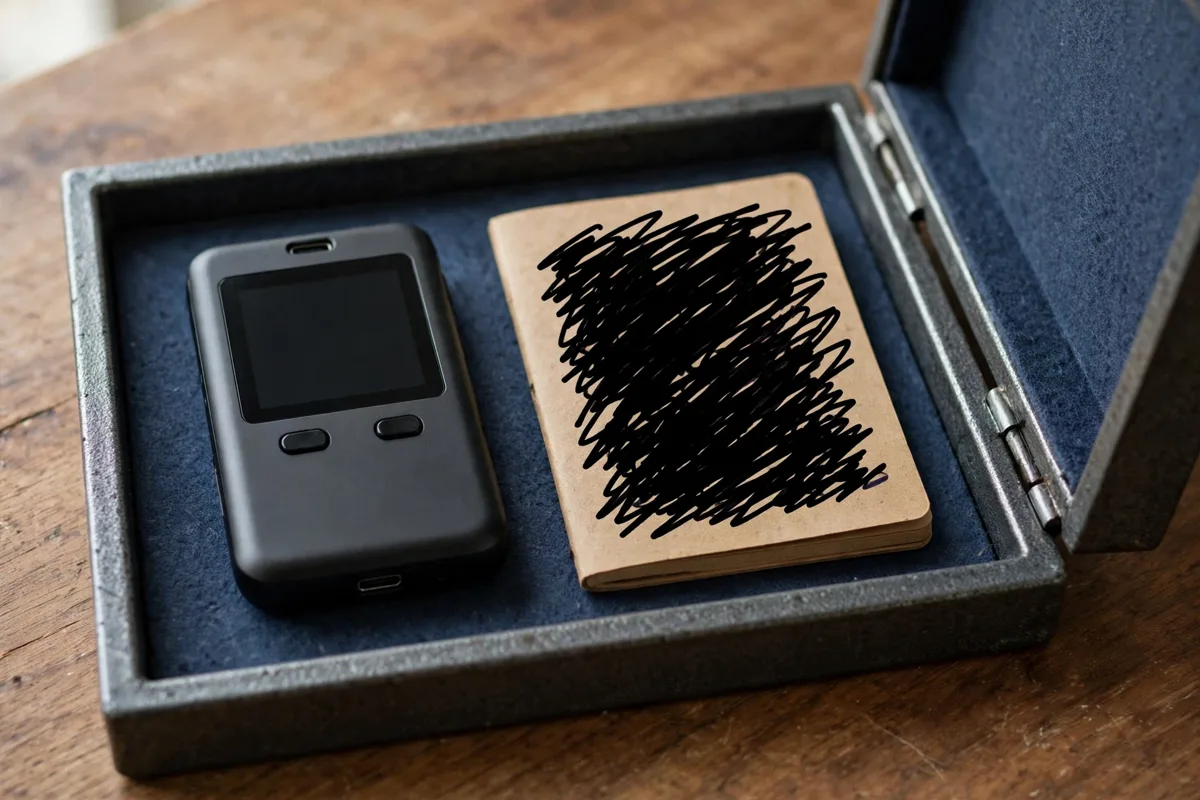
From my own setup, I keep a small amount in a phone wallet for test transfers, and I move larger amounts offline after a test send clears. Read the hot vs cold crypto wallets guide to match wallet type to amount, and read What Is Bitcoin? for coin basics.
Frequently Asked Questions
Can a crypto scam be reversed after I send money?
No, a crypto scam transfer is hard to reverse after confirmation, because a blockchain transfer has no bank to cancel the payment. Report fast to the exchange, the bank, the FBI IC3, and the FTC, and save all wallet addresses and transaction IDs. A refund is not guaranteed.
How do I know if a crypto giveaway is real?
No, a real crypto giveaway never asks you to send crypto first to claim a prize or verify a wallet. A send-first rule, a QR code from a video, and a copied celebrity account all point to a fake giveaway. Check the official site yourself, and skip the offer when the official site shows no such giveaway.
Should I share my seed phrase with crypto support?
No, you should never share a seed phrase, a private key, a password, or a 2FA code with crypto support or any other person. Real support teams never ask for those items. A seed phrase request is a theft attempt, so end the chat and report the message.
What is a pig-butchering crypto scam?
A pig-butchering crypto scam is a fraud that builds trust over weeks through a new online friend or mentor, then moves the victim to a fake platform for larger deposits. Withdrawals fail or demand extra fees. End contact when a stranger steers you to a platform or a deposit.
Can the FBI or an exchange recover stolen crypto?
Sometimes, an exchange or law enforcement can flag a wallet or freeze an account, but recovery is not guaranteed and depends on speed and records. Report on the same day to the FBI IC3 and the FTC, give the exchange the wallet addresses, and send no fee to a recovery seller.
Is a new coin safe when influencers promote it?
No, a new coin is not safe on influencer posts alone, because paid posts and copied whitepapers can dress up a token with no team, no use, and no audit. Check founder names, the project site, and the audit report before any buy. Skip a coin when those items are missing.
Conclusion
How to avoid crypto scams comes down to one habit: check the 7 red flags before you send money, and stop the payment when any flag appears, because a confirmed crypto transfer is hard to reverse.
Start with the 10-minute platform check, use official apps only, keep the seed phrase on paper offline, and keep large amounts in a wallet you control. Savvy Cash Flow publishes money guides. This article gives general information only, and this article is not financial advice.