


Last updated: October 2026
Written by Emma for Savvy Cash Flow.
What is staking in crypto? Staking is the process of locking crypto on a proof-of-stake network so validators can check transactions and add blocks, and stakers earn rewards in the same crypto for that work. Rewards vary by network, fees, and lockup rules, and staked coins can lose value if prices fall.
This guide explains what is staking, how proof-of-stake networks pick validators, which coins support staking, and the 4 ways to stake crypto. It then covers reward rates, a staking vs saving vs mining comparison, the risks, 6 steps to start, and a 5-point check for judging any staking rate. It closes with 6 answers to common staking questions, and it names the coins beginners can stake first.
Key Takeaways
- Staking is locking crypto on a proof-of-stake network to help check transactions and earn rewards in the same crypto.
- Bitcoin cannot be staked, because Bitcoin uses proof-of-work mining, not proof-of-stake validation.
- Solo validation, delegation, exchange staking, and liquid staking differ in control, minimum amounts, fees, and lockup rules.
- Headline rates are not net returns: fees, lockup time, price moves, and token inflation change the result.
- Stake only crypto you plan to hold for months or years, and check the unstaking wait before you lock any coins.
- What Is Staking in Crypto?
- How Does Staking Work Step by Step?
- What Is Proof of Stake (PoS)?
- Which Cryptos Can You Stake?
- What Are the 4 Ways to Stake Crypto?
- How Much Can You Earn From Staking?
- Staking vs Saving vs Mining: Which Option Fits Which Goal?
- What Are the Risks of Staking?
- Is Staking Passive Income?
- How Do You Start Staking in 6 Steps?
- How Do You Check If Staking Is Worth It?
- Conclusion
- FAQs
What Is Staking in Crypto?
Staking is locking crypto on a proof-of-stake blockchain so the network can use that locked value to pick validators, check transactions, and add new blocks, and the network pays rewards to stakers for that service. Staking is a network job, not a bank deposit, and stakers keep ownership of their coins while the coins stay locked.
Staking lets a proof-of-stake network run without mining computers. A staker commits coins as a bond of good behavior. The network picks validators from stakers, and picked validators check transactions and propose blocks. Validators earn block rewards and a share of transaction fees, and delegators earn a share of those rewards.
Staking rewards arrive in the same crypto that a staker locked: ETH stakers earn ETH, and ADA stakers earn ADA. Staking suits holders who already plan to hold a coin for months or years. Browse the Cryptocurrency guides for wallet safety, scam red flags, and buying steps before you stake.
How Does Staking Work Step by Step?
To stake crypto, pick a proof-of-stake coin, choose a staking method, lock the coins with a validator or platform, and collect rewards while the coins stay locked, then unstake the coins when the lockup period ends. Each step has one choice that changes control, fees, and exit speed.
To stake crypto, start with a coin that uses proof-of-stake validation. Bitcoin fails this test, because Bitcoin uses mining. Ethereum, Solana (SOL), Cardano, and Polkadot (DOT) pass this test, because each network uses a form of proof-of-stake validation.
Next, choose how to stake, then lock the coins and confirm 3 facts in writing: the reward rate, the fee, and the unstaking wait. Rewards then arrive on a set schedule.

What Is Proof of Stake (PoS)?
Proof of Stake (PoS) is a blockchain consensus method that picks validators in proportion to the crypto they lock, so validators with more locked crypto have a higher chance of checking the next block. Proof of Stake replaces mining puzzles with locked value as the bond for honest validation.
Proof of Stake works on one rule: locked coins act as collateral. Validators who check blocks correctly keep their stake and earn rewards. Validators who approve false blocks, sign two blocks at once, or stay offline too long can lose part of their stake through slashing. Slashing is the penalty that makes cheating costly.
The first working proof-of-stake crypto was Peercoin, launched in 2012. Ethereum switched from mining to proof-of-stake in September 2022, in an upgrade called The Merge. For full background on the method, read the proof-of-stake consensus on Wikipedia. One quotable fact sums up the trade-off: Proof of Stake uses locked value, not computing power, to secure a network, so it uses far less energy than mining and puts more power in the hands of large holders.
Which Cryptos Can You Stake?
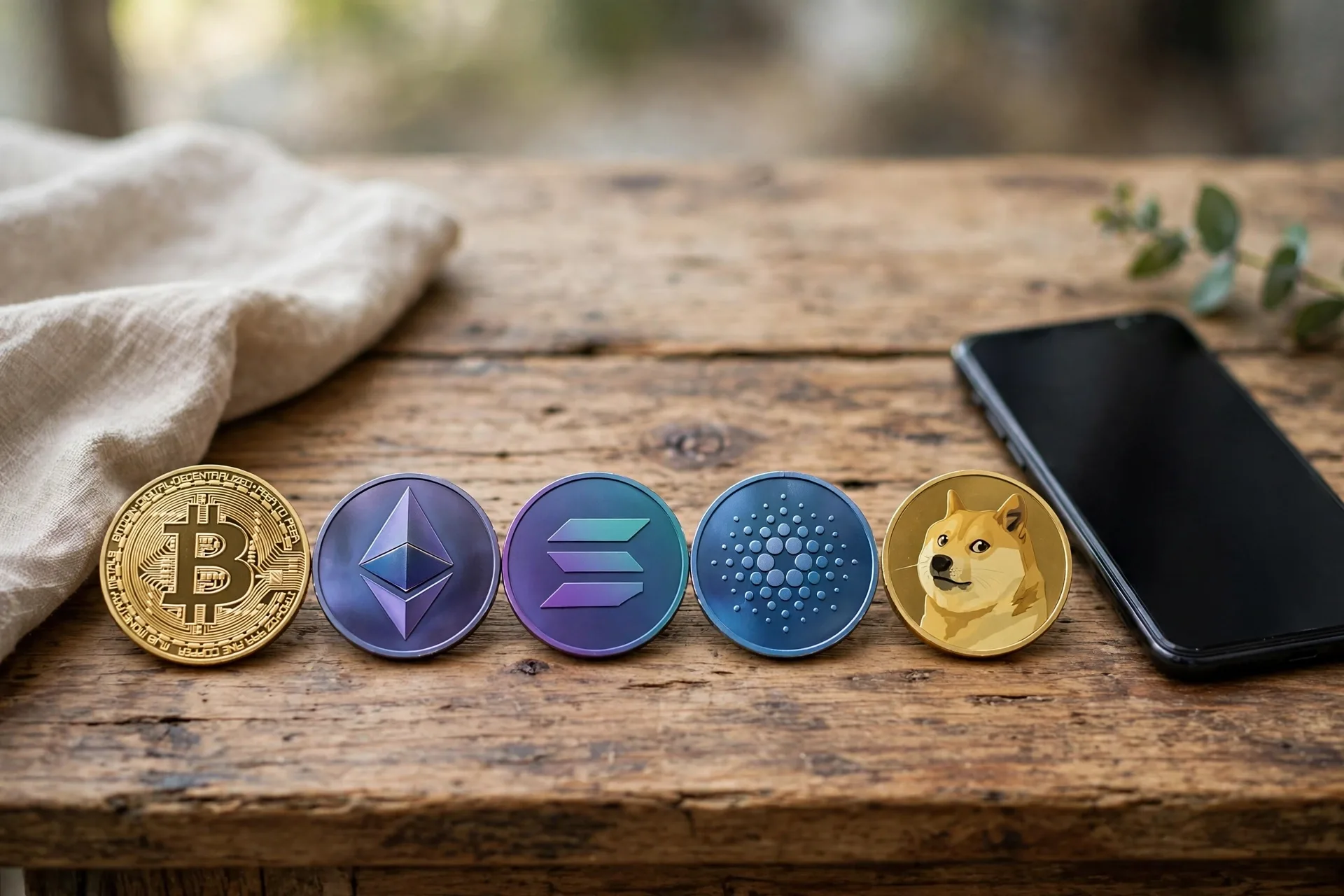
Cryptos you can stake include Ethereum, Solana, Cardano, Polkadot, Avalanche (AVAX), and Cosmos (ATOM), because each network runs on proof-of-stake validation and pays rewards to validators and delegators. Bitcoin cannot be staked, and any coin that uses mining alone cannot be staked either.
Ethereum is the largest staking network by value. Solo Ethereum validation needs 32 ETH, a high bar for most beginners. Pools and exchanges let holders stake smaller amounts of ETH and share validator rewards after fees. Ethereum staking rewards sit at the low end of major networks, and that lower rate pairs with a large, active network.
Solana, Cardano, and Polkadot suit beginners who want lower minimums. Solana unstaking takes about 2 to 3 days. A rate above 15% deserves a check of token supply growth, lockup length, and validator set size.
Bitcoin vs Ethereum shows why the two largest coins differ so much: Bitcoin was built to transfer and hold digital money, and Ethereum was built to run apps, and only Ethereum of the two supports staking.
What Are the 4 Ways to Stake Crypto?
The 4 ways to stake crypto are solo validation, delegation to a validator or pool, exchange staking, and liquid staking, and the 4 ways differ in control, minimum stake, fees, and exit speed. Beginners gain most from delegation or exchange staking, and advanced users gain most from solo validation.
Solo validation means running a validator node with the full minimum stake. Solo validation gives full control and full rewards minus network costs, but it needs technical skill and a computer that stays online. A solo validator who goes offline can miss rewards, and a solo validator who breaks rules can face slashing.
Delegation means assigning coins to a validator while the coins stay in a personal wallet. Delegation needs no validator computer. The validator takes a commission, often 5% to 10% of rewards, and passes the rest to delegators. Exchange staking means a crypto exchange stakes coins for customers, with small minimums and one-click setup, but the exchange holds the coins. Liquid staking means a protocol locks coins and issues a tradeable receipt token, which solves lockup but adds smart contract risk.
| Staking method | Control | Minimum | Fees | Exit speed |
|---|---|---|---|---|
| Solo validation | Full | High, 32 ETH for Ethereum | Network costs only | Slow, network wait applies |
| Delegation or pool | High, coins stay in wallet | Low | Validator commission | Medium, unstaking wait applies |
| Exchange staking | Low, platform holds coins | Very low | Platform fee plus spread | Fast to slow, platform rules apply |
| Liquid staking | Medium, receipt token trades | Low | Protocol fee | Fast for receipt token, slow for base coins |

How Much Can You Earn From Staking?
Staking rewards on major networks sit in a range of about 2% to 7% per year, and the exact rate depends on the network, the share of coins staked, validator fees, and token inflation. Smaller networks advertise higher rates, and higher rates pair with higher price swings and higher inflation.
CoinGecko (2026) reports typical staking rewards of 2% to 7% Annual Percentage Yield (APY) on major networks, with Ethereum near the low end of that range. APY is the yearly reward rate after compounding, and APY changes as more holders stake. When more coins join staking, each staker earns a smaller share of a fixed reward pool.
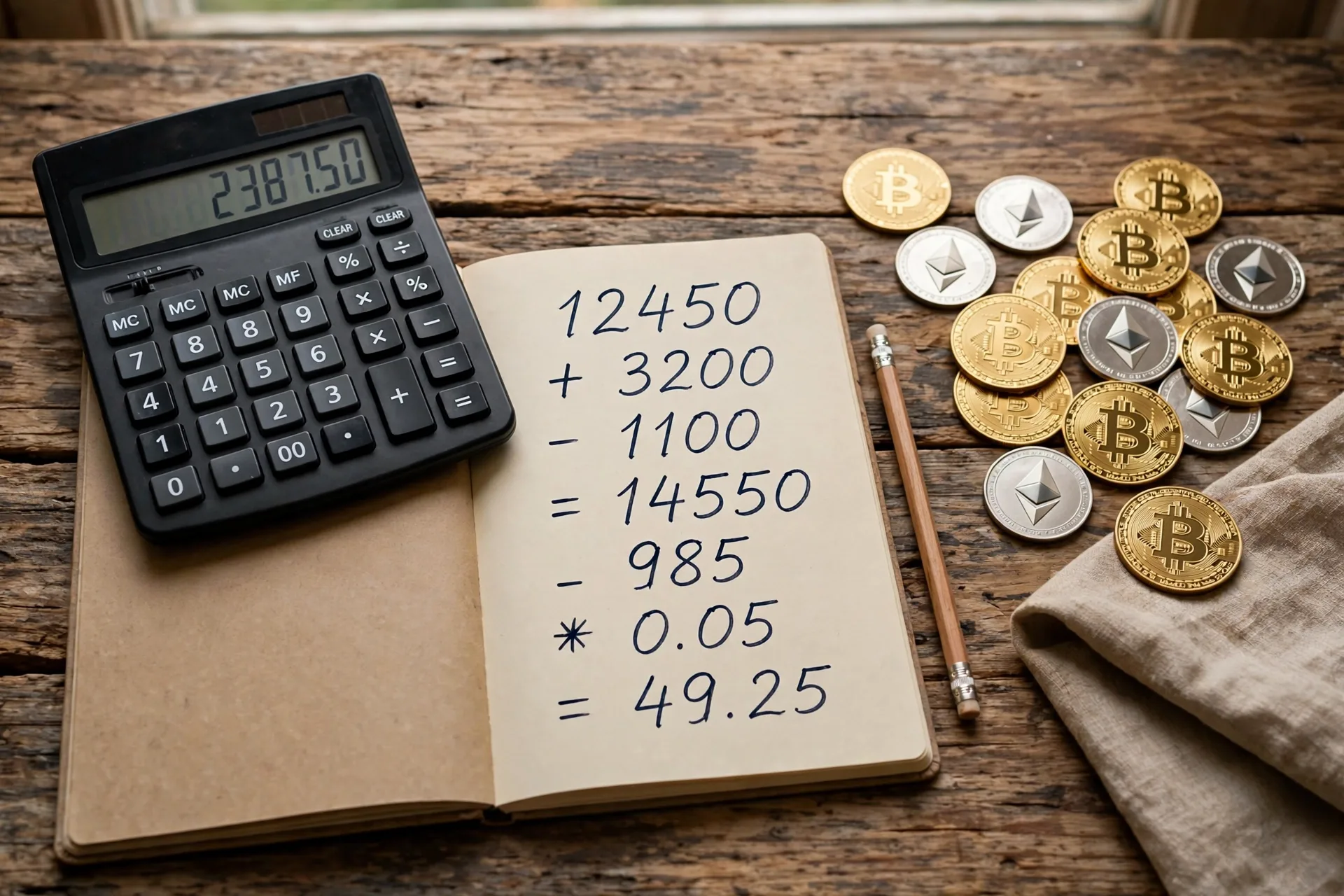
A simple example shows the math. A holder stakes 100 coins at 5% APY and earns 5 coins in one year before fees, and a validator commission of 10% cuts the reward to 4.5 coins.
Staking vs Saving vs Mining: Which Option Fits Which Goal?
Staking fits long-term crypto holders who want rewards on coins they already hold, saving fits cash that must stay safe and easy to reach, and mining fits operators who can run hardware and pay power costs. Each option earns a return in a different way, and each option carries a different risk set.
A savings account pays interest from a bank, and deposits in many countries carry deposit protection up to a set limit. Staking pays rewards from network issuance and fees, and staking carries no deposit protection. A savings balance stays stable in dollars, while a staked balance swings with the coin price. Mining pays rewards to computers that solve puzzles and check blocks, and mining needs hardware, power, cooling, and upkeep.
| Option | What earns the return | What you need | Main risk | Best fit |
|---|---|---|---|---|
| Staking | Network issuance and fees | Proof-of-stake coins | Price fall, lockup, slashing | Long-term holders of a staked coin |
| Saving | Bank interest | Cash in an account | Low return, inflation drag | Cash needed soon or emergency funds |
| Mining | Block rewards and fees | Hardware and cheap power | Power cost, hardware cost, price fall | Operators with technical skill and cheap power |
What Are the Risks of Staking?
The risks of staking are price volatility, lockup and unstaking waits, slashing penalties, platform failure, smart contract bugs, and token inflation, and price volatility causes the largest losses for most stakers. A staking reward cannot offset a large price fall during a lockup.
Price volatility is the top risk. Staked coins can fall 20%, 30%, or more while locked. A holder who cannot sell during a crash keeps the full loss, and rewards arrive in the same falling coin, so the reward value falls with the stake value. Lockup risk follows price risk: some networks let holders unstake at any time, some impose an unbonding period of days or weeks, and some exchange products add their own lock terms on top of network rules.
Slashing risk applies to validators and their delegators, and delegators share the penalty when their validator gets slashed. Spreading coins across 2 or 3 validators with strong uptime lowers single-validator risk. Platform risk applies to exchange staking, while self-custody delegation puts key safety on the holder. The hot vs cold crypto wallets guide explains which wallet type fits long-term holdings and which type fits small active balances. Tax rules add a final task, because many countries tax staking rewards as income when received.

Is Staking Passive Income?
Yes, staking is passive income after setup, because rewards arrive without daily work once coins are locked with a validator or platform, but staking is not risk-free income and it is not steady income. Rates change, prices swing, and lockups block quick exits.
Staking income is passive in effort, not in risk. A holder spends time once on coin choice, method choice, and validator choice, then rewards arrive on schedule. A holder still needs to check validator performance, fee changes, and rate changes each month, because a validator who drops offline or raises commission cuts income until the holder switches.
Staking income is also uneven, because payouts follow network schedules and arrive in crypto. Treat staking as a bonus on a holding, not as a reason to buy a coin.
How Do You Start Staking in 6 Steps?
To start staking, buy a proof-of-stake coin, move it to a wallet or platform that supports staking, pick a validator or product, check fees and unstaking terms, stake a small test amount, and track rewards monthly. A small test stake catches fee and lockup surprises before a large stake locks.
- Pick a proof-of-stake coin you plan to hold. Choose Ethereum, Solana, Cardano, or Polkadot for a first stake, and skip coins bought only for an advertised rate.
- Buy the coin on a regulated exchange. Buy a small amount first, turn on app-based two-factor authentication, and confirm the withdrawal address twice.
- Choose a staking method. Choose delegation for control with low minimums, or choose exchange staking for the easiest setup with platform custody.
- Check 4 facts before you lock coins. Check the reward rate, the fee, the unstaking wait, and the slashing rules for your validator or platform.
- Stake a small test amount first. Stake 10% of the planned amount, wait for one reward payout, and confirm the net rate matches the advertised rate after fees.
- Track rewards and validator health monthly. Record each payout, check validator uptime and commission, and move coins if performance drops.
In my own first check of a staking product, I compared the headline rate with the fee line and the unstaking wait before I staked anything, and the fee line changed the net rate enough to change my choice of product. That one check is worth repeating on every new staking product.
Explore how to buy your first crypto safely before you stake, so the buy step, the wallet step, and the safety checks are set before any coins get locked.
How Do You Check If Staking Is Worth It?
Staking is worth it when the net reward after fees beats the costs of lockup and price risk for a coin you already plan to hold, and staking is not worth it when the lockup blocks money you may need soon. Use 5 checks before any stake, and skip the stake if 2 or more checks fail.
First, compute net yield: reward rate minus validator commission minus platform fees, and compare net yield across 2 or 3 validators, not across headline rates. Second, check token inflation: a reward rate below supply growth means a shrinking network share. Third, check lockup: match the unstaking wait to the time you can leave the money untouched. Fourth, check validator quality: uptime above 99%, a stable commission, and a record with no major slashing events. Fifth, check tax and record work: rewards need a payout log, and selling rewards needs a gain record.
A worked check shows the method. A 6% headline rate with a 10% validator commission gives 5.4% before platform fees, and a 10% coin price fall still leaves the holder down in dollar terms. Skip staking when any of 3 red flags appear: a guaranteed return promise, a lockup longer than your holding plan, or a validator with hidden fees. Savvy Cash Flow crypto guides cover wallet safety, scam red flags, and buying steps for beginners.
Conclusion
Staking is a way to earn rewards on proof-of-stake crypto you already plan to hold, and staking works best when the holder checks net yield, lockup rules, validator quality, and price risk before locking any coins. Staking rewards come from network issuance and fees, not from a bank, and staking carries price, lockup, slashing, and platform risks that saving does not carry.
Start small, pick a major network, delegate to a strong validator or use a trusted platform, and track net rewards monthly. Skip any product that promises a fixed return or hides its fees. For more beginner crypto guides, visit Savvy Cash Flow and build the buying, wallet, and safety steps first, then add staking as a bonus on a long-term holding.
FAQs
What is staking in simple terms?
Staking is locking crypto on a proof-of-stake network to help check transactions and earn rewards in the same crypto. Validators use locked coins as collateral, check blocks, and share block rewards and fees with stakers. Staked coins stay owned by the holder but cannot be sold until unstaking ends.
Can you stake Bitcoin?
No, you cannot stake Bitcoin, because Bitcoin uses proof-of-work mining, not proof-of-stake validation. Bitcoin mining uses computers and power to check blocks. Holders who want Bitcoin exposure earn no staking rewards, and any product that promises Bitcoin staking rewards uses a different method, such as lending, with its own risks.
How much money do you need to start staking?
You need only a small amount to start staking through a pool or exchange, because pools and exchanges accept small stakes, while solo Ethereum validation needs 32 ETH. Delegation on Cardano or Solana can start with a few coins plus network fees.
Is staking crypto safe?
No, staking crypto is not fully safe, because staked coins face price falls, lockup waits, slashing penalties, platform failure, and smart contract bugs. Staking avoids mining hardware costs, but staking adds risks that a savings account does not carry.
Do you pay tax on staking rewards?
Yes, in many countries you pay tax on staking rewards, because rewards count as income when received, and selling rewards can trigger a second tax event. Tax rules differ by country, so keep a log of each payout date and value.
Can you lose money staking crypto?
Yes, you can lose money staking crypto, because a price fall can exceed the reward, a validator can get slashed, or a platform or protocol can fail. Rewards add coins, but rewards do not protect dollar value.