

Introduction
Learning how to invest spare change automatically means linking a debit or credit card to an investing app, letting the app round each purchase up to the next dollar, and investing the leftover cents into a diversified portfolio without a manual transfer. A $3.47 coffee becomes a $4.00 charge, and the 53 cents moves into your investments. Over a month, those small amounts add up to $25 to $100 for most spenders.
This guide defines spare change investing, shows how round-ups work in 5 steps, and lists what you can expect to invest each month at 3 spending levels. It compares 5 apps that invest spare change automatically, gives a 7-step setup plan, and breaks down the fees at balances from $100 to $10,000. It covers what to buy with your spare change, 5 mistakes that shrink returns, and the exact point to move from round-ups to a free brokerage.
Key Takeaways
- Round-ups turn the cents from each card purchase into automatic investments, with no manual transfer.
- Most spenders generate $25 to $60 a month in round-ups, and a 2x multiplier doubles that amount.
- A $4 monthly fee costs 9.6% a year on a $500 balance, so fees matter most in year one.
- Low-cost diversified exchange-traded funds (ETFs) suit spare change investing better than single stocks.
- Add a $25 weekly recurring deposit, since round-ups alone build wealth slowly.
- Move to a free brokerage once the balance passes $5,000 to $10,000.

What Is Spare Change Investing?
Spare change investing is the practice of investing very small amounts of money, often just cents or a few dollars at a time, into the stock market through an automated app, so a beginner can own a slice of a diversified portfolio without saving a lump sum first. Micro-investing is the wider term for the same idea, and round-ups are the best-known method inside it.
A micro-investing app connects to a bank account or card, watches each purchase, and moves the spare change into investments on a set schedule. The micro-investing entry on Wikipedia describes the same model: small, regular amounts invested through fintech apps, with the goal of making investing open to people who start with very little money.
At Savvy Cash Flow, spare change investing sits in the same family as starting small with index funds. The Investing & Wealth guides cover each part of the plan in more depth, from first buys to account types. Spare change investing is the on-ramp, not the whole plan.
How Does Round-Up Investing Work?
Round-up investing works in 5 steps: link a card, spend as normal, round each purchase up to the next dollar, collect the spare change until it reaches a $5 transfer threshold, and invest the total into a diversified portfolio of low-cost funds. The whole process runs in the background, and the investor makes no decision per purchase.
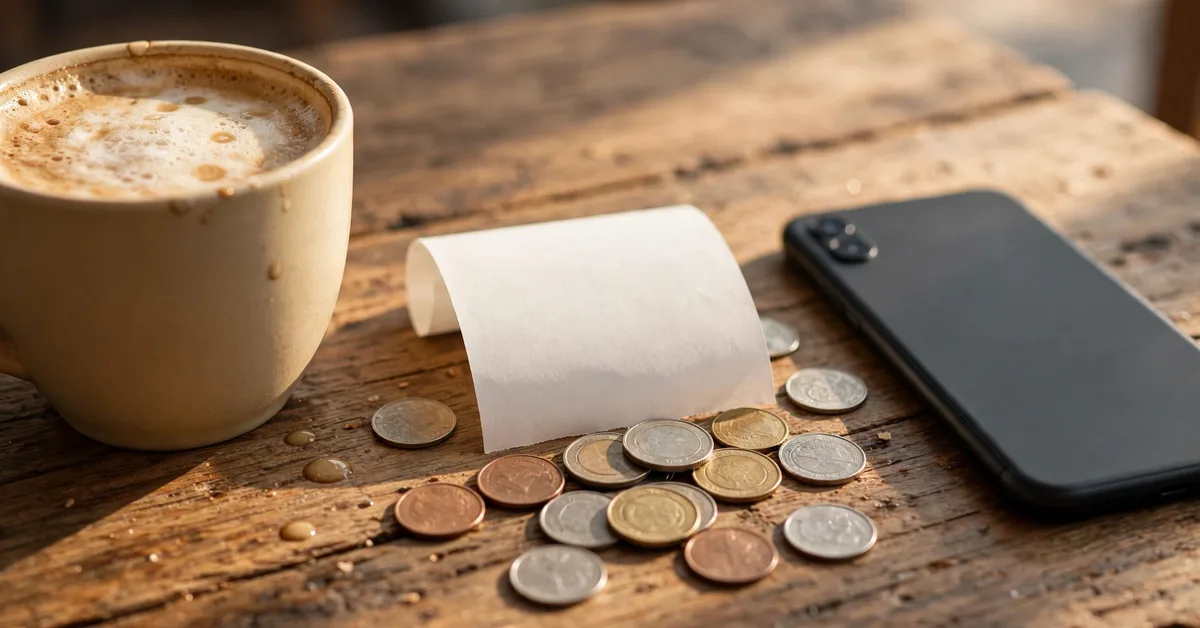
To invest spare change automatically, follow these steps in order.
- Link a checking account and the debit or credit cards used most days.
- Turn on Round-Ups in the app settings and pick a portfolio risk level.
- Spend as normal, since each purchase rounds up to the next whole dollar.
- Let the app collect the spare change until it reaches the $5 transfer threshold.
- Watch the app invest the collected amount into fractional shares of funds.
A $4.35 coffee rounds up to $5.00, so 65 cents goes to the round-up pot. A $12.80 grocery run rounds up to $13.00, so 20 cents goes in. Cash purchases create no round-ups, since the app only sees card transactions. The average Acorns investor, with a verified and active account, has rounded up $800 as of August 2026 (Source: Acorns (2026)).
Real-Time Round-Ups work faster for Acorns Checking customers, since the spare change moves with each cleared purchase instead of waiting for the $5 total. Other apps hold round-ups until the threshold is met, then move the money in one transfer that takes 1 to 3 business days to clear.
How Much Spare Change Can You Invest Each Month?
A light spender with 25 card purchases a month invests about $12 in round-ups, a moderate spender with 50 purchases invests about $25, and a heavy spender with 80 purchases invests about $40, since the average round-up is close to 50 cents per purchase. A 2x multiplier doubles each of those totals, and a $25 weekly recurring deposit adds $100 a month on top.
| Spending level | Card purchases a month | Round-ups a month | With a 2x multiplier | Plus $25 a week |
|---|---|---|---|---|
| Light | 25 | $12 | $24 | $124 |
| Moderate | 50 | $25 | $50 | $150 |
| Heavy | 80 | $40 | $80 | $180 |
The table shows the real point: round-ups alone build a habit, and recurring deposits build the balance. A moderate spender who adds $25 a week invests $150 a month, which is 6 times the round-ups alone. Over 10 years at a hypothetical 7% average annual return, $150 a month grows to about $26,000, from $18,000 in contributions plus about $8,000 in growth. The same $150 a month reaches about $78,100 in 20 years and about $183,000 in 30 years, before fees and taxes, and the numbers are hypothetical, not a promise.
| Monthly amount | 10 years | 20 years | 30 years |
|---|---|---|---|
| $50 | $8,700 | $26,000 | $61,000 |
| $100 | $17,300 | $52,100 | $122,000 |
| $150 | $26,000 | $78,100 | $183,000 |
The table uses a hypothetical 7% average annual return and monthly contributions, before fees and taxes. Actual results depend on market performance, fees, and taxes, and no return is guaranteed. In my own routine, I check my round-up total on the first Saturday of each month, and I raise the multiplier by one step each time my balance passes the next $1,000 mark.
Which Apps Invest Spare Change Automatically?
Acorns, Stash, and Cash App Investing are the 3 apps that invest spare change automatically through round-ups in 2026, while M1 Finance and SoFi Invest automate investing through recurring deposits and managed portfolios but offer no round-up feature. Acorns suits hands-off beginners best, Stash suits learners who want to pick stocks, and Cash App suits people who want zero monthly fees.
| App | Round-ups | Monthly cost | What you own | Start amount | Best for |
|---|---|---|---|---|---|
| Acorns | Yes, 2x, 3x, 10x multipliers | $4 to $12 | Managed ETF portfolios | $5 | Hands-off beginners |
| Stash | Yes, Smart-Stash deposits | $12 | Stocks, ETFs, or managed portfolios | $0 | Learners who want picks |
| Cash App Investing | Yes, to a chosen stock | $0 | Stocks and ETFs | $1 | Zero-fee starters |
| M1 Finance | No, auto-invest pies | $3 under $10,000 | Custom pie portfolios | $100 | Target allocations |
| SoFi Invest | No, recurring deposits | $0 | ETFs or stocks | $5 | Free automated portfolios |
Prices were checked in November 2026 on each company site, and fees can change, so check the current pricing page before opening an account. Acorns Bronze costs $4 a month and includes Round-Ups, an IRA (Individual Retirement Account), and checking. Silver costs $8 a month and adds emergency savings plus a 1% first-year IRA match. Gold costs $12 a month and adds a 3% first-year IRA match, custom portfolios, and kids accounts.
Stash charges one flat $12 a month for brokerage, retirement, and custodial accounts, plus a personal plan and guidance from a registered investment advisor. Smart Portfolios add a 0.25% annual advisory fee on balances of $1,000 or more. Cash App Investing charges no monthly fee, and its Round Ups sweep spare change from card purchases into a stock of the investor’s choice, starting at $1. The trade-off is clear: Cash App offers no IRA and no managed portfolio, so the investor picks every stock.
M1 Finance works by pies, which are target mixes of stocks and ETFs, and every deposit flows into the underweight slices first. SoFi Invest offers free self-directed trading with fractional shares from $5, plus Automated Investing that builds and rebalances an ETF portfolio at no advisory fee. Neither M1 Finance nor SoFi Invest offers round-ups, so the investor sets a recurring deposit instead.
How to Invest Spare Change Automatically in 7 Steps
To invest spare change automatically, pick a goal and account type, choose one app from the table above, open the account, link a checking account and cards, turn on Round-Ups with a multiplier, add a recurring deposit, and review the account once a month. Setup takes under an hour, and the first round-up usually lands within a week.
To set up spare change investing, follow these steps in order.
- Pick a goal and account type. A Roth IRA suits retirement money, and a taxable brokerage account suits money needed before retirement age.
- Choose one app from the table above. Pick Acorns for full automation, Stash for learning, or Cash App for zero fees.
- Open the account and answer the risk questions. The app uses the answers to pick a portfolio mix.
- Link a checking account and the cards used most days. Link every card used each week, since more transactions mean more round-ups.
- Turn on Round-Ups and set a multiplier. Start at 1x for the first month, then move to 2x once the checking balance stays comfortable.
- Add a recurring deposit of $25 a week or $100 a month. Round-ups are the bonus layer, and the recurring deposit is the base.
- Check the account once a month. Confirm that round-ups still run, fees stay in line, and the balance grows.
Start with $100 first if the account feels new: our guide on how to start investing with $100 gives a 7-step first-buy plan built around a small budget. The same steps apply here, with round-ups added on top.
How Much Do Spare Change Apps Cost?
Spare change apps cost $0 to $12 a month, and the fee matters most on small balances, since a $4 monthly fee costs 9.6% a year on a $500 balance but only 0.48% a year on a $10,000 balance. The fee-to-balance ratio decides whether an app is cheap or pricey, not the dollar amount alone.
| Balance | Acorns Bronze $4 a month | Stash $12 a month | Cash App $0 a month |
|---|---|---|---|
| $100 | 48.0% a year | 144.0% a year | 0% |
| $500 | 9.6% a year | 28.8% a year | 0% |
| $1,000 | 4.8% a year | 14.4% a year | 0% |
| $5,000 | 0.96% a year | 2.88% a year | 0% |
| $10,000 | 0.48% a year | 1.44% a year | 0% |
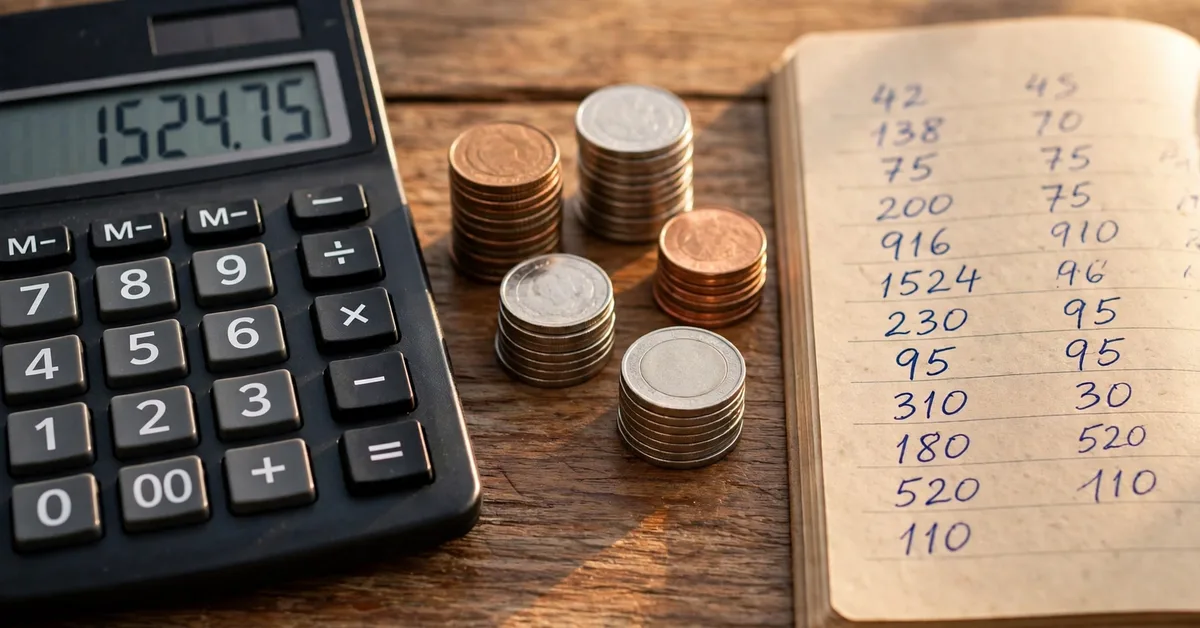
The math is simple: divide the yearly fee by the balance. A $4 monthly fee is $48 a year, so $48 divided by $500 is 9.6%. The same $48 on a $5,000 balance is under 1%. That is why round-up apps make the most sense once the balance passes $1,000, and why a free app like Cash App or SoFi Invest wins on a balance under $500.
Fund fees sit on top of the app fee. Most broad index funds charge 0.03% to 0.10% a year, so a $1,000 balance pays $0.30 to $1.00 a year in fund fees. Acorns customers have invested over $7.3 billion through Round-Ups (Source: Acorns (2026)), and the habit is the product, not the fee. Still, the fee is real money, so check the ratio each time the balance doubles.
Spare Change Investing vs Recurring Deposits: When to Use Which
Spare change investing suits beginners who struggle to save at all, while recurring deposits suit investors who already save each month, and most investors should use both, with round-ups as the habit layer and a recurring deposit as the growth layer. The table below shows when each method wins.
| Factor | Round-ups only | Recurring deposits only | Both together |
|---|---|---|---|
| Monthly amount | $12 to $40 | Fixed, $100 or more | $112 to $180 |
| Effort | None after setup | One setup step | One setup step |
| Best for | Building the habit | Building the balance | Habit plus balance |
| Fee risk | High on small balances | Low at free brokers | Low after $1,000 |
| Control | Low, app picks the fund | High, investor picks | High with auto buys |
Use round-ups alone for the first 30 days, while the habit forms. Add a recurring deposit in month 2, once the round-ups prove the money is not missed. Use recurring deposits alone when the balance passes $5,000, since a free brokerage with a $100 monthly auto-buy then beats a $4 to $12 monthly app fee. Readers who want the full strategy behind the schedule can read our guide on 5 investment strategies for beginners for index fund investing, dollar-cost averaging, and yearly rebalancing.
What Should You Buy With Your Spare Change?
Spare change should go into low-cost diversified exchange-traded funds (ETFs) first, since one ETF share buys a slice of hundreds of stocks or bonds at once, trades like a stock, and often costs under 0.10% a year in fund fees. Fractional shares make this work at any dollar amount, since $0.65 of spare change can buy a slice of a fund that costs $400 a share.
A broad total stock market ETF or S&P 500 ETF is the simplest first buy. One purchase spreads the money across hundreds of companies, so no single company decides the result. Over 20 years, 93% of large-cap fund managers trailed the S&P 500 (Source: S&P Dow Jones Indices (2026)), which is a strong hint that a beginner should not try to beat the index with single-stock picks.
Single stocks suit a small learning slice only. Buy $5 or $10 of a company whose products are used each week, and keep stock picking under 10% of the portfolio until more experience builds. The full list of fund types sits in our guide on types of investments for beginners, which covers index funds, ETFs, bonds, and robo-advisors side by side. Reinvest dividends when the app offers the choice, since dividend reinvestment buys more shares without a new transfer.
5 Mistakes That Shrink Spare Change Returns
The 5 mistakes that shrink spare change returns are paying a $12 monthly fee on a $300 balance, investing while carrying 24% credit card debt, investing money needed within 3 years, picking single stocks with round-ups, and checking the balance daily then stopping after a market drop. Each mistake is easy to avoid once it is named.
- Pay a $12 fee on a $300 balance. A $144 yearly fee on a $300 balance is 48% a year, so the fee eats the round-ups. Use a free app until the balance passes $1,000.
- Invest while carrying 24% credit card debt. Card debt at 24% grows faster than investments can, so pay the card first, then invest the spare change.
- Invest money needed within 3 years. Cash needed soon, like a house down payment, does not belong in the stock market, since a 20% drop right before the need turns a plan into a problem.
- Pick single stocks with round-ups. One stock can fall 50% while the market rises, so keep round-ups in diversified funds and limit single stocks to a small slice.
- Check the balance daily and stop after a drop. Daily moves are noise, and stopping contributions during a dip means buying fewer shares at low prices. Check once a month and keep the auto-buy running.
Build a $1,000 starter emergency fund before the first investment, so a surprise bill never forces a sale at the worst moment. Then attack high-interest debt, then scale the round-ups and recurring deposits together.
When to Graduate From Round-Ups to a Free Brokerage
Graduate from round-ups to a free brokerage once the balance passes $5,000 to $10,000, since a $0-commission broker with a $100 monthly auto-buy then costs less than a $4 to $12 monthly app fee and gives full control over funds and accounts. Round-up apps are the on-ramp, not the destination.
To graduate from round-ups, follow these steps in order.
- Open a free brokerage account with $0 commissions and fractional shares.
- Set a $100 monthly auto-buy into the same low-cost ETF.
- Move new round-ups to the brokerage by turning off the old app, or keep the old app for round-ups and invest the rest at the broker.
- Open a Roth IRA at the broker when retirement is the goal. For 2026, the IRA limit is $7,500 a year if under 50, plus a $1,100 catch-up at 50 or older (Source: Internal Revenue Service (IRS) (2026)). The IRS 2026 IRA contribution limits page lists the full set of limits and catch-up rules.
- Keep the old app only if its IRA match or cashback beats the fee. If not, close it and keep the money in one place.
Brokerage accounts carry SIPC insurance up to $500,000 for securities, and banking features carry FDIC insurance up to $250,000 per depositor (Source: PersonalOne (2026)). The same coverage applies at most major micro-investing platforms. A 401(k) stays first when an employer matches contributions, since a 50% match on up to 6% of pay is $1,800 a year of free money on a $60,000 salary, and the 2026 401(k) limit is $24,500 a year (Source: Internal Revenue Service (IRS) (2026)).
Frequently Asked Questions
How much money can you make investing spare change?
You can make real money only over years, not months. A moderate spender who invests $150 a month, round-ups plus a $25 weekly deposit, reaches about $26,000 in 10 years at a hypothetical 7% average annual return, before fees and taxes. Round-ups alone, at $25 a month, reach about $4,300 in 10 years on the same math.
Is investing spare change worth it?
Yes, investing spare change is worth it as a starting habit, since it builds the account, the routine, and the first $1,000 without a lifestyle change. It is not worth it as the only plan, since $25 a month alone grows slowly. Add a recurring deposit in month 2 to turn the habit into real growth.
What is the best app to invest spare change automatically?
Acorns is the best app for hands-off beginners, since it offers true Round-Ups with 2x, 3x, and 10x multipliers, managed ETF portfolios, and an IRA in one app from $4 a month. Cash App Investing is the best free choice, since it charges $0 a month and starts at $1, though it offers no IRA and no managed portfolio.
Are spare change investing apps safe?
Yes, spare change investing apps are safe in the same way brokerages are safe, since major platforms carry SIPC insurance up to $500,000 for securities and FDIC insurance up to $250,000 for banking features. Safety means the account is protected if the firm fails, not that investments cannot lose value. All investing carries risk, including possible loss of principal.
Do you pay taxes on spare change investing?
Yes, you pay taxes on spare change investing in a taxable brokerage account, since dividends are taxed each year and gains are taxed when shares are sold. Round-ups inside a Roth IRA grow tax-free, and qualified withdrawals in retirement are tax-free, which is why the account type matters as much as the app choice.
Can you invest spare change in a Roth IRA?
Yes, you can invest spare change in a Roth IRA on apps that offer one, such as Acorns and Stash, since both let round-ups and recurring deposits flow into the IRA. For 2026, the IRA limit is $7,500 a year if under 50, so a $150 monthly plan fits easily inside the limit.
Conclusion
How to invest spare change automatically comes down to 3 moves: link a card, turn on Round-Ups, and add a $25 weekly recurring deposit, then leave the plan alone for years. Round-ups build the habit, the recurring deposit builds the balance, and low-cost diversified ETFs do the growing. Check the fee-to-balance ratio at $1,000 and again at $5,000, and move to a free brokerage once the fee costs more than the automation is worth.
Start today: pick one app from the table, link one card, and set the first $25 weekly deposit before the week ends. Savvy Cash Flow covers the next steps, from first buys to retirement accounts, so the spare change habit grows into a full investing plan. A year from now, the amount will not be the thing remembered. The day the investing habit started will be.
This article is for general information only and is not financial advice. Investing involves risk, including possible loss of principal. Consider speaking with a qualified professional about your situation.