

Introduction
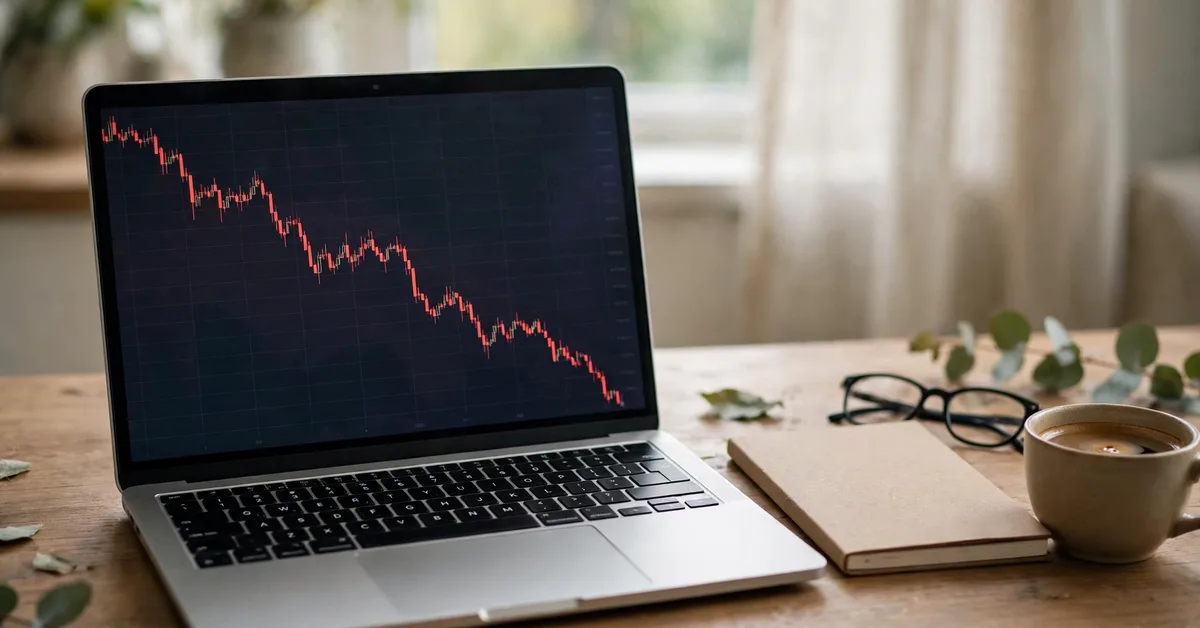
A crypto bear market is a long stretch of falling crypto prices, usually a drop of 20% or more from recent highs that lasts for months, and a crypto bear market ends only when prices stop making new lows and confidence returns. Bitcoin fell about 51% from its record high of about $126,000 in October 2025 to near $62,000 in November 2026, and that fall fits the definition (Source: Tangem, 2026). This guide explains what a crypto bear market is, the 7 signs that mark one, how long past bear markets lasted, how a bear market differs from a correction, a crash, and a crypto winter, the causes behind the fall, the dollar math of a deep drawdown, a 7-day plan for beginners, the playbook for 3 holder situations, safety and tax steps, and the 5 mistakes that cost the most money.
Key Takeaways
- A crypto bear market is a sustained price fall of 20% or more from recent highs, and in crypto the fall often runs 70% to 90% for Bitcoin and more for altcoins.
- Bitcoin has completed 4 bear markets since 2011, with falls of 93%, 86%, 84%, and 77.5% from peak to trough, and each took about a year to reach the bottom (Source: mb.io, 2026).
- A bear market differs from a correction: a correction is a 10% to 20% dip inside an uptrend, while a bear market breaks the trend for months.
- A 50% loss needs a 100% gain to recover, and a 77% loss needs about a 335% gain, so position size matters more than timing.
- A written 7-day plan beats a guess: check safety, save tax records, set a buy schedule, and stop checking the price each day.
What Is a Crypto Bear Market?
A crypto bear market is a prolonged period of falling cryptocurrency prices that lasts for months, and a crypto bear market is marked by a drop of 20% or more from recent highs, weak confidence, and lower trading volume. The 20% figure comes from stock markets, where one accepted measure of a bear market is a price fall of 20% or more over at least a 2-month period (Source: Wikipedia, 2026). Crypto falls run deeper than stock falls. Bitcoin dropped 70% to 85% in past bear markets, and many altcoins lost more than 90% (Source: Bitso, 2026).
A crypto bear market is a market condition, not one bad week. Prices fall, recover a little, then fall again to a lower low. Each rally stops short of the last high. News turns negative. New buyers stay away. Trading volume dries up as attention leaves. The mood shifts from hope to fear, then to silence. Bitcoin sits at the center of the pattern, because Bitcoin has the longest price record and the rest of the market has followed Bitcoin in every completed cycle so far.
The term “bear market” dates to 18th-century London, where traders who sold shares they did not yet own were called bearskin jobbers, and the name shortened to “bears” (Source: Wikipedia, 2026). The name stuck because it describes sellers who expect prices to fall. A person who expects prices to fall is bearish. A person who expects prices to rise is bullish. The Cryptocurrency guides on Savvy Cash Flow cover more beginner crypto topics in the same plain style.

How Do You Know a Crypto Bear Market Has Started?
You know a crypto bear market has started when 7 signs show up together: a 20% or larger fall from the high, lower highs and lower lows, falling volume, failed rallies, rising correlation across coins, quiet project news, and fear readings that stay low for months. No single sign proves a bear market. A 20% fall can happen in a week inside a healthy uptrend. The pattern of signs together is what counts.
- Lower highs and lower lows. Each rally stops short of the last high, and each fall sets a lower low. This price structure is the most reliable sign, and it matters more than any single percentage.
- Volume dries up. Trading activity falls as attention leaves. Quiet markets are a bear market signature, and the low volume also makes the later bottom hard to spot.
- Rallies fail. Sharp rises of 20% to 40% happen inside bear markets and then give the gains back. These bear market rallies convince many buyers that the bottom is in, and then prices make new lows.
- Correlation rises. Altcoins that behaved differently start falling together, because holders sell whatever they can sell, not whatever they want to sell.
- Narratives get quieter. Projects stop announcing, conferences shrink, and hiring slows. Media attention fades.
- Sentiment readings sit low for months. The Crypto Fear and Greed Index parking in the teens and 20s for weeks is a common bear market reading. In November 2026 the index sat at 13 out of 100, in Extreme Fear territory (Source: Savvy Cash Flow, 2026).
- Stablecoin supply rises. Money moves out of volatile coins and into stablecoins, which shows that holders want safety and dry powder, not new positions.
A bear market cannot be named with certainty while it runs. The 20% line is crossed often, and only later does the record show whether the fall was a correction inside an uptrend or the start of a bear market. The signs above give a working read, not a guarantee.

How Long Does a Crypto Bear Market Last?
A crypto bear market lasts about 12 to 18 months from peak to recovery in past cycles, and a crypto bear market takes about a year to reach its bottom before prices move sideways for months. The record is short: Bitcoin has only 4 completed bear markets, and each one ran about a year from peak to trough. Recovery to a new record high took much longer than the fall itself.
| Cycle | Peak | Trough | Peak to trough fall |
|---|---|---|---|
| 2011 | $32 | $2 | 93% |
| 2013 to 2015 | $1,163 | $152 | 86% |
| 2018 | $19,783 | $3,122 | 84% |
| 2022 | $68,789 | $15,476 | 77.5% |
Source: mb.io (2026). Two patterns show up across all 4 cycles. Falls have run between 77% and 93%, and each fall was shallower than the one before it. The 2018 cycle took about 14 months from peak to trough, the longest of the 4.
The current fall follows the same shape so far. Bitcoin set a record high of about $126,000 on October 6, 2025, then fell to near $62,000 by November 2026, about 51% below the high (Source: Tangem, 2026). United States spot Bitcoin ETFs recorded their worst month in June 2026, with about $4.5 billion pulled out in one month (Source: Tangem, 2026). Past cycles say a bottom takes about a year, and the 2026 fall is about 13 months old at the time of writing, so the timing fits the old pattern, but no pattern can set a date for the low.
For comparison, the average bear market in United States stocks from 1926 to 2014 lasted 13 months with an average cumulative loss of 30% (Source: Wikipedia, 2026). Crypto bear markets run deeper and faster than stock bear markets, and crypto has no earnings floor under prices, so falls can run further than fundamentals would suggest.
Crypto Bear Market vs Correction vs Crash vs Crypto Winter
A crypto bear market is a months-long trend break, a correction is a short 10% to 20% dip inside an uptrend, a crash is a fast and sharp fall over days or weeks, and a crypto winter is a severe bear market that lasts more than a year with low activity across the whole industry. The 4 terms describe different shapes, and each one calls for a different response.
| Term | What it means | Typical size | Typical length | What a beginner does |
|---|---|---|---|---|
| Correction | A short dip inside an uptrend | 10% to 20% | Days to weeks | Hold the plan, check nothing |
| Crash | A fast, sharp fall on panic or a shock | 30% or more, fast | Days to weeks | Do not sell in panic, check safety |
| Crypto bear market | A sustained downtrend with lower highs and lower lows | 20% to 90% | 12 to 18 months | Follow the 7-day plan below |
| Crypto winter | A severe, long bear market with low funding and low activity | 70% or more | More than a year | Learn, build skills, keep records |
Use the table as a decision check. A 15% dip with rising volume and steady news is a correction, and the right move is to hold the plan. A 50% fall over 2 days after an exchange collapse is a crash, and the right move is to check wallet safety before any trade. A 40% fall over 6 months with lower highs, dry volume, and fear readings in the teens is a bear market, and the right move is the 7-day plan. A 2-year stretch with dead funding, quiet projects, and prices flat at the lows is a crypto winter, and the right move is to learn and prepare for the next cycle.
Bear market rallies blur the lines. A bear market rally is a price rise of 5% or more inside a downtrend before prices fall again (Source: Wikipedia, 2026). Rallies of 20% to 40% are common inside crypto bear markets (Source: mb.io, 2026). A rally is only a recovery when it brings higher lows, rising volume, and better news with it. One green week never ends a bear market on its own.
What Causes a Crypto Bear Market?
A crypto bear market is caused by a mix of 6 forces: tighter money policy, too much leverage, rule changes, a large failure, weak token supply rules, and fading real use. The forces often arrive together, and each one feeds the next.
- Tighter money policy. Rising interest rates make risk assets less attractive, and crypto sits at the far end of the risk curve. The 2022 fall began as central banks raised rates fast. In 2026 the Federal Reserve held rates steady and took expected cuts off the table, which drained the same support (Source: Tangem, 2026).
- Too much leverage. Borrowed positions get liquidated as prices fall, and each forced sale pushes prices lower, which triggers more liquidations. The loop turns a normal fall into a deep one.
- Rule changes and enforcement. Bans, lawsuits, or unclear rules cut confidence. Slow progress on clear crypto rules in the United States has weighed on prices through 2026.
- A large failure. The 2022 bear market deepened when Terra/LUNA collapsed in May 2022 and wiped out about $40 billion in value in one week, and FTX, one of the largest exchanges, went bankrupt in November 2022 (Source: Bitso, 2026).
- Weak token supply rules. Large scheduled releases, high inflation, and insider selling pressure prices. A token with heavy releases ahead tends to fall harder than one without them.
- Fading real use and capital rotation. When the promised use does not arrive, token prices fall. In 2026 a large share of speculative money moved into AI stocks and chip makers instead of crypto, which pulled demand away without any crypto-specific bad news (Source: Tangem, 2026).
No single cause explains a whole bear market. The 2026 fall has no Terra-style collapse and no FTX-style failure behind it. The pressure comes from money policy, ETF outflows, and capital rotation, which makes it a slower bleed than 2022, not a smaller one.
What Does a Crypto Bear Market Do to Your Money?
A crypto bear market cuts a portfolio by the same percentage as the market fall, and a crypto bear market makes recovery hard because a 50% loss needs a 100% gain to get back, a 77% loss needs about a 335% gain, and a 90% loss needs a 900% gain. The recovery math is the part most beginners miss. A fall and a rise of the same percentage do not cancel out.
| Portfolio at the peak | Value after a 50% fall | Value after a 77% fall | Gain needed to recover from the 77% low |
|---|---|---|---|
| $1,000 | $500 | $230 | About 335% |
| $5,000 | $2,500 | $1,150 | About 335% |
| $10,000 | $5,000 | $2,300 | About 335% |
A $1,000 portfolio that falls 50% to $500 needs a 100% rise to reach $1,000 again. The same portfolio at the 2022-style low of $230 needs a gain of about 335% to get back to $1,000. A 90% drawdown needs a 900% gain to return to the old high (Source: MEXC, 2026). The math is why size matters more than timing: a small position can wait out a 2-year recovery, while a large position forces a sale at the worst moment.
Altcoins fall further than Bitcoin in every cycle. Bitcoin fell 77.5% in 2022, while many altcoins lost more than 90% and some never returned to their old highs (Source: Bitso, 2026). A portfolio spread across 10 small coins is not safer than a portfolio in 2 large coins when the whole market falls together. Diversification across crypto alone does not remove market risk, because correlation rises in a bear market and coins fall together.
The dollar math also sets the buy rule. A $100 monthly buy at $62,000 buys about 0.0016 BTC per month. If the price falls to $31,000 during those months, each $100 buys twice as much Bitcoin. Dollar-cost averaging (DCA) smooths the entry price, but DCA does not remove losses: a $1,200 stake bought at $62,000 is worth about $600 if the price halves. The schedule helps, and the asset still has to recover.

What Should Beginners Do in a Crypto Bear Market?
Beginners should follow a 7-day plan in a crypto bear market: write down every holding, move long-term coins off exchanges, check seed phrase backups, save tax records, set a fixed buy schedule or decide to buy nothing, set alerts, and then stop checking the price each day. The plan takes one week, and each step has one job.
- Day 1: Write down every coin, amount, and buy price in one sheet. List the exchange or wallet for each holding. A plan starts with facts, not feelings.
- Day 2: Move long-term holdings off exchanges to a wallet you control. Keep only the amount you plan to trade in the next few weeks on an exchange.
- Day 3: Check seed phrase backups and turn on app-based two-factor authentication. Write the 12-word or 24-word phrase on paper in two places, and never share it with any person or website.
- Day 4: Export all 2026 trade histories and save them for taxes. Export CSV files from each exchange and wallet app, and label transfers between your own wallets as transfers.
- Day 5: Decide a fixed buy amount and schedule, or decide to buy nothing. A $100 monthly buy on a set day beats a large buy made on a feeling. If the amount is money you need soon, buy nothing.
- Day 6: Set price alerts and delete the trading app from the home screen. Two alerts are enough: one for a large fall and one for a large rise. Daily checks feed panic, not decisions.
- Day 7: Review the written plan once, then stop checking prices daily. Read the plan, confirm the schedule, and close the apps. The plan now runs the decisions.
When I tracked the Fear and Greed Index each morning for a week during the 2026 fall, the mood number moved faster than the price did, and that week is what fixed my own rule: check the plan once a week, not the price each morning. A written plan also stops the 2 most common errors, which are selling at the low after a bad headline and buying a large amount after one green day.

Which Bear Market Playbook Fits Your Situation?
The right bear market playbook depends on your situation: a first-time buyer starts with a small test amount, a long-term holder reviews the thesis each quarter, and a person who needs the money soon keeps needed cash out of crypto entirely. One playbook does not fit all 3, because the risks are different.
| Situation | Main risk | Best move | What to avoid |
|---|---|---|---|
| First-time buyer | Buying too much, too fast | A small test amount of $25 to $100, then a set schedule | A lump sum on hype or a green day |
| Long-term holder | Panic selling near the low | Hold the plan, review the thesis each quarter | Checking the price daily, using leverage |
| Needs the money soon | Forced selling at a loss | Keep needed cash out of crypto, sell on a schedule if a sale is due | Waiting years for a recovery that may not come |
A first-time buyer learns the system with a small amount. A $25 buy teaches the order screen, the fee screen, and the wallet transfer, and the lesson costs little if the price falls. A long-term holder has already paid the learning cost, so the job is to protect the plan from emotion. A person who needs the money in 6 months has no time to wait out a 12 to 18 month bear market, so the money should not sit in crypto at all.
If you are torn between buying now and waiting, split the difference with a written rule: buy half the planned amount now, then buy the other half in equal weekly slices. Read our guide on should I buy Bitcoin now for the full 4-check test before any buy.
How Do You Keep Crypto Safe and Organized in a Bear Market?
You keep crypto safe and organized in a bear market by moving long-term holdings to a wallet you control, backing up the seed phrase offline in two places, locking every account with app-based two-factor authentication, and saving a full tax record for every trade. Bear markets punish sloppy security, because scams spike when prices fall and holders are distracted.
Scam messages pose as support staff and ask for a seed phrase to fix a wallet. Real teams never ask for a seed phrase, a private key, or a password by email, text, or direct message. Fake apps copy real wallet names in search ads and unofficial app stores. Download wallet apps only from the official site, type the exchange address yourself, and never open an exchange from a link in a message. Read our guide on how to store crypto safely for the full 7-step setup, including the hardware wallet checklist and the inheritance plan.
Tax records matter as much as wallet safety. The Internal Revenue Service (IRS) treats digital assets as property, not currency, so selling, swapping, or spending crypto can create a capital gain or loss (Source: IRS, 2026). Brokers must report gross proceeds on Form 1099-DA for sales on or after January 1, 2025, and must report basis on certain sales on or after January 1, 2026 (Source: IRS, 2026). The IRS digital assets page states the property rule and the reporting duty in plain terms, and it lists the records to keep: the type of asset, the date and time, the number of units, the fair market value, and the basis. A sale at a loss can offset gains, and that tax-loss harvesting only works when the records exist. Read our guide on crypto taxes for beginners for the full filing steps and the Form 1099-DA checklist.

What Are the 5 Biggest Mistakes in a Crypto Bear Market?
The 5 biggest mistakes in a crypto bear market are panic selling at the low, averaging down into dying projects, using leverage to recover fast, keeping large amounts on an exchange, and treating a bear market rally as the end of the bear market. Each mistake is preventable, and each one costs money because crypto trades cannot be reversed once confirmed.
- Panic selling at the low. The worst sales happen when fear peaks. Past lows arrived when fear was highest, so a sale made in panic locks in the loss and misses the recovery.
- Averaging down into dying projects. Buying more of a falling coin only helps when the project survives. A coin with no users, no revenue, and heavy scheduled releases can fall 90% and never return. Check the thesis before each new buy.
- Using leverage to recover fast. Margin compounds mistakes. A short squeeze can move Bitcoin 17% in 5 days, which wipes out a leveraged short, and a long position can liquidate on one more dip. Never use rent money, bill money, or borrowed money.
- Keeping large amounts on an exchange. Exchanges can freeze, get hacked, or fail. The 2022 fall included the FTX bankruptcy, and holders with coins on the exchange waited years for partial recovery. Keep only trading money on an exchange.
- Treating a bear market rally as the end. A 30% rise inside a downtrend feels like a recovery, and it often fails. Wait for higher lows, rising volume, and better news together before calling a turn.
Crypto Bear Market vs Bull Market
A crypto bear market is a long fall with fear and shrinking volume, and a crypto bull market is a long rise with confidence and growing volume, and the two markets reward opposite behavior. The table below shows the full contrast.
| Factor | Crypto bear market | Crypto bull market |
|---|---|---|
| Price trend | Sustained fall, lower highs and lower lows | Sustained rise, higher highs and higher lows |
| Typical Bitcoin fall or rise | 77% to 93% from peak to trough in past cycles | New record highs after each cycle so far |
| Sentiment | Fear, then capitulation, then indifference | Optimism that builds into euphoria |
| Volume and participation | Buyers leave, volume dries up | New buyers arrive, volume rises with price |
| Typical triggers | Rate rises, rule crackdowns, hacks, collapses | Adoption, clear rules, new use cases, ETF access |
| Main risk to you | Selling at the bottom because losses feel permanent | Buying at the top because confidence peaks with price |
| Best beginner move | Written plan, small scheduled buys, safety checks | Written exit plan, profit targets set while calm |
| Duration | About 12 to 18 months in past cycles | About 12 to 18 months from trough to peak |
Both markets punish the same error: deciding by feeling instead of by plan. Bull markets punish buyers who chase green candles. Bear markets punish sellers who chase red candles. The plan written in a calm week is worth more than any signal in a loud week. Savvy Cash Flow covers both sides of the cycle in the same plain style, so a beginner can read the bull market guide next and keep one plan for the whole cycle.
Conclusion
A crypto bear market is a long, deep fall that tests every holder, and a crypto bear market rewards the holder who plans in writing, sizes positions small, keeps coins safe, and waits out the cycle. The definition is simple: a fall of 20% or more from recent highs that lasts for months, with lower highs, dry volume, and fear that stays low. Bitcoin has completed 4 such falls since 2011, each one took about a year to bottom, and each one ended with a recovery to new highs. The 2026 fall fits the same shape, with Bitcoin about 51% below its record high of about $126,000. The dollar math sets the stakes: a 50% loss needs a 100% gain to recover, and a 77% loss needs about a 335% gain. The 7-day plan turns that knowledge into action: write down holdings, move coins to a wallet you control, back up the seed phrase, save tax records, set a schedule, and stop checking the price each day. Bear markets end, and the holders who reach the end with a plan intact are the ones who benefit when the next cycle starts.
Frequently Asked Questions
How long does a crypto bear market last?
A crypto bear market lasts about 12 to 18 months in past cycles, and a crypto bear market takes about a year to reach its bottom. The 2018 cycle took about 14 months from peak to trough, and the 2022 cycle took about 12 months. Recovery to a new high took much longer than the fall.
Is crypto in a bear market in 2026?
Yes, crypto fits the bear market definition in 2026, because Bitcoin fell about 51% from its record high of about $126,000 in October 2025 to near $62,000 in November 2026. The fall shows the classic signs: lower highs, dry volume, fear readings in the teens, and large ETF outflows. Only later will the record show where the low was.
Should I sell my crypto in a bear market?
No, you should not sell all your crypto in a bear market, because panic selling near the low locks in the loss and misses the recovery that followed every past cycle. Sell only when the plan says so: when you need the money soon, when the thesis broke, or when one position grew too large.
What is a crypto winter?
A crypto winter is a severe and extended crypto bear market that lasts more than a year, with low prices, scarce funding, low user activity, and many projects shutting down. A normal bear market may last months. A crypto winter lasts longer and affects the whole industry mood, while serious builders keep working with less capital and less attention.
Can you make money in a crypto bear market?
Yes, some traders make money in a crypto bear market through short selling, staking rewards, and scheduled buying at lower prices, but each method carries real risk. Short selling can lose more than the stake when prices rise fast. Staking pays rewards in the same coin whose price is falling. Scheduled buying only helps when the asset recovers.
How do I know when a crypto bear market ends?
You know a crypto bear market ends when prices stop making new lows, rallies hold their gains, volume returns, and sentiment improves for weeks, not days. One green week never ends a bear market. Follow the written plan and buy on a schedule instead of trying to call the exact bottom.