

Your first paycheck is proof that your work has value, and what you do with it sets the pattern for every paycheck after it. What to do when you get your first paycheck is simple: read your pay stub, split the money with a basic budget, capture any employer 401(k) match, start a small emergency fund, and set up the accounts that make the next steps automatic. The seven moves in this guide take about 90 minutes in total, and they work whether your first paycheck is $200 from a part-time job or $2,000 from a full-time role. Savvy Cash Flow covers beginner money guides like this one so first earners can start strong without jargon or guesswork.
A first paycheck is a financial fresh start. No bad habits exist yet, no debt payments eat the money before you see it, and small amounts grow fast because time is on your side. The order below matters: bills and minimum payments come first, the employer match comes second, a small cash buffer comes third, and extra debt payoff and investing follow after that. Follow the order, and the exact dollar amounts matter less than the habit. The guide below shows each move with real dollar amounts, so you can copy the plan to your own paycheck.
Key Takeaways
- Read your pay stub first: gross pay is not your pay, net pay is the number your budget uses.
- Split every paycheck into needs, wants, and savings with the 50/30/20 rule as a starting point.
- Capture the full 401(k) employer match before you spend on anything fun, because the match is a 100% return on that money.
- Build a $1,000 starter emergency fund in a high-yield savings account at a separate bank.
- Open a Roth IRA while your tax rate is low, and build credit slowly with a starter card you pay in full.
What Should You Do When You Get Your First Paycheck?
What to do when you get your first paycheck is to give every dollar a job before you spend any of it. Open a checking account with direct deposit, read your pay stub so you know your real take-home pay, split the money between needs, wants, and savings, capture the full 401(k) employer match, move a fixed amount into a separate savings account, and set a small fun budget so you still enjoy the win. These seven moves turn one paycheck into a system that runs on its own.
A first paycheck is a financial fresh start. No bad habits exist yet, no debt payments eat the money before you see it, and small amounts grow fast because time is on your side. The order below matters: bills and minimum payments come first, the employer match comes second, a small cash buffer comes third, and extra debt payoff and investing follow after that. Follow the order, and the exact dollar amounts matter less than the habit.
Browse more beginner guides on the Personal Finance guides page at Savvy Cash Flow to build on these seven moves.
1. Read Your Pay Stub Before You Spend Anything
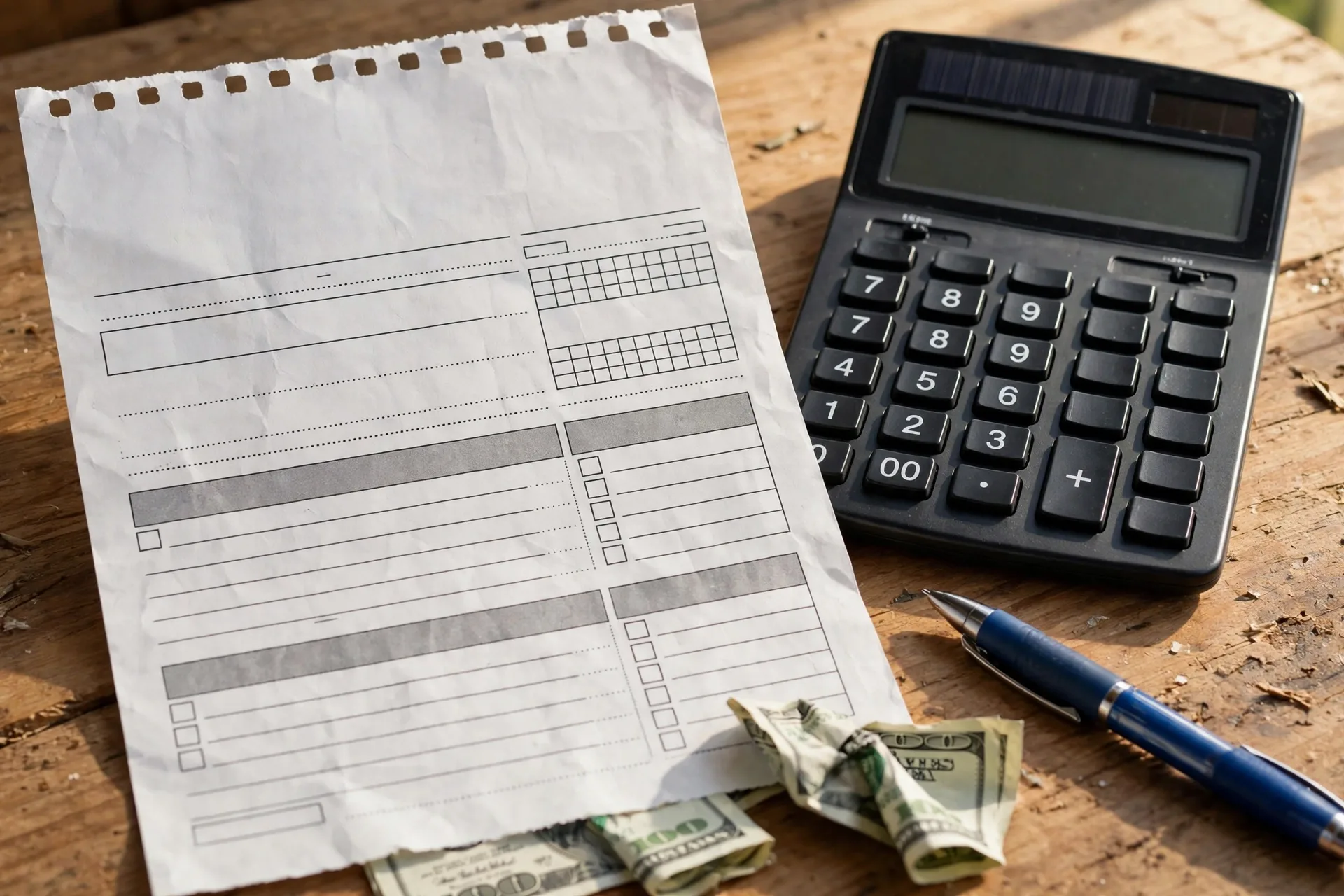
Read your pay stub line by line, because gross pay is the number on your offer letter and net pay is the money that lands in your bank account. Your pay stub shows gross pay, federal income tax, state income tax, Social Security and Medicare taxes, health insurance premiums, retirement contributions, and any other deduction. Net pay is gross pay minus all of those lines, and net pay is the only number your budget can use.
Federal Insurance Contributions Act (FICA) tax takes 7.65% of your pay: 6.2% for Social Security and 1.45% for Medicare. On a $1,500 gross biweekly paycheck, FICA alone is about $115. Federal and state income tax add more, and health insurance premiums and retirement contributions add more still. For most full-time workers, net pay lands at roughly 65% to 75% of gross pay (Source: Bina Capital, 2026).
Use this worked example for a $1,500 gross biweekly paycheck:
| Line | Amount |
|---|---|
| Gross pay (biweekly) | $1,500 |
| 401(k) contribution (4% to get the full match) | -$60 |
| FICA tax (7.65%) | -$115 |
| Federal and state income tax (estimate) | -$150 |
| Health insurance premium | -$75 |
| Net pay (what lands in your account) | $1,100 |
Check three things on your first pay stub: your hours and pay rate match what you worked, your tax withholding looks right, and your 401(k) contribution shows up if you enrolled. If any line looks wrong, tell payroll the same day and keep a copy of the stub. A wrong first paycheck is common, and payroll fixes it faster when you flag it early.
2. Set Up Direct Deposit and a Checking Account
Set up direct deposit into a checking account before your second payday, so your pay arrives on time and you never pay a check-cashing fee. Direct deposit is an electronic transfer from your employer straight into your bank account. Give payroll your routing number and account number, and your pay lands in your account on payday without a trip to the bank.
A checking account is the home base for your first paycheck. Your debit card, bill payments, and automatic transfers all run from it. Pick an account with no monthly fee and no minimum balance, because fees eat small paychecks fast. Many banks and credit unions offer free checking for students and young workers, so ask before you open one.
If you have no bank account yet, open one this week and bring a photo ID plus your Social Security number. You can also ask your employer if it offers a pay card, but a real checking account gives you more control and fewer fees. Keep your checking account for spending and bills only, and keep savings in a separate account so the two never mix.

3. Give Your First Paycheck a Simple Budget
Split your first paycheck with the 50/30/20 rule: 50% for needs, 30% for wants, and 20% for savings and extra debt payments. The 50/30/20 rule is a budget that divides after-tax income into three buckets, and it works because it takes two minutes to set up and fits on one line. Needs are rent, groceries, transport, phone, and minimum loan payments. Wants are dining out, streaming, games, and fun. Savings cover your emergency fund, retirement contributions, and extra debt payoff.
Here is the same $1,100 net biweekly paycheck split with the rule:
| Bucket | Share | Amount per paycheck |
|---|---|---|
| Needs (rent, groceries, transport, phone) | 50% | $550 |
| Wants (fun, dining out, streaming) | 30% | $330 |
| Savings and extra debt payoff | 20% | $220 |
The $220 savings bucket splits further: $120 goes to your emergency fund and $100 goes to a Roth IRA (Individual Retirement Account). At that pace, a $1,000 starter emergency fund takes about 9 paychecks, or about 4 months on a biweekly schedule. The numbers are not magic, and the split can shift when rent eats more than half your pay. If needs take 60%, cut wants to 20% and keep savings at 20% rather than dropping savings to zero.
New to budgets? Read What Is a Budget? for a plain-English walkthrough before you split your first paycheck.
Track your spending for the first month, even loosely. A notes app works fine. Most first earners find $40 to $80 a month in small purchases they forgot about, like app subscriptions and daily coffee, and that money can move straight into savings.
4. Capture the Full 401(k) Employer Match
Contribute enough to your 401(k) to get the full employer match, because the match is an instant 100% return that no savings account or stock can beat. A 401(k) is an employer retirement plan that takes money from your paycheck before tax. Many employers match part of what you put in, and the most common formula is 100% of the first 4% of your pay. On a $70,000 salary, a 4% match is $2,800 a year of free money from your employer, on top of the $2,800 you contribute.
Set your contribution rate in your first week, before the first paycheck even hits. Log into your benefits portal, find the 401(k) contribution rate, and set it to at least the match percentage. Pick a target-date fund that matches your expected retirement year as the default investment, because it handles the mix of stocks and bonds for you.
For 2026, you can contribute up to $24,500 of your own money to a 401(k) (Source: IRS, 2026). Most first earners never get near that limit, and that is fine. The goal in year one is the full match, not the max. If your employer offers no 401(k) at all, skip to step 6 and open a Roth IRA instead, because the same retirement saving still matters without the match.
Ask HR two questions before you enroll: when does the match start, and when does it vest? Some plans match right away, and some need you to stay 1 to 4 years before the matched money is fully yours. The match is still worth capturing either way, because your own contributions are always yours.

5. Start Your Emergency Fund in a High-Yield Savings Account
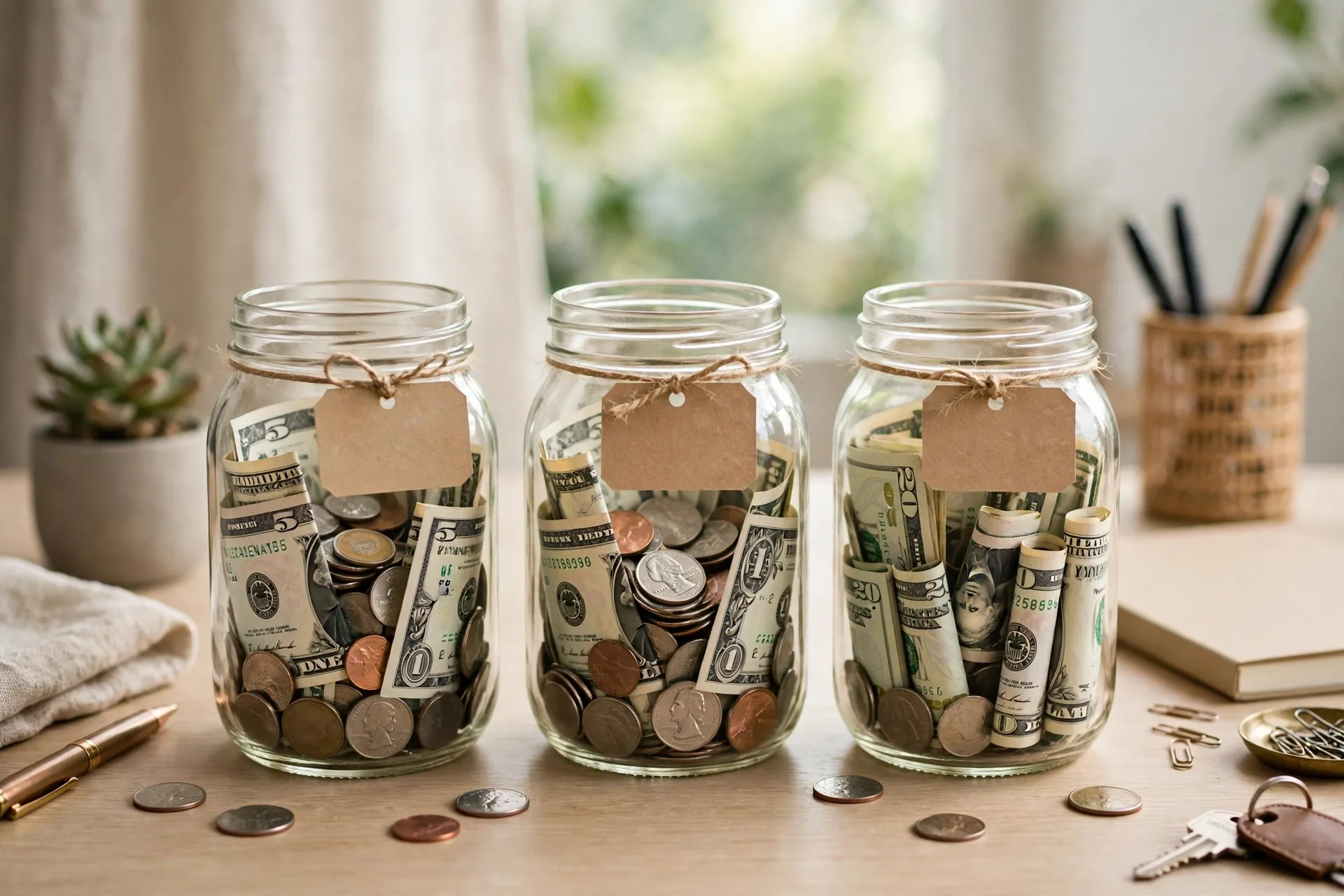
Move a fixed amount from every paycheck into a high-yield savings account at a separate bank, and aim for a $1,000 starter emergency fund first. An emergency fund is cash set aside for surprise costs like a car repair or a medical bill, so one bad week never becomes credit card debt. A high-yield savings account (HYSA) is a savings account that pays a higher interest rate than a standard bank savings account, and it keeps the money safe, separate, and easy to reach.
Open the HYSA at a different bank from your checking account. The 1 to 2 day transfer delay between banks creates friction that stops impulse withdrawals, and that friction is the point. Set up an automatic transfer for the day after each payday, so the money moves before you can spend it. Start with $25 to $50 per paycheck if money is tight, and raise the amount when your pay rises.
The national average rate on savings accounts was 0.39% in November 2026 (Source: FDIC, 2026), while many high-yield accounts pay several times that rate. The rate matters less than the habit in year one, because $1,000 in a HYSA earns a few dollars a month while $1,000 in a checking account earns almost nothing and gets spent. Build the starter fund to $1,000, then grow it toward one month of expenses, and then toward 3 to 6 months.
Learn the details in How to Build an Emergency Fund From Scratch, and compare account types in What Is a High-Yield Savings Account?
6. Open a Roth IRA While Your Tax Rate Is Low
Open a Roth IRA (Individual Retirement Account) while your income and tax rate are low, because you pay tax on the money now and never pay tax on the growth again. A Roth IRA is an individual retirement account you open yourself, outside your employer. You contribute after-tax money, the money grows tax-free for decades, and withdrawals in retirement are tax-free. That trade is at its best in your first job, when your tax bracket is usually the lowest it will ever be.
For 2026, you can contribute up to $7,500 a year to an IRA (Source: IRS, 2026). That is about $625 a month to max it out, but most first earners start with $50 to $100 a month and raise it with each raise. Open the account at a low-cost broker, set up an automatic monthly transfer from checking, and set the money to auto-invest in a target-date fund or a broad index fund. A Roth IRA that holds only cash is just a savings account with a tax wrapper, so the investment step matters as much as the account.
Compare the two account types in Roth IRA vs Traditional IRA before you choose. If your employer offers a 401(k) match, capture the match first, then fund the Roth IRA with what is left. If your employer offers no retirement plan, the Roth IRA is your first retirement account, and starting it in year one puts decades of tax-free growth on your side.
When I set up my first direct deposit, I split $25 from each paycheck into a separate savings account before I spent anything else, and that small automatic move built my first $500 cushion in 10 paychecks without any willpower. Automation beats discipline, because it works on the weeks you forget.
7. Build Credit the Safe Way With a Starter Card
Build credit with one starter card that you pay in full every month, because on-time payments and low balances are what build a strong credit score. A credit score is a number that lenders use to judge how reliably you repay borrowed money, and it affects apartment rentals, car loans, and future credit cards. Your first paycheck is the right time to start, because a long history of on-time payments is hard to build later.
If you have no credit history, a secured credit card is the usual first step. You put down a deposit of $200 to $300, the bank gives you a card with that limit, and your payments get reported to the credit bureaus. Use the card for one small recurring cost, like a $15 streaming subscription, set it to autopay in full, and leave the rest of your spending on your debit card.
Keep your credit utilization under 30%, and under 10% is better. Credit utilization is the share of your credit limit that you use, so a $300 limit means keeping the balance under $90, and under $30 is better still. Never carry a balance month to month: credit card accounts that were charged interest paid an average rate of 22.36% in the third quarter of 2026 (Source: Federal Reserve, 2026), and no savings account beats that cost.
Learn the full playbook in How to Improve Your Credit Score Fast, and check your credit report for free at least once a year so errors never sit unnoticed.

What If Your First Paycheck Is Wrong?
If your first paycheck is wrong, tell payroll in writing the same day, because a documented error gets fixed faster than a verbal complaint. Check your hours, your pay rate, your tax withholding, and your benefit deductions against your offer letter and your time records. Common first-paycheck errors are missing hours, the wrong hourly rate, no 401(k) deduction when you enrolled, and too much or too little tax withheld.
Follow these 5 steps:
- Photograph or save your pay stub and your time records for that pay period.
- Write down the exact error, with the correct number next to the wrong number.
- Email payroll and your manager, and keep the email as your record.
- Ask for a corrected check or an off-cycle payment, and ask when it will arrive.
- Check the next paycheck to confirm the fix, and check your W-4 if the tax withholding was wrong.
Check your W-4 (Employee’s Withholding Certificate) with the IRS Tax Withholding Estimator, a free IRS tool that checks whether your employer withholds the right amount of tax from your pay. A big refund at tax time means you lent the government money for free all year, and a big bill means you owe tax you never set aside. Fix the W-4 early, and your take-home pay stays steady all year.
First Paycheck Checklist: Your First 30 Days
Your first 30 days need one checklist, not ten apps, and each item below takes under 30 minutes. Work through the list in order, and check each item off as you finish it.
- Open a checking account with no monthly fee, if you do not have one yet.
- Give payroll your bank details for direct deposit.
- Read your first pay stub and confirm hours, rate, taxes, and deductions.
- Set your 401(k) contribution to at least the full employer match.
- Enroll in health insurance, and in a Health Savings Account (HSA) if you pick a high-deductible plan.
- Open a high-yield savings account at a separate bank.
- Set up an automatic transfer to savings for the day after each payday.
- Open a Roth IRA and set up a small automatic monthly contribution.
- Apply for a secured credit card if you have no credit history, and set it to autopay in full.
- Run the IRS Tax Withholding Estimator and fix your W-4 if the withholding is off.
Do the audit again at day 90: confirm the 401(k) money is landing, the savings transfer runs on schedule, and the Roth IRA contribution is invested, not sitting as cash. If all four checks pass, your system runs itself, and your only job is a yearly review where you raise the savings rate by 1% of pay.
First Paycheck vs Second Paycheck: What Changes
Your first paycheck builds the system, and your second paycheck runs it, so the work drops sharply after payday one. The first paycheck needs accounts, forms, and decisions. The second paycheck needs one habit: leave the automatic transfers alone and spend only what is left in checking after they run.
| Task | First paycheck | Second paycheck onward |
|---|---|---|
| Accounts | Open checking, HYSA, Roth IRA | No new accounts |
| Payroll forms | Direct deposit, W-4, 401(k), benefits | Fix only if something is wrong |
| Budget | Build the 50/30/20 split | Follow the split, adjust once a month |
| Savings | Set up automatic transfers | Transfers run on their own |
| Credit | Apply for a starter card | Pay in full, keep use under 30% |
| Time needed | About 90 minutes total | About 10 minutes to review |
Raise your savings rate with every raise, not before. A $100 monthly raise can send $50 to savings and $50 to fun, and your lifestyle never feels the cut because the money never hits your checking account.
What About a First Paycheck From a Part-Time or Teen Job?
A part-time or teen first paycheck follows the same seven moves, minus the employer benefits, because the habits matter more than the dollar amounts. Teens and part-time workers usually get no 401(k), no health insurance, and no employer match, so steps 4 and 6 change: skip the 401(k) and open a Roth IRA with $25 a month instead, since a teen with earned income can hold a Roth IRA through a custodial account with a parent or guardian.
Set aside tax money yourself if your employer withholds nothing. Gig and contract workers get no tax withholding at all, and the IRS Gig Economy Tax Center explains the rules for reporting that income. A simple rule is to move 15% of every gig payment into a separate savings account for taxes, so April never brings a surprise bill.
Starting pay for new college graduates averaged $68,873 for business majors and $81,535 for computer science majors in the class of 2026 (Source: NACE, 2026). Part-time first paychecks are far smaller, often $200 to $400, and the same split still works: $100 to needs, $60 to wants, and $40 to savings builds a $1,000 emergency fund in about a year of steady part-time work.
Frequently Asked Questions
How much of my first paycheck should I save?
Save at least 20% of your first paycheck, split between your 401(k) match, your emergency fund, and a Roth IRA. If 20% is too much right now, start with 10% and raise it by 1% every few months. The habit matters more than the starting number, and automatic transfers make the habit stick.
Should I save or invest with my first paycheck?
Do both, in order: capture the 401(k) match first, build a $1,000 starter emergency fund second, and fund a Roth IRA third. The match is a guaranteed 100% return, the emergency fund stops surprise costs from becoming debt, and the Roth IRA uses your low early tax rate for decades of tax-free growth.
What is a good first paycheck budget?
A good first paycheck budget is the 50/30/20 rule: 50% for needs, 30% for wants, and 20% for savings and extra debt payoff. Adjust the shares when rent eats more than half your pay, but keep savings at 20% if you can. A simple budget you follow beats a perfect budget you quit.
Do I need a bank account for my first paycheck?
Yes, you need a checking account for direct deposit, because most employers pay by direct deposit and paper checks cost time and fees. Open a free checking account with a photo ID and Social Security number, give payroll your routing and account numbers, and your pay lands on time every payday.
How do I cash my first paycheck without a bank account?
Take the check to the bank that issued it with a photo ID, but expect a fee and a hold on the funds. A better move is to open a checking account first, deposit the check there, and set up direct deposit so the next paycheck arrives without a trip to the bank.
When should I start investing after my first paycheck?
Start investing with your very first paycheck by capturing the 401(k) match, then open a Roth IRA within your first month. Time in the market beats timing the market, and money invested at age 22 has about 40 years to grow before retirement.
How much is a 401(k) match worth?
A typical 401(k) match of 100% of the first 4% of pay is worth $2,800 a year on a $70,000 salary, and $28,000 over 10 years before any investment growth. Skipping the match gives up that money every year, so set the contribution rate in your first week on the job.
Conclusion
What to do when you get your first paycheck is to build a small system before you spend the money: read the pay stub, set up direct deposit, split the pay with a simple budget, capture the full 401(k) match, start a $1,000 emergency fund, open a Roth IRA, and build credit slowly. These seven moves take about 90 minutes, and they keep working long after the first paycheck is gone. The first paycheck is the smallest one you will ever earn, but the habits it starts are the ones that build wealth. Start with the first step today, and let the system do the rest. More beginner money guides wait for you on Savvy Cash Flow, where every guide follows the same plain-English style.