

Introduction
How to start a pet sitting business from home comes down to 7 steps: pick 2 or 3 services, get first aid certified, buy pet sitter insurance, register the business, set prices, build a booking page, and win first clients through Rover and your network. Startup costs run $475 to $1,630, and the booking can arrive in 1 to 2 weeks.
Pet sitting is paid care for other people’s animals while owners work or travel. This guide explains what a pet sitting business from home is, what it costs to start, which license and insurance rules apply, what sitters charge, how Rover, Wag, and direct bookings compare on pay, the 7 steps to launch, how to pet-proof a home for boarding, how to win the first 5 clients, what taxes sitters pay, what to do when a pet gets sick, and how much a first month can earn.

Key Takeaways
- A pet sitting business from home starts for $475 to $1,630, and insurance is the one cost you should not skip.
- Drop-in visits price at $18 to $30, dog walks at $20 to $35, and overnight sitting at $50 to $90 per night.
- Rover keeps 20 percent of each booking and Wag keeps about 40 percent, so direct bookings pay more for the same work.
- A pet first aid course costs $25 and takes 35 minutes, and it is the cheapest trust signal a new sitter can buy.
- The first 5 clients come from 20 personal contacts, 2 local groups, and flyers at vet clinics and pet shops.
- Set aside 25 percent of each payment for taxes, and file when net earnings reach $400.
What Is a Pet Sitting Business From Home?
A pet sitting business from home is a paid service that cares for pets in the owner’s home or in the sitter’s home while the owner is away, and the sitter feeds pets, refreshes water, gives medication, walks dogs, and sends photo updates to the owner. Pet sitting is a more personal form of care than kennel boarding, because the pet stays in a home setting with one sitter.
Pet sitting covers 6 main services. Drop-in visits are short stops to feed a pet, refresh water, scoop a litter box, and let a dog out. Dog walking is a 20, 30, or 60-minute walk, often at midday. Doggy day care is daytime care at the sitter’s home. Overnight sitting means the sitter stays at the client’s home overnight. Boarding means the pet stays overnight at the sitter’s home. Pet taxi is driving a pet to the vet, groomer, or day care. Read how pet sitting differs from boarding on Wikipedia.
Pet sitting is a side hustle that fits people who love animals and want flexible work with no commute. Owners book sitters most on weekends and holidays, which is exactly when owners travel. The work does not suit people who need same-day pay, because platform payouts take days, or people who rent a home where pets are not allowed and plan to host animals there. Compare pet sitting with other low-cost service businesses in the Business Ideas & Side Hustles guides on Savvy Cash Flow.
How Much Does It Cost to Start a Pet Sitting Business?
A pet sitting business from home costs $475 to $1,630 to start, and the low start uses a Rover profile with basic gear, while the high start adds a Limited Liability Company (LLC), a full year of insurance, first aid training, booking software, and a website. Insurance is the largest single cost in both ranges, and it is the one item that protects the sitter from a vet bill that can run into thousands of dollars.
| Startup cost item | Low range | High range | What it covers |
|---|---|---|---|
| Pet first aid course (Red Cross) | $25 | $25 | 35-minute online cat and dog first aid course |
| Rover profile review fee | $49 | $79 | One-time fee before a Rover profile goes live |
| Pet sitter insurance, first year | $300 | $1,000 | Liability plus care, custody, and control cover |
| Business registration (LLC) | $50 | $200 | State filing fee, varies by state |
| Basic supplies | $50 | $125 | Leashes, waste bags, treats, towels |
| Flyers, Google Business Profile, basic website | $0 | $200 | Local marketing and a booking page |
| Total startup cost | $475 | $1,630 | Full start range for a pet sitting business |
Pet sitting is one of the cheapest service businesses to launch, because the sitter needs no stock, no shop, and no staff. Many sitters start for less than $500 by using a platform profile and gear they already own. Monthly running costs stay low too: insurance runs $15 to $35 per month, scheduling software runs $0 to $30 per month, fuel runs $100 to $300 per month for driving between client homes, and supplies run $30 to $60 per month (Source: Foundra (2026)).

I read 10 competitor guides before I wrote this guide. None of them gave a full first-month earnings plan with hours attached, so this guide adds one in the earnings section near the end.
Do You Need a License or Insurance to Pet Sit?
A pet sitting business from home needs a city business license where the city requires one, pet sitter liability insurance with care, custody, and control cover, and a written service agreement, and the business needs no national pet sitting license in most of the United States. There is no federal license to become a pet sitter. Most cities ask for a general business license that costs $50 to $150, and some cities add a kennel or boarding permit when pets stay overnight in the sitter’s home.
Start as a sole proprietorship and form a Limited Liability Company (LLC) after clients arrive, or form the LLC first if you want the liability shield from day one. A Limited Liability Company (LLC) is a legal form that separates personal assets from business debts in most states. State filing fees run $50 to $300. Get an Employer Identification Number (EIN) free from the IRS after you form the LLC, because banks ask for an EIN for a business account. You can apply for an EIN free on the IRS site in one session, and the IRS issues the number at once when the application is approved.
Insurance covers 3 risks. General liability cover pays for injury to other people and damage to client property. Care, custody, and control cover pays vet bills when a pet in the sitter’s care is hurt or lost, and a standard liability policy excludes pets in care without this cover. A surety bond pays the client when a sitter or an employee steals from a client home. Pet sitter insurance costs $200 to $400 per year for a basic policy, and full policies run $300 to $1,000 per year (Source: Foundra (2026); EarnQuill (2026)).
A background check is also part of the trust package. Rover runs a background check through a third-party provider before a profile goes live, and sitters must be at least 18 years old. A pet first aid certificate from the American Red Cross costs $25, takes 35 minutes online, and covers breathing trouble, cardiac emergencies, wounds, and seizures (Source: American Red Cross (2026)).

How Much Do Pet Sitters Charge?
Pet sitters charge $18 to $30 per 30-minute drop-in visit, $20 to $35 per 30-minute dog walk, $35 to $75 per night for boarding, and $50 to $90 per night for overnight sitting in the client’s home, and prices rise with experience, reviews, and holiday demand. New sitters price near the low end to win the first 5 reviews, then raise prices after 5 paid jobs and 3 reviews.
| Service | Typical rate | Best buyer |
|---|---|---|
| Drop-in visit, 30 minutes | $18 to $30 | Cat owners, dogs that need a midday check |
| Dog walking, 30 minutes | $20 to $35 | Working owners, high-energy dogs |
| Dog walking, 60 minutes | $35 to $50 | Active owners, large dogs |
| Boarding in the sitter’s home, per night | $35 to $75 | Owners on holidays |
| Overnight sitting in the client’s home, per night | $50 to $90 | Owners who want the pet at home |
| Pet taxi, per trip | $15 to $30 | Vet and groomer trips |
Price per unit of service: per walk, per drop-in visit, per night for overnights. Then build packages on top, because packages are where repeat income lives. A discounted weekly bundle, such as 5 midday walks, locks in a client and smooths income. Add holiday premiums for peak dates such as Thanksgiving, the December holidays, and summer travel, and set that policy in writing before the first booking so the price is never awkward.
Do not race to the bottom. The average sitter near you might charge $15 to $20 per visit, but established sitters report charging $40 or more per walk or drop-in and $50 to $70 for boarding. Owners trust their pet to the sitter who looks like a professional, not the cheapest option. When the calendar fills for 2 straight weeks, raise the price for new clients by $2 to $5.

Rover vs Wag vs Direct Bookings: Which Pays More?
Direct bookings pay more than Rover or Wag for the same pet sitting work, because Rover keeps 20 percent of each booking and Wag keeps about 40 percent, while a direct booking keeps 100 percent of the fee minus card processing of about 2.9 percent. A $50 overnight booking through Rover nets $40. The same booking through Wag nets $30. The same booking direct nets about $48.50 after card fees.
| Factor | Rover | Wag | Direct bookings |
|---|---|---|---|
| Commission per booking | 20 percent | About 40 percent | $0, card fee about 2.9 percent |
| $50 overnight, sitter keeps | $40 | $30 | About $48.50 |
| $3,000 monthly gross, sitter keeps | $2,400 | $1,800 | About $2,913 |
| First booking speed | Days | Days | 1 to 4 weeks |
| Client ownership | Platform owns the booking | Platform owns the booking | Sitter owns the client list |
| Trust signal | Platform reviews and guarantee | Platform reviews and guarantee | Own insurance, bond, and reviews |
The fee compounds over time. A sitter who grosses $3,000 per month on Rover loses $600 per month to commission, which is $7,200 per year and $21,600 over 3 years (Source: TailStalks (2026)). A full-time sitter who grosses $36,000 per year keeps about $28,800 on Rover, against about $35,801 on direct bookings with a flat-fee booking tool, a gap of about $7,001 per year.
Use platforms to find clients, then move repeat clients to direct booking. The path is simple: deliver strong service, give every Rover client a business card, and offer a small discount for direct booking, such as $45 per night direct against $50 through the app. Rover’s guarantee covers some costs from injuries to the pet in care and damage to the sitter’s property, but only for bookings paid through Rover. It excludes injury to the sitter, bookings made outside Rover, illness, pre-existing conditions, and preventable issues such as fleas and ticks. A sitter who takes private clients outside a platform needs an own policy, because the platform guarantee does not cover those bookings.
Dog walking pairs well with pet sitting. Read the Dog Walking Business: Startup Costs and Earnings guide to add walks to your service menu.
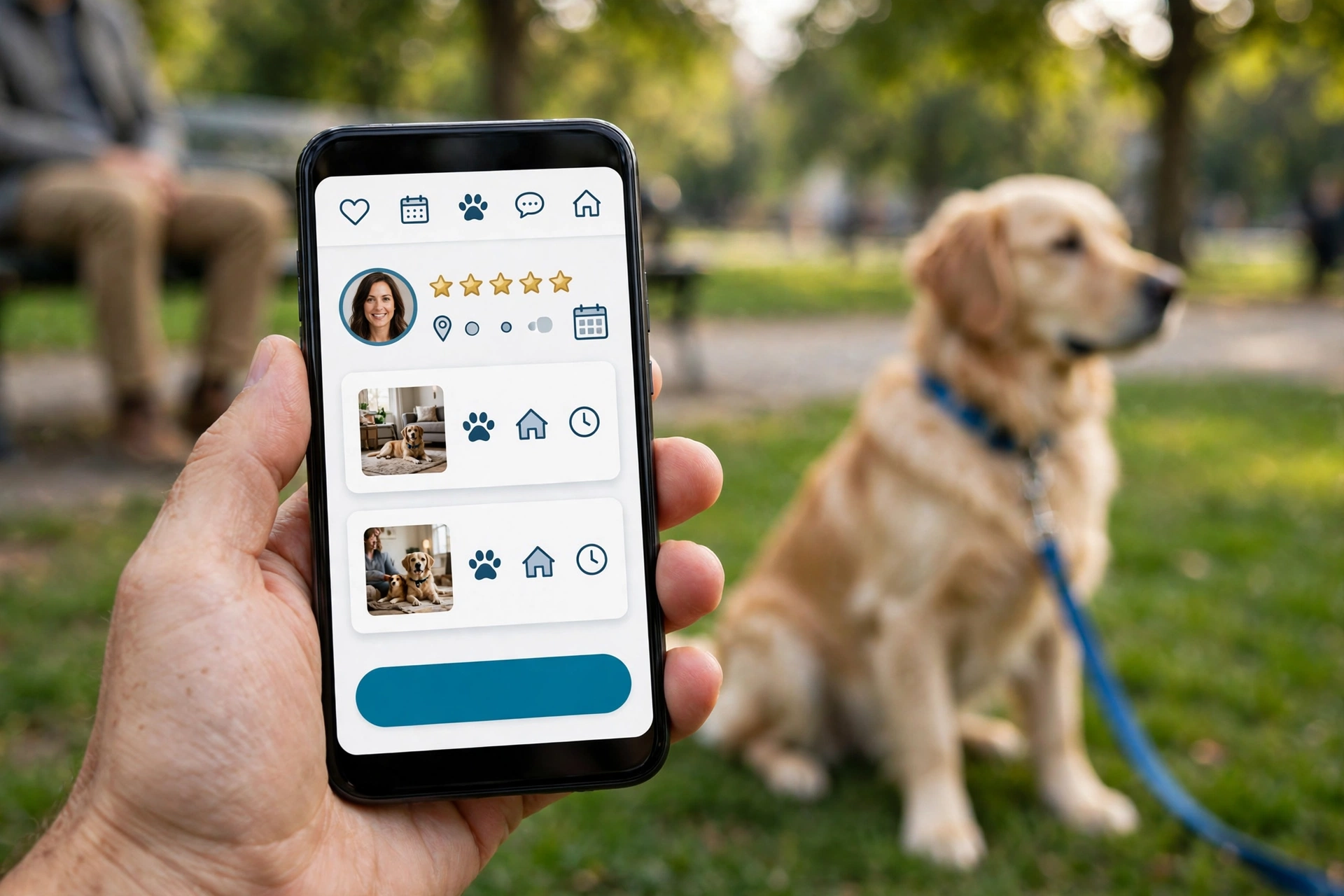
How to Start a Pet Sitting Business From Home in 7 Steps
To start a pet sitting business from home in 7 steps, pick services, get certified and insured, register the business, set prices, build a booking page, run a meet and greet with every new client, and turn trial bookings into weekly packages with a review request on delivery day. Follow the 7 steps in order, because each step removes one blocker for the next step.
- Pick 2 or 3 services to offer first. Drop-in visits and dog walking are the easiest starts, because they need no overnight stay and no home setup. Add overnight sitting and boarding after 10 paid bookings, when reviews and routines are in place.
- Get pet first aid certified and insured before the first paid client. Take the $25 Red Cross course, then buy a pet sitter policy with care, custody, and control cover. Add the certificate and the insurance line to every profile on the day you complete them.
- Register the business name and check city license rules. Check the name on the state business registry, file a DBA or LLC, and ask the city clerk office about a business license and any boarding permit. Apply for a free EIN from the IRS after the LLC is filed.
- Set 3 prices and write the service terms. Set a drop-in price, a walk price, and an overnight price from local Rover rates. Write a service agreement that covers cancellation, medication, vet authorization, key handling, and what happens when a pet damages property.
- Build a one-page booking page with area, prices, and a contact form. Add a Google Business Profile on the same day, because local search is how neighbours find sitters. List services, prices, service area, and 3 photos of you with pets.
- Create Rover and Wag profiles for early bookings. Rover profiles need a background check and a $49 to $79 review fee. Use clear photos, a bio that describes the pet’s day rather than your life story, and a line that names your ideal client, such as anxious rescue dogs or senior dogs.
- Win 3 trial bookings at an intro price, then convert them to weekly packages. Offer the first visit at a discount to neighbours and local group members. Ask for a review on delivery day, and offer one free walk for each referral that books a weekly package.
How Do You Pet-Proof Your Home for Boarding?
To pet-proof a home for boarding, remove hazards, set up separate sleep, feed, and play areas, secure the yard, and store keys, medication, and cleaning supplies out of reach, and check the lease and homeowners association (HOA) rules before the first boarding guest arrives. Boarding in the sitter’s home is a separate service from pet sitting in the client’s home, and it carries its own rules: Wikipedia notes that boarding outside the pet’s home often needs a kennel license, city or county approval, and disease-control protocols.
- Secure electrical cords and cover sharp corners.
- Store cleaning supplies, medication, and toxic plants out of reach.
- Check the fence for gaps and lock the gate before each stay.
- Set up a sleep area with a bed and blanket, a feed area with bowls, and a play area with toys.
- Give cats vertical space and a scratching post, and keep litter boxes in a quiet spot.
- Keep a separate room for new arrivals, so dogs meet slowly under supervision.
- Cap boarding at 2 to 3 dogs at a time, and walk no more than 3 dogs at once unless the dogs are trained and compatible.
- Check the lease and HOA rules first, because some leases and HOAs forbid boarding animals at home.
- Clean bowls daily, vacuum often, and keep a first aid kit in the car and one in the home.

How Do You Get Your First 5 Clients?
To get your first 5 pet sitting clients, message 20 personal contacts with one offer, post the offer in 2 local groups, leave flyers at 2 vet clinics and 2 pet shops with staff permission, and list on Rover for early bookings, then ask every happy client for a review and a referral. The first 5 reviews are the hardest. After that, the platform algorithm starts working for the sitter.
Start with the personal network. Tell everyone you know that you are available for pet sitting, post on Nextdoor, and offer a discounted first visit to build reviews. The first 10 to 15 clients come from the personal network and the neighbourhood in most new pet sitting businesses (Source: Foundra (2026)).
Partner locally with vet offices, groomers, and dog trainers, because they get asked for referrals all the time. A friendly introduction and a stack of cards turns a vet clinic into a steady client pipeline. Post in local Facebook groups with one clear offer, one price, and one start date, and answer every comment on the same day.
Photo updates are the cheapest retention tool a sitter owns. Send a photo update after every visit. It costs nothing, and it is why clients rebook. Tell the owner what you did, how the pet ate, and anything unusual you noticed. Ask for a Google review after 3 successful visits. A referral program that offers one free walk per referral that books keeps the pipeline full without ad spend.

What Taxes Do Pet Sitters Pay?
Pet sitters pay self-employment tax of 15.3 percent on net earnings plus income tax, and filing is required when net earnings reach $400 or more, so set aside 25 percent of each payment for taxes and track income, miles, and receipts in one sheet (Source: Internal Revenue Service (IRS), 2026). A pet sitter is a self-employed worker in most cases, which means no employer withholds tax from pay.
Keep 5 facts for each booking: date, client name, pet name, service, and amount paid. Record miles for each route day, because the IRS mileage deduction lowers taxable income. Record expenses in the same sheet: insurance, supplies, fuel, software, and phone costs. Bill weekly packages in advance, because advance billing stops late payment gaps. A same-day cancellation fee of 50 percent stops revenue leaks, and a full fee applies for a no-show with no notice.
Platforms send a 1099-K when payments pass the IRS threshold for the year. For 2026, the 1099-K threshold is $20,000 (Source: Internal Revenue Service (IRS), 2026). Rover says payments appear in the sitter account 2 days after a service ends, then Stripe sends the money to the bank, which can take up to 5 business days. Tips added later arrive within 24 hours of the client leaving them. Plan cash flow around that wait, and do not count on same-day pay. This article gives general information only, not tax advice for a specific person.
What Should You Do When a Pet Gets Sick or Hurt?
When a pet gets sick or hurt in your care, call the owner and the vet at once, follow the instructions on the intake form, write down what happened, and use the vet authorization the client signed before the booking, because a signed authorization lets the vet treat the pet when the owner cannot be reached. Never wait for a reply before you act on a clear emergency, such as heavy bleeding, choking, or a seizure.
Collect a real intake form for every client before the first paid service. The form needs pet name, breed, age, temperament, bite history, feeding and medication amounts and times, vet details, emergency contacts, home details, alarm codes, key location, and rooms the sitter should not enter. It also needs a vet authorization up to a set amount, such as $500, and written agreement to handle emergencies when the owner cannot be reached.
Keep a pet first aid kit in the car and one in the home: gauze, bandages, saline wash, tweezers, a digital thermometer, towels, and the vet clinic phone number taped to the kit. Identify a 24-hour emergency vet in the service area before the first booking. During the visit, over-communicate: send photo updates after every visit, and report anything unusual at once. After an incident, write down the time, the symptoms, the calls made, and the vet advice, and send the note to the owner on the same day.
How Much Can You Earn in Your First Month?
A new pet sitter can earn about $1,000 in the first month from 3 overnight bookings per week at $50 per night plus 5 midday walks per week at $20 each, which is $150 per week from overnights and $100 per week from walks, or $1,000 per month before costs and platform fees. The numbers below are a worked example only, not typical results. Real numbers differ with rates, area, and repeat clients.
| First-month plan | Bookings per week | Rate | Gross per week | Hours per week |
|---|---|---|---|---|
| Overnight sitting, 3 nights | 3 | $50 per night | $150 | About 6 active hours |
| Midday dog walks, 5 walks | 5 | $20 per walk | $100 | About 3 hours |
| Total | 8 bookings | Mixed | $250 | About 9 hours |
On Rover, the $250 weekly gross nets $200 after the 20 percent fee. On direct bookings, the same week nets about $243 after card fees. Monthly costs of $100 to $150 for fuel, supplies, and software leave about $650 to $850 per month before tax in the Rover version of the plan, and about $820 to $1,020 in the direct version.
The Bureau of Labor Statistics (BLS) lists median pay of $17.08 an hour for animal care and service workers in May 2025, or $35,530 a year, and it projects 11 percent growth from 2025 to 2035, much faster than average, with about 69,400 openings a year (Source: U.S. Bureau of Labor Statistics (2025)). That median covers employed workers too, so treat it as a loose guide, not what a new sitter earns. Full-time sitters with a packed schedule earn $40,000 to $80,000 per year in the ranges reported by 2026 guides, and the path to that level is 15 to 20 regular clients who book repeat visits (Source: Foundra (2026)).
The pet sitting market is growing faster than any other pet specialty, with 12 percent projected growth from 2024 to 2030 (Source: Pet Care Insurance (2025)). Demand is real, but income follows repeat clients, not one-off bookings. A few reliable regular clients matter more than a long list of one-off bookings, because repeat clients need no marketing cost, book on a schedule, and refer friends.
Frequently Asked Questions
How much money do you need to start a pet sitting business?
You need $475 to $1,630 to start a pet sitting business from home. The low start covers a $25 first aid course, a $49 to $79 Rover review fee, $300 of insurance, a $50 LLC filing, and $50 of supplies. Insurance is the one cost you should not skip.
Do you need a license to be a pet sitter?
No, there is no federal or national license to be a pet sitter in the United States. Most cities ask for a general business license that costs $50 to $150. Some cities add a kennel or boarding permit when pets stay overnight in your home, so check with the city clerk office first.
How much do pet sitters make per month?
A new pet sitter can earn about $1,000 per month in the first month from 3 overnight bookings and 5 walks per week, before costs and fees. Full-time sitters with a packed schedule earn $40,000 to $80,000 per year. Income depends on rates, area, and how many repeat clients the sitter holds.
Is Rover or Wag better for new pet sitters?
Rover is better for most new pet sitters, because Rover keeps 20 percent of each booking while Wag keeps about 40 percent. Rover also has more owners and more bookings in most areas. Use either platform to win the first reviews, then move repeat clients to direct booking.
Do pet sitters need insurance?
Yes, pet sitters need liability insurance with care, custody, and control cover, even though no law in most states requires it. A basic policy costs $200 to $400 per year. One injured pet can cost thousands of dollars in vet bills, and a standard liability policy excludes pets in care.
Can you pet sit from home if you rent?
You can pet sit in clients’ homes while you rent, but hosting pets in a rented home needs a lease check first. Many leases and homeowners association rules forbid boarding animals at home. Drop-in visits and overnight sitting at the client’s home avoid the issue completely.
Conclusion
How to start a pet sitting business from home comes down to this: start for $475 to $1,630, price drop-in visits at $18 to $30 and overnights at $50 to $90, buy insurance before the first paid client, and fill the calendar with repeat clients who book direct. Rover and Wag win the first reviews, but direct bookings keep the full fee, so the move from platform to direct is where profit grows.
Start this week: pick 2 services, take the $25 first aid course, buy insurance, register the business, and message 20 contacts with one offer. Pet sitting is one service business that starts at home with low cost and real demand. A cleaning business follows the same start pattern of register, insure, price, and find clients first. For more home business ideas, browse Savvy Cash Flow and compare service businesses that fit the same low-cost start.
This article gives general information only. Check local rules with your city clerk office, and talk to a tax professional about your own tax position.