

Introduction
Learning how to plan a road trip on a budget starts with a total spending cap, a route shape, and a line-by-line price for fuel, stays, and food before you book anything. A 7-day, 1,200-mile trip costs $892 for one person, $1,217 for a couple, and $1,652 for a family of four with the plan in this guide.
A budget road trip is a car trip with a fixed daily cap, a cooler, and stays that cost less than hotels. The guide covers the cost, 7 steps, route shapes, gas savings, cheap stays, cooler food, car checks, packing, the fly-or-drive break-even, and a 7-day start plan, with worked math you can check and answers to the most asked questions. The plan also shows when driving beats flying and how to start 7 days before you leave.
Key Takeaways
- A 7-day, 1,200-mile road trip costs $892 solo, $1,217 for a couple, and $1,652 for a family of four, with fuel, stays, food, parks, and tolls included.
- Fuel cost equals miles divided by mpg times price per gallon. At $4.01 per gallon, 1,200 miles costs $192 at 25 mpg and $160 at 30 mpg.
- A loop route beats a one-way route for most trips, because a one-way rental adds a $150 to $300 drop-off fee.
- Cooler meals and camping nights cut the biggest costs. Food from a cooler costs about $10 a day per person, and a campsite costs $20 to $35 a night.
- Start 7 days before departure: set the budget on day 1, book stays by day 3, and check the car by day 4.
What Is a Budget Road Trip?
A budget road trip is a car trip that uses a fixed daily spending cap, a planned route, and low-cost stays and food to keep the total under a set number. The cap covers fuel, lodging, food, tolls, parking, and park fees.
A road trip becomes a budget road trip when every cost has a line in the plan before departure. The same rules fit a weekend drive and a 3,000-mile drive: drive 4 to 6 hours a day, stop before dark, and keep one rest day in a 7-day trip. A 300-mile day at 60 miles per hour (mph) takes 5 hours of driving plus stops.
The trip has 4 parts: the route, the car, the stays, and the food. The route sets the miles and the fuel cost. The car sets the miles per gallon (mpg) and the repair risk. The stays set the largest cost after fuel. The food sets the daily cost that grows fastest with more people.
How Much Does a Road Trip Cost?
A 7-day, 1,200-mile road trip costs $892 for one person, $1,217 for a couple, and $1,652 for a family of four, with fuel at $4.01 per gallon, 6 nights of stays, and food from a cooler plus one restaurant meal a day. The table below shows each line, so you can change any line to match your own trip.
| Cost line | Solo | Couple | Family of 4 |
|---|---|---|---|
| Fuel, 1,200 miles at 25 mpg | $192 | $192 | $192 |
| Stays, 6 nights | $300 | $390 | $510 |
| Food, 7 days | $210 | $385 | $630 |
| Park pass and activities | $150 | $200 | $260 |
| Tolls, parking, and misc | $40 | $50 | $60 |
| Total | $892 | $1,217 | $1,652 |
Food costs $30 a day for one person, $55 a day for a couple, and $90 a day for a family of four. A full restaurant plan costs about $60 a day for one person and $180 a day for a family of four, so the cooler plan saves $210 for a solo traveler and $630 for a family of four on a 7-day trip. The park line includes one America the Beautiful Pass at $80 per year, which covers 2,000+ federal recreation sites (Source: National Park Service (2026)).
The hotel-plus-restaurant baseline for a solo traveler runs about $1,522 for the same 7 days: $720 for stays at $120 a night, $420 for food, $192 for fuel, $150 for activities, and $40 for tolls. The budget plan at $892 cuts that baseline by about 41 percent. The Budget Travel guides on this site use the same line-by-line method, and Savvy Cash Flow covers budget travel with the same worked-math style.
How Do You Plan a Road Trip on a Budget in 7 Steps?
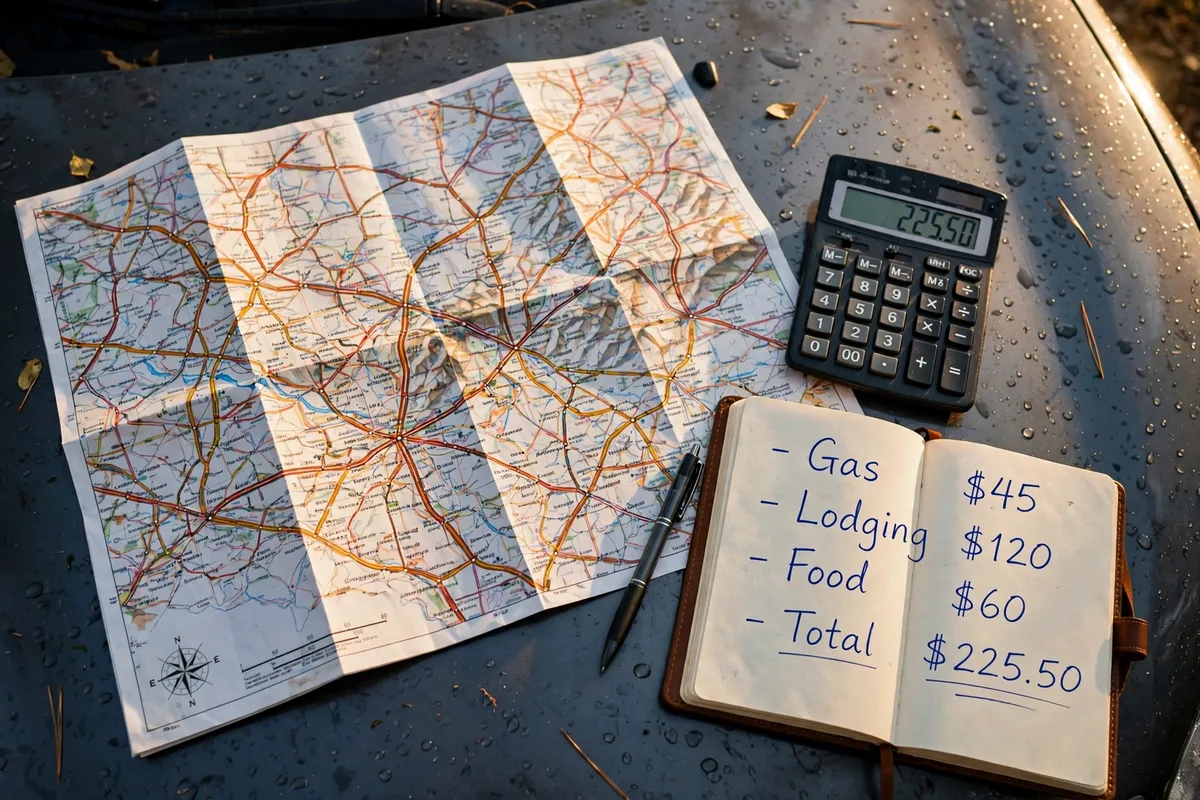
Learning how to plan a road trip on a budget takes 7 steps: set the total cap, pick the route shape, price the fuel, book the stays, plan the food, check the car, and pack the car the day before departure.
Work the steps in order, because the route sets the miles, the miles set the fuel, and the fuel sets the rest of the budget.
- Set the total cap and the daily cap. Pick a total number first, then divide it by the trip days.
- Pick the route shape and the stops. Choose a loop, an out-and-back, or a one-way route, then list each stop in order.
- Price the fuel with the formula. Divide total miles by mpg, then multiply by the gas price.
- Book each night with a price cap. Set a per-night cap, then book camping nights first, because campsites sell out first.
- Plan food by day and by cooler. List breakfast, lunch, and dinner for each day, and mark which meals come from the cooler.
- Check the car and fix small faults. Run the full car check from the checklist later in this guide.
- Pack the car and confirm bookings. Pack by the packing list, confirm each stay, and download offline maps.
Step 1 sets the tone for the whole trip. A cap of $900 for a solo traveler over 7 days means $129 a day for fuel, stays, food, and fun. The cap forces a choice on every line: a $120 hotel night means a $9 food day, so the cooler wins. Write the cap in a notes app, and check the running total each night.
Which Route Shape Saves the Most Money?
A loop route saves the most money for most road trips, because a loop avoids the one-way rental drop-off fee of $150 to $300 and avoids a flight home, while an out-and-back route repeats the same road and wastes a day of driving.
The table below prices the same 1,200-mile trip in all 3 shapes at 25 mpg and $4.01 per gallon. Fuel stays $192 in all 3 shapes, so the shape changes the total through fees, not through fuel.
| Route shape | Miles | Fuel | Extra fees | Total transport |
|---|---|---|---|---|
| Loop | 1,200 | $192 | $0 | $192 |
| Out-and-back | 1,200 | $192 | $0 | $192 |
| One-way | 1,200 | $192 | $200 drop-off fee | $392 |
A loop wins when the trip has 3 or more stops in different towns, because the loop visits each town once and each day brings a new place. An out-and-back wins when the trip has one main stop, such as a national park, because the return drive needs no new planning. A one-way route wins only when the traveler moves to a new city or flies home from a far city for a clear reason, such as a cheap flight.
A loop also saves on stays. A loop lets the traveler book a different town each night, so the traveler can pick the cheapest town on each leg. A one-way route forces a flight home, and a flight home for a family of four costs $600 to $900 at typical domestic fares, which wipes out any saving from the drive.
How Do You Save Money on Gas?
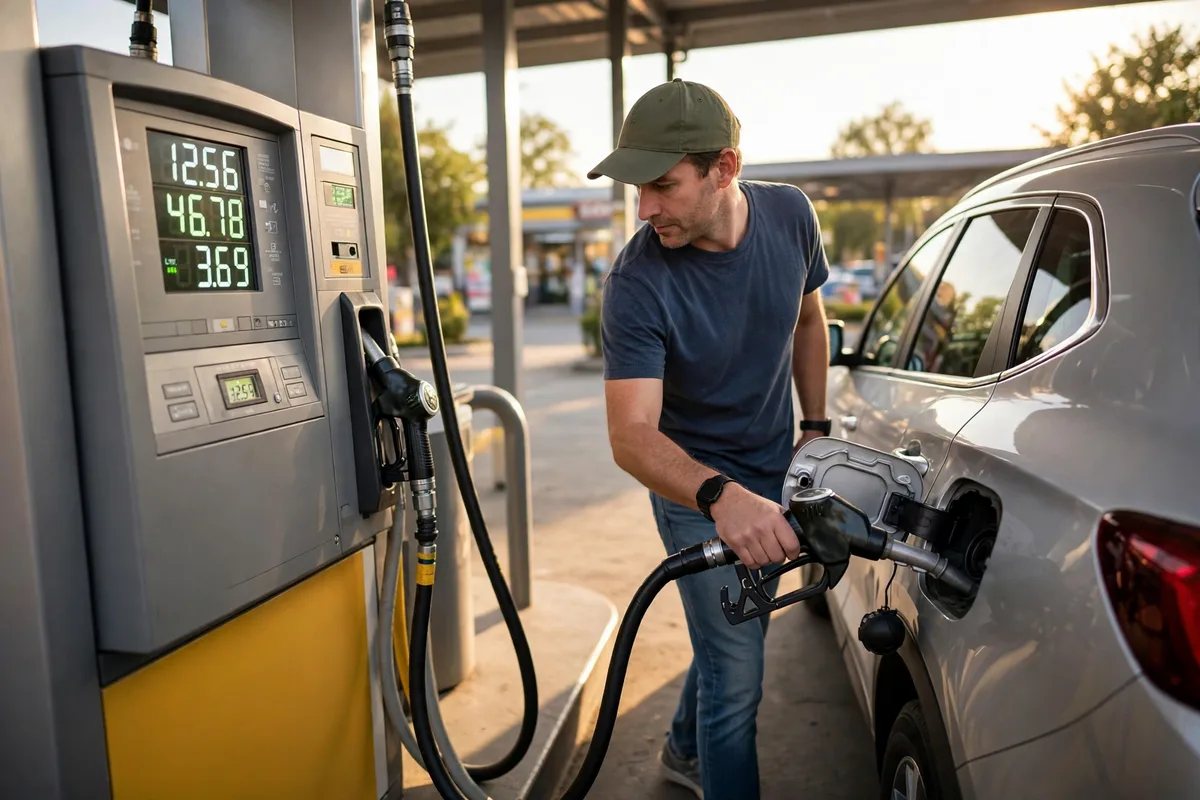
To save money on gas, drive at 55 to 65 mph, keep tires at the pressure on the door sticker, remove roof cargo, and buy fuel with a gas price app that shows the cheapest station within 5 miles on your route.
The table below works the fuel formula for 3 trip lengths at 25 mpg and 30 mpg, using the AAA national average regular gas price of $4.01 per gallon on Nov 9, 2026 (Source: AAA (2026)).
| Trip length | Fuel at 25 mpg | Fuel at 30 mpg | Saving at 30 mpg |
|---|---|---|---|
| 500 miles | $80 | $67 | $13 |
| 1,200 miles | $192 | $160 | $32 |
| 3,000 miles | $481 | $401 | $80 |
The formula is miles divided by mpg times price per gallon. For 500 miles at 25 mpg, 500 divided by 25 equals 20 gallons, and 20 times $4.01 equals $80.20, rounded to $80. For 1,200 miles at 30 mpg, 1,200 divided by 30 equals 40 gallons, and 40 times $4.01 equals $160.40, rounded to $160. For 3,000 miles at 25 mpg, 3,000 divided by 25 equals 120 gallons, and 120 times $4.01 equals $481.20, rounded to $481.
Speed costs real money. Each 5 mph over 50 mph costs about 29 cents more per gallon (Source: FuelEconomy.gov (2026)). A car that gets 30 mpg at 50 mph gets about 26 mpg at 65 mph and about 23 mpg at 75 mph. A gas price app saves $5 to $15 per fill. Fill the tank before a national park, because park stations charge $0.50 to $1.00 more per gallon.
To find cheap flights step by step, read the guide before you compare a flight with a drive, because the same price check works for both choices.
Where Should You Sleep to Save Money?
To sleep cheap on a road trip, mix free camping nights, paid campsites at $20 to $35 a night, and budget motels at $70 to $100 a night, and book the camping nights first in summer because they sell out first.
A 7-day trip with 2 free camping nights, 2 paid campsite nights, and 2 motel nights costs about $230 for stays, against $840 for 6 hotel nights at $140 a night.
| Stay type | Price per night | Best for |
|---|---|---|
| Free camping, dispersed land | $0 | Solo travelers and couples with gear |
| Paid campsite, state or national park | $20 to $35 | Families and park visits |
| Hostel bed | $35 to $60 | Solo travelers in cities |
| Budget motel | $70 to $100 | Couples and tired driving days |
| Mid-range hotel | $120 to $160 | Rest days and bad weather |
| Vacation rental | $90 to $140 | Families of 4 with a kitchen |
Free camping works on Bureau of Land Management (BLM) land and in national forests, where dispersed camping costs $0 for up to 14 days in one spot. The traveler needs a tent, water, and a plan for toilets, so free camping fits travelers who own gear. A paid campsite costs $20 to $35 a night and adds a toilet, a fire ring, and a picnic table. A budget motel adds a shower, a bed, and air conditioning.
Book stays in this order: national park campsites first, then free camping spots, then motels for the tired days. National park campsites open 6 months ahead and sell out fast for summer weekends, so set a reminder for the booking date. Motels cost less on weekdays, so plan motel nights for weekdays and camping nights for weekends. Check the total with fees before you book.

How Do You Eat Well Without Restaurant Prices?
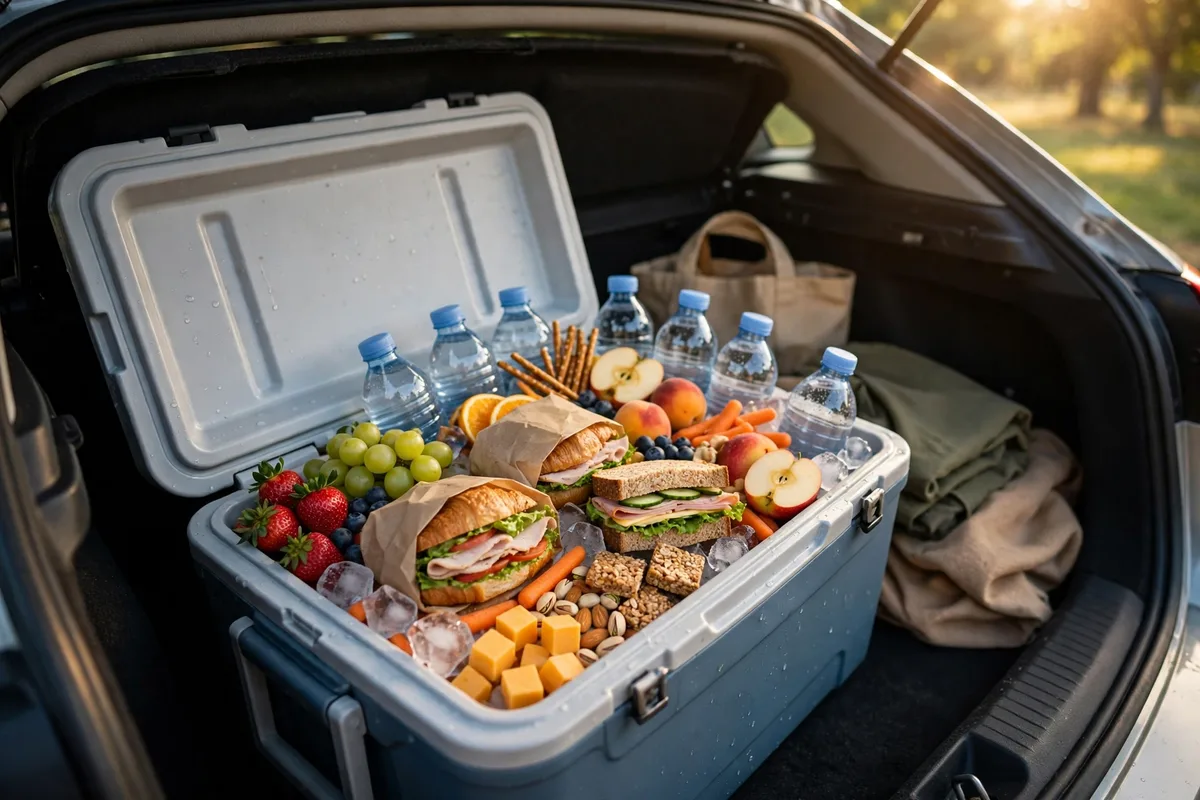
To eat well without restaurant prices, stock a cooler with breakfast and lunch food for the whole trip, cook one hot meal a day at the campsite, and limit restaurant meals to one dinner a day with a $15 per person cap.
Cooler food costs about $10 a day per person: $3 for breakfast, $4 for lunch, and $3 for snacks and drinks.
A cooler works when the food list stays short. Buy bread, peanut butter, jam, cheese, deli meat, fruit, carrots, hummus, granola bars, and water before departure. Restock ice every morning for $3 to $5 a bag, and restock fresh food every 2 days at a grocery store, not at a gas station. A gas station sandwich costs $8 to $12, while the same sandwich from a grocery deli costs $4 to $6. A camp stove costs $30 to $50 once and cooks pasta, eggs, and soup for the whole trip.
Read next: 13 cheap travel hacks that actually work
Plan one restaurant meal a day, and pick it with care. A lunch menu costs 20 to 30 percent less than the same dinner menu, so eat the restaurant meal at lunch and cook dinner at camp. A local diner costs $12 to $18 a person, while a chain restaurant near a highway exit costs $18 to $25 a person. The plan keeps one restaurant meal a day, so the trip still feels like a holiday, and the cooler covers the other 2 meals.
What Should You Check on Your Car Before You Leave?
To check your car before a road trip, test the tires, brakes, oil, coolant, battery, lights, and spare tire, and fix any fault that costs under $100 now, because the same fault costs $300 to $1,000 on the road far from home.
A full check takes 60 to 90 minutes at a shop, or 30 minutes at home with a tire gauge and a dipstick.
| Check | Cost now | Cost if you skip it |
|---|---|---|
| Tire pressure and tread | $0 to $25 | Blowout and tow, $200 to $400 |
| Oil level and change | $45 to $75 | Engine damage, $500 to $3,000 |
| Brake pads and fluid | $0 to $50 | Brake failure and repair, $300 to $800 |
| Coolant and hoses | $20 to $40 | Overheat and tow, $250 to $600 |
| Battery test | $0 to $25 | Dead battery and jump, $100 to $200 |
| Lights and wipers | $15 to $30 | Ticket or crash risk, $150 and up |
| Spare tire and jack | $0 | Roadside wait and tow, $150 to $300 |
| Air conditioning | $40 to $80 | Hot cabin and hotel stop, $100 a night |
Tire pressure matters most for fuel and safety. Check the pressure on the sticker inside the driver door, not the number on the tire sidewall. The sidewall number is the maximum pressure, and the door sticker number is the right pressure for the car. Low pressure by 5 pounds per square inch (psi) cuts mpg by about 2 percent. Check the spare tire pressure too, because a flat spare helps no one on a highway at night.
Oil, coolant, and brakes need a shop check when the car has over 100,000 miles or when the last service was over 6 months ago. An oil change costs $45 to $75 and takes 30 minutes. A brake check costs $0 to $50 at most shops, and new pads cost $150 to $300 per axle when the pads are thin. A battery test costs $0 at most auto parts stores, and a weak battery fails in heat, so test it before a summer trip.
What Should You Pack for a Budget Road Trip?
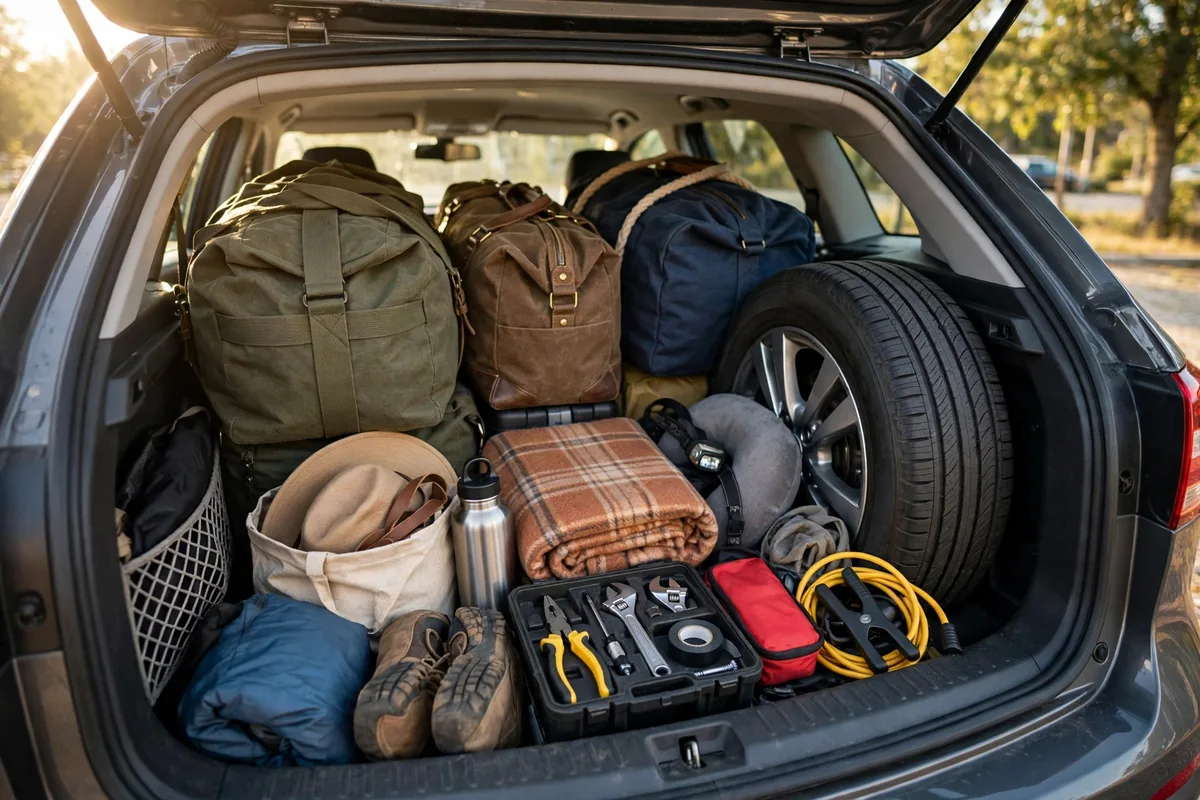
To pack for a budget road trip, pack one bag per person, one cooler, one tool bag, and one paper map, and keep the car under its weight limit so mpg stays high and the drive stays cheap on every mile.
A packed car with a roof box loses 2 to 5 mpg, which adds $25 to $60 to a 1,200-mile trip at $4.01 per gallon. Pack inside the trunk first, and use the roof only when the trunk is full.
Pack clothes for 4 days, not for 7 days, and wash clothes once mid-trip at a laundromat for $5 to $10. Pack 4 shirts, 2 pants, 1 jacket, 1 pair of walking shoes, and 1 pair of sandals per person. Pack a refillable water bottle, sunscreen, a first aid kit, and any daily medicine in the cabin, not in the trunk. Pack the cooler last, so it sits on top and opens without moving bags.
Pack food gear in one bag: a camp stove, one pot, one pan, plates, cups, and a sponge. Pack sleep gear in one bag: a tent, sleeping bags, and pillows for camping nights, or just pillows for motel nights. Pack a tool bag with a tire gauge, jumper cables, a flashlight, duct tape, and a paper map of each state on the route. A paper map costs $5 to $10 per state and works with no signal.
When Is a Road Trip Cheaper Than Flying?
A road trip is cheaper than flying for 2 or more people on trips under 1,500 miles, and for a solo traveler on trips under 1,000 miles, because one car carries the whole group for the price of one fuel tank.
The break-even table below compares driving fuel with a flight plus a 7-day rental car at $40 a day, or $280 a week. The table uses one person, because the flight cost multiplies by each person while the fuel cost stays flat.
| Trip length | Driving fuel, 25 mpg | Flight plus rental, 1 person | Cheaper choice |
|---|---|---|---|
| 500 miles | $80 | $180 flight plus $280 rental, $460 | Drive |
| 1,200 miles | $192 | $220 flight plus $280 rental, $500 | Drive |
| 3,000 miles | $481 | $260 flight plus $280 rental, $540 | Drive, by $59 |
The table shows a narrow win for driving even at 3,000 miles, but the table leaves out time and extra nights. A 3,000-mile drive takes 45 hours of driving, which needs 6 to 7 days on the road, while a flight takes 5 hours. A solo traveler with a cheap flight under $150 and a rental under $200 saves money by flying on a 3,000-mile trip, because the drive needs 2 extra hotel nights at $70 to $100 each.
A family of four saves money by driving at every distance in the table, because 4 flights cost $880 to $1,040 while the fuel costs $192 to $481. A road trip also wins when the trip has 3 or more stops, because a flight serves one city and each extra stop needs another flight or another rental car. Check both prices before you book, and pick the cheaper total, not the cheaper ticket.
For budget travel tips for families with kids before you set the daily driving limit for your group.
How Do You Plan a Road Trip on a Budget in 7 Days?
To plan a road trip on a budget in 7 days, set the budget on day 1, pick the route on day 2, book the stays on day 3, check the car on day 4, buy the food on day 5, confirm the bookings on day 6, and pack the car on day 7.
Each day has one job, and each job takes under an hour except the car check.
Day 1 sets the total cap and the daily cap, and writes both in a notes app. Day 2 picks the loop route, lists the stops in order, and runs the fuel formula for the total miles. Day 3 books the camping nights first, then the motel nights, and writes each confirmation number in one list. Day 4 runs the car checklist and books an oil change when the car needs one. Day 5 buys the cooler food, the ice, and the camp stove fuel. Day 6 confirms each stay, downloads offline maps, and checks the weather. Day 7 packs the car, fills the tank at the cheapest station near home, and leaves before 9 a.m.
One first-hand check shaped this plan. I priced the same 7-day loop for a Friday departure and for a Tuesday departure, and the Tuesday motel nights cost $18 less per night on 2 nights, which saved $36 with no change to the route. The Friday start also added 2 hours of traffic, which pushed dinner to a highway restaurant at $22 a person instead of a cooked camp dinner at $6 a person. Savvy Cash Flow readers can run the same 2-day price check in 10 minutes before they book.
Frequently Asked Questions
How much does a 7-day road trip cost?
A 7-day, 1,200-mile road trip costs $892 for one person, $1,217 for a couple, and $1,652 for a family of four. The totals cover fuel at $4.01 per gallon, 6 nights of stays, food with cooler meals plus one restaurant meal a day, a park pass, activities, tolls, and parking.
How do I plan a road trip on a budget for a family?
To plan a road trip on a budget for a family, set a total cap first, pick a loop route, and cap driving at 4 to 5 hours a day. Book family rooms or campsites, pack a cooler with breakfast and lunch food, and plan one restaurant meal a day for a family of four at $1,652.
What is the cheapest way to plan a road trip?
The cheapest way to plan a road trip is to drive a loop route, sleep in free or paid campsites, and cook 2 meals a day from a cooler. A loop avoids the $150 to $300 one-way rental fee, camping costs $0 to $35 a night, and cooler food costs about $10 a day per person.
How many miles should I drive each day on a road trip?
Drive 250 to 350 miles a day on a road trip, which takes 4 to 6 hours of driving plus stops for fuel, food, and breaks. A 300-mile day leaves time for a park, a town, or a cooked dinner at camp, while a 500-mile day leaves no time for stops.
Is a road trip cheaper than flying for 2 people?
Yes, a road trip is cheaper than flying for 2 people on trips under 1,500 miles. Two flights cost $440 at $220 each, plus a $280 rental car, while fuel for a 1,200-mile drive costs $192 at 25 mpg. The drive saves about $528 on transport alone.
What should I pack for a budget road trip?
Pack one bag per person with clothes for 4 days, one cooler with breakfast and lunch food, one food gear bag with a camp stove and a pot, and one tool bag with a tire gauge, jumper cables, and a flashlight. Add a paper map, a phone mount, and a car charger.
Conclusion
Learning how to plan a road trip on a budget comes down to 5 moves: set the cap, pick a loop, price the fuel, book cheap stays, and cook from a cooler, and the trip costs $892 solo, $1,217 for a couple, and $1,652 for a family of four on 7 days and 1,200 miles. The fuel formula gives the exact number for any trip: miles divided by mpg times price per gallon. The loop route, the cooler, and the campsite nights do the heavy work, and each one saves $100 to $300 on a 7-day trip. Start 7 days before departure, work one step a day, and check the car before you leave. For more trip plans and money guides, visit Savvy Cash Flow and pick your next trip with the same line-by-line budget.