

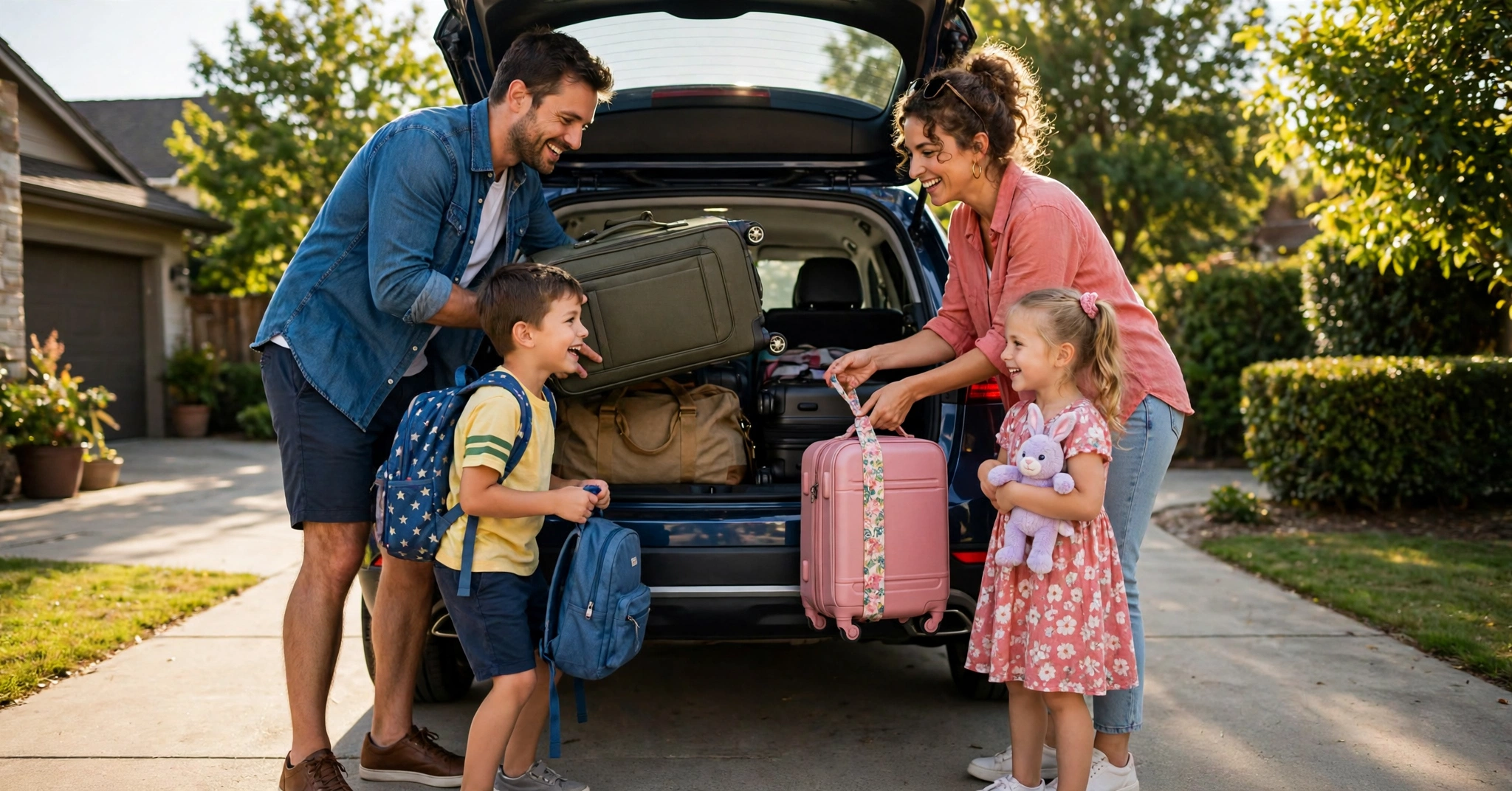
Introduction
Budget travel tips for families with kids are the planning moves that cut a family trip by 30% to 50% without cutting the fun: set a total budget first, travel in shoulder season, book lodging with a kitchen, drive when the drive is under 6 hours, and cap paid attractions at one per day. A family of 4 can take a full week for $1,800 to $2,800 on a road trip or $3,200 to $4,600 at a beach destination, and the gap between those two numbers comes down to 5 choices made before you book. This guide gives you a worked trip budget, a 5-step setup, age-by-age tactics for babies, young kids, and teens, a kids’ spending plan, a travel fund plan, and the hidden costs that catch most families. You will also find a road trip vs flying comparison and free activities that keep kids happy.
Key Takeaways
- A family of 4 can take a 7-day trip for $1,800 to $2,800 by road or $3,200 to $4,600 by air at a beach destination, and 5 choices made before booking set the total.
- Set the total budget first, then split it into transport, lodging, food, activities, and a 10% buffer.
- Travel in May, late August, September, or October to pay 20% to 30% less than peak summer rates.
- A vacation rental with a kitchen cuts food spending by $200 or more per trip.
- Give each kid a set souvenir budget and a packed snack box, and the small daily leaks stop.
What Are Budget Travel Tips for Families With Kids?
Budget travel tips for families with kids are planning habits that lower the cost of a family trip while keeping the trip fun for children, and the 5 habits that save the most are setting a total budget first, picking a drive-to destination with a free anchor, booking lodging with a kitchen, traveling in shoulder season, and capping paid attractions at one per day. A free anchor is a beach, a national park, a free museum, or a historic district that fills a full day without a ticket. The free anchor matters because attractions are the line that grows fastest with kids: one $30 ticket per person turns into $120 per stop for a family of 4.
Family travel has 4 cost buckets, and each bucket has one big lever. Transport is flights or gas plus a rental car. Lodging is the nightly rate plus taxes and fees. Food is groceries plus restaurant meals. Activities are paid attractions plus gear. A family vacation on a budget controls all 4 buckets with one plan, not with 4 separate plans. Browse the Budget Travel guides for more trips that use the same cost-first method.
The average U.S. family spent about $8,000 on travel in 2024 (Source: U.S. Family Travel Survey (2025)). That average covers long-haul flights, resort hotels, and eating out 3 times a day. A family that drives, cooks half its meals, and picks one paid attraction per day spends far less than that average and still gets a full week away. The tips below show how.
How Much Does a Family Vacation Cost in 2026?
A family vacation costs $1,800 to $2,800 for a family of 4 for 7 days on a road trip, $3,200 to $4,600 at a U.S. beach destination, and $2,000 to $3,400 at a national park, with flights as the biggest variable on top of those totals. The table below shows the full range for 4 common trip types, so you can pick the type first and set the budget second.
| Trip type | Transport | Lodging per night | Food per day | 7-day total (family of 4) |
|---|---|---|---|---|
| Domestic road trip | $250 to $400 gas | $60 to $120 | $60 to $100 | $1,800 to $2,800 |
| U.S. beach destination | $600 to $1,200 flights | $120 to $200 | $90 to $140 | $3,200 to $4,600 |
| National park trip | $400 to $900 flights or gas | $40 to $180 | $50 to $90 | $2,000 to $3,400 |
| Mexico all-inclusive | $700 to $1,300 flights | $150 to $260 | Included | $3,500 to $5,000 |
These totals are planning estimates from 2026 travel guides, not guaranteed prices. The single biggest lever is transport. A 6-hour driving radius opens up whole destination types you would otherwise fly to, which is why a family road trip is one of the most reliable ways to keep a family vacation on a budget. A family of 4 that drives to a national park and camps 2 nights can bring the week under $2,000, while the same family flying to a resort beach can pass $4,000 before the first meal.
Lodging is the second lever. A condo or cabin with a kitchen runs $60 to $180 a night in shoulder season, and it cuts food spending at the same time. A hotel room that fits 4 people often costs more per night and adds 3 restaurant meals a day on top. Food is the third lever: a family of 4 eats for $50 to $100 a day with groceries and one restaurant meal, and $120 to $200 a day eating out 3 times.
How Do You Set a Family Travel Budget in 5 Steps?
To set a family travel budget, pick a total number your household can pay without debt, split it into transport, lodging, food, activities, and a 10% buffer, price the trip with real rates for your dates, cut one line until the total fits, and track spending daily on the trip. Follow the 5 steps below in order.
- Pick a total number your household can pay without debt.
- Split the total into transport, lodging, food, activities, and a 10% buffer.
- Price the trip with real rates for your dates, not last year’s prices.
- Cut one line until the total fits, and start with flights or lodging.
- Track spending daily on the trip with one shared note or app.
Step 1 sets the ceiling. A total of $2,400 for a week is a common target for a family of 4, and it fits a road trip or a national park week. Step 2 splits that total into 5 buckets. A $2,400 trip splits into $400 for transport, $800 for lodging, $500 for food, $400 for activities, and $240 for the buffer, with $60 left over. The buffer covers parking, tolls, sunscreen you forgot, and the ice cream that appears every afternoon.
Step 3 is where most budgets fail. Check the real nightly rate with taxes and fees, the real flight total with bags, and the real ticket prices for the attractions you want. A $120 nightly rate becomes $155 with taxes and a cleaning fee, and 4 attraction tickets at $30 each become $120 per stop. Step 4 cuts one line when the total runs over. Cut flights first by shifting dates or driving, then cut lodging by moving a few miles from the main strip. Step 5 keeps the plan alive on the trip: one parent logs each day’s spending in a shared note, and the family checks the running total each night.

When Is the Cheapest Time to Travel With Kids?
The cheapest time to travel with kids is May, late August, September, or October, when hotel rates run 20% to 30% below peak summer rates, flights cost less, and the weather stays warm enough for beaches, hikes, and lake days across the United States. Shoulder season is the stretch just before and just after the summer peak, and it is the single easiest saving a family can make.
| Travel window | Saving vs peak summer | Best for | Watch out for |
|---|---|---|---|
| May | 20% to 30% off hotels | Beach trips, city breaks | School is still in session |
| Late August | 15% to 25% off hotels | Beach trips, parks | Some attractions cut hours |
| September | 20% to 30% off hotels and flights | National parks, beaches | Hurricane season on the Gulf Coast |
| October | 20% to 30% off hotels | Mountains, cities, fall color | Peak foliage weeks cost more |
| January and February | 25% to 40% off hotels | Warm-climate cities | Cold weather at home and at some stops |
School calendars set the limit for most families. If your kids are in school, travel the first week school ends or the last week before it starts, and pick a Tuesday departure, which often costs $100 or more less per ticket than a Friday departure. If your kids are not in school yet or you homeschool, travel outside peak periods for the lowest rates and the smallest crowds. Book months ahead when prices are still low, because prices rise as the dates fill. See the 12 cheap family vacation destinations for the cheapest weeks at 12 places that fit a family of 4.
How Can Families Cut Flight Costs With Kids?
Families cut flight costs with kids by booking domestic flights 28 to 44 days ahead, setting a price alert the day they pick a route, checking nearby airports, and packing carry-on only, because bags, seat fees, and transfers add $100 to $300 to a family fare. Airline fares fell 1.5% over the 12 months to 2026 (Source: U.S. Bureau of Labor Statistics (2026)), so deals exist for families that search with a plan.
Children under 2 fly free on a parent’s lap on domestic flights, and most airlines charge 10% of an adult fare for a lap infant on international flights. That free seat ends at age 2, so a long-haul trip before the second birthday saves the cost of a full ticket. Children 2 and older need their own seat, and most airlines let families with kids under 6 board early and seat together at no extra charge when they ask at booking.
Compare 2 tools before you book. Google Flights gives the most accurate baseline price, and Skyscanner finds budget carriers that Google Flights misses. Check a nearby airport too: a flight from Newark instead of JFK, or into a smaller airport near your destination, can cost $50 to $100 less per ticket. Add the ground transfer cost before you judge the saving, because a $60 saving disappears when the transfer costs $70. Pack carry-on only when the trip allows it: one checked bag at $35 each way costs $280 for a family of 4 on a round trip.
Compare fares with our 7-step guide to finding cheap flights before you book: How to Find Cheap Flights Step by Step (2026)

Road Trip vs Flying vs Train: Which Costs Less for a Family of 4?
A road trip costs less than flying or taking the train for a family of 4 on trips under 500 miles, because one tank of gas moves 4 people while flying and train travel charge per person, and the car also removes the rental car cost at the destination. Use the table to pick the mode first, then pick the destination that fits it.
| Mode | 500-mile trip, family of 4 | Travel time | Best for |
|---|---|---|---|
| Road trip | $60 to $120 gas plus tolls | 8 hours | Trips under 6 hours, gear-heavy families |
| Flying | $600 to $1,200 plus bags and transfers | 3 to 5 hours door to door | Trips over 1,000 miles, short weekends |
| Train | $400 to $700 for 4 seats | 9 to 12 hours | Scenic routes, kids who love trains |
| Bus | $200 to $400 for 4 seats | 9 to 11 hours | Tight budgets, city-to-city trips |
A road trip wins under 500 miles and loses over 1,000 miles, when 2 days of driving eat the trip. A road trip also gives the family a car at the destination, which removes a $300 to $500 rental car bill. Flying wins when the trip is short: a 3-day weekend cannot spare 2 driving days. A train suits families who want the ride to be part of the trip, and kids under 2 ride free on most U.S. routes. A bus is the cheapest per-person option, and it suits city-to-city trips where the family needs no car at the other end.
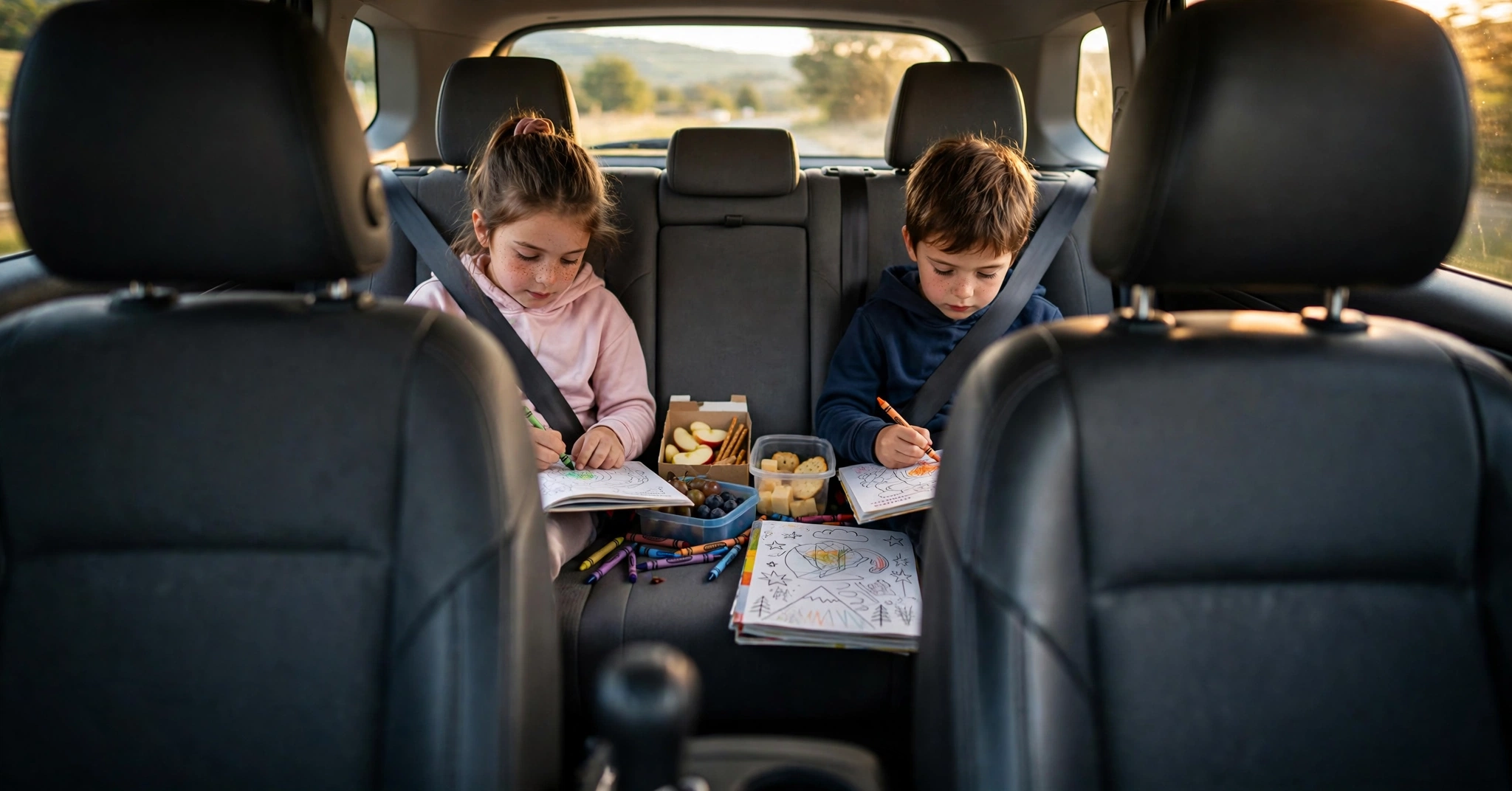
On our last road trip, I packed a snack box for each kid the night before, and we spent nothing on food between breakfast and dinner on the drive day. That one habit saved about $40, and it kept the kids busy for 2 hours. Pack the snack boxes, the water bottles, and the coloring books before you leave, and the drive becomes part of the trip instead of a cost.
Why Does a Vacation Rental With a Kitchen Save Families the Most Money?
A vacation rental with a kitchen saves families the most money because a family of 4 eats breakfast and packed lunches for $12 to $20 a day with groceries, while the same meals at restaurants cost $40 to $60 a day, which adds up to $200 or more saved over a 5-day trip.
A vacation rental is the renting out of a furnished apartment, house, or condo on a temporary basis to tourists as an alternative to a hotel, and most rentals include a full kitchen, a washer, and more space than a hotel room.
Cook one meal a day and pack one meal a day, and eat out once a day. Breakfast is the easiest meal to cook: eggs, fruit, and toast cost under $10 for 4 people. Lunch is the easiest meal to pack: sandwiches, fruit, and water bottles cost under $15 for 4 people. Dinner out becomes the one daily treat instead of the third restaurant bill of the day. A family that cooks breakfast and packs lunch saves $25 to $40 a day, which is $125 to $200 over 5 days.
Check the total price before you book, because a low nightly rate can hide a cleaning fee of $75 to $150 and a service fee of 10% to 15%. Compare the full total with taxes and fees against a hotel room for the same nights. Book a rental with free cancellation when you can, and read the last 10 reviews for notes on the kitchen, the beds, and the check-in process. Rentals suit families of 5 or 6 best, because a hotel room that fits 6 people costs more than a 2-bedroom rental in most places.

What Free Activities Keep Kids Happy on a Family Trip?
Free activities keep kids happy on a family trip when the activity lets them move, explore, or make something, and the 6 free activities that work best are beaches, nature trails, playgrounds, free museums, Junior Ranger programs, and a photo scavenger hunt. A beach needs no ticket and fills a full day with sand play, swimming, and shell hunting. A nature trail gives kids a goal, like reaching a waterfall or spotting 5 birds, and the walk costs nothing.
Free museums fill a rainy day. The Smithsonian museums in Washington, DC charge no admission, and the National Zoo is free too. Many city art museums are free for kids under 12, and most have a family day each month. National parks run free Junior Ranger programs: kids pick up a booklet at the visitor center, finish the activities on the trail, and earn a badge. The Great Smoky Mountains National Park drew 11,527,939 visitors in 2025, which makes it the most visited national park in the United States (Source: Wikipedia (2026)), and the park charges no entrance fee. Cars parked for more than 15 minutes need a tag at $5 per day (Source: National Park Service (2026)).
A photo scavenger hunt costs nothing and keeps kids looking. Give each kid a list of 10 things to photograph: a red door, a street musician, a dog in a window, a funny sign. The hunt turns a walk into a game, and the photos become the trip album. A hotel pool, a local playground, and a picnic in a park fill the gaps between paid stops. Plan one paid attraction per day, then fill the rest of each day with free sights, and the kids will not miss the second ticketed stop.

How Much Should Each Kid Get for Souvenirs and Snacks?
Each kid should get $10 to $20 for the whole trip for souvenirs, plus a packed snack box and a $5 daily snack budget, because a set amount stops the daily asking and teaches kids to pick one thing they truly want. A kids’ spending plan has 3 parts: a souvenir budget, a snack budget, and a rule for choosing.
| Age | Souvenir budget per trip | Snack budget per day | What works best |
|---|---|---|---|
| Toddlers (2 to 4) | $5 | $3 | One small toy or book |
| School-age (5 to 12) | $10 to $15 | $5 | One keepsake, picked on the last day |
| Teens (13 to 17) | $20 | $5 to $10 | One item they choose, plus snack freedom |
Give the money in cash at the start of the trip, and let each kid hold it. Cash makes the limit real in a way a card does not. Set the rule before the first shop: one souvenir per kid, picked on the last day, so the first gift shop does not take the whole budget. A kid who waits until the last day picks better and regrets less.
Pack a snack box per kid each morning with crackers, fruit, and a small treat, and refill it from a grocery run, not from a gift shop. A snack box costs about $3 per kid per day from a grocery store, while the same snacks at a theme park or airport cost $12 to $15. A daily snack budget of $5 per kid covers one treat, like ice cream, without opening the budget to every stand you pass.
How Do You Build a Family Travel Fund?
To build a family travel fund, pick the trip total, divide it by the months until the trip, and move that amount to a separate savings account on every payday, because a fixed transfer turns a $2,400 trip into $200 a month over 12 months or $400 a month over 6 months. A travel fund is a separate savings account that holds trip money only, and the separation stops the trip money from mixing with daily spending.
| Trip total | Save per month for 12 months | Save per month for 6 months | Save per month for 3 months |
|---|---|---|---|
| $1,200 | $100 | $200 | $400 |
| $2,400 | $200 | $400 | $800 |
| $3,600 | $300 | $600 | $1,200 |
| $4,800 | $400 | $800 | $1,600 |
Start the fund the day you pick the destination, not the week you book. Set an automatic transfer for the day after payday, so the money moves before you can spend it. Add small wins to the fund: a $25 refund, a $40 saving from a bill cut, or a $60 cashback payout. A family that saves $200 a month for 12 months has $2,400, which covers a full road trip week for 4 people. A family that starts 3 months out needs $800 a month for the same trip, which is why starting early matters more than saving hard.
Let the kids watch the fund grow. A simple chart on the fridge with the total and the current balance gives kids a reason to care about the trip budget, and it makes the saving feel like part of the trip. When the fund hits the target, book the lodging first, because it sells out fastest, then the flights.

What Hidden Travel Costs Catch Families by Surprise?
Hidden travel costs catch families by surprise when fees sit outside the headline price, and the 6 costs that add the most are resort fees, parking, checked bags, rental car seats, tips, and attraction parking, which together add $200 to $500 to a family trip. The table below lists each cost, the typical amount, and the fix.
| Hidden cost | Typical amount | How to avoid it |
|---|---|---|
| Resort fee | $25 to $50 per night | Pick lodging with no resort fee |
| Hotel parking | $10 to $30 per day | Stay outside the center or use transit |
| Checked bags | $35 to $70 per bag each way | Pack carry-on only |
| Rental car seat | $10 to $15 per day | Bring your own seat or car seat bag |
| Attraction parking | $10 to $25 per stop | Use a shuttle or park once per day |
| Tips and service charges | 15% to 20% on meals | Budget tips into the food line |
| Gear rental | $20 to $50 per day | Bring strollers, chairs, and umbrellas |
Read the full price before you book. A $120 room with a $35 resort fee and $20 parking costs $175 a night, not $120. A $99 flight with a $35 checked bag each way costs $169, not $99. Add the fees to the headline price for every option you compare, and the cheapest option often changes. Keep a $200 buffer in the budget for the costs you cannot see in advance, and check the running total each night so a surprise on day 2 does not become a problem on day 5.
Budget Travel Tips by Age: Babies, Young Kids, and Teens
Budget travel tips by age work best when each age gets its own lever: babies save money on flights and gear, young kids save money on free programs and one paid attraction a day, and teens save money when they help pick the plan and manage their own snack budget. One plan does not fit all ages, so match the tactics to the kids you have.
Babies and Toddlers (Under 5)
Babies under 2 fly free on a parent’s lap on domestic flights, which saves a full ticket on a long trip. Pack the gear you need instead of renting it: a stroller, a car seat, and a portable crib cost $20 to $50 a day to rent at the destination, and most airlines check a stroller and a car seat free. Plan around naps: a tired toddler in a hot queue costs more in snacks and tears than a quiet hour back at the rental. Pick one outing per day, and keep it short.
School-Age Kids (5 to 12)
School-age kids get the most from free programs. Junior Ranger booklets, free museum days, and nature trails fill their days at no cost. Cap paid attractions at one per day, and let the kid pick which one. A kid who picks the attraction cares more about it and asks for less at the gift shop. Give a $10 to $15 souvenir budget for the trip, and let the kid hold the cash. Pack a snack box each morning, and the food budget stays in line.
Teens (13 to 17)
Teens need a say in the plan. Let each teen pick one activity for the trip, and give a $20 souvenir budget plus a $5 to $10 daily snack budget to manage alone. A teen who manages a small budget learns the same skill the trip teaches the parents. Teens also eat more, so a rental with a kitchen matters more with teens than with toddlers. Pick a destination with free Wi-Fi and a pool, because a teen with nothing to do costs more in paid activities than a teen with a plan.
Frequently Asked Questions
How much does a family vacation cost on average?
A family vacation costs $1,800 to $2,800 for a family of 4 for 7 days on a road trip, and $3,200 to $4,600 at a U.S. beach destination, while the average U.S. family spent about $8,000 on travel in 2024 (Source: U.S. Family Travel Survey (2025)). The gap comes from flights, resort hotels, and eating out 3 times a day.
Can a family of 4 vacation for under $2,000?
Yes, a family of 4 can vacation for under $2,000 by driving to the destination, booking a condo or cabin with a kitchen, and traveling in shoulder season. A national park week, a beach week in May or September, and a Smokies cabin trip all fit under $2,000 for 4 to 7 days.
What is the cheapest way to travel with kids?
The cheapest way to travel with kids is a road trip to a drive-to destination with a free anchor, like a national park or a public beach, with lodging that has a kitchen. Driving removes airfare, the kitchen removes restaurant bills, and the free anchor removes ticket costs.
How far ahead should families book a vacation?
Families should book domestic flights 28 to 44 days ahead and lodging 2 to 3 months ahead, since prices jump sharply within 60 days of departure. Cabins, condos, and family rooms book out months ahead for summer, so book lodging first.
Do kids fly free?
Children under 2 fly free on a parent’s lap on domestic flights, and children 2 and older need their own seat on every flight. Most airlines charge 10% of an adult fare for a lap infant on international flights, and kids 12 and under can use the TSA PreCheck lane with a parent.
How do I stop kids asking for souvenirs all day?
Give each kid a set souvenir budget in cash at the start of the trip, and set one rule: one souvenir per kid, picked on the last day. Cash makes the limit real, and waiting until the last day stops the first gift shop from taking the whole budget.
Conclusion
Budget travel tips for families with kids come down to 5 moves: set a total budget first, travel in shoulder season, drive when the drive is under 6 hours, book lodging with a kitchen, and cap paid attractions at one per day. A family of 4 that follows those 5 moves takes a full week for $1,800 to $2,800 by road, builds the trip fund at $200 a month over a year, and gives each kid a small budget to manage. The kids remember the beach, the trail, and the pool, not the price of the room. Start with the total, pick one destination from the best budget travel destinations in the USA, and book the lodging first, since it sells out fastest. Savvy Cash Flow covers budget travel with real costs in every guide, so use the numbers here to plan the trip, then go.
This article is for general information only and is not financial advice. Prices are planning estimates from 2026 travel guides and change by date, demand, and season, so check live prices before booking.