

Introduction
An NFT is a unique digital token stored on a blockchain that proves one wallet owns one specific digital item, such as art, a ticket, or a game item. NFT stands for Non-Fungible Token, and each token carries a unique ID that no other token can copy. This guide explains what an NFT is, what non-fungible means, how NFTs work, what items can be NFTs, how NFTs differ from cryptocurrency, how to buy an NFT in 7 steps, what you own after a buy, whether NFTs still hold value in 2026, the risks, and the tax rules that apply.
Key Takeaways
- An NFT is a unique blockchain token that proves ownership of one specific digital item, and no two NFTs are the same.
- NFTs use smart contracts and the ERC-721 standard, and most NFTs live on Ethereum, Solana, Polygon, or Base.
- Buying an NFT buys the token, not the copyright, and the image file often sits off-chain on a server or on IPFS.
- A 2023 study of 73,257 NFT collections found 95% had a market value of zero, so most NFTs are not investments.
- In the United States, the IRS treats NFTs as property, and selling an NFT can create a taxable gain or loss.
What Is an NFT?
An NFT is a unique digital identifier that is recorded on a blockchain and is used to certify ownership and authenticity of one specific item. An NFT is a token with its own ID and metadata stored in a smart contract, and that record shows who minted the token and who holds it now. NFTs link to digital files such as art, photos, videos, music, game items, tickets, or membership passes, and NFTs can also link to physical items such as a handbag, a watch, or a property deed.
The idea is older than the 2021 boom. The first known NFT, Quantum, was created by Kevin McCoy and Anil Dash in May 2014 on the Namecoin blockchain (Source: Wikipedia, 2026). The term NFT gained wide use in 2017, when the CryptoKitties game popularized the ERC-721 standard on Ethereum. Read the non-fungible token history on Wikipedia for the full timeline from Quantum to the 2021 boom.
Savvy Cash Flow covers the topic in plain terms in the Cryptocurrency guides, where each crypto basic builds on the last.
What Does Non-Fungible Mean?
Non-fungible means one of a kind, and a non-fungible item cannot be swapped one-for-one with an identical item. Fungible means interchangeable. A dollar bill is fungible, because any dollar bill holds the same value as any other dollar bill. Bitcoin (BTC) is fungible, because one bitcoin equals any other bitcoin. A concert ticket for seat 14B is non-fungible, because that seat is one specific seat, and a ticket for seat 14C is a different item.
| Feature | Fungible item | Non-fungible item |
|---|---|---|
| Interchangeable | Yes, one unit equals another unit | No, each unit is unique |
| Examples | Dollar bill, bitcoin, ether | NFT art, concert ticket, house deed |
| Value basis | Same value per unit | Value set by the specific item |
| Supply | Units are identical | Each token has a unique ID |
An NFT brings non-fungibility to the digital world. A digital image file can be copied in one click, but the NFT that points to that file cannot be copied, because the token ID and the ownership record live on a public blockchain. The copy holds no ownership record, and the token holds the record.
How Do NFTs Work?
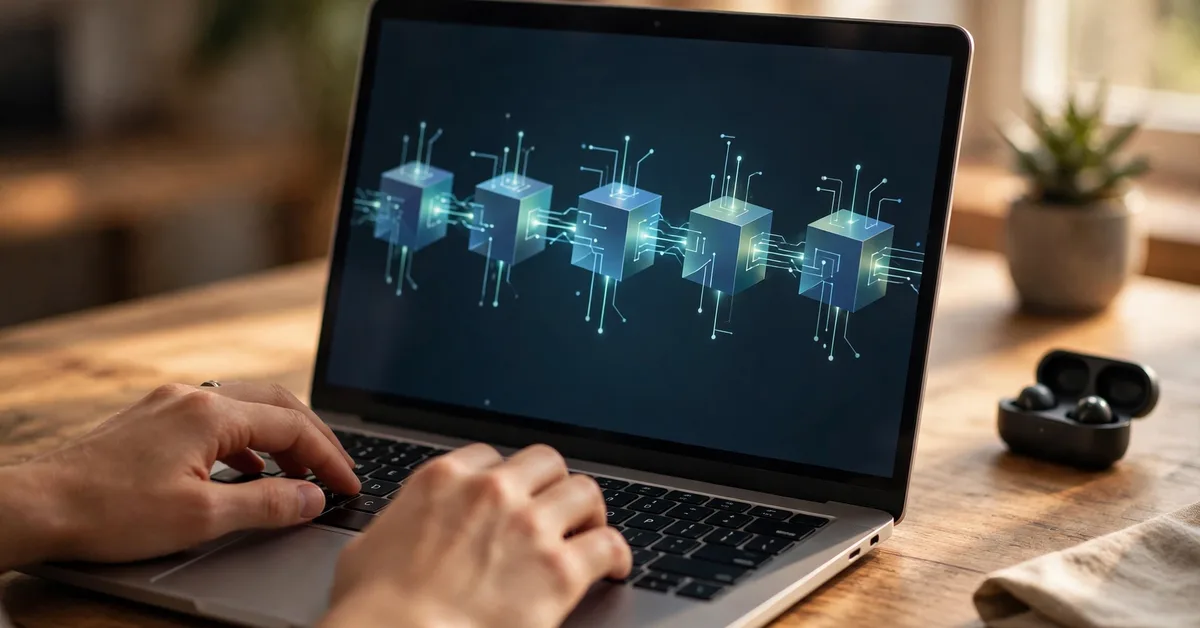
NFTs work through 4 steps: minting, smart contract rules, blockchain storage, and transfer on sale. Minting creates the token. A smart contract writes the token ID, the owner wallet, and the metadata to the blockchain. The blockchain stores the ownership record in public, and each sale updates that record with a new owner and a timestamp.
Step 1: Minting. Minting is the act of creating an NFT. A creator uploads a file to a platform, adds a title, a description, and an edition size, and the platform smart contract writes a new token to the blockchain. Minting costs a network fee called gas on Ethereum, and gas fees rise when the network is busy. On Solana, Polygon, or Base, minting can cost a few cents.
Step 2: Smart contracts. A smart contract is a small program stored on a blockchain that runs the rules for a token. The smart contract sets the token ID, the owner, and the transfer rules, and the smart contract moves the token when a sale completes. Most NFTs use the ERC-721 standard on Ethereum, and ERC-721 is the rulebook that makes each token unique. A related standard, ERC-1155, lets one contract issue unique tokens and identical copies, which suits game items such as 1 legendary sword and 500 identical gold coins.
Step 3: Storage. The ownership record lives on the blockchain, but the image file often lives off-chain. A token stores a link to the file, and that link can point to IPFS (InterPlanetary File System), Arweave, or an ordinary web server. IPFS and Arweave links last, because the file sits on a distributed network. A link to an ordinary company server can break, and the image can vanish while the token stays on-chain.
Step 4: Transfer. A sale moves the token from the seller wallet to the buyer wallet, and the blockchain records the move in public. Anyone can check the full history of a token: who minted it, who bought it, when each sale happened, and what price each sale paid.
What Can Be an NFT?
An NFT can be any item that benefits from a public proof of ownership, and 6 common types cover most NFTs in 2026. Each type uses the same token mechanics, and each type gives the holder a different use.
- Digital art. Illustrations, photos, animation, and generative art. Beeple sold Everydays: the First 5000 Days for 69.3 million dollars at Christie in 2021 (Source: Wikipedia, 2026).
- Music. Tracks, albums, and backstage passes that give fans perks such as early access or a live event entry.
- Gaming items. Skins, characters, weapons, and virtual land that a player holds as a token instead of renting from a game company.
- Tickets and memberships. Event entry, club access, or a community pass that the holder can resell or transfer.
- Collectibles. Sports moments, trading cards, and brand drops, including tokenized physical cards such as Pokemon cards.
- Real-world assets. Certificates linked to physical art, luxury goods, or property records, where the token proves authenticity.
The winning uses in 2026 center on verification and access, not on flipping a picture. Event tickets stop counterfeits, game items move with the player, and credentials prove a diploma without a phone call to the issuer.
NFT vs Cryptocurrency: What Is the Difference?
An NFT differs from cryptocurrency in 1 way: an NFT is unique, and a cryptocurrency unit is interchangeable. Both use blockchains, and both move between wallets, but the two serve different jobs. Cryptocurrency works as money, and an NFT works as proof of ownership.
| Feature | Cryptocurrency | NFT |
|---|---|---|
| Unit type | Fungible, each unit equals another | Non-fungible, each token is unique |
| Main job | Send and hold value | Prove ownership of one item |
| Examples | Bitcoin (BTC), Ethereum (ETH) | Digital art, ticket, game skin |
| Supply | Millions of identical units | Each token has a unique ID |
| Price basis | Market price per coin | Price per specific token |
| Divisible | Yes, bitcoin splits into satoshis | No, a token cannot split |
What Is Bitcoin? explains the first and largest cryptocurrency, and that guide pairs well with this one, because Bitcoin shows the fungible side and an NFT shows the non-fungible side. A buyer needs cryptocurrency to buy an NFT in most cases, because marketplaces price NFTs in ETH or SOL, and the buyer pays gas fees in the same coin.
How to Buy an NFT in 7 Steps
To buy an NFT in 7 steps, set up a wallet, fund it, check the collection, verify the contract, check the full cost, buy on the official marketplace, and review wallet permissions after the buy. Each step takes minutes, and the order matters, because a skipped check can cost the full amount.
- Set up a self-custody wallet. Install MetaMask for Ethereum chains or Phantom for Solana, write the 12-word or 24-word recovery phrase on paper, and never type the phrase into a website.
- Fund the wallet. Buy ETH or SOL on a regulated exchange, send it to the wallet, and keep extra coin for gas fees. A 30 dollar NFT on Ethereum can carry a gas fee above the NFT price during busy hours.
- Pick a marketplace. OpenSea is the largest general marketplace, and Magic Eden leads on Solana. Open the marketplace by typing the address yourself.
- Check the collection. Read the floor price, the lowest listed price, and the recent trading volume. A low floor price with almost no volume is a trap, because a buyer may never find a buyer to sell to later.
- Verify the contract address. Copy the official contract address from the project’s own website or verified social account, and match it on the marketplace page. Fake collections copy the same art and a similar name.
- Check the full cost. Add the NFT price, the gas fee, and the marketplace fee of 2% to 2.5% on most sales. A 100 dollar NFT with a 15 dollar gas fee and a 2.5% marketplace fee costs 117.50 dollars in total.
- Buy, then review permissions. Complete the buy on the official marketplace, check the NFT in the wallet, and revoke token approvals that are no longer in use.
Learn how to buy your first crypto safely in 5 steps before you fund a wallet, because the exchange buy and the wallet setup come first. For wallet choice, read the guide on hot vs cold crypto wallets to match the wallet to the amount.
A worked cost check keeps a first buy honest. A beginner buys a 50 dollar NFT on Ethereum, pays 12 dollars in gas, and pays 1.25 dollars in marketplace fees at 2.5%, for a total of 63.25 dollars. The same 50 dollar NFT on Solana costs about 50.50 dollars in total, because Solana fees run under a few cents. The chain choice changes the total cost by more than 20% on a small buy.
What Do You Actually Own When You Buy an NFT?
When you buy an NFT, you own the token, and you do not own the copyright unless the license says so. This point confuses more beginners than any other part of NFTs, and the license decides the rights.
Buying an NFT is like buying a signed, numbered print. The buyer owns that one edition, and the artist keeps the right to reproduce the image, sell merchandise, or license the image. Some projects grant wider rights, and Bored Ape Yacht Club grants commercial use of the ape image to the holder, but the grant comes from the project license, not from the token itself. Read the license before a buy, and check what the license allows: display only, personal use, or commercial use.
Three checks settle what a buy includes:
- Check the license. The marketplace listing or the project site states the rights. No license text means display rights only in most cases.
- Check where the file lives. Open the token metadata and read the file link. An IPFS or Arweave link gives a durable file, and a link to a company server can break when the company closes.
- Check the royalty terms. A smart contract can list a royalty for the creator, but the royalty standard ERC-2981 only describes a royalty, and ERC-2981 does not force a marketplace to pay it.
When I checked a listing I liked, the image link pointed to a plain web server, not IPFS, so I passed on it, because the art could vanish while the token stayed in my wallet.
Are NFTs Still Worth Anything in 2026?
Most NFTs are worth little or nothing in 2026, and a small tier of collections with real utility or strong demand holds most of the value. The speculative boom is over, and the technology now serves practical uses.
NFT trading rose from 82 million dollars in 2020 to 17 billion dollars in 2021, then fell sharply in 2022 (Source: Wikipedia, 2026). A 2023 study by dappGambl looked at 73,257 NFT collections and found 69,795 of them held a market value of zero ether, which is 95% of the sample, with about 23 million people holding tokens they could not sell for a real price (Source: dappGambl, 2023). Total NFT sales reached about 5.6 billion dollars in 2025, down 37% from 2024, and the average sale price sat near 96 dollars (Source: CoinMarketCap, 2026).
The market in 2026 splits in two directions. One side is the old art speculation, where most 2021 collections trade near zero. The other side is utility: tokenized collectible cards, event tickets, game items, and real-world asset records. Platforms that tokenize physical collectibles, such as Pokemon cards, drove a 2026 revival in real-world asset tokenization (Source: Koinly, 2026).
A beginner decision table keeps the choice simple:
| Situation | NFT makes sense | NFT does not make sense |
|---|---|---|
| Goal | Own art, a ticket, or a game item to use | Get rich fast from a flip |
| Budget | Money you can lose in full | Rent money, bill money, or emergency fund money |
| Research | Contract checked, license read, volume checked | Bought from a social post link |
| Time frame | Hold for use, with no resale plan | Must sell in days at a profit |
Treat an NFT as a high-risk collectible, not as a savings plan. Buy art you would enjoy owning even when no buyer appears, and size the spend so a total loss changes nothing in the budget.
What Are the Risks of NFTs?

NFTs carry 5 main risks: scams, price drops, low liquidity, broken royalty promises, and unclear legal rights. Each risk is real, and each risk has a fix a beginner can apply before a buy.
Scams. Fake collections, phishing links, free mint traps, and wallet drainers are the most common losses. A single bad approval can empty a wallet in one transaction. Use only official links, verify the contract address, and never type a recovery phrase into a site. Read how to avoid rug pulls in crypto for the 7 checks that catch most fake projects.
Price drops. NFT prices can fall 90% or more from a peak, and most collections never recover. The dappGambl 2023 study puts the scale in plain numbers: 95% of collections held zero market value.
Low liquidity. An NFT has no constant market of buyers. A seller can wait days, weeks, or months for a buyer at the listed price, and a seller may find no buyer at all. Check trading volume before a buy, and treat a thin market as a warning sign.
Broken royalty promises. Early NFT marketing promised creators a royalty on every resale, paid by the smart contract forever. In practice, the royalty standard only describes the royalty, and marketplaces pay it by choice. In August 2023, OpenSea made creator fees optional for new collections, and other marketplaces followed. A creator cannot count on resale royalties, and a buyer cannot use a royalty promise as a sign of quality.
Unclear legal rights. The token proves blockchain ownership, but the token does not grant copyright by itself. Courts are still shaping the rules, and a buyer who wants commercial rights must get them in writing in the license.
Do You Pay Tax on NFTs?
Yes, selling or swapping an NFT is usually a taxable event in the United States, even when the trade never touches cash. The IRS treats digital assets as property, not as currency, for tax purposes, and the IRS lists non-fungible tokens (NFTs) as an example of a digital asset (Source: IRS, 2026).
The tax rules for a beginner break into 4 parts:
- Buying with cash is not a taxable event. Paying dollars for an NFT creates no gain or loss at the buy.
- Buying with crypto can trigger tax. Paying with ETH or SOL counts as a disposal of that crypto, and a gain on the crypto can be taxed.
- Selling an NFT creates a capital gain or loss. The gain equals the sale price minus the cost basis, and the cost basis includes the buy price plus gas fees and marketplace fees. Keep the receipt for each fee.
- Some NFTs count as collectibles. The IRS has said some NFTs may be taxed as collectibles under a look-through test, and a collectible held over 1 year can face a long-term capital gains rate of up to 28%, which is higher than the usual 0% to 20% long-term rate (Source: IRS, 2026).
Brokers must report gross proceeds from digital asset sales on Form 1099-DA for transactions on or after January 1, 2025, and basis reporting starts for transactions on or after January 1, 2026 (Source: IRS, 2026). Read the IRS digital assets guidance for the current tax return question and the record rules.
A beginner tax record needs 5 fields per transaction: the date, the NFT name and contract address, the buy price in dollars, each fee in dollars, and the sale price in dollars. Keep those 5 fields in one file from the first buy, because a sale a year later is hard to rebuild from exchange records alone.
Frequently Asked Questions
What is an NFT in simple terms?
An NFT is a unique digital certificate of ownership stored on a blockchain. Each NFT points to one specific item, such as art, a ticket, a game asset, or a credential, and only one wallet can hold that token at a time. A coin is interchangeable, and an NFT is one of a kind.
How do NFTs work?
NFTs work through a smart contract that writes a unique token ID and an owner wallet to a blockchain. Minting creates the token, the blockchain stores the ownership record in public, and each sale updates the record with the new owner. Most NFTs use the ERC-721 standard on Ethereum.
Can someone just right-click and save my NFT?
Yes, anyone can save a copy of the image, but the copy holds no ownership record. The token proves who owns the item, and the blockchain shows the full history of the token. Ownership, provenance, and any perks stay with the holder of the token, not with the holder of a copy.
How much does it cost to buy an NFT?
An NFT costs the listed price plus gas fees and a marketplace fee of about 2% to 2.5%. Prices run from under 1 dollar to millions of dollars. On Solana, Polygon, or Base, fees run a few cents, and on Ethereum, gas fees change with network demand and can exceed the price of a cheap NFT.
Do I own the copyright when I buy an NFT?
No, buying an NFT does not transfer the copyright in most cases. The buyer owns the token, and the creator keeps the copyright unless the license grants it. Some projects grant commercial use in the license, so read the license text before a buy.
Are NFTs a good investment?
No, most NFTs are not good investments, and 95% of collections held zero market value in a 2023 study of 73,257 collections. NFTs suit collectors who want art, tickets, or game items to use. A buyer should spend only money that can be lost in full, and a buyer should never borrow to buy an NFT.
Do I pay tax when I sell an NFT?
Yes, selling an NFT usually creates a capital gain or loss in the United States. The IRS treats NFTs as property, and some NFTs may face a collectibles rate of up to 28% on long-term gains. Keep a record of the buy price, each fee, and the sale price for every transaction.
Conclusion
An NFT is a unique blockchain token that proves one wallet owns one specific digital item, and the token, not the image file, is what a buyer owns. NFTs work through minting, smart contracts, and a public ownership record, and NFTs now serve real uses in tickets, gaming, collectibles, and credentials. Most NFTs hold little resale value in 2026, so a beginner should buy for use, check the license and the file storage, verify the contract, and keep the spend small.
Start with a wallet, a small test amount, and a collection with real trading volume, and skip any NFT that promises a guaranteed return. Savvy Cash Flow publishes beginner money guides that keep crypto, budgeting, and saving in plain terms, and the Cryptocurrency guides give the next step after this one. This article gives general information only, and this article is not financial advice.