

Last updated: October 2026
Written by Emma for Savvy Cash Flow.
Introduction
Learning how to diversify a small portfolio starts with a simple fact: a small portfolio can hold hundreds of assets through 3 low-cost funds, even when the total balance is only $100. Diversification is the practice of spreading money across different asset types, sectors, and countries so one holding does not decide the full result. This guide covers what diversification means, how to pick a 3-fund core, how to set allocation by time horizon, how to use fractional shares and automatic investing, how to add bonds and international funds, how to avoid over-diversification, and how to rebalance once a year. You will see 3 sample portfolios for $100, $500, and $1,000, a fee and tax checklist, and a 7-step plan you can start this week.
Key Takeaways
- Start with 3 funds: one total United States (US) stock fund, one international stock fund, and one total bond fund cover most of the core mix.
- Use percentages, not dollar size: a $100 portfolio with a 70% stock and 30% bond split is diversified in structure, even when the dollar amounts are small.
- Keep fees low: choose funds with low expense ratios and check the fee before you buy.
- Automate small amounts: a fixed monthly amount builds the habit and spreads purchase prices over time.
- Rebalance once a year: sell a small part of the holding that grew past target and buy the holding that fell below target, if taxes and account rules allow it.
- Do not add 20 funds: overlap hides risk and adds work without adding real spread.
What Is Portfolio Diversification?
Portfolio diversification is the practice of spreading invested money across different asset types, companies, sectors, and countries so a loss in one holding has a smaller effect on the total portfolio. Diversification is a risk control method, not a return guarantee. A diversified portfolio is a portfolio that holds many assets with different return drivers. Savvy Cash Flow publishes beginner investing guides that use this same plain, low-cost approach.
How Does Diversification Lower Risk in a Small Portfolio?
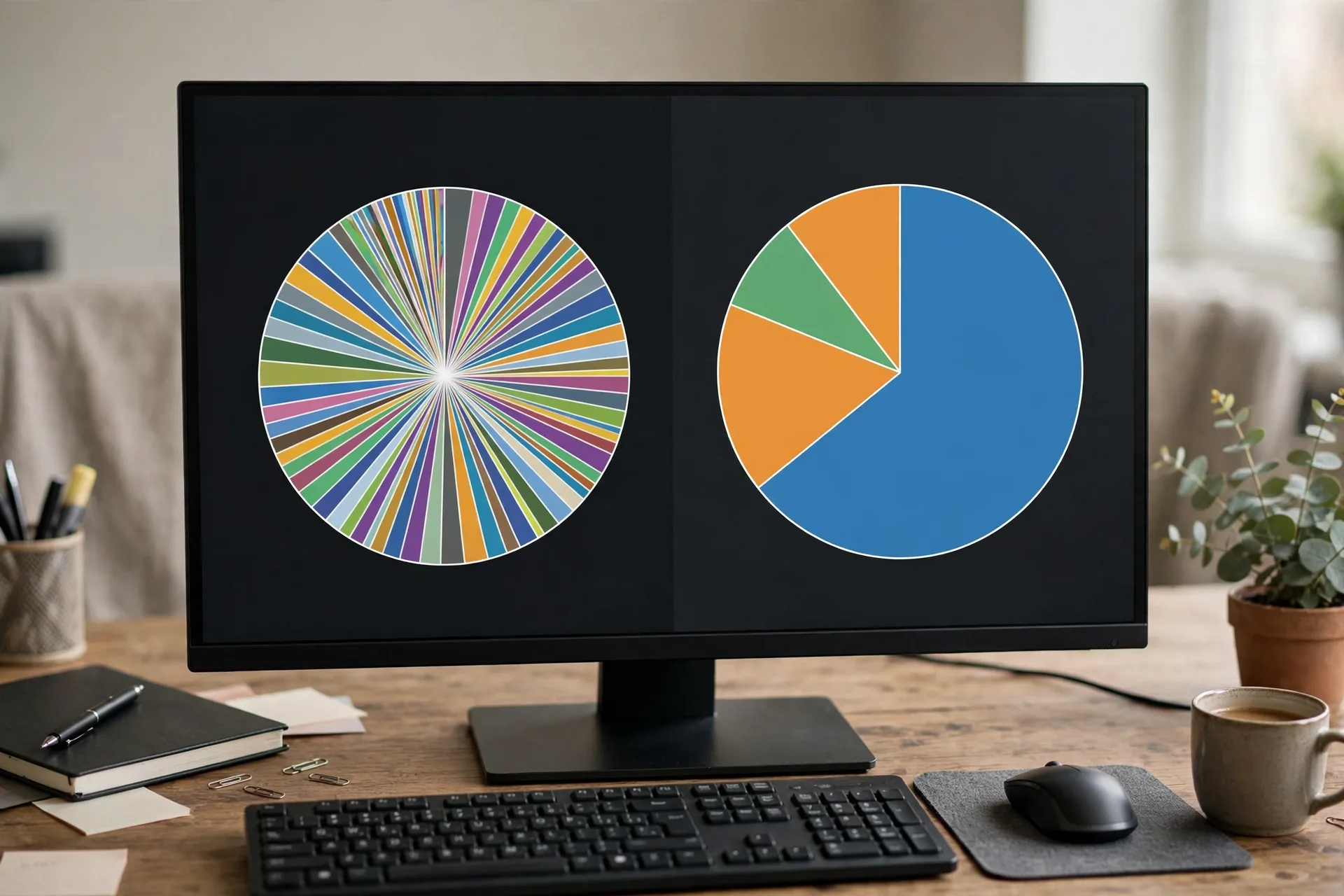
Diversification lowers risk in a small portfolio because different assets rarely fall by the same amount at the same time, so the portfolio result sits between the best holding and the worst holding. To diversify a small portfolio, start with funds that already hold hundreds of assets, then set a target mix across stocks and bonds.
One practical observation from my own setup: when I set up a $100 monthly plan, I split the first deposit across 2 funds and set the same split for every later deposit, so the allocation stayed close to target without a manual trade each month.
What Is the Simplest Diversified Portfolio for Beginners?
The simplest diversified portfolio for beginners is a 3-fund portfolio: a total US stock fund, an international stock fund, and a total bond fund. To build the 3-fund core, pick 1 fund in each group, set a percentage for each fund, and invest new money in those same percentages.
| Fund group | What it holds | Role in the portfolio |
|---|---|---|
| Total US stock fund | Hundreds of US companies across sectors and sizes | Growth core |
| International stock fund | Companies outside the US, in developed and emerging markets | Country spread |
| Total bond fund | Government and corporate bonds with mixed maturities | Stability and income |
The Investing & Wealth guides on Savvy Cash Flow cover index funds and exchange-traded funds (ETFs) in more depth, and they use the same low-cost, beginner-first approach as this guide.

How to Diversify a Small Portfolio in 7 Steps
To diversify a small portfolio in 7 steps, set a goal, pick a target mix, choose 3 low-cost funds, open a low-fee account, invest a fixed amount each month, add new money in target percentages, and rebalance once a year. To diversify a small portfolio, follow each step in order, and skip extra funds until the core is in place.
- Write the goal and the time horizon. A goal for retirement in 25 years allows more stock exposure than a goal for a house deposit in 3 years.
- Pick a target mix. Use the models in the next section as a starting point, then adjust for your own comfort with price falls.
- Choose 3 low-cost funds. Compare expense ratios, check what each fund holds, and avoid 2 funds that hold the same index.
- Open an account with low fees. Look for commission-free ETF trades, low minimums, and fractional share support.
- Set a fixed monthly amount. A fixed amount of $25, $50, or $100 per month builds the habit and spreads entry prices over time.
- Invest new money in target percentages. New deposits can fix small drifts without selling, which also avoids taxable sales in a taxable account.
- Review once a year. Check the actual percentages, check fees, and rebalance only when a holding drifts 5 percentage points or more from target.

How Much Should You Put in Stocks, Bonds, and International Funds?
A beginner with a long time horizon can start with 70% stocks and 30% bonds, with 20% to 30% of the stock part in international funds, and adjust the stock share down as the time horizon shortens. How to diversify a small portfolio depends on time horizon, income stability, and comfort with price falls, so use the table as a starting model, not a fixed rule.
| Model | Stocks | Bonds | Who it fits |
|---|---|---|---|
| Growth (20+ years) | 80% | 20% | Long horizon, steady income, comfortable with falls |
| Balanced (10-20 years) | 60% | 40% | Medium horizon, wants growth with less swing |
| Conservative (under 5 years) | 40% | 60% | Short horizon, needs the money soon |
Sample portfolios show how the same percentages work at 3 sizes:
| Portfolio size | Growth model example | Monthly habit |
|---|---|---|
| $100 | $56 US stocks, $24 international stocks, $20 bonds | $25 per month in the same split |
| $500 | $280 US stocks, $120 international stocks, $100 bonds | $50 per month in the same split |
| $1,000 | $560 US stocks, $240 international stocks, $200 bonds | $100 per month in the same split |

How Do Fractional Shares Help a Small Portfolio?
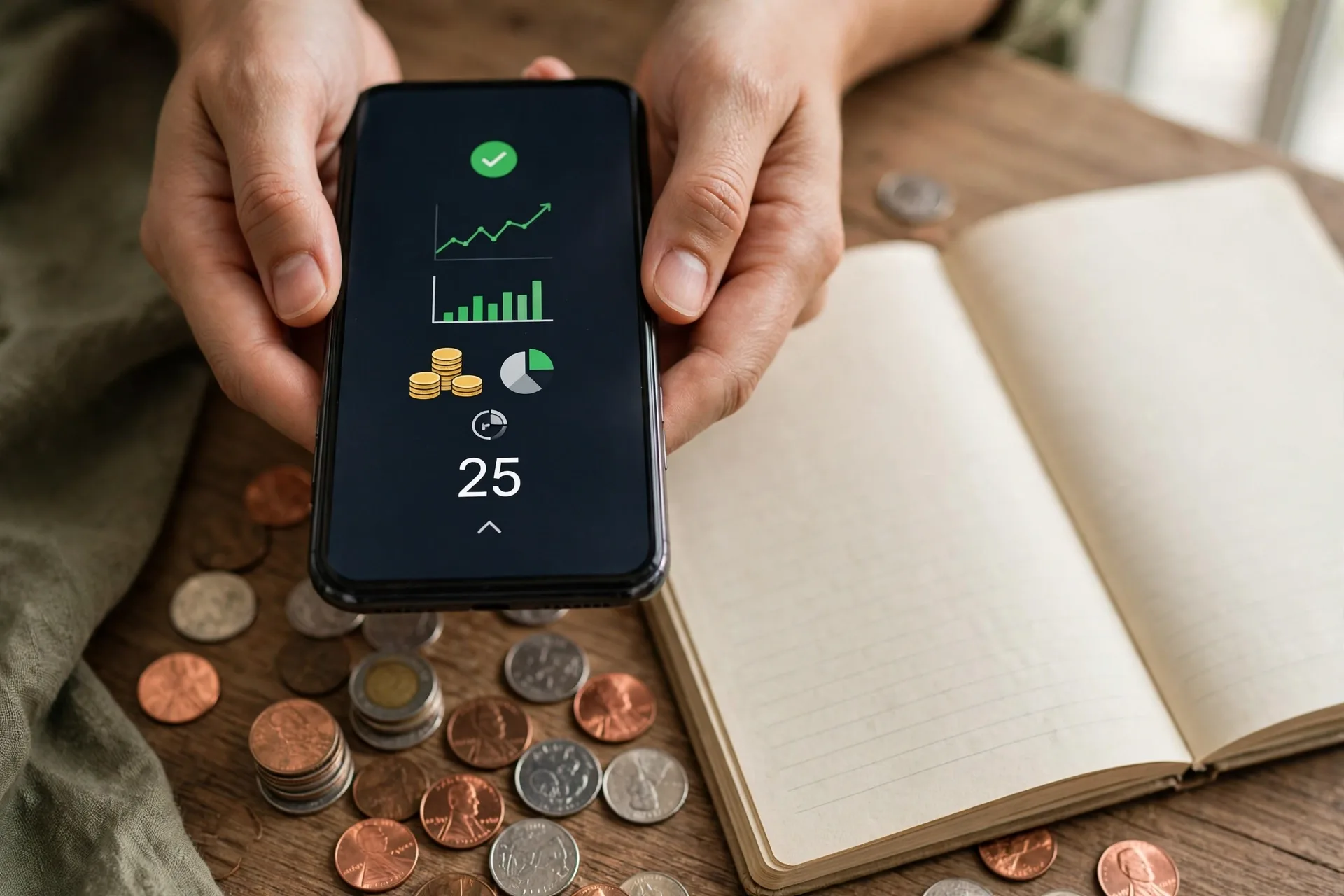
Fractional shares help a small portfolio because fractional shares let you invest an exact dollar amount in a fund or stock, even when one full share costs more than your monthly budget. Fractional shares are portions of a share bought for a set dollar amount, rather than a whole share count. If you prefer funds over single shares, see how to start investing in index funds for minimums and fee checks.
Should You Add Real Estate, Gold, or Crypto to a Small Portfolio?
A small portfolio does not need real estate, gold, or crypto in the core mix, and any extra asset should stay small, at 5% or less of the total, until the 3-fund core is fully funded. To add an extra asset to a small portfolio, first fund the 3-fund core, then cap the extra asset at a fixed percentage, and review it at the yearly check.
Real Estate Investment Trusts (REITs) are companies that own income-producing property and trade like stocks. A REIT fund gives property exposure without a house deposit, and a REIT fund fits inside a small account through a low-cost ETF. Gold moves on different drivers than stocks in some years, but gold pays no dividend and no interest, so gold adds price swing without income. Crypto assets carry high price swings and separate custody and tax rules, so a small crypto share limits the damage from a sharp fall while still giving exposure.
For a first stock purchase inside a diversified plan, read how to buy your first stock step by step before you place an order, so the purchase fits the target mix instead of breaking it.
Diversified Portfolio vs Concentrated Portfolio
A diversified portfolio spreads money across many assets and accepts the average result of those assets, while a concentrated portfolio holds few assets and accepts a result close to the best or worst holding in the group. Diversified portfolio vs concentrated portfolio is a choice between a narrower range of results and a wider range of results.
| Feature | Diversified portfolio | Concentrated portfolio |
|---|---|---|
| Number of holdings | Hundreds through funds, or 20+ stocks | 1 to 5 stocks |
| Company risk | Low, one company has a small weight | High, one company can cut the total by a large amount |
| Work to manage | Low, 3 funds and a yearly check | High, each company needs tracking |
| Best-case result | Close to the market average | Close to the best stock, if the pick wins |
| Worst-case result | Close to the market average | Close to the worst stock, if the pick loses |
Diversification is a process of allocating capital in a way that reduces exposure to any one asset or risk, as defined on the diversification in finance page that explains variance reduction across uncorrelated assets. That definition matches the practical rule in this guide: spread the money, keep the fund count low, and let the percentages do the work.
How to Rebalance a Small Portfolio Without High Costs
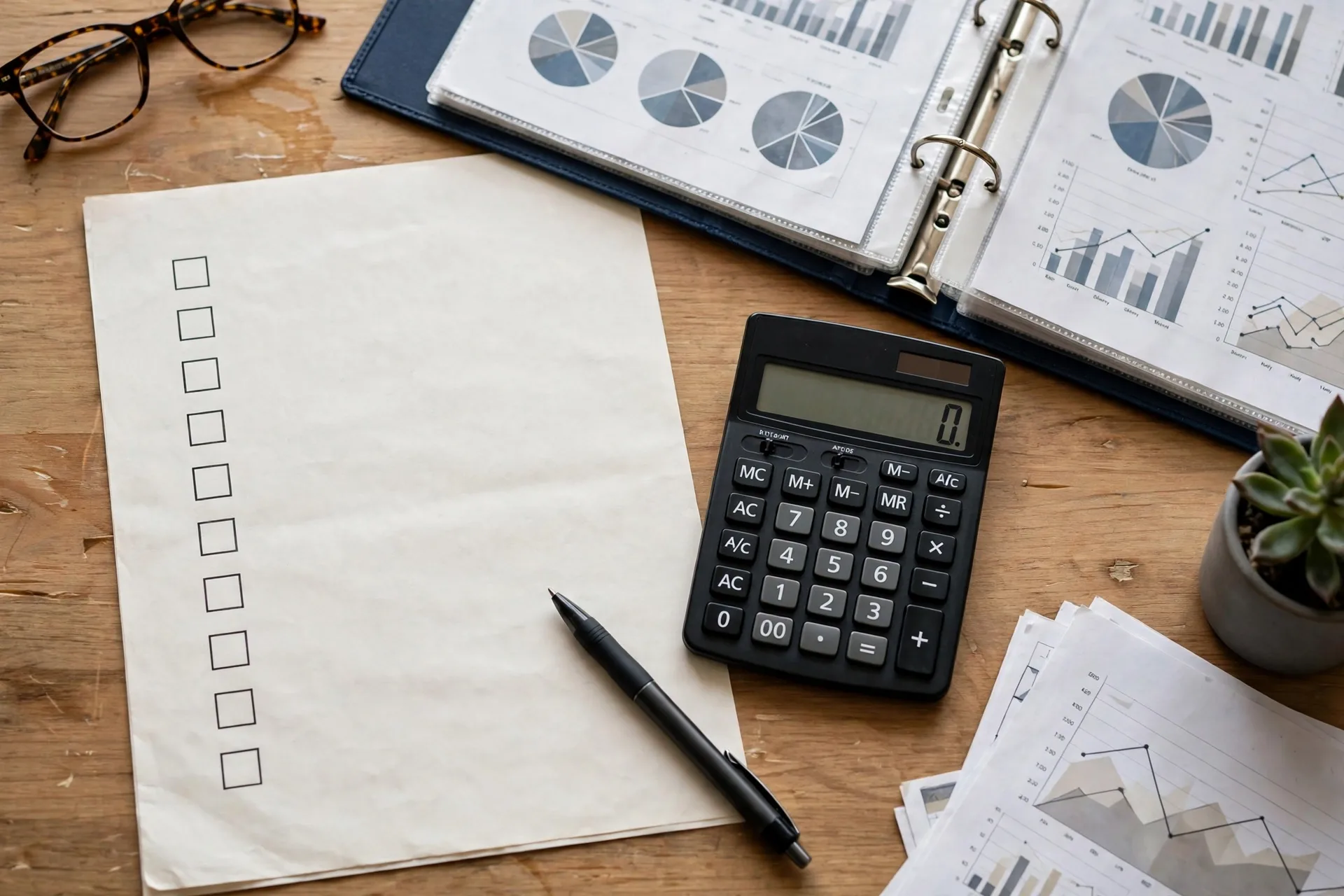
To rebalance a small portfolio without high costs, use new deposits first, rebalance once a year, and only sell when a holding drifts 5 percentage points or more from target. Rebalancing is the practice of returning portfolio percentages to target after market moves shift the weights.
- New money first: direct the next 3 monthly deposits to the holding below target, and check if the drift closes without a sale.
- Once a year: a yearly check keeps trading low and avoids reaction trades after single market moves.
- Tax-aware sales: in a taxable account, a sale can create a tax bill, so prefer new deposits in taxable accounts and save sales for tax-advantaged accounts when both account types exist.
5 Mistakes That Break a Small Diversified Portfolio
The 5 mistakes that break a small diversified portfolio are holding overlapping funds, chasing last year winners, trading on market news, ignoring fees, and skipping the yearly check. Each mistake is easy to fix once you name it.
- Overlapping funds: 3 funds that track the same US index give the look of spread with no real spread. Check holdings overlap before you add a fund.
- Chasing last year winners: a sector that rose 40% last year can fall 30% this year. New money should follow the target mix, not last year return rank.
- Trading on market news: daily news moves prices in both directions. A fixed monthly plan and a yearly check remove most reaction trades.
- Ignoring fees: a fund with a 1.00% yearly fee takes $10 per year on $1,000, while a fund with a 0.05% yearly fee takes $0.50 per year on $1,000. The gap grows as the balance grows.
- Skipping the yearly check: without a check, a growth portfolio drifts to a higher stock share each year, and risk rises without a decision.
Read our ETFs for beginners guide for a full fee and fund comparison checklist before you pick your 3 funds.
Frequently Asked Questions
How many stocks do I need to diversify a small portfolio?
You need 1 broad fund, not a set stock count, to diversify a small portfolio, because 1 total market fund already holds hundreds of stocks across sectors and sizes. A portfolio of 20 individual stocks can also spread company risk, but 20 stocks need more cash, more tracking, and more trades than 1 fund. Start with funds, and add individual stocks only after the core mix is in place and the stock share stays below 10% of the total.
Can I diversify with only $100?
Yes, you can diversify with only $100, because fractional shares and low-minimum funds let you split $100 across US stocks, international stocks, and bonds in target percentages. A $100 split at 70% stocks and 30% bonds becomes $70 in stocks and $30 in bonds, with the stock part split between US and international funds. The dollar amounts are small, but the percentage structure matches a larger diversified portfolio.
Is 3 funds enough for diversification?
Yes, 3 funds are enough for diversification for most beginners, because 3 funds with different return drivers cover US stocks, international stocks, and bonds in one simple mix. More funds add overlap risk and tracking work. Add a 4th fund only when the new fund adds a driver the core lacks, such as a REIT fund for property exposure, and keep the extra fund at a small fixed percentage.
How often should I rebalance a small portfolio?
You should rebalance a small portfolio once a year, or when a holding drifts 5 percentage points or more from target, whichever comes first. Yearly rebalancing keeps trading costs low and avoids reaction trades. New monthly deposits can fix small drifts without sales, which is the lowest-cost method in a taxable account.
Does diversification guarantee I will not lose money?
No, diversification does not guarantee you will not lose money, because diversification reduces company risk but cannot remove market risk. A diversified stock portfolio still falls when the whole market falls. Diversification narrows the range of results and lowers the chance that one company loss drives the full result, but losses remain possible in any market fall.
Conclusion
How to diversify a small portfolio comes down to 3 funds, clear percentages, low fees, and a yearly check. A small portfolio with a 70% stock and 30% bond split, built from a total US stock fund, an international stock fund, and a total bond fund, holds the same percentage structure as a larger diversified portfolio. Start with a fixed monthly amount you can hold through market falls, invest new money in target percentages, and rebalance once a year when drift passes 5 percentage points. Keep the fund count low, check fees before each purchase, and let the percentages, not market news, guide each deposit. That simple system gives a small portfolio real spread without extra work, extra fees, or extra risk from concentration.
This guide gives general education only, not personal financial advice. Check your broker fee schedule and tax rules before you buy, sell, or rebalance.