


You open your phone to check one thing, and twenty minutes later you have bought a jacket you did not plan to buy and a gadget you do not need. Sound familiar? This is impulse buying, and it is one of the biggest money leaks in your budget. But there is a simple fix that takes zero willpower: the 24 hour rule for money.
The 24 hour rule is a waiting trick: when you want to buy something you did not plan to buy, you wait a full 24 hours first. That is it. Yet this one habit can save you hundreds or even thousands of dollars a year, because most buying urges simply expire while you wait.
Key Takeaways
- The 24 hour rule for money means waiting 24 hours before any unplanned purchase, so you decide with a clear head instead of in the heat of the moment.
- Impulse buying costs the average person $150 to $200 a month, so this one rule can save you up to $2,400 a year.
- For purchases over $100, extend the wait: 7 days for medium buys and 30 days for big ones.
- Keep a wish list during your wait. Most people buy less than 10% of what lands on it, which shows how many urges were never real.
What Is the 24-Hour Rule for Money?

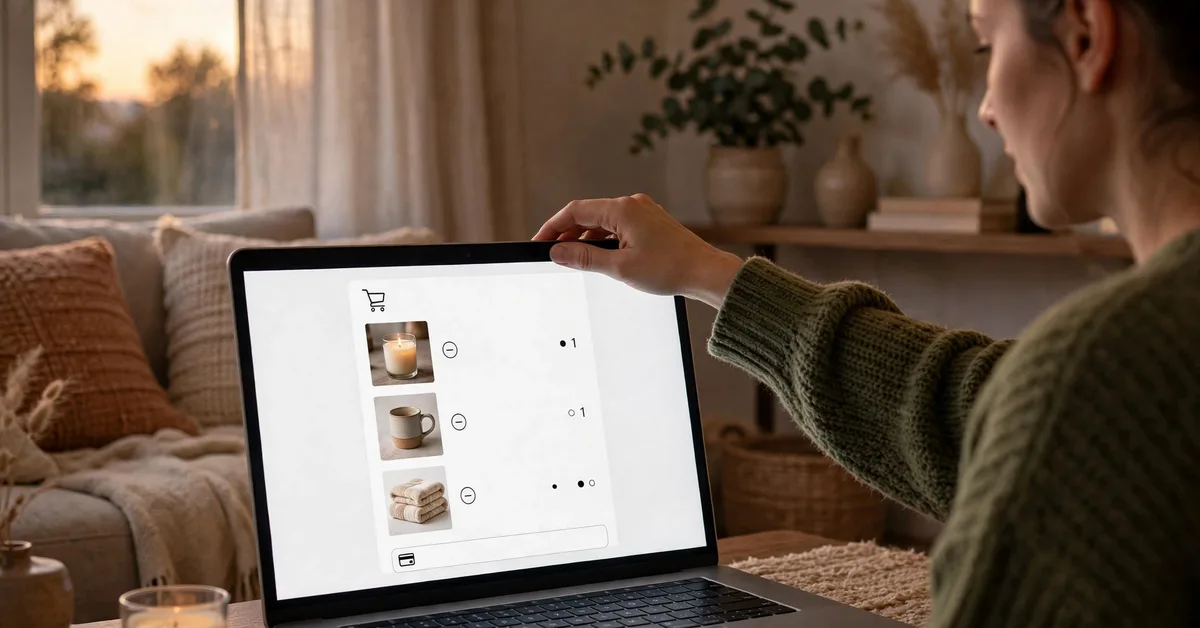
The 24-hour rule is a simple spending rule: if you want to buy something you did not plan to buy, you wait 24 hours before making the purchase. During that waiting period, you do nothing. You do not put the item in your cart, you simply walk away or close the tab and come back tomorrow. If you still want the item after 24 hours and it fits your budget, you buy it without guilt.
The rule only applies to wants, not needs. If your phone charger died or your car needs brake pads, that is not an impulse buy, that is life. The 24 hour rule targets unplanned purchases driven by emotion, a sale, or a trigger: the clearance sweater, the flash sale gadget, the late-night online order you barely remember placing.
Why Does the 24-Hour Rule Work?
The 24-hour rule works because it attacks the emotion behind impulse buying instead of fighting your willpower. When you see something you want, your brain releases dopamine and the purchase feels like a win right now. A 24-hour cooling-off period lets that chemical rush fade, so your rational brain rejoins the decision and judges the item itself, not the excitement around it.
It also defeats the tricks retailers use on you. Online stores are engineered to close the sale before the rush fades: countdown timers, “only 2 left” warnings, and flash sales ending at midnight. Every one of these works only if you decide fast. When you commit to waiting 24 hours, the countdown has already ended by the time you decide, and you judge the item at its real price against your budget.
How Much Money Can the 24-Hour Rule Save You?

The 24 hour rule can save you roughly $75 to $150 a month, or $900 to $1,800 a year. Here is the math: surveys estimate the average person spends $150 to $200 a month on impulse purchases, which is $1,800 to $2,400 a year on things never planned. If the rule cuts that in half, and for most people it cuts more, you keep around $100 every month.
Make it concrete: say you catch yourself wanting unplanned items worth about $120 a week, or $480 a month. Research on this rule shows roughly 70 to 80% of urges die during the waiting period. If 75% of yours fade, you avoid $360 of spending a month. That is $4,320 a year back in your pocket, enough for a starter emergency fund. These are easy ways to save money every month that stack perfectly with this rule.
How Do You Use the 24-Hour Rule? A 5-Step Guide
Use this system every time the urge hits, not just when you remember.
Step 1: Name the Urge
The moment you feel the pull, say it out loud: “I want to buy this, and it was not on my list.” Naming the urge pulls it out of autopilot. Most impulse buys happen in a trance of scrolling or browsing, and one sentence breaks the trance.
Step 2: Capture the Details, Then Walk Away
Take a photo or screenshot of the item with its price. This tells your brain the want is “saved,” which calms the fear of missing out, and it gives you a record for tomorrow. Then close the tab or put the item back. This is one of the money mindset shifts that separates calm spenders from chronic overspenders: treat every unplanned want as information, not a command.
Step 3: Set a Reminder for Tomorrow
Set a phone alarm for the same time tomorrow. Do not trust yourself to “just remember.” The reminder is your decision checkpoint.
Step 4: Ask Three Questions When the Reminder Goes Off
Look at your screenshot and ask: Do I still want this? Do I already own something similar? Will I care about this in 30 days? Two or more “no” answers means delete the screenshot and move on. An honest “yes” to all three means the want survived the cooling-off period.
Step 5: Buy Without Guilt, or Let It Go
If the item passes the test and fits your budget, buy it and enjoy it. The 24-hour rule is not about never spending, it is about never spending by accident. If the urge died, congratulate yourself: you just saved that amount with zero effort. Track your avoided purchases for a month. Seeing the total, often $200 to $400, makes the habit stick.
When Should You Extend the Rule to 48 Hours or 30 Days?

Extend the wait for bigger purchases: 48 hours to 7 days for anything over $100, and a full 30 days for anything over $500. A $25 candle is a small mistake. A $1,200 laptop bought on excitement can set your budget back months. Many financial planners recommend this tiered system: 24 hours for everyday items, 7 days for mid-size buys, 30 days for big ones.
The 30-day version has its own name, the 30-day rule: write the item, its price, and today’s date in a notes app. If you still want it after 30 days, it was a genuine want, and you can plan for it in your budget. Most people buy less than 10% of what lands on the list.
What Are the Most Common 24-Hour Rule Mistakes?

The biggest mistake is making exceptions for “deals.” If an item is not worth its regular price to you, the discount is manufacturing urgency, not value. Let the sale expire. If you still want it at full price tomorrow, buy it then.
The second mistake is applying the rule only sometimes. The rule works because it is automatic. Make it binary: unplanned purchase means a 24-hour wait, every time. And do not cheat by buying it “now” and telling yourself you will return it tomorrow. Most people never bother returning, which is exactly what retailers count on. For more tactics, our complete guide to stopping impulse buying covers seven proven systems that pair well with this one.
How Does the 24-Hour Rule Compare to Other Saving Tricks?

The 24-hour rule is the best first habit, but it gets stronger combined with other systems. A no-spend week resets autopilot spending by limiting you to essentials for seven days. The cash envelope system caps spending physically: carry a fixed amount of cash for a category, and when the envelope is empty, spending stops.
The 24-hour rule wins as a starter habit because it has almost no friction: one behavior change, wait one day. Use it as your first line of defense, then add a monthly spending review to catch patterns. Combined with strategies to cut your monthly expenses without stress, waiting 24 hours turns saving from a project into a reflex.
Frequently Asked Questions
Does the 24-hour rule actually work?
Yes. It is one of the most recommended tactics by budgeting experts because it directly targets the emotion behind impulse buying. Shoppers who successfully control impulse spending consistently name waiting a day among their top strategies. It will not stop every impulse, but it reliably kills the majority of them.
What purchases should skip the 24-hour rule?
Skip the wait for genuine needs: medicine, safety items, replacing something broken you use daily, and true emergencies. The rule is for unplanned wants, not for punishing yourself over things you need.
What if the sale ends before the 24 hours are up?
Let it go. If the item is worth buying, it is worth buying at its regular price tomorrow. Most “expiring” deals come back within weeks anyway. This is the hardest part of the rule and also the most important test.
How is the 24-hour rule different from the 30-day rule?
They are the same idea at different scales. The 24-hour rule handles everyday impulses under $100. The 30-day rule handles bigger wants: add the item to a wish list and revisit it after a month. One catches the small leaks, the other prevents the big regrets.
Can the 24-hour rule help with online shopping?
It is most powerful for online shopping, because online stores are built to remove every second of thinking time between want and purchase. Screenshot the item, close the tab, and set your reminder. Deleting saved card numbers from shopping sites adds a second layer of friction.
The Bottom Line
You do not need more willpower to save money. You need a better system, and the 24-hour rule for money is the simplest system there is: wait one day before any unplanned purchase, and let most buying urges die quietly on their own. Start today. The next time you feel the urge, screenshot it, set a reminder, and walk away.
Impulse buying is one of the money mistakes keeping you poor, and the 24-hour rule is the cheapest, fastest fix for it. Share this guide with someone who always says “I just went in for one thing.” Their wallet will thank you.
This article is for general information only and is not financial advice. Spending habits vary, so adapt these tips to your own situation.