


Key Takeaways
- Impulse buying is an unplanned purchase driven by emotion or triggers, and the average shopper spends an estimated $150 to $300 per month on unplanned buys.
- The 24-hour rule is the single most effective tactic: waiting one day kills most buying urges.
- A 30-day wish list separates real wants from passing impulses for bigger purchases.
- Removing saved payment info and unsubscribing from sale emails cuts temptation at the source.
- A small “fun money” budget lets you spend guilt-free while the rest of your money stays protected.
You walked in for one thing and walked out with seven. The shoes were 40% off, the candle smelled like fall, and somehow a kitchen gadget you will never use ended up in your cart. If this sounds familiar, you are not alone. Learning how to stop impulse buying is one of the fastest ways to keep more of your paycheck, because most of us leak hundreds of dollars a year on purchases we never planned.
Impulse buying is not a character flaw. Stores, apps, and ads are engineered by experts to trigger your buying instinct. The good news is that a few simple systems can protect you from those triggers almost on autopilot.
What Is Impulse Buying?

Impulse buying is any purchase you make on the spot, without planning or real need, driven by emotion, a deal, or a trigger in the moment. The key difference from regular spending is intent: you did not walk into the store (or open the app) planning to buy it. It is the clearance sweater, the checkout-line snacks, and the late-night online order you barely remember placing.
Retailers know this well: candy at the register, “price drop” alerts at midnight, sales that always end in 2 hours. Impulse buying is a designed behavior, not a personal failure, and seeing that is the first step to beating it.
Why Do We Impulse Buy?
We impulse buy because our brains are wired to chase instant rewards. A surprise deal or shiny new item releases dopamine, the feel-good chemical, and the purchase feels like a win in the moment. Marketers amplify this with scarcity (“only 2 left”), urgency (“sale ends tonight”), and social proof (“10,000 people bought this”).
Stress, boredom, and fatigue make it worse. After a long day, your decision-making energy is low, so “add to cart” feels easy and harmless. Online shopping removes the last bit of friction: one click, no wallet to open, no line to stand in. Once you see impulse spending as a habit loop (trigger, urge, purchase, brief high, regret), you can break it by changing the loop, which is exactly what the tips below do.
7 Proven Tips to Stop Impulse Buying for Good
These are not vague “just be disciplined” lectures. Each tip is a concrete system that removes a trigger or adds friction. Pick three to start with, and add more as they become habits.
1. Use the 24-Hour Rule
The 24-hour rule is simple: when you want something unplanned, wait 24 hours before buying it. This is the most powerful of all impulse buying tips because most urges expire fast. That sweater that felt urgent at noon usually feels optional by the next morning.

How to do it: take a photo or screenshot of the item with its price, then walk away or close the tab. Set a phone reminder for tomorrow. If you still genuinely want it after 24 hours and it fits your budget, buy it without guilt. For purchases over $100, stretch the wait to 7 days. You will be shocked how many “must-haves” you forget entirely.
2. Keep a 30-Day Wish List

For bigger wants, a 30-day wish list is the upgraded version of the 24-hour rule. Write the item, price, and date on a list (a notes app or paper works). If you still want it after 30 days, it was a real want, not an impulse.
This works because it turns vague desire into data. You will notice patterns: three gadgets added, zero remembered. The list also helps you plan: if the item still matters in 30 days, you can budget for it instead of swiping a credit card. Many people find they buy less than 10% of what lands on their wish list, which tells you everything about how fleeting impulses are.
3. Unsubscribe, Unfollow, and Delete the Apps
Your inbox and feed are impulse-buying machines. Every “FLASH SALE” email and influencer haul video is a trigger dressed as content. Spend 30 minutes unsubscribing from store emails, unfollowing shopping-focused accounts, and deleting shopping apps from your phone.
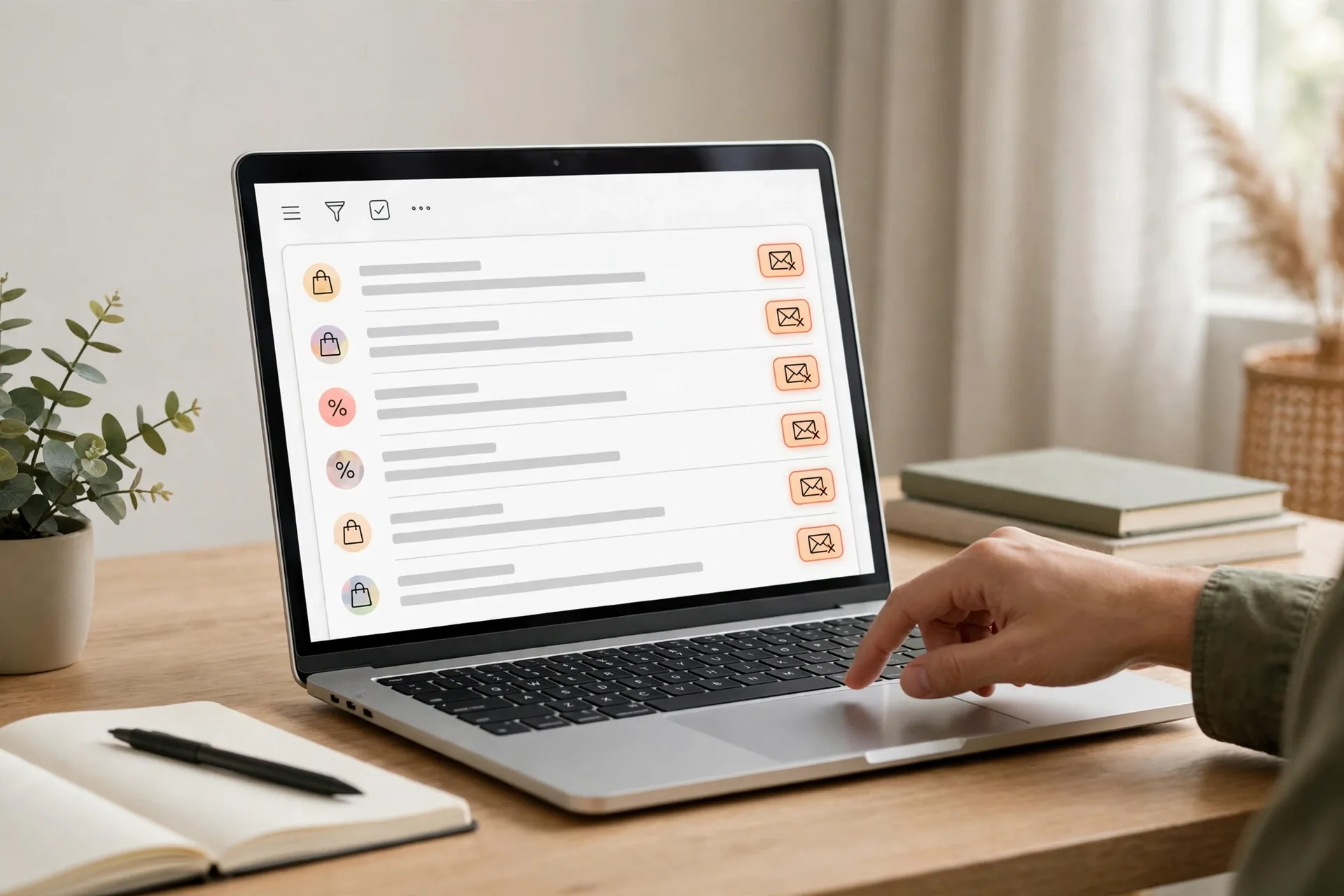
This is the highest-leverage tip on the list because it works passively. You cannot impulse buy from a sale you never hear about. Keep the apps off your phone and force yourself to shop from a browser, where checkout takes more steps. Fewer triggers means fewer urges, and it is one of the simplest ways to cut your monthly expenses without changing your lifestyle.
4. Always Shop With a List
Never walk into a store, open a grocery app, or browse a website without a list. A list turns shopping from an exploration into a mission: get in, get what you need, get out. Studies on grocery spending consistently show that list shoppers spend less and waste less food.
Write the list before you go, and make a rule: if it is not on the list, it goes on the 30-day wish list instead.
5. Remove Saved Cards and Turn On Friction
One-click checkout is the enemy of thoughtful spending. Delete saved credit cards from shopping sites and apps, and turn off express payment options like Apple Pay or Shop Pay on retail apps. Forcing yourself to get up, find your wallet, and type in 16 digits gives your rational brain time to catch up with your emotional brain.
Extra friction ideas: log out of shopping accounts after every purchase, keep your credit card in a drawer instead of your wallet, or use a prepaid card with a fixed monthly spending limit. Every extra step is a checkpoint where the impulse can die quietly.
6. Give Yourself a Fun Budget
Total deprivation backfires. If your budget has zero room for fun, you will eventually snap and overspend in one big binge. Instead, build a small “fun money” line into your budget, an amount you can spend on anything, no questions asked, no guilt attached.

Even $50 to $100 a month works. When it is gone, it is gone until next month. This satisfies the part of you that wants spontaneity while protecting your real goals. If you need a framework to fit it in, the 50/30/20 budget rule gives your “wants” a built-in 30% lane, so fun spending is planned, not impulsive.
7. Track Every Purchase for 30 Days
For one month, write down every single thing you buy and how you felt about it a week later. A notes app or a simple spreadsheet is fine. This is not about judgment; it is about data. Most people discover that 20 to 40% of their spending went to things they barely remember or already regret.
The review is the powerful part. After 30 days, highlight every purchase you would not make again and add up the total. That number is your personal “impulse tax,” and seeing it in black and white is often the wake-up call that makes the other tips stick. Unplanned spending is one of the money mistakes that keep people poor, and tracking is how you prove it to yourself with your own numbers.
What to Do When the Urge Hits Right Now

Knowing the tips is one thing; surviving the moment of temptation is another. Here is a 5-minute emergency plan for when you are staring at something you desperately want:
- Pause and breathe. Put the item down or close the tab. Physically stepping back breaks the trance.
- Ask three questions: Do I need this? Do I already own something similar? Will I care about this in 30 days? Two “no” answers means walk away.
- Check your fun budget. If you have fun money left and it fits, buy it guilt-free. If not, it goes on the 30-day list.
- Leave the store or site. Urges fade fast once the trigger is gone. Take a walk, drink water, or switch tasks.
- Text a friend your screenshot. Saying “talk me out of this” out loud makes the impulse feel silly, which is usually what it is.
Keep this list on your phone for the moment of temptation.
Frequently Asked Questions
Is impulse buying a real problem or just bad habits?
It is a real, measurable problem. Research on consumer spending consistently finds that a large share of purchases are unplanned, and surveys estimate the average American spends over $150 a month on impulse buys. It is driven by real psychology, dopamine, scarcity, and decision fatigue, not laziness.
How long should I wait before buying something I want?
Use the 24-hour rule for everyday items and a 30-day wait for anything over $100. The longer the wait, the clearer your true desire becomes. Most impulses fade within a day; real wants survive a month.
Does the 24-hour rule actually work?
Yes, and it is the most recommended tactic by budgeting experts because it directly targets the emotion behind the purchase. The urge to buy is strongest in the moment and decays quickly. A forced cooling-off period lets your rational brain rejoin the decision.
How do I stop impulse buying online specifically?
Delete shopping apps, remove saved payment methods, and unsubscribe from sale emails. Never shop when you are tired, stressed, or bored. Online, friction is your best friend.
What if my partner or family members are impulse buyers?
Agree on a shared threshold, for example, any unplanned purchase over $50 gets discussed first. Give everyone their own fun money budget so nobody feels controlled. Make it a team system, not a policing system, and review spending together monthly without blame.
The Bottom Line
You do not need more willpower to stop impulse buying. You need better systems: a 24-hour cooling-off rule, a 30-day wish list, fewer triggers in your inbox and feed, more friction at checkout, a guilt-free fun budget, and 30 days of honest tracking. Start with any two tips this week. Small systems beat big intentions every time.
Ready to take control? Pick the one tip that feels easiest and use it on your very next shopping trip. Then come back and add another. In three months, check your spending and see how much of your old “impulse tax” you kept. If this guide helped, share it with a friend who always says “I just went in for one thing.”
This article is for general information only and is not financial advice. Spending habits vary, so adapt these tips to your own situation.
[…] it still works: Most budget failures are behavior problems, not math problems. If you regularly blow your budget on unplanned purchases, a physical barrier beats a mental note every […]