

You set a budget on the first of the month, full of good intentions. Then the 20th rolls around, your checking account looks thin, and you cannot say where the money went. If that cycle sounds familiar, the cash envelope system might be the reset your budget needs.
The cash envelope system is one of the oldest budgeting methods around, and it is having a real comeback in 2026. Search “cash stuffing” on any social platform and you will find thousands of people filling envelopes with physical cash. But does it still work in a world of tap-to-pay and one-click checkout?
Key Takeaways
- The cash envelope system is a budgeting method where you divide your monthly cash into labeled envelopes for each spending category, and when an envelope is empty, spending in that category stops.
- It works because handing over physical cash hurts more than swiping a card, which naturally slows impulse spending.
- In 2026, it works best as a hybrid: cash envelopes for problem spending categories plus digital tools for bills and savings.
- Start with just 2 to 3 envelopes (groceries, dining out, fun money) rather than trying to envelope your entire budget on day one.
- The biggest reason people quit is borrowing from one envelope to cover another, so treat each envelope as a hard limit.
What Is the Cash Envelope System?
The cash envelope system is a budgeting method where you withdraw your spending money in cash at the start of each pay period, divide it into labeled envelopes for specific categories like groceries, gas, and entertainment, and spend only from the matching envelope until the next payday.
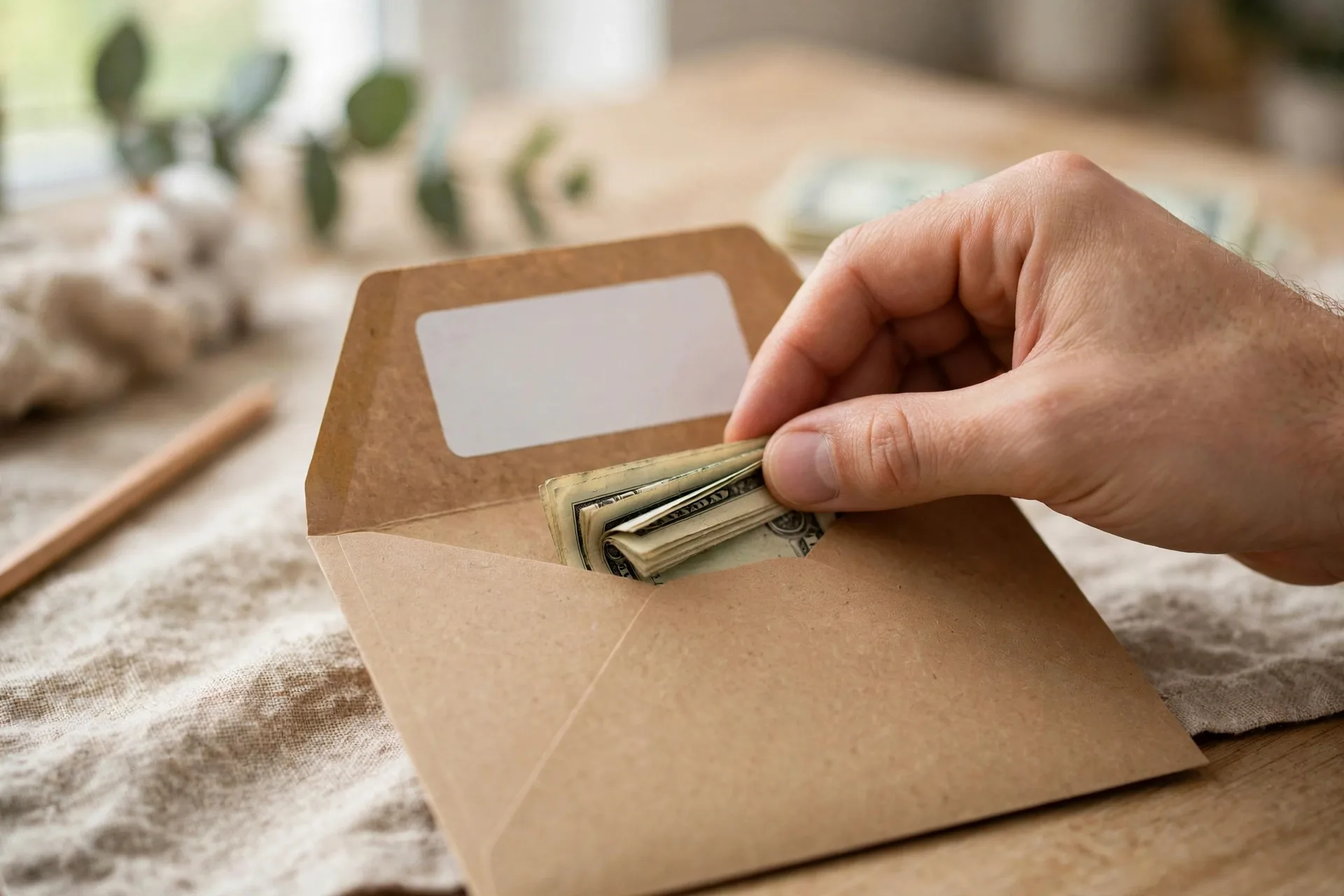
It is sometimes called envelope budgeting, and its viral cousin on social media is “cash stuffing.” The concept is decades old, but the mechanics have not changed: every dollar gets a job, and every dollar is visible. When the grocery envelope is empty on the 24th, you are eating from the pantry, not swiping anyway.
How Does the Cash Envelope System Work?
The cash envelope system works in five steps: list your variable spending categories, set a cash limit for each, withdraw that total on payday, divide the bills into labeled envelopes, and spend only from the matching envelope.
Step 1: List your variable spending categories. Groceries, dining out, gas, personal spending, entertainment. Fixed bills like rent stay in your bank account.
Step 2: Set a realistic limit for each. Use your last two to three months of actual spending per category, then trim by 10 to 15 percent. If you spent $600 a month on groceries, $520 is a stretch goal; $350 is a setup for failure.
Step 3: Withdraw the cash on payday. Add up all your envelope limits and take out that exact amount in smaller bills so you can split categories precisely.
Step 4: Stuff the envelopes. Label each envelope with the category and amount, then divide the cash.
Step 5: Spend only from the matching envelope. When an envelope is empty, that category is done until next payday. No transfers, no exceptions.

Does the Cash Envelope System Still Work in 2026?
Yes, the cash envelope system still works in 2026, because the psychology behind it has not changed: people consistently spend less with cash than with cards, since handing over physical money creates a “pain of paying” that a tap or swipe does not trigger.
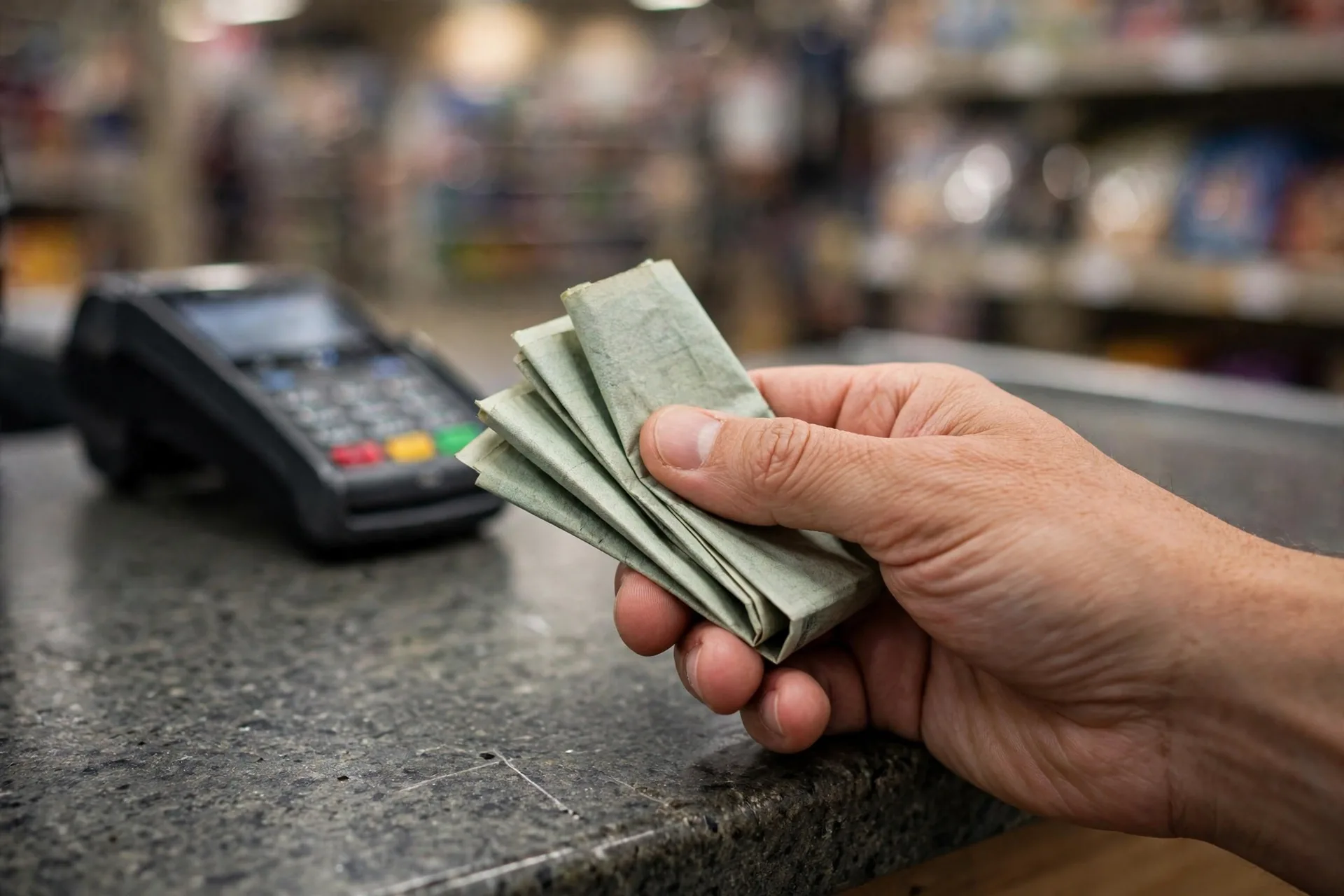
Why it still works: Most budget failures are behavior problems, not math problems. If you regularly blow your budget on unplanned purchases, a physical barrier beats a mental note every time.
Where it struggles: A fully cash life is impractical in 2026. Online shopping, subscriptions, and most bill payments are digital, and cash offers no fraud protection or rewards points.
The 2026 verdict: Use it as a hybrid system. Put cash envelopes on your two or three problem categories, the ones where you chronically overspend, and run everything else digitally. You get the behavioral power of cash exactly where you need it without fighting modern life.
Cash Envelope System vs. Credit and Debit Cards
For controlling discretionary spending, the cash envelope system beats cards, because cash creates visible, immediate feedback on every purchase while cards delay the pain until the statement arrives.
Research into the “cashless effect” has repeatedly found that people spend more paying by card versus cash. A card payment is abstract; counting out bills is concrete. You feel each dollar leave. Cards still win on purchase protection, fraud limits, cashback, and automatic records, so split the job: bills and planned purchases on cards, leak categories in cash envelopes.
Cash Envelope Budget Categories: Where to Start
The best cash envelope budget categories are the variable ones where you overspend: groceries, dining out, gas, personal spending, and entertainment. Start with just 2 to 3 categories, not ten.
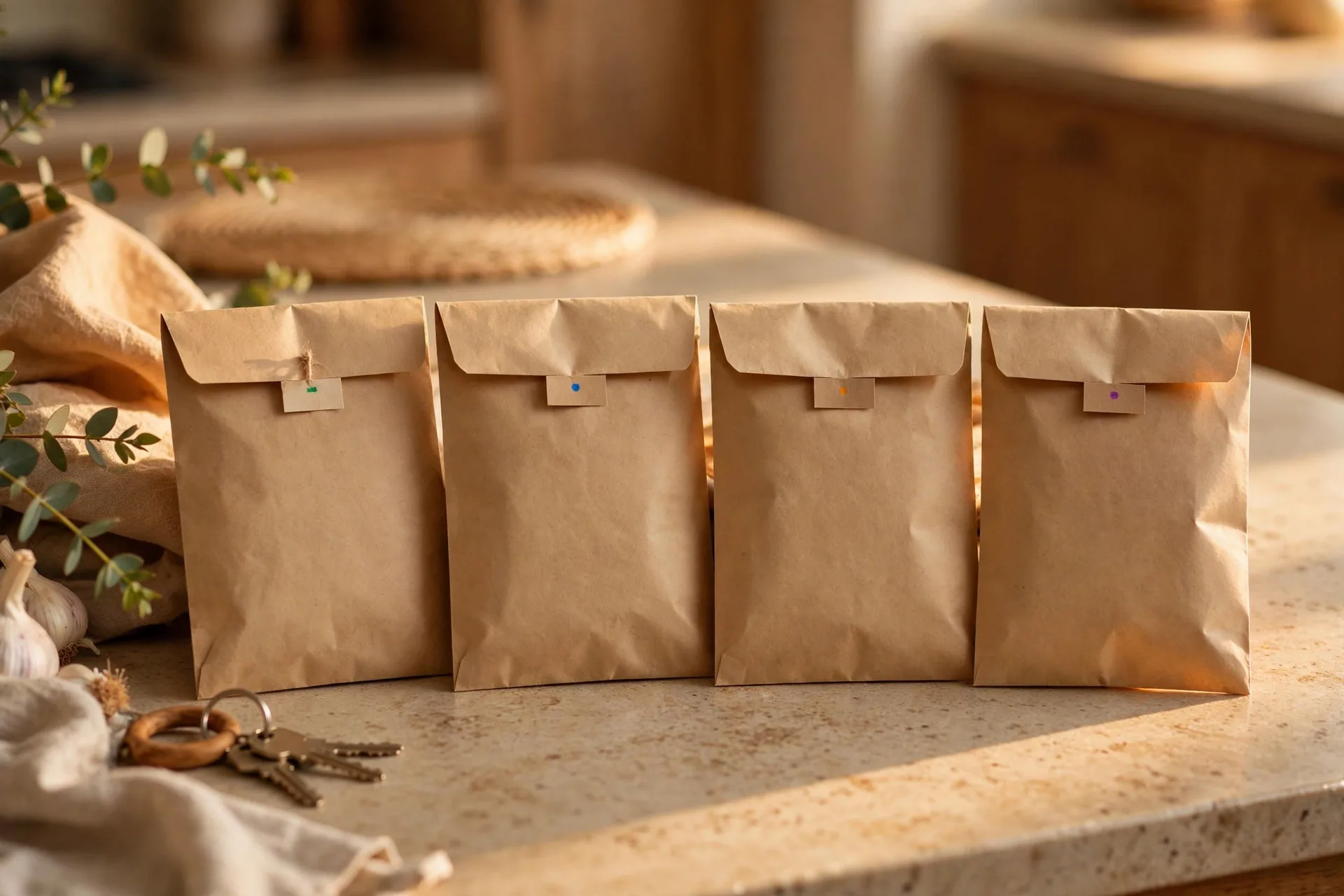
A common beginner mistake is creating twelve envelopes on day one, which turns the system into a part-time job. Pick the categories that leak money. Here is a realistic starter setup for a $3,500 monthly take-home:
- Groceries: $500. The number one envelope category. A fixed cash limit is the fastest lever if you want to save money on groceries every month.
- Dining out and coffee: $150. Takeout and coffee runs are classic budget killers because each one feels small.
- Fun money: $100. Personal spending with zero guilt and zero judgment, but a hard ceiling.
- Gas and transport: $200. Only envelope this if your driving costs vary.
That is $950 in envelopes, roughly 27 percent of take-home pay. The rest stays digital: rent, utilities, insurance, savings, debt payments. If the 50/30/20 budget rule is your framework, your envelopes live inside the 30 percent “wants” slice plus variable “needs” like groceries. After two to three months, add categories like clothing or gifts, or don’t. Many successful envelope budgeters keep it at three envelopes forever.
The 2026 Twist: Digital Cash Envelope Alternatives
If carrying cash feels like a dealbreaker, digital cash envelope alternatives give you the same category limits without physical bills: separate no-fee bank accounts per category, prepaid debit cards loaded with your monthly limit, or budgeting apps with virtual envelope features.
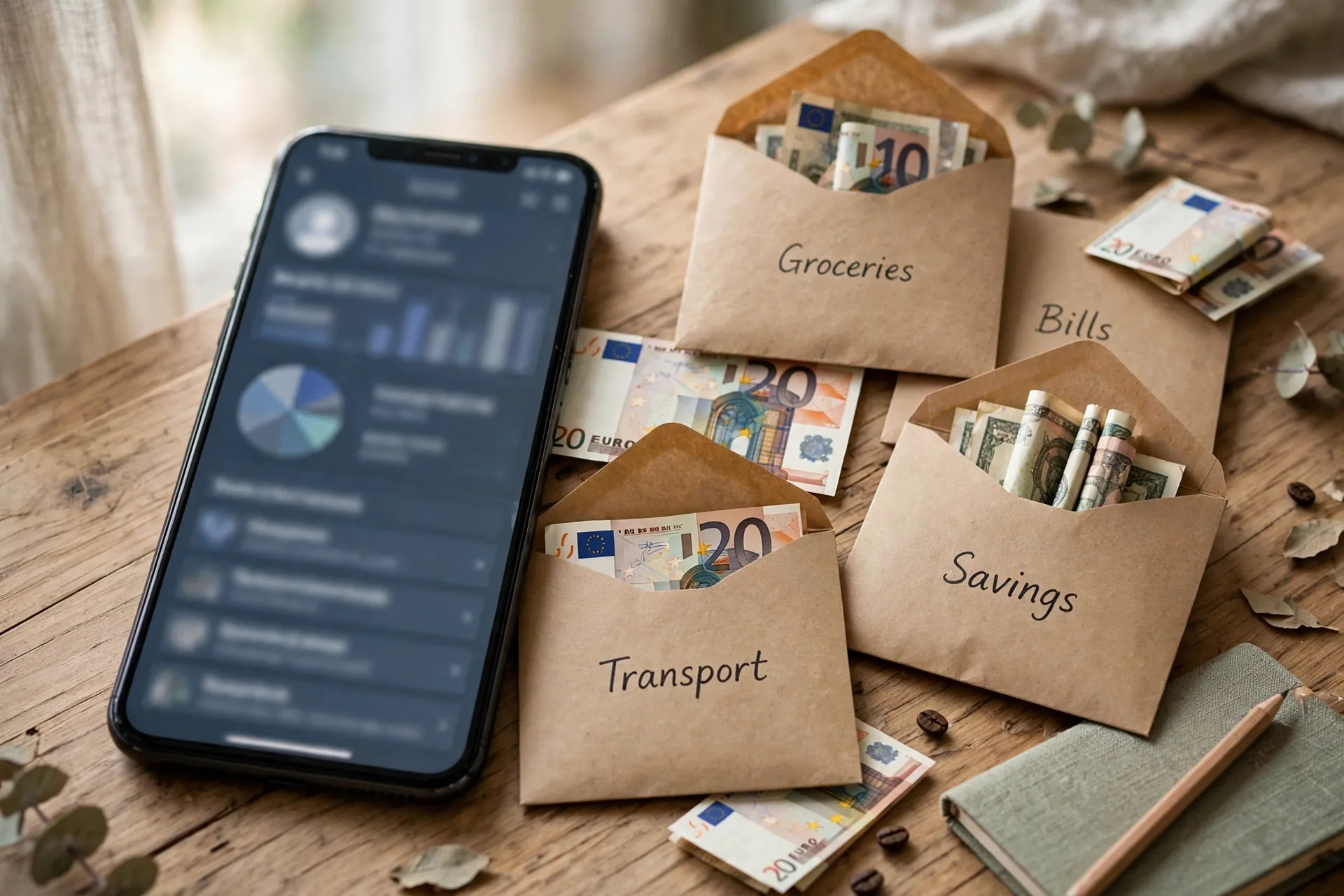
Separate bank accounts. Open two or three free accounts nicknamed Groceries, Fun Money, and so on. Transfer the monthly limit in on payday and spend only from that account’s debit card.
Prepaid debit cards. Load one card per category with the monthly amount. It works exactly like an envelope: the balance is the balance. Choose cards with no monthly fee.
Envelope-style budgeting apps. Several apps offer virtual envelope features that alert you as you approach the ceiling. A hard cap still beats an open-ended budget.
The hybrid most people stick with: physical cash for the one category that defeats you, digital envelopes for everything else.
6 Mistakes That Break the Cash Envelope System
1. Enveloping your entire budget on day one. Start with two or three categories and expand only when the habit is solid.
2. Borrowing between envelopes. The number one system-killer. The moment you “borrow” $40 from groceries to cover dining out, the envelopes become suggestions. When a category runs dry, stop spending in it.
3. Forgetting irregular expenses. Haircuts, car maintenance, gifts. These are sinking funds, not monthly envelopes. Set aside a small amount monthly in savings, or one surprise bill will raid your envelopes.
4. No tracking at all. Jot the remaining balance on each envelope after big purchases. Without any tracking, you will be guessing by week three.
5. Skipping the monthly reset. On payday, empty every envelope and start fresh. Leftover cash means the limit was too generous; an envelope that ran dry early needs a bigger limit or tighter habits.
6. Quitting after one bad month. Month one is calibration, not a final grade. Adjust the limits and run it again.

How to Start Your Cash Envelope System This Weekend
You can start in under an hour. Pick your two leakiest spending categories, set limits from your actual recent spending, withdraw that cash, label two envelopes, and spend only from them until your next payday.
- Saturday morning (15 min): Check bank statements for your actual grocery and dining-out spending over the last two months. Average them, subtract 10 percent. Those are your first two limits.
- Saturday afternoon (20 min): Withdraw the total in small bills, label two envelopes with the category and amount, and stuff the cash.
- All week: Pay for those two categories only from the envelopes. The “just this once” swipe is how the old pattern survived.
- Next payday (15 min): Count what is left, note which category ran dry first, and adjust. That review is the whole secret.
Pair the envelopes with a simple monthly budget spreadsheet if you want the full picture in one place.
Frequently Asked Questions
Is the cash envelope system better than a budgeting app?
The cash envelope system wins at changing spending behavior through physical limits; apps win at automation and record-keeping. Combine them: envelopes for problem categories, an app for the overview.
How much cash should I keep in my envelopes?
Only your variable spending money, typically 20 to 35 percent of take-home pay. Keep bills, savings, and debt payments in the bank.
Does the cash envelope system work for couples?
Yes, often better, because the limits are visible and shared. Agree on categories and amounts together, and give each person their own fun-money envelope to avoid arguments about personal spending.
What do I do with leftover envelope cash at month end?
Roll it into next month’s envelope or move it to savings. Consistent leftovers mean the limit was too generous, so consider trimming it.
Can I use the cash envelope system with irregular income?
Yes. Fund envelopes from each paycheck using percentage-based limits rather than fixed amounts. In a low-income month, every envelope shrinks proportionally, which keeps the system honest.
Is cash stuffing the same as the cash envelope system?
Yes. Cash stuffing is the social media name for the same method: dividing physical cash into labeled envelopes by spending category. The viral videos add decorative binders, but the mechanics are identical.
The Bottom Line
The cash envelope system absolutely still works in 2026, just not the way it worked in 1996. You do not need to go fully cash. You need its core insight, that physical limits change behavior, applied exactly where your budget leaks.
Start this weekend with two envelopes for your two leakiest categories. Run it for one full pay cycle, do the honest reset, and adjust.
This article is for general information only and is not financial advice. Adapt the system to your own income, expenses, and comfort with carrying cash.