

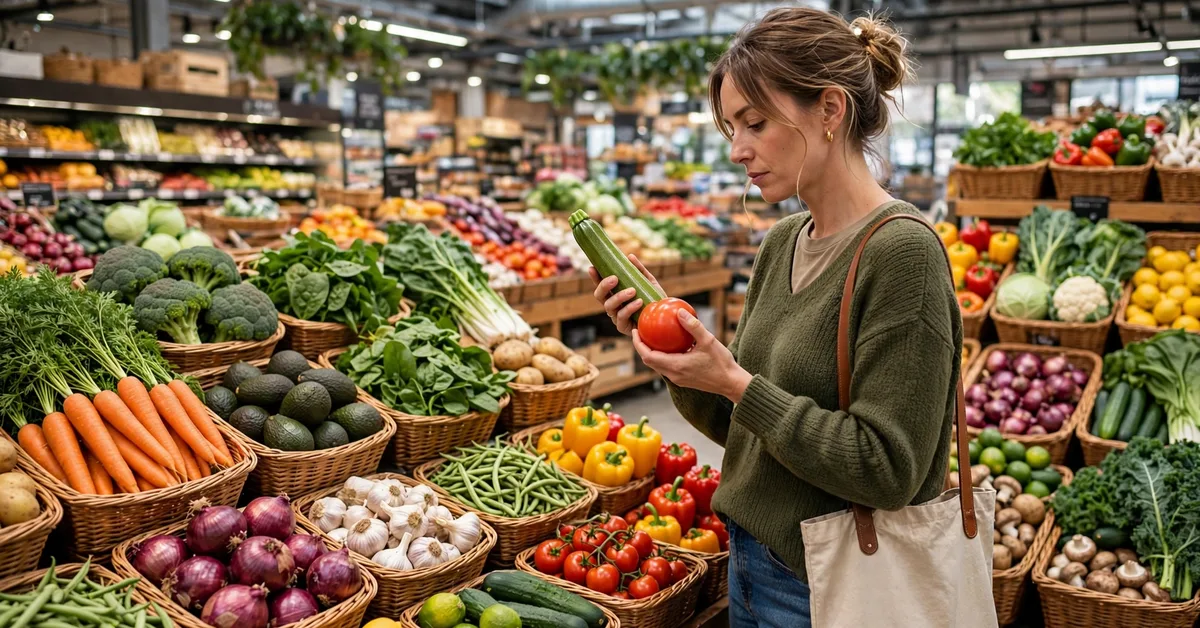
Groceries are probably the biggest flexible expense in your budget. Rent is fixed, bills are mostly fixed, but food spending can swing by hundreds of dollars a month. The USDA estimates a family of four spends $800 to $1,200 a month on food at home, which means learning how to save money on groceries can free up $100 to $300 a month without changing what you eat very much.
Key Takeaways
- Set a grocery budget at 10 to 15 percent of your take-home pay, and track it weekly instead of monthly.
- Meal planning for just 7 days at a time can cut your grocery bill by 20 to 30 percent.
- Always shop with a written list: unplanned items make up 20 to 40 percent of a typical cart.
- Store-brand products cost about 25 percent less than name brands and taste nearly identical.
- Compare unit prices, buy seasonal produce, and stock up on rice, beans, oats, and frozen vegetables.
What Is a Grocery Budget?
A grocery budget is a monthly spending limit for food you buy to eat at home, including groceries and pantry staples but not restaurant meals or takeout. A practical rule of thumb is 10 to 15 percent of your take-home pay: on a $4,000 monthly income, that is $400 to $600 a month.
How Can Meal Planning Save You Money on Groceries?
Meal planning saves you money because it lets you buy only what you will actually cook, which eliminates the waste that makes food the most expensive thing you throw away. The average American household wastes about 30 percent of the food it buys, roughly $1,500 a year for a family of four, simply by buying ingredients with no plan to use them.
Start small. Before your next shopping trip, pick 7 dinners for the week. Write down every ingredient each recipe needs, then cross off what you already own. What remains is your shopping list.
Three habits that save the most: plan around what you already own (check fridge, freezer, and pantry first), repeat ingredients across recipes (spinach for Monday’s pasta becomes Thursday’s omelet), and keep 3 or 4 “anchor meals” on rotation (tacos, stir-fry, sheet-pan chicken, lentil soup are cheap, flexible, and hard to mess up).
You do not need a fancy system. A note on your phone works perfectly. Meal planning stacks nicely with other easy ways to save money every month, so treat it as your first and highest-impact habit.
Why Should You Always Shop With a List?
You should always shop with a list because unplanned purchases account for 20 to 40 percent of a typical shopping cart, and most are snacks, sweets, and “just in case” items you never intended to buy. A list is a contract with yourself: if it is not on the list, it does not go in the cart.
Build your list from your meal plan and organize it by store section (produce, dairy, meat, pantry) so you walk the store once instead of wandering. Wandering is where impulse buying happens. Eat a snack before you shop too: hungry shoppers spend noticeably more. A $2 banana at home can save you $20 of impulse buys at the store.
Store Brand vs Name Brand: Does Switching Save Real Money?
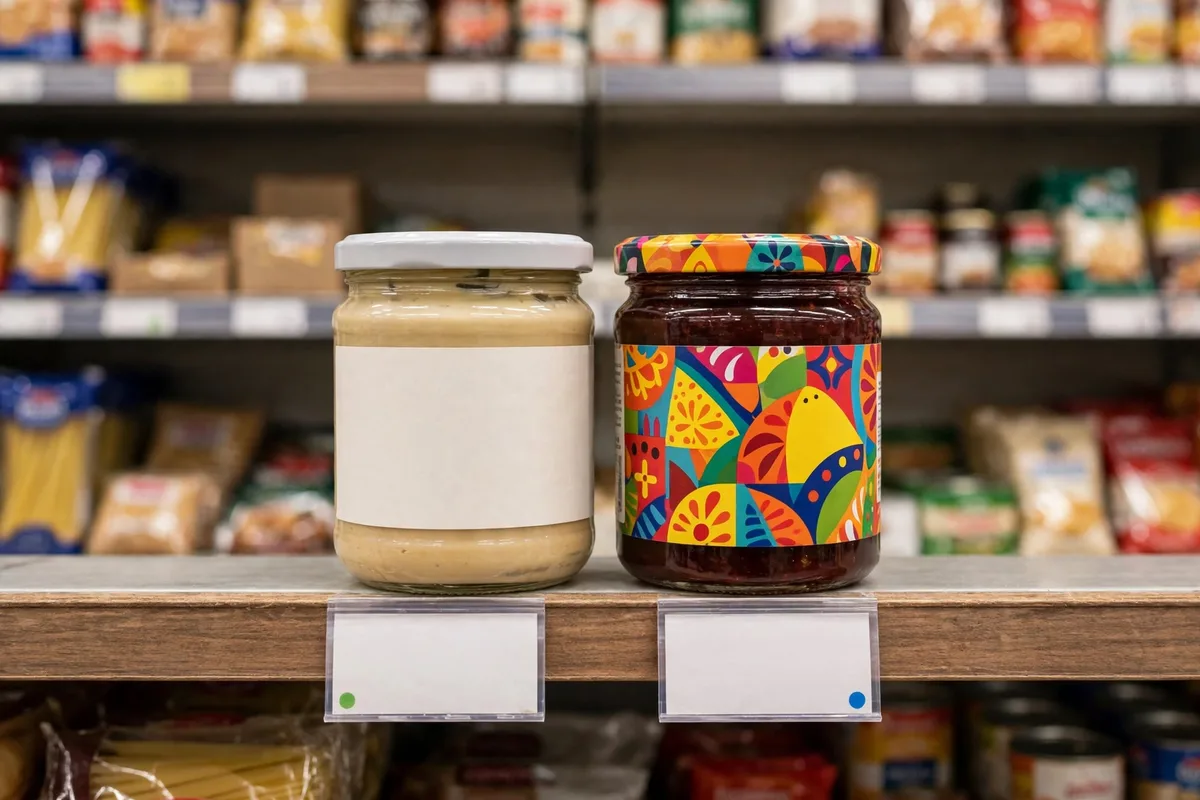
Switching to store brands saves real money. Store brands typically cost 20 to 30 percent less than name brands, and in blind taste tests most shoppers cannot tell the difference for staples like canned tomatoes, frozen vegetables, oats, and milk. Many are made in the same factories as the name brands they compete with.
On a $600 monthly grocery budget, switching half your cart to store brands can save $75 to $90 a month, nearly $1,000 a year, for zero extra effort.
Try this: buy the store brand first for anything that is a basic ingredient (rice, pasta, canned beans, spices). Only switch back if you genuinely taste a difference. Most people switch back on fewer than 1 in 10 items.
How Do You Cut Your Grocery Bill With Sales and Cashback?
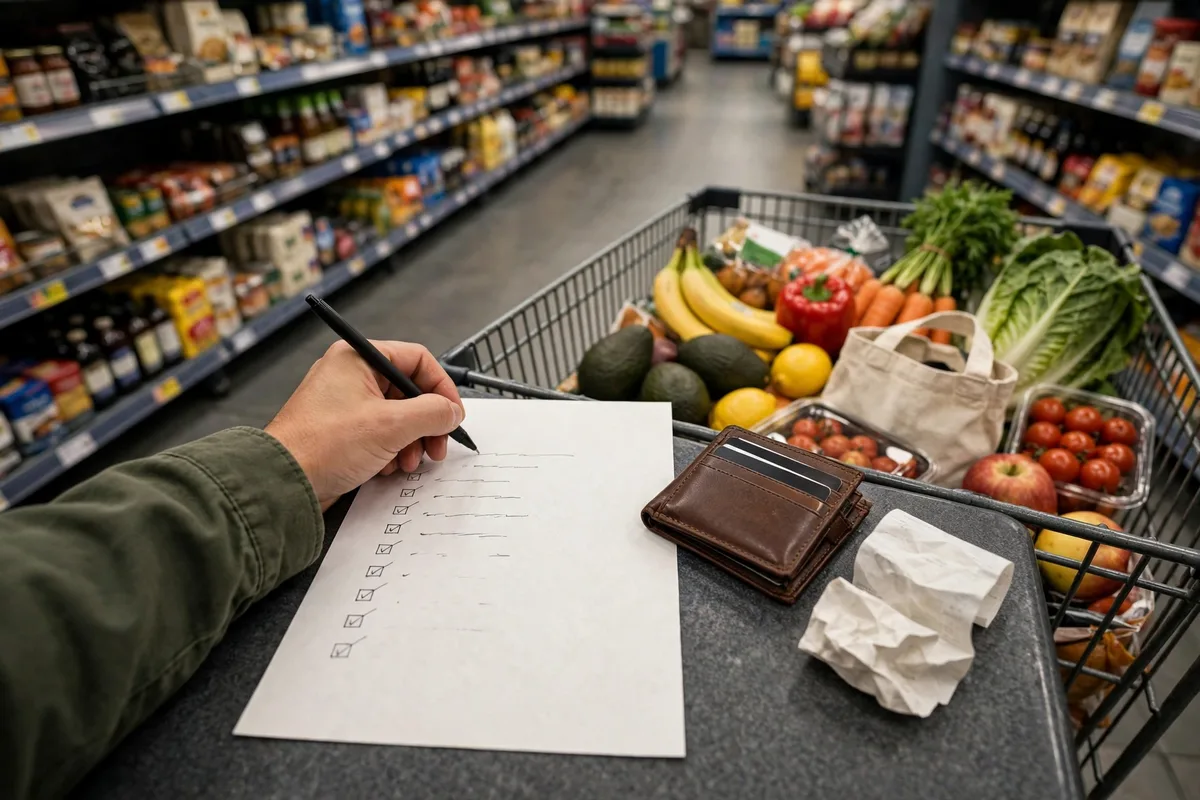
You cut your grocery bill by checking the weekly ad before you plan meals, then stacking store sales with loyalty discounts and cashback apps on the same purchase. Start with your store’s free loyalty program, which typically saves 5 to 10 percent on sale items. Then add one cashback app for groceries, which pays you back on items you were buying anyway.
The key rule: buy it because you need it, then get the deal. Stock up only on non-perishables you use every week, like canned tomatoes or coffee, when they hit their lowest sale price. Clip digital coupons before you shop, not in the aisle.
Is Buying in Bulk Actually Cheaper?
Buying in bulk is cheaper only when the unit price is lower and you will use everything before it goes bad. Check the shelf tag’s unit price, which shows cost per ounce or per pound. A 10-pound bag of rice at $8.99 ($0.90 per pound) beats a 2-pound bag at $2.49 ($1.25 per pound). But a giant tub of hummus that expires before you finish it costs you money, not saves it.
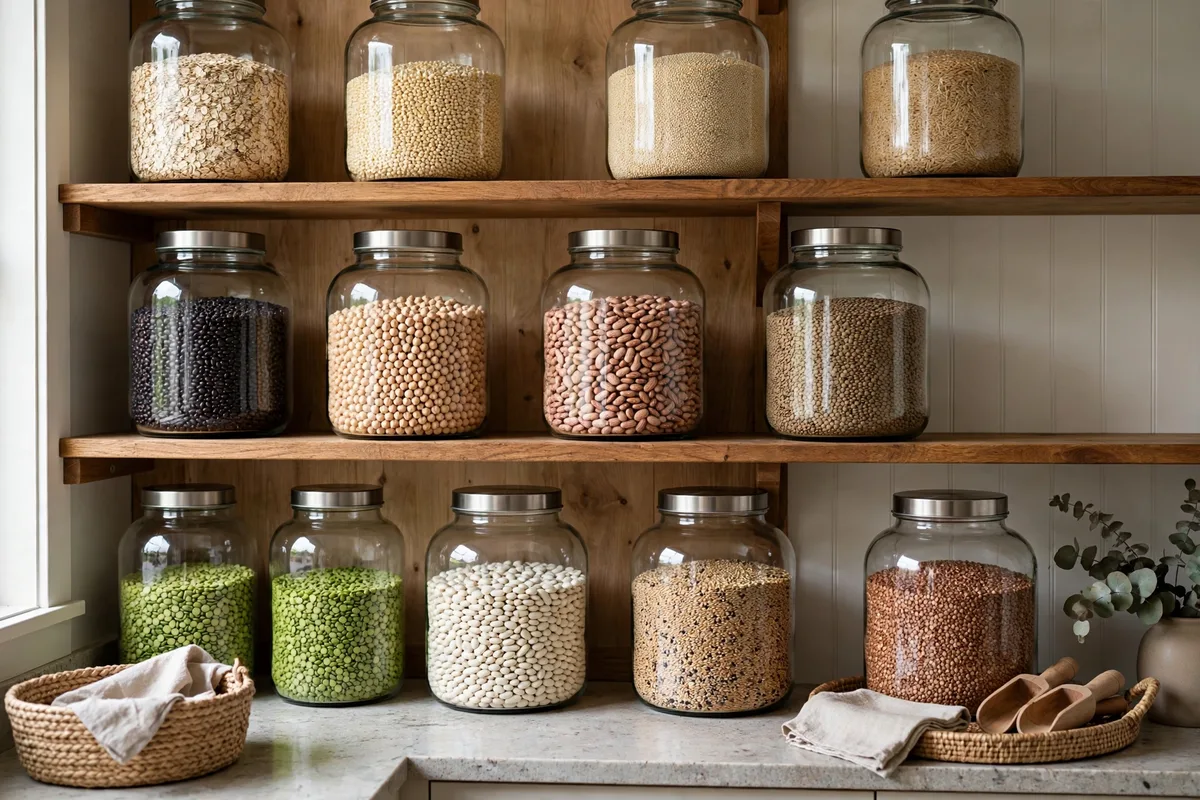
Safe bulk buys for most households: rice, dried beans, oats, flour, sugar, frozen vegetables, coffee, and toilet paper. Risky bulk buys: fresh produce, dairy, and anything you are trying for the first time.
How Does Buying Seasonal Produce Lower Your Grocery Costs?
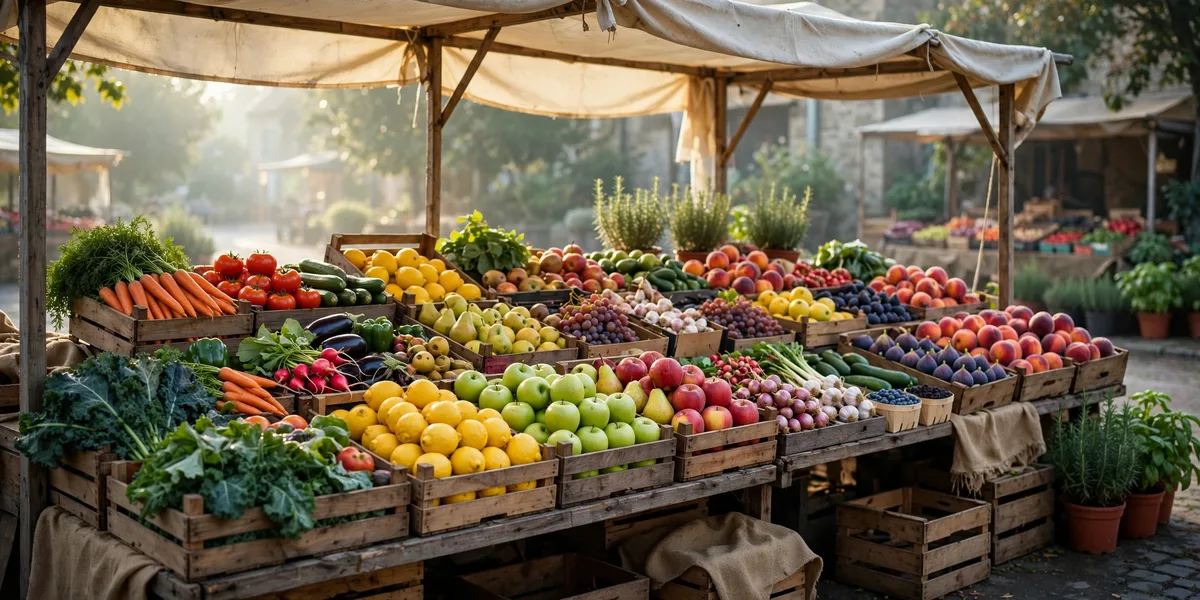
Buying seasonal produce lowers your costs because fruits and vegetables are cheapest when harvested locally in large quantities. Strawberries in June can cost $2.50 a pint, while the same berries flown in during January can cost $5 or more and taste worse. The seasonal price difference often runs 30 to 50 percent.
A quick seasonal guide: spring brings asparagus, peas, and strawberries; summer brings tomatoes, corn, and peaches; fall brings apples, squash, and sweet potatoes; winter brings citrus, kale, and carrots. Frozen produce is the year-round exception: frozen berries, peas, and corn are picked at peak ripeness, cost less than out-of-season fresh, and last months in your freezer with no nutrition trade-off.
What Pantry Staples Save You the Most Money?
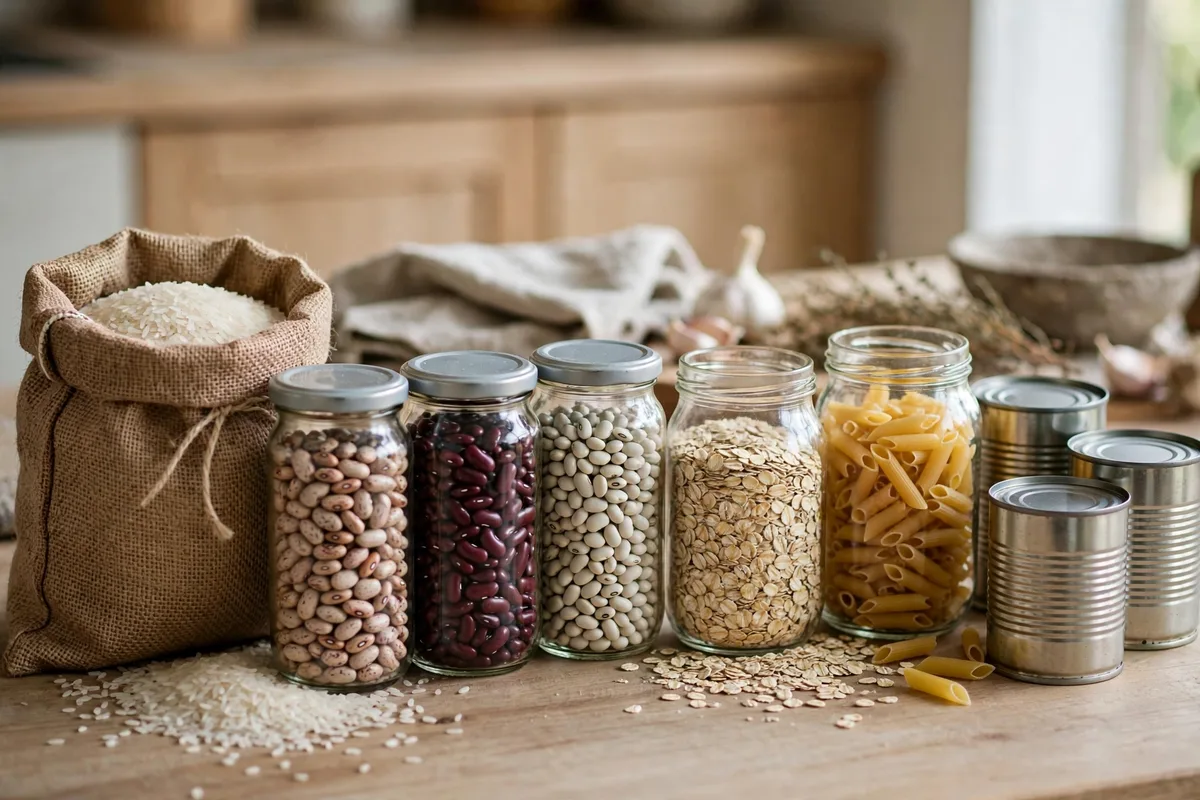
The pantry staples that save the most are rice, dried beans and lentils, oats, pasta, canned tomatoes, and frozen vegetables, because they cost pennies per serving and form the base of dozens of cheap, filling meals. A pound of dried lentils costs about $1.50 and makes roughly 10 servings of soup, about 15 cents a serving before add-ins.
Keep these 10 always stocked: long-grain rice, dried beans or lentils, rolled oats, pasta, canned tomatoes, peanut butter, cooking oil, flour, frozen mixed vegetables, and basic spices. A well-stocked pantry changes your relationship with takeout: when rice, beans, eggs, and frozen veg are always in the house, “there is nothing to eat” becomes a 15-minute stir-fry instead of a $30 delivery order, which is exactly what these frugal living tips that don’t feel like sacrifice are built around.
How Do You Stop Impulse Buying at the Store?
You stop impulse buying by removing the triggers: shop with a list, eat before you go, and give yourself a 24-hour rule for anything over $20 that is not on your list. End caps and checkout displays sit exactly where your willpower is weakest, so treat the center of each aisle, not the ends, as your shopping zone.
Two systems that work: the photo rule (photograph the unplanned item instead of buying it; add it to next week’s list if you still want it) and the cash envelope method (withdraw your weekly grocery budget in cash and leave the cards at home).
How Should You Track Grocery Spending Month to Month?
Track grocery spending weekly, not monthly, because a weekly check catches overspending early enough to fix it, while a monthly review only tells you what already went wrong. The simplest system: write down your weekly budget (your monthly budget divided by 4.3) and subtract each trip’s total. When the number hits zero, you are done for the week.
If you use a budgeting app, create a dedicated “Groceries” category separate from “Dining Out” so you see exactly where food money goes. Many people discover that takeout, not groceries, is the real budget killer. These best budgeting apps and templates for 2026 include several free options that handle grocery tracking well.
Frequently Asked Questions
How much should I spend on groceries per month?
A common guideline is 10 to 15 percent of your take-home pay. On a $3,500 monthly income, that is $350 to $525 a month. A single person cooking most meals can often land near $250 to $350, while a family of four typically spends $600 to $900.
What is the cheapest way to eat healthy?
Base meals on cheap whole foods: rice, beans, lentils, oats, eggs, frozen vegetables, bananas, and seasonal produce. A $50 weekly grocery list built on these staples can feed one person well for the whole week.
Does meal planning really save money?
Yes. Households that plan meals typically cut grocery spending by 20 to 30 percent, mostly by reducing waste and impulse buys. On a $600 monthly budget, that is $120 to $180 back every month for about 30 minutes of planning a week.
Are store brands as good as name brands?
For basic ingredients, yes. Blind taste tests consistently show most people cannot tell store brands from name brands for canned goods, frozen vegetables, oats, and dairy. Keep the name brands only where you notice a real difference.
How can I save money on groceries with a family?
Plan meals around what kids will actually eat to cut waste, buy pantry staples in bulk, use store brands for basics, and cook one extra portion for tomorrow’s lunch. Getting kids involved in picking one meal a week also reduces the “I don’t want this” waste that inflates family grocery bills.
Should groceries be part of my 50/30/20 budget?
Yes. Groceries fall into the “needs” category, the 50 percent portion of the 50/30/20 budget rule. Food at home is a need; restaurant meals and takeout count as wants in the 30 percent category.