


Introduction
How to turn a hobby into a side hustle comes down to 7 moves: pick one hobby with buyers, test it with 10 sales to strangers, price it from real costs, list it in one place, and grow it in small weekly steps while you keep your day job. A hobby side hustle is paid work built from a skill you already enjoy, and it turns spare hours into extra income without a new degree or a big loan. This guide covers what a hobby side hustle is, how to test whether your hobby can pay, the 7 steps that take it from idea to first sale, which hobbies earn in 2026, how to price your work, the tax line between a hobby and a business, where to sell, a 30-day launch plan, and the 5 mistakes that end most hobby hustles early.
Key Takeaways
- Test before you spend: 10 sales to strangers at a real price in 30 days is the proof that a hobby can pay.
- Price from costs, not from rivals: materials plus time plus fees plus profit gives a price you can defend.
- Start on 1 platform: a marketplace brings buyers on day one, and your own store comes after sales turn steady.
- Keep the joy in the hobby: cap orders and keep 1 project unsold, so paid work never eats the fun.
- Track every dollar from sale 1: the IRS treats a hobby and a business in different ways, and records decide which one applies.
What Is a Hobby Side Hustle?
A hobby side hustle is a small paid business built from a hobby, and it sells a product, a service, or a skill that the hobby already taught you, on a schedule you control beside a main job to earn extra income. A hobby side hustle differs from a hobby in 1 clear way: a hobby serves you, while a hobby side hustle serves a buyer, on the buyer schedule, at a price that covers your costs. A hobby side hustle also differs from a full business in 1 clear way: it stays small on purpose, with 5 to 10 hours a week and no staff, until sales prove it can grow.
A hobby side hustle takes 3 forms. First, sell what you make: candles, jewelry, baked goods, knitwear, prints. Second, sell what you know: tutoring, coaching, short courses, patterns, templates. Third, sell what you can do: photography, baking for events, repairs, pet care, music lessons. Most beginners start with the first form, because a finished item is the easiest offer to price and photograph.
For more guides in the same plain style, browse the Business Ideas & Side Hustles guides on Savvy Cash Flow.
How Do You Know If Your Hobby Can Make Money?
Your hobby can make money when 3 tests pass: strangers pay your real price, you can repeat the work for 5 hours a week without dread, and the price still leaves a profit after materials and fees on every sale. Run the 3 tests in order, and run them small, before you buy stock or build a website. A hobby that fails 1 test can still stay a hobby, and that result saves money.
The buyer test comes first. Show the product or service to 5 people who do not know you, state the real price, and count how many pay. Friends and family do not count as buyers, because they buy to support you, not to solve their own need. The time test comes next. Make or deliver the work 3 times in 1 week, on your normal schedule, and note how it feels on the third round. The joy test comes last. Ask 1 plain question: would I still enjoy this if I did it for 10 strangers next month? A no answer means the hobby earns more as a hobby than as a side hustle.
How to Turn a Hobby Into a Side Hustle in 7 Steps
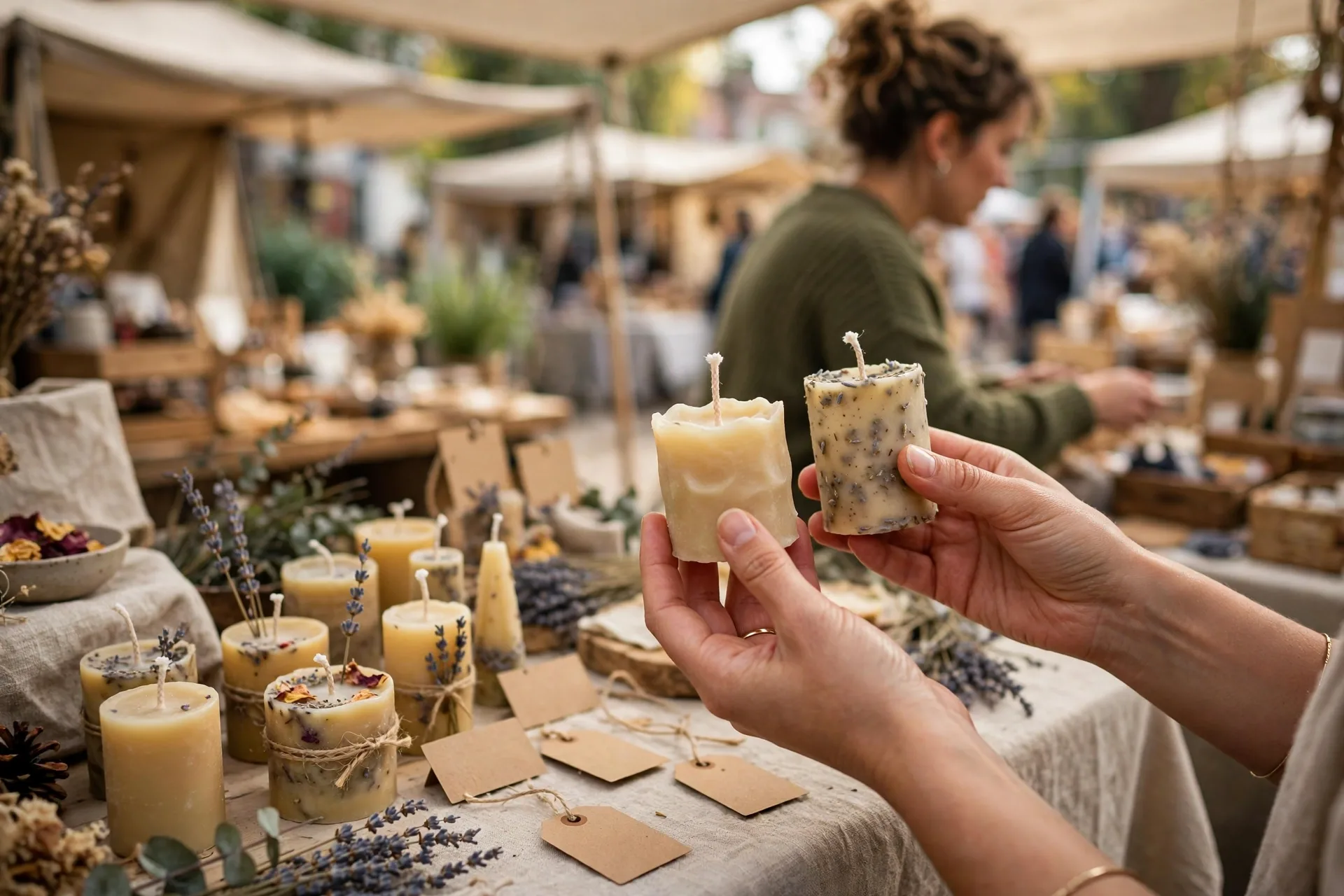
To turn a hobby into a side hustle, pick 1 hobby and 1 buyer, check demand in 30 minutes, set a price from real costs, get 10 sales from strangers in 30 days, list in 1 place, pre-sell before you stock up, and review the numbers at day 30. Follow the 7 steps below in order, and spend no money on a logo or a website until step 4 is done.
- Pick 1 hobby and 1 buyer. Choose the hobby you already do weekly, then name 1 buyer who pays for it, such as a busy parent who buys custom birthday cakes or a new homeowner who buys handmade planters. A clear buyer beats a broad idea every time.
- Check demand in 30 minutes. Search your product phrase on Etsy and on Google, open the top 20 listings, and read the reviews for buyer requests. Count how many listings sold in the last month, and note the price range that repeats most.
- Set your real price from costs. Add materials, your time at a fair hourly rate, selling fees, and a profit margin of 20 percent or more. The pricing section below shows the math on 3 worked examples.
- Run the stranger test. Aim for 10 sales to strangers at your real price within 30 days, through a market stall, a marketplace listing, or a post in a local group where selling is allowed. Ten paid strangers prove demand in a way that 100 compliments never do.
- List in 1 place. Open 1 shop on 1 marketplace, or 1 simple order form, and put 5 to 10 items or 1 clear service on it. One live listing with good photos beats 5 half-built shops.
- Pre-sell before you stock up. Take orders first and make second, with a deposit or full payment upfront. Pre-selling protects your savings, because you only buy materials for orders you already hold.
- Review the numbers at day 30. Add up sales, costs, fees, and hours, then decide: green light means strangers bought, some came back, and you still enjoy the work. Yellow light means sales happened only below cost, so change the product, the price, or the method and test again. Red light means only friends bought, or the work lost its joy, so keep the hobby as a hobby.
Which Hobbies Make Money in 2026?
The hobbies that make money in 2026 are photography, writing, crafting, baking, fitness coaching, and digital products, because each one has a clear buyer, a low start cost, and a marketplace that brings traffic on day one for a new seller. The table below shows realistic part-time income for each hobby, with the time each one needs to reach a first sale.
| Hobby | Best way to earn | Realistic monthly income (part-time) | Time to first sale |
|---|---|---|---|
| Photography | Event shoots, stock photos, prints | $200 to $2,000 | 2 to 6 weeks |
| Writing and blogging | Freelance work, ads, affiliate links | $300 to $5,000 | 6 to 12 weeks |
| Crafting and handmade goods | Etsy, markets, Amazon Handmade | $100 to $2,500 | 1 to 4 weeks |
| Baking | Custom cakes, farmers markets | $200 to $1,500 | 1 to 3 weeks |
| Fitness coaching | Online coaching, workout plans | $500 to $4,000 | 2 to 6 weeks |
| Digital products | Printables, templates, short guides | $500 to $5,000 | 2 to 6 weeks |
Income ranges in this table reflect part-time effort of 10 to 20 hours a week (Source: Sellvia (2026)). The top end of any range needs an established audience, repeat buyers, or a well-ranked listing built over 6 to 12 months. Expect the first 60 to 90 days to be a learning phase with modest or zero returns, and judge the hobby only after a full 30-day test with real listings.
How Do You Price a Hobby Product or Service?
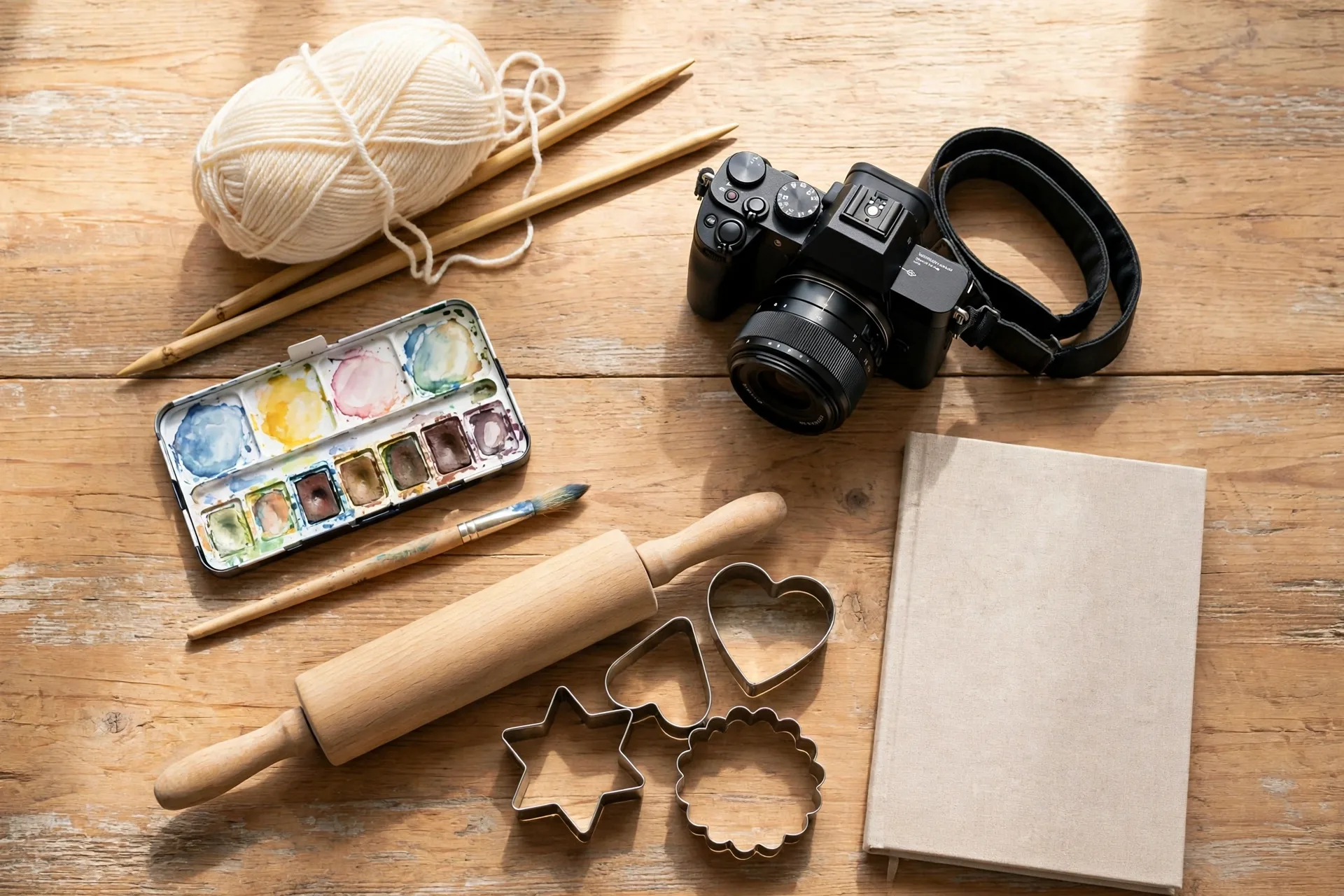
To price a hobby product or service, add materials, your time at a fair hourly rate, selling fees, and a profit margin of 20 percent or more, then round the total to a clean sale price that covers every cost. Use the formula below for every listing, and run the formula again when fees change or when you add a bundle.
Sale price = materials + time + fees + profit
A hand-poured candle shows the math. Materials cost $7 for wax, scent, jar, and label. Making 1 candle takes 30 minutes, and 30 minutes at $20 per hour is $10 of time. Fees on a $23 sale run about $2.30 on a marketplace that takes around 10 percent. Materials of $7 plus time of $10 plus fees of $2.30 plus profit of $3.70 gives a sale price of $23, and the same candle at $19 would break even with no profit left. A service shows the same rule in a shorter form: 1 hour of tutoring at $25 per hour, minus $0 in materials and $0 in fees on a direct booking, leaves $25 before tax. A digital product shows it too: a $12 printable pays about $1.40 in Etsy fees and keeps about $10.60, so a $12 price with a $10 profit target needs 50 sales to reach $500 in profit.
I priced my first batch of handmade items by copying a rival shop, and the first 3 sales left almost no profit after fees. I rebuilt the price from my own costs, and the same items then cleared $8 per sale. Copy a rival price only after you know your own costs, because a rival price hides the rival costs and never fits your fee mix.
New to side income? Read What Is a Side Hustle? The Beginner’s Guide to learn the basics first.
Hobby vs Business: What Changes for Taxes?
A hobby becomes a business for tax purposes when you run the activity to make a profit, and the IRS weighs 9 factors to decide which label fits, with no single factor deciding the result alone in the IRS test for you. The 9 factors are whether you carry out the activity in a businesslike manner and keep full records, whether your time and effort show an intent to profit, whether you depend on the income for your livelihood, whether losses come from causes outside your control or from the normal startup phase, whether you change methods to improve profit, whether you and your advisors have the knowledge to run the activity well, whether you made a profit in similar activities before, whether the activity makes a profit in some years and how much, and whether you can expect a future profit from the assets used in the activity.
Two rules catch beginners most. First, income counts even when no tax form arrives: if buyers pay you through payment apps for goods and services during the year, you may receive a Form 1099-K, and those payments are taxable income that you must report. Second, good records decide the label: a separate bank account, a sales log, and kept receipts show a businesslike manner, while a hobby with no records looks like a hobby to the IRS. The IRS guide to hobby or business lists the same 9 factors in full (Source: IRS Tax Tip 2024-55 (2024)). This guide gives general information only, not tax advice, and a tax professional can confirm the rules for your state.

Marketplace or Your Own Store: Which Route Fits You?
A marketplace fits a beginner who needs buyers now, while your own store fits a seller with repeat buyers and a brand to protect, and a seller can run both routes at once for discovery plus control from day one. The table below shows when to use each route, so you can pick 1 route for the first 30 days and add the second only after first sales.
| Factor | Marketplace (Etsy, Amazon Handmade) | Your own store (Shopify, Big Cartel) |
|---|---|---|
| Buyer traffic | Built-in search traffic | You bring every visitor |
| Fees | 4% to 15% per sale | Monthly plan plus processing |
| Branding control | Limited shop branding | Full control |
| Buyer emails | Restricted | You keep the list |
| Best first step | List 10 items and test demand | Add after first sales |
| Best for | Beginners with no audience | Sellers with repeat buyers |
Etsy is the best first marketplace for most craft sellers, because Etsy brings about 87 million active buyers who search for handmade goods (Source: Etsy (2026)). A $50 sale on Etsy costs about $5.20 in fees, while the same sale on Amazon Handmade costs $7.50 and on MakerPlace by Michaels costs $2.00. Compare the 9 sites in full in our guide on where to sell handmade crafts online. If your hobby turns into files instead of physical goods, read our guide on how to sell digital products online for the printable version of this plan.

Your First 30 Days: A Week-by-Week Launch Plan
To turn a hobby into a side hustle in 30 days, work in 4 weekly goals: week 1 validates demand, week 2 prices and lists, week 3 chases the first 10 sales, and week 4 reviews the numbers and sets the next goal. The table below gives each week 1 goal, 3 tasks, and 1 clear finish line, so you always know the next move.
| Week | Goal | Do these 3 tasks | Done when |
|---|---|---|---|
| Week 1 | Validate | Pick 1 hobby and 1 buyer; check 20 listings; ask 5 strangers if they would pay | 5 strangers say yes at your real price |
| Week 2 | Price and list | Run the pricing formula; photograph 5 items in daylight; publish 1 listing | 1 listing is live with 5 photos |
| Week 3 | Sell | Share the listing with 1 pin and 1 group post; answer every buyer question in 24 hours; take 1 pre-order | First sale arrives from a stranger |
| Week 4 | Review | Add up sales, costs, fees, and hours; note the top buyer question; set 1 goal for month 2 | You know your profit per sale in dollars |
Work on the plan for 5 to 10 hours a week, in 2 or 3 fixed slots, and guard 1 evening a week with no side hustle work at all. A hobby side hustle grows on steady small weeks, not on one big weekend that burns you out.
5 Mistakes That Kill a Hobby Side Hustle
The 5 mistakes that kill a hobby side hustle are pricing from a rival, buying stock before the first sale, launching on 3 platforms at once, ignoring the tax record from day 1, and taking every order until the joy is gone. Each mistake below has a fix that takes less than an hour.
- Pricing from a rival. A rival price hides the rival costs, so run your own formula and charge your own price.
- Buying stock before the first sale. Pre-sell 10 orders first, then buy materials for those orders only.
- Launching on 3 platforms at once. Pick 1 marketplace, learn its search and fees, and add a second platform only after 10 sales.
- Ignoring the tax record from day 1. Record each sale, fee, and payout in 1 spreadsheet from the first sale, and set aside 25% to 30% of each payout for tax.
- Taking every order until the joy is gone. Cap orders at a number you can finish in your weekly hours, keep 1 project that never goes on sale, and raise the price before you raise the hours.
When Should a Hobby Side Hustle Become Full-Time Work?
A hobby side hustle is ready to become full-time work when 3 tests pass at once: the side income covers 50 percent or more of your main pay for 3 months in a row, you hold 3 to 6 months of expenses in savings, and your order book or client calendar fills 1 month ahead. Pass all 3 tests before you hand in notice, because 1 strong month proves demand while 3 steady months prove a business. About 36 million small businesses operate in the US (Source: U.S. Small Business Administration (2025)), and most of them started as a side project with a day job behind it. If only 1 or 2 tests pass, keep the day job and grow the side hustle for another 90 days, then test again.
Frequently Asked Questions
Can I turn a hobby into a side hustle with no money?
Yes, you can turn a hobby into a side hustle with $0, because Etsy and Facebook Marketplace charge no monthly fee, and pre-selling means you buy materials only after a buyer pays. You still need the hobby skill, a phone camera, and 5 to 10 hours a week. A service version, such as lessons, needs no materials upfront.
How much money can you make from a hobby side hustle?
A hobby side hustle pays $100 to $2,500 a month, and the range depends on the hobby, the price, and the hours you give it. Craft sellers often land near $100 to $2,500 a month, while digital products reach $500 to $5,000 a month with an audience. Expect modest or zero returns in the first 60 to 90 days.
Do I need a business license to sell my hobby products?
You may need a license to sell hobby products, and the answer depends on your city, your state, and what you sell. Food, cosmetics, and children’s products carry extra rules, and many cities ask for a home occupation permit of $25 to $100. Check your city planning site before your first sale, and ask an accountant once sales turn regular.
How do I price handmade products for profit?
To price handmade products for profit, add materials, your time at a fair hourly rate, selling fees, and a profit margin of 20 percent or more. A candle with $7 of materials, $10 of time, and $2.30 of fees needs a $23 price to clear about $3.70 of profit. Never copy a rival price, because it hides the rival costs.
Should I sell on Etsy or my own website first?
Sell on Etsy first, because Etsy brings about 87 million active buyers to a new seller, while your own website brings no buyers until you drive traffic to it. Start on 1 marketplace, prove demand with 10 sales to strangers, and add your own store once sales turn steady and repeat buyers ask for it.
How many hours a week does a hobby side hustle take?
A hobby side hustle takes 5 to 10 hours a week at the start, split into 2 or 3 fixed slots for making, listing, and answering buyers. A product hobby needs more making time, while a digital product needs more listing and traffic time upfront. Guard 1 evening a week with no side hustle work.
Conclusion
How to turn a hobby into a side hustle comes down to a small test, a real price, and 30 days of steady work: pick 1 hobby with 1 buyer, get 10 sales from strangers, price from your own costs, and grow only what the numbers support. Keep the joy in the hobby by capping orders and keeping 1 project just for you, track every dollar from sale 1, and let the 30-day review decide the next step. Pick your hobby this week, run the stranger test, and list your first item. Readers who want more beginner income guides can explore the full library on Savvy Cash Flow.