
Introduction
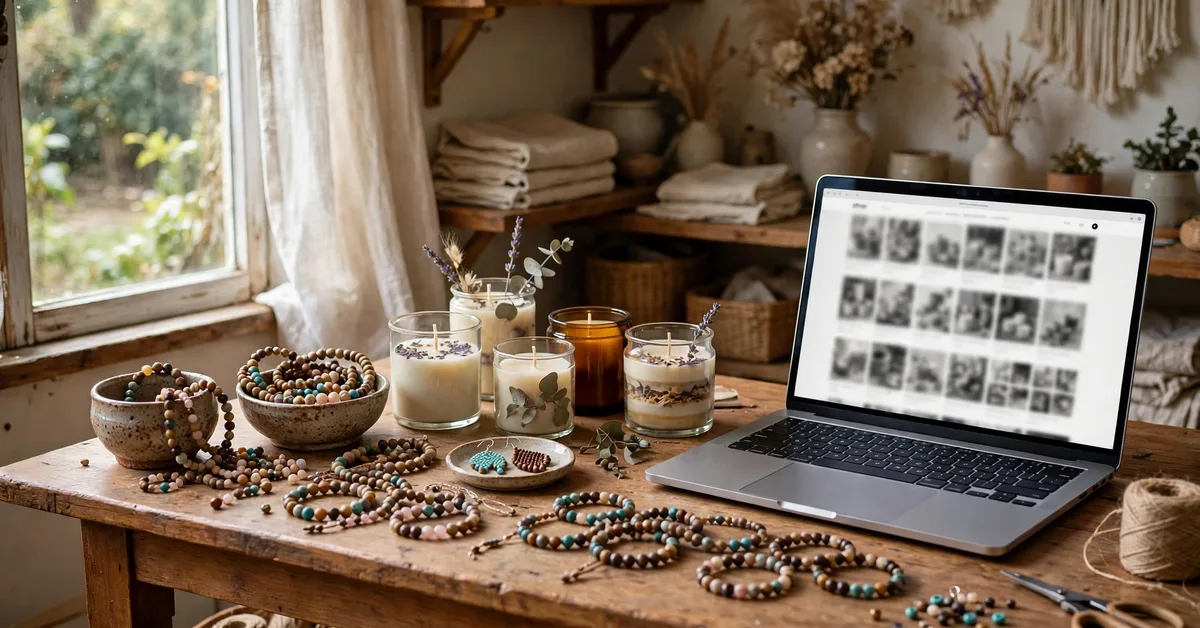
To sell handmade crafts online, start on Etsy for built-in craft buyers, add Amazon Handmade for Prime shoppers, and open your own store on Shopify or Big Cartel once sales turn steady, because marketplaces bring buyers on day one while your own store keeps more profit per sale. This guide answers where to sell handmade crafts online with 9 sites compared by fees, buyers, and effort. A handmade crafts marketplace is a site where buyers search for handmade goods and sellers list items for a fee. The global market for handmade goods reached $680 billion in 2021 (Source: Research and Markets (2021)), and buyers still pay for work made by hand. You will learn what each site costs on a $50 sale, how to list your first item in 7 steps, how taxes work for craft sellers, which route fits your craft, and which 5 mistakes slow first sales.
Key Takeaways
- Etsy is the best first site for most craft sellers, with about 87 million active buyers and a $0.20 listing fee plus 6.5% per sale.
- Amazon Handmade charges a flat 15% referral fee with no listing fee, but you must apply and prove your items are handmade.
- MakerPlace by Michaels takes only 4% per sale with no monthly fee, the lowest fee among the big craft marketplaces.
- On a $50 sale, fees run from $0 for local Facebook Marketplace pickup to $7.50 on Amazon Handmade.
- Start on 1 marketplace, list 10 items in 30 days, and add your own store only after first sales.
What Is a Handmade Crafts Marketplace?
A handmade crafts marketplace is an online site where makers list handmade goods for buyers who search for handmade items, and the marketplace takes a fee from each sale in exchange for buyer traffic, online payment handling, and search tools. A marketplace differs from your own store in 3 ways: buyers arrive without your ads, the site sets the rules, and fees apply to every sale. Etsy is the largest example: Etsy launched on June 18, 2005, and Etsy now connects about 8 million sellers with buyers (Source: Wikipedia (2026)). A marketplace suits a beginner with no audience, because the first sale can come from search alone. Browse the Make Money Online guides on Savvy Cash Flow for more beginner income routes with the same low-cost test.
Where to Sell Handmade Crafts Online: The 9 Best Sites at a Glance
The 9 best sites to sell handmade crafts online are Etsy, Amazon Handmade, eBay, MakerPlace by Michaels, TikTok Shop, Facebook Marketplace, Shopify, Big Cartel, and Folksy, and the best pick depends on your craft type, price point, and need for buyers now or control later. The table below compares each site, so you can shortlist 2 sites in one minute.
| Site | Best for | Cost per sale | Built-in buyers |
|---|---|---|---|
| Etsy | Beginners who need craft buyers | $0.20 + 6.5% + processing | Yes, 87 million buyers |
| Amazon Handmade | Prime shoppers, gift items | 15% referral fee | Yes, Amazon shoppers |
| eBay | One-of-a-kind, vintage-style crafts | 12.7% + $0.30 (Crafts) | Yes, 159 million buyers |
| MakerPlace by Michaels | Craft buyers, low fees | 4% (2% at Premium) | Yes, Michaels shoppers |
| TikTok Shop | Video-driven impulse buys | 6% referral fee | Yes, TikTok feed |
| Facebook Marketplace | Local sales, large items | Free local, 5% shipped | Yes, local buyers |
| Shopify | Your own brand store | $29/mo + 2.9% + $0.30 | No, you drive traffic |
| Big Cartel | Small catalogs, free start | Free plan, processing only | No, you drive traffic |
| Folksy | UK makers | £0.15 + 6% + VAT | Yes, UK buyers |
Goimagine, a US handmade marketplace, closed on March 23, 2026 (Source: Yclas (2026)).
1. Etsy: Best for Built-In Craft Buyers
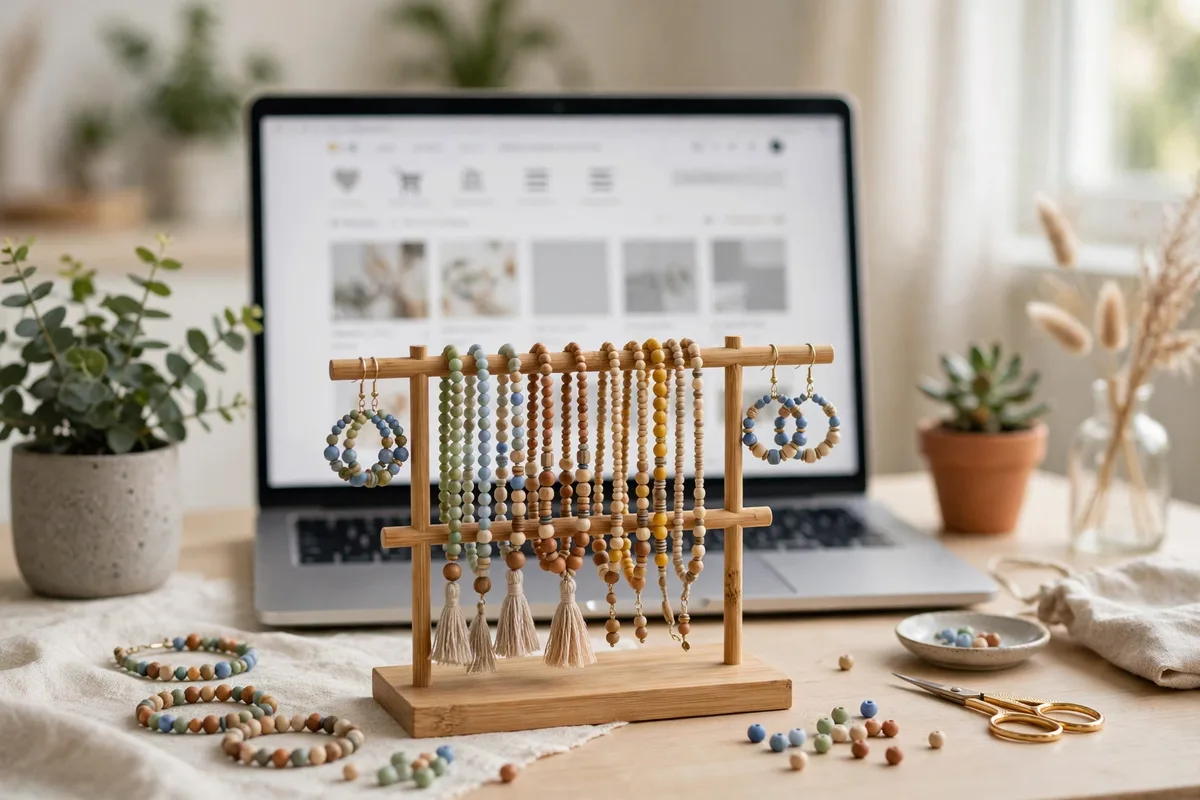
Etsy is the best first site to sell handmade crafts online for most beginners, because Etsy brings about 87 million active buyers who search for handmade goods, and a new seller can list an item in minutes with no monthly fee. Etsy reported $2.6 billion in marketplace sales in the second quarter of 2026, up 7.5% from the year before (Source: Etsy (2026)).
Etsy charges $0.20 per listing, a 6.5% transaction fee, and payment processing of 3% plus $0.25 per order in the US, so a $50 sale costs $5.20 in fees and you keep $44.80. Etsy suits jewelry, home decor, wedding items, personalized gifts, and printables. Etsy tightened its rules in July 2024 with Creativity Standards that label how each item was made. In my own test listings, a photo of the item in use earned more clicks than a plain white-background photo, so shoot one lifestyle photo for every listing.
2. Amazon Handmade: Best for Prime Shoppers
Amazon Handmade is the best site to sell handmade crafts online to Prime shoppers, because Amazon Handmade puts handmade items inside the Amazon store with one-click checkout and Prime shipping, and Amazon waives the $39.99 monthly plan fee for approved artisans. Amazon Handmade launched in 2015 and now hosts makers from more than 80 countries (Source: Yclas (2026)).
Amazon Handmade charges a flat 15% referral fee with no listing fee, so a $50 sale costs $7.50 and you keep $42.50. You must apply with photos of your workspace and proof that you make each item by hand, and approval takes a few weeks. Amazon Handmade suits higher-priced crafts and gift items. Amazon Handmade does not suit items under $15.
3. eBay: Best for One-of-a-Kind and Vintage-Style Crafts
eBay is the best site to sell handmade crafts online for one-of-a-kind pieces and vintage-style crafts, because eBay gives a seller 159 million active buyers and an auction format that tests prices without a fixed price commitment for handmade sellers. eBay suits handmade furniture, collectible crafts, and art pieces that photograph well from every angle (Source: eufyMake (2026)).
eBay charges 12.7% on the total sale up to $2,500 in the Crafts category plus a $0.30 per-order fee, so a $50 sale costs $6.65 and you keep $43.35. Sellers get 250 free listings per month before insertion fees apply. eBay does not suit sellers who want a craft-only audience.
4. MakerPlace by Michaels: Best Low-Fee Craft Marketplace
MakerPlace by Michaels is the best low-fee site to sell handmade crafts online, because MakerPlace charges a 4% transaction fee with no monthly fee and no listing fee, and the buyers on MakerPlace already shop at Michaels for craft supplies. The fee drops to 2% at the Premium tier.
On a $50 sale, MakerPlace takes $2.00 and you keep $48.00. MakerPlace suits jewelry, resin art, paper crafts, and personalized gifts. MakerPlace is newer than Etsy, so treat it as a second shop, not the only shop.
5. TikTok Shop: Best for Video-Driven Impulse Sales

TikTok Shop is the best site to sell handmade crafts online through video, because TikTok Shop lets buyers purchase inside a video or live stream, and the process video itself does the selling for crafts like resin art, custom tumblers, and handmade keychains. TikTok Shop launched in the US in 2023 and grew fast with makers who film their process.
TikTok Shop charges a 6% referral fee on most categories, so a $50 sale costs $3.00 and you keep $47.00, and the fee covers payment processing. TikTok Shop does not suit sellers who avoid video, because sales depend on steady posting.
6. Facebook Marketplace: Best for Local Sales and Large Items
Facebook Marketplace is the best site to sell handmade crafts online for local sales and large items, because local pickup listings cost $0 in fees, and you keep 100% of the sale price when the buyer collects the item in person. Facebook Marketplace suits furniture, wall art, and home decor that cost too much to ship.
For shipped orders, Facebook Marketplace charges 5% of the sale price, so a $50 shipped sale costs $2.50 and you keep $47.50. Listing takes minutes, and buyers search by location. Local buyers often negotiate, so set a firm price.
7. Shopify: Best for Your Own Brand Store
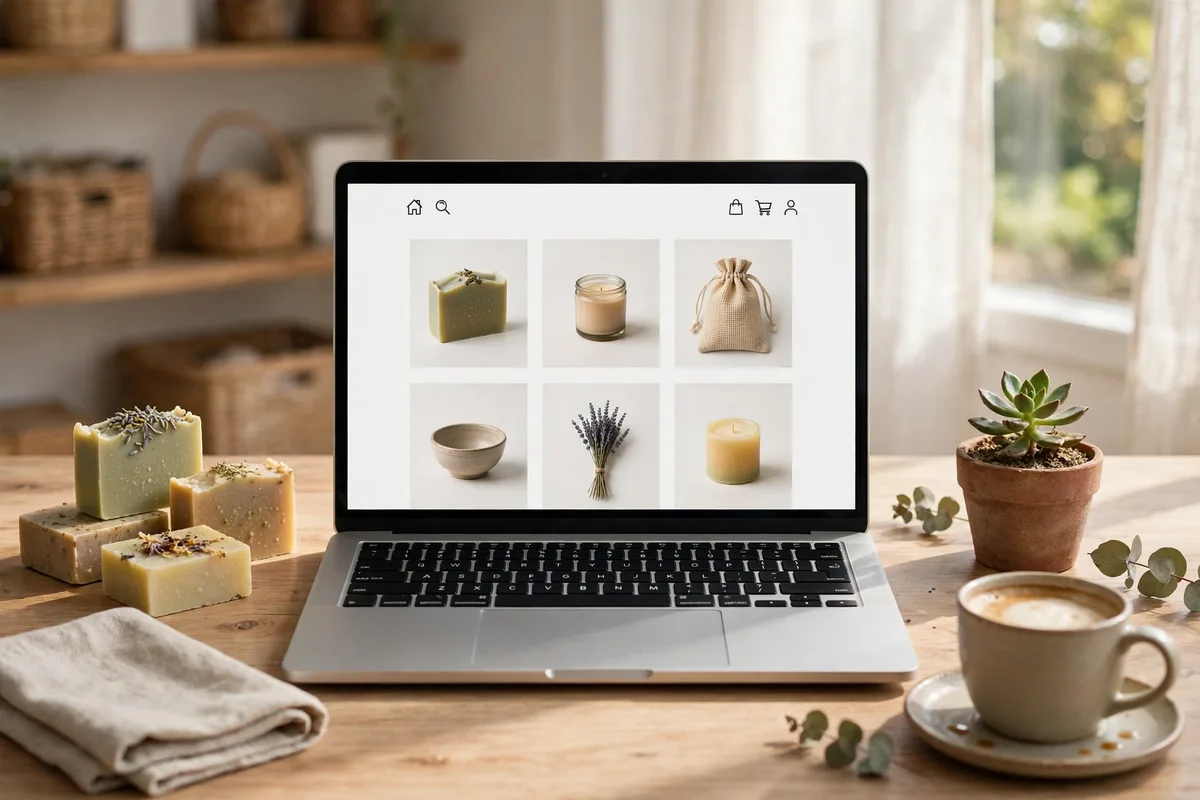
Shopify is the best site to sell handmade crafts online when you want your own brand store, because Shopify gives full control over branding, pricing, and buyer emails, and no marketplace takes a cut of the customer relationship you build. Shopify suits sellers with repeat buyers and a clear brand.
Shopify Basic costs $39 per month, or $29 per month billed yearly, plus payment processing of 2.9% plus $0.30 per order, so a $50 sale costs $1.75 in processing before the monthly plan. Shopify brings no buyers. Add Shopify after a marketplace proves your products sell. If you want a no-stock route beside crafts, read our print on demand guide and compare cash needs before you pick a niche.
8. Big Cartel: Best Free Start for a Small Catalog
Big Cartel is the best free start to sell handmade crafts online with a small catalog, because the Gold plan is free for up to 5 products, and Big Cartel charges zero transaction fees on every plan for small-batch makers. Big Cartel suits potters, jewelers, and makers with a tight collection of 5 to 50 products.
You pay only payment processing to Stripe or PayPal, about 2.9% plus $0.30 per order, so a $50 sale costs about $1.75 and you keep about $48.25. Paid plans run $15 to $30 per month. Setup takes about an hour.
9. Folksy: Best for UK Makers
Folksy is the best site to sell handmade crafts online for UK makers, because Folksy lists only UK makers, so you compete with British craft sellers, not with global mass production, and Folksy suits traditional crafts, knitting, and handmade jewelry that appeal to British buyers.
Folksy charges £0.15 plus VAT per listing after the first 3 free listings, and a 6% plus VAT commission on the sale price, so a £50 sale costs about £3.15 and you keep about £46.85. Folksy does not allow vintage items or resellers, and the smaller audience means lower competition for UK sellers.
Marketplace or Your Own Store: Which Route Fits You?
A marketplace fits a beginner who needs buyers now, while your own store fits a seller with repeat buyers and a brand to protect, and a seller can run both routes at once for discovery plus control from day one. The table below shows when to use each route.
| Factor | Marketplace (Etsy, Amazon Handmade) | Your own store (Shopify, Big Cartel) |
|---|---|---|
| Buyer traffic | Built-in search traffic | You bring every visitor |
| Fees | 4% to 15% per sale | Monthly plan plus processing |
| Branding control | Limited shop branding | Full control |
| Buyer emails | Restricted | You keep the list |
| Best first step | List 10 items and test demand | Add after first sales |
| Best for | Beginners with no audience | Sellers with repeat buyers |
Use a marketplace with no audience yet, your own store with a loyal buyer list, and both for discovery plus control.
How Much Does Each Site Take on a $50 Sale?
On a $50 sale with no shipping charged, fees run from $0 for a local Facebook Marketplace pickup to $7.50 on Amazon Handmade, and Etsy takes $5.20, eBay takes $6.65, MakerPlace takes $2.00, and TikTok Shop takes $3.00 per sale. The table below shows the full fee math for all 9 sites.
| Site | Fees on a $50 sale | You keep |
|---|---|---|
| Etsy | $5.20 | $44.80 |
| Amazon Handmade | $7.50 | $42.50 |
| eBay (Crafts) | $6.65 | $43.35 |
| MakerPlace by Michaels | $2.00 | $48.00 |
| TikTok Shop | $3.00 | $47.00 |
| Facebook Marketplace (shipped) | $2.50 | $47.50 |
| Facebook Marketplace (local pickup) | $0.00 | $50.00 |
| Shopify Basic | $1.75 plus $29.00 monthly plan | $48.25 before the plan |
| Big Cartel Gold (free plan) | $1.75 processing | $48.25 |
| Folksy | About £3.15 on a £50 sale | About £46.85 |
Fees change over time, so check each fee page before you list.
How to List Your First Handmade Item in 7 Steps

To list your first handmade item, pick 1 product, photograph it in daylight, write a title with buyer words, price it from costs, open 1 shop, publish the listing, and share it with 1 pin, and the full listing can go live in 1 day. Follow the 7 steps below in order.
- Pick 1 product with clear buyer demand, such as a candle scent buyers already search for.
- Photograph the item in daylight with 5 photos, plus 1 photo of the item in use.
- Write a title with the product, the material, and the buyer or occasion in plain words.
- Price the item from the pricing formula: costs plus fees plus target profit equals the sale price.
- Open 1 shop on 1 site and fill in the shop name, policies, and payment details.
- Publish the listing with tags that repeat buyer words from the title.
- Share the listing with 1 Pinterest pin and 1 post in a group where self-promotion is allowed.
Run a 30-day test: publish 1 listing per week for 4 weeks and judge results at the end.
Sell files too? Read our guide on how to sell digital products online for the printable version of this plan.
How Do Taxes Work When You Sell Handmade Crafts?
Taxes on handmade craft sales work as self-employment income in the US: you report all sales income, track business costs, and pay income tax plus self-employment tax on net profit, even when no tax form arrives, and a tax professional can confirm the rules for your state. This guide gives general information only, not tax advice.
The IRS treats a hobby and a business in different ways: a business operates to make a profit, while a hobby is for pleasure. The IRS guide on hobby or business lists 9 factors to help you decide, including profit intent, books and records, and time spent on the activity. Marketplaces may send a Form 1099-K, and you still report income even with no form. Keep 3 tax habits from sale 1: record each sale and fee, keep tool receipts, and set aside 25% to 30% of each payout for tax.
5 Mistakes That Slow Your First Sales
The 5 mistakes that slow first sales for handmade crafts are a broad niche, vague titles, prices copied from rivals, no preview photos of the item in use, and quitting after 1 quiet week, and each fix below turns a quiet shop into a shop with testable listings.
- Broad niche: narrow to 1 buyer group and 1 problem, such as gifts for new moms.
- Vague titles: write titles with buyer words, not “Handmade Necklace” with no detail.
- Prices copied from rivals: price from your own costs and fees first.
- No lifestyle photos: add 1 photo of the item in use before you publish.
- Quitting after 1 quiet week: complete the 30-day test with 4 listings before you judge a niche.
Watch for fake offers: any buyer who asks you to pay a fee before you earn is a red flag. Read our online income scams guide for the 8 red flags.
Frequently Asked Questions
These questions cover the first decisions a new craft seller faces.
What is the best site to sell handmade crafts online for beginners?
When you ask where to sell handmade crafts online, Etsy is the best site for most beginners, because Etsy brings about 87 million active buyers who search for handmade goods, and a new seller lists an item in minutes with no monthly fee. Etsy charges $0.20 per listing plus 6.5% per sale, so a $50 sale costs $5.20 in fees.
How much does it cost to start selling handmade crafts online?
You can start with $0 in platform fees on Etsy, Big Cartel, or Facebook Marketplace, because these sites charge only when a sale happens. You still need materials, packaging, and shipping supplies, and a first listing needs 5 good photos.
Do I need a business license to sell handmade crafts online?
Most US sellers can start as a sole proprietor with no license, but rules vary by state, city, and product type, and food, cosmetics, and children’s items face extra rules. Check your city and state rules before your first sale.
Can I sell handmade crafts online without a website?
Yes, you can sell handmade crafts online with no website, because Etsy, Amazon Handmade, and TikTok Shop provide shop pages, search traffic, and checkout tools. A website helps later, when you want full branding, a custom domain, and a buyer email list.
Which handmade crafts sell best online?
Jewelry, candles, home decor, personalized gifts, and wedding items sell best online in 2026, because buyers search for these items as gifts and each type photographs well. Pick 1 type, then test 10 listings before you add a second type.
How much money can I make selling handmade crafts online?
Income depends on price, fees, and listing count, and a $50 item that keeps $44.80 on Etsy needs 12 sales to reach about $500 in profit before material costs. Income grows over time when listings, reviews, and repeat buyers grow.
Conclusion
Where to sell handmade crafts online comes down to one test: start on Etsy for built-in buyers, test MakerPlace for the lowest fees, and add your own store once sales turn steady, because the right site is the one where your buyers already shop and your price still leaves a profit. Pick 1 site today, list 1 item this week, and run the 30-day test with 4 listings before you judge the niche. Track every fee and payout in one spreadsheet. Savvy Cash Flow covers more beginner income guides for your next test.