

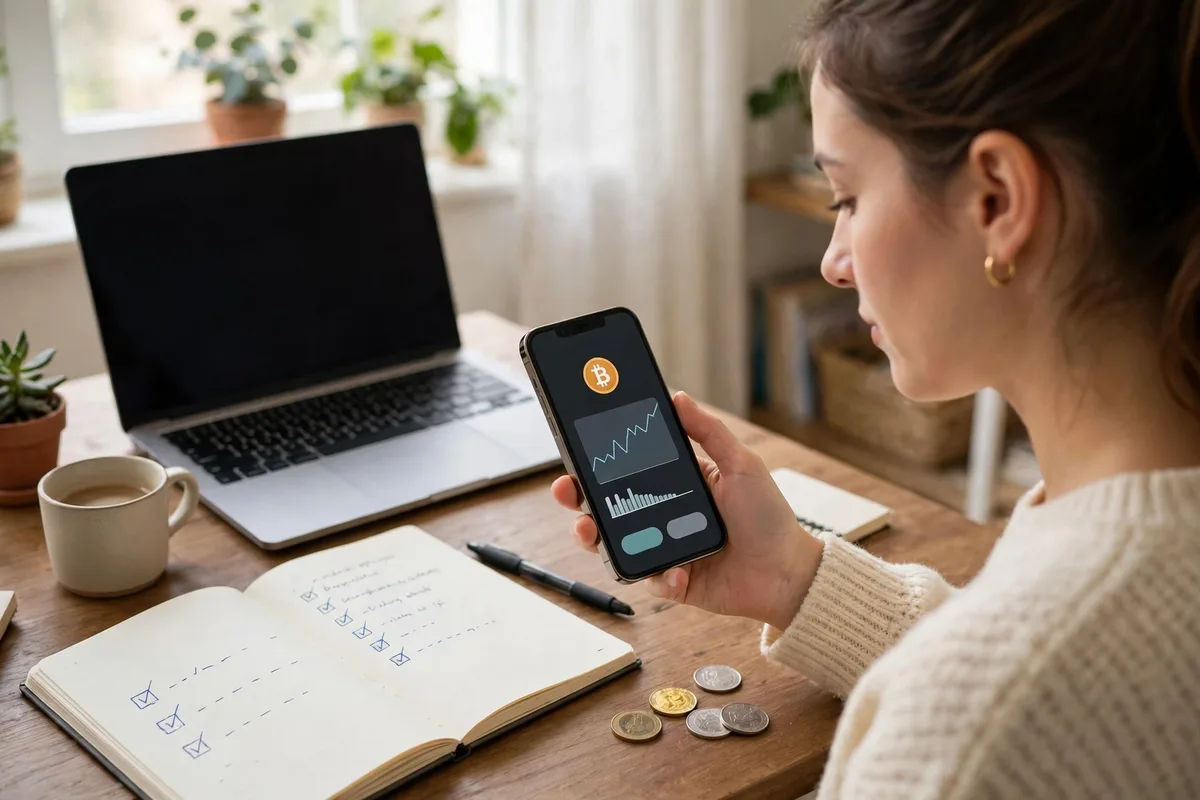
To buy your first crypto safely, choose a regulated exchange, verify your identity, turn on app-based two-factor authentication, place a small test order, and move long-term holdings to a wallet you control, with a paper backup stored in a safe place.
This guide explains what cryptocurrency is, how to buy your first crypto safely in 5 steps, how to pick an exchange, how a wallet works, how to spot scams, how much to spend, and what records to keep after the buy. This guide also covers fees, payment methods, storage choices, and tax records, so a beginner can start with a small amount, check each step, and avoid the most common first-buy mistakes, with a clear plan from start to finish.
Key Takeaways
- A safe first purchase follows 5 steps: regulated exchange, identity check, account security, small test order, and safe storage.
- You do not need to buy one whole coin, and most beginners start with Bitcoin (BTC) or Ethereum (ETH).
- App-based two-factor authentication beats text codes, and a recovery phrase must stay on paper, offline, and private.
- A crypto price can fall sharply, a payment is hard to reverse, and a lost key can mean lost access.
- Keep a record of every buy date, amount, fee, and price, because a later sale can count as a taxable event.
What Is Cryptocurrency?
Cryptocurrency is a digital asset that uses a blockchain ledger to record transfers, uses cryptography to check each transfer, and lets people send value over the internet without a bank approving each payment, while crypto coins stay on the blockchain ledger.
Bitcoin (BTC) is the first and largest cryptocurrency by market value, and Ethereum (ETH) is the second large cryptocurrency. A coin runs on its own blockchain, while a token runs on another blockchain, and both types can rise or fall fast. Read the cryptocurrency definition on Wikipedia for the full history of Bitcoin, Ethereum, and later coins. A beginner does need to learn the coin chosen for the first buy: the coin name, the coin symbol, the coin purpose, and the coin risks.
Browse the Cryptocurrency guides to compare crypto basics before you pick a coin for a first purchase.
Is Buying Crypto Safe for Beginners?
No, buying crypto is not risk-free for beginners, and buying crypto stays safe only when the buyer uses a regulated platform, a small amount, strong account security, and a private wallet backup stored offline on paper, with no keys shared online.
Crypto prices can drop by 30 percent or more in a short period, crypto payments are hard to reverse after confirmation, and crypto scams copy real exchanges, real wallets, and real support staff.
Crypto fraud losses show the size of the risk. The Federal Bureau of Investigation (FBI) counted 181,565 crypto-related complaints and 11.4 billion dollars in losses in 2025 (Source: FBI, 2026). Most of that loss came from fake platforms and fake investment schemes, not from a plain buy on a regulated exchange. A first buy must use money that the buyer can afford to lose in full.
How to Buy Your First Crypto Safely in 5 Steps
To buy your first crypto safely in 5 steps, choose a regulated exchange, verify identity, secure the account, fund the account with a low-fee method, and place a small market order, then check the receipt and move long-term holdings to a wallet you control.
Step 1: Choose a regulated exchange
To choose a regulated exchange, pick a platform that operates legally in your country, shows clear fees, and offers customer support. Coinbase, Kraken, and Gemini are 3 names that appear in most beginner guides for United States buyers. Type the exchange web address yourself, and never open an exchange from a link in a message, an email, or a social post.
Step 2: Verify your identity and secure the account
To verify identity and secure the account, upload a government photo ID, complete a selfie check when asked, set a long unique password, and turn on app-based two-factor authentication (2FA) with an authenticator app. Identity checks are called Know Your Customer (KYC) checks, and KYC checks are required by regulated exchanges to fight fraud and money laundering.
Step 3: Fund the account with a low-fee method
To fund the account with a low-fee method, link a bank account for a bank transfer (ACH) when low cost matters more than speed, and check the fee and the clearing time before you send funds. A bank transfer (ACH) is often free or low cost, and a bank transfer (ACH) can take 1 to 3 business days to clear. A credit card buy is the weakest choice for most beginners, because a card issuer can treat a crypto buy as a cash advance.
Step 4: Place a small test order
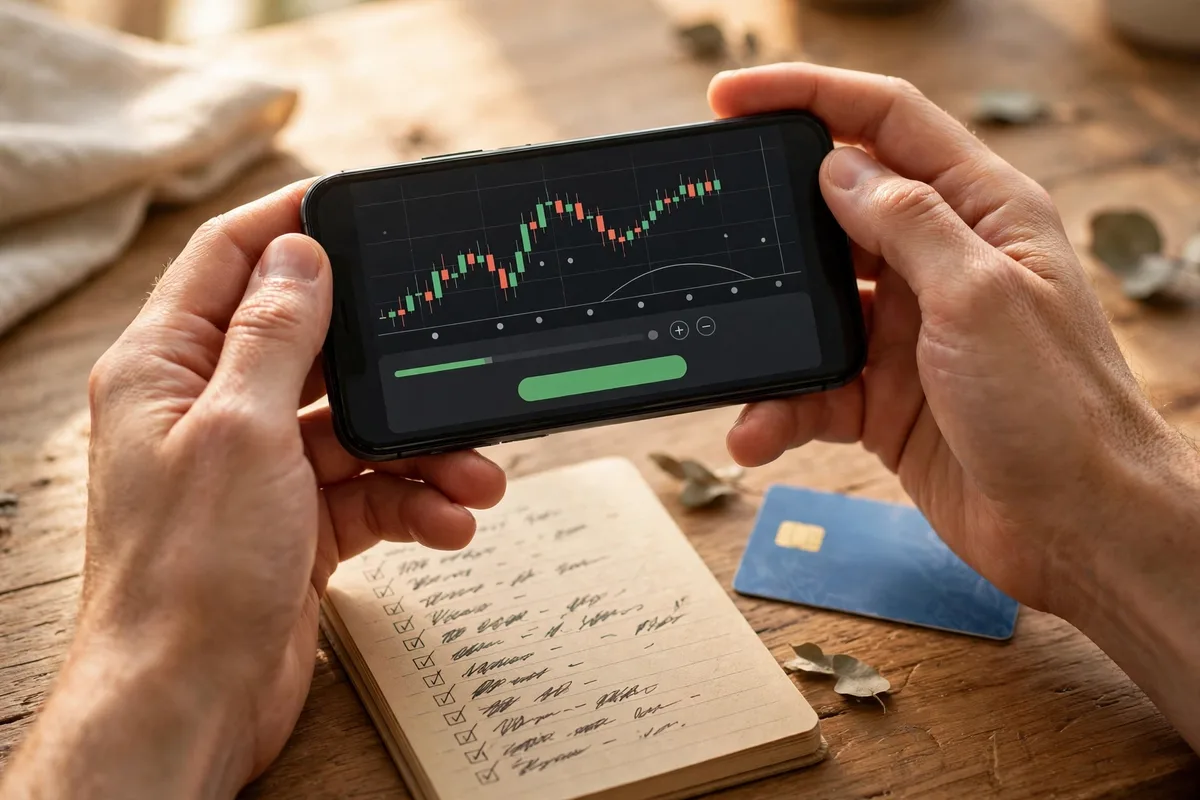
To place a small test order, pick Bitcoin (BTC) or Ethereum (ETH), enter a small dollar amount such as 25 dollars or 50 dollars, pick a market order, and check the coin amount, the fee, and the total cost before you confirm. A market order buys at the best price now, and a market order suits a small first buy. You do not need to buy one whole Bitcoin, because Bitcoin divides into 100 million satoshis.
Learn what Bitcoin is in our beginner guide to Bitcoin before you pick a coin for the test buy.
Step 5: Move long-term holdings to a wallet you control
To move long-term holdings to a wallet you control, set up a wallet, copy the wallet address with care, send a tiny test amount first, check that the test amount arrived, and then send the rest. When I set up my first practice wallet, writing the 12-word recovery phrase on paper took longer than the buy itself. Store the paper backup in a safe place, never take a photo of the recovery phrase, and never type the recovery phrase into a website or a chat.
Which Exchange Should a Beginner Choose?
A beginner should choose a regulated exchange with a clear fee page, a simple buy screen, app-based two-factor authentication, and customer support that answers in plain words, because a clear screen causes fewer mistakes than a low fee alone for beginners.
| Exchange trait | What to check before a first buy |
|---|---|
| Regulation and location | Operates legally in your country |
| Buy screen | Coin amount, fee, and total cost shown before confirm |
| Fees | Clear trading, deposit, and withdrawal fees |
| Security | App-based two-factor authentication and withdrawal checks |
| Support | Help pages and human support |
| Coins offered | Bitcoin (BTC) and Ethereum (ETH) offered |
Coinbase suits beginners who want the simplest buy screen, and Kraken suits beginners who want lower fees on an advanced screen. Compare 2 or 3 platforms on fees and on the buy screen, and pick one platform.

What Is a Crypto Wallet and Where Should You Store Crypto?
A crypto wallet is software or a device that stores keys, creates transactions, and shows a balance, while crypto coins stay on the blockchain, and a wallet owner must guard the private key and the recovery phrase with care at all times.
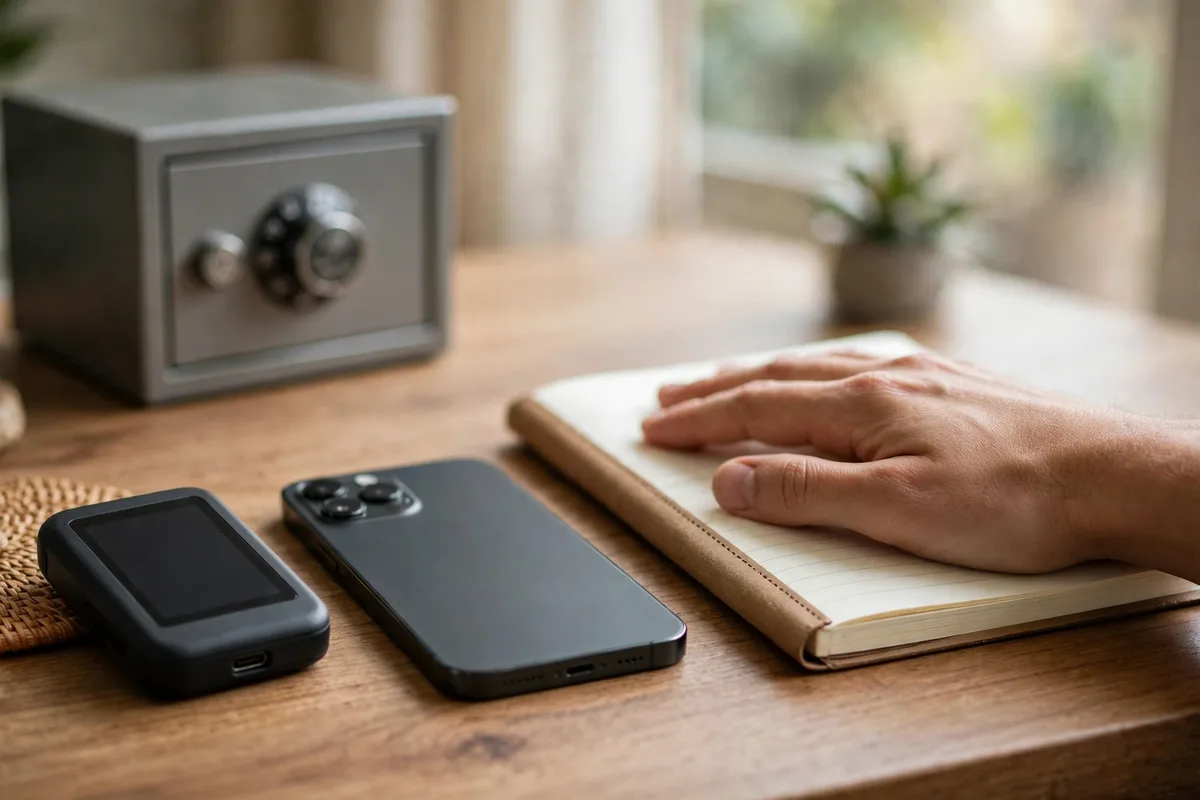
A crypto wallet holds a public key for receiving crypto and a private key for signing transfers. A recovery phrase is a set of 12 or 24 words that restores a wallet, and a recovery phrase must stay private, offline, and on paper.
| Wallet type | How the wallet works | When to use the wallet |
|---|---|---|
| Hot wallet | Software wallet connected to the internet | Small amounts used often |
| Cold wallet | Hardware wallet kept offline | Larger amounts held long term |
| Exchange account | Exchange holds the keys | Short-term trading, small amounts only |
Use a hot wallet for a small test amount, and use a cold wallet for a larger long-term amount. A hardware wallet costs about 60 to 150 dollars for common models. Test a wallet with a tiny transfer first.
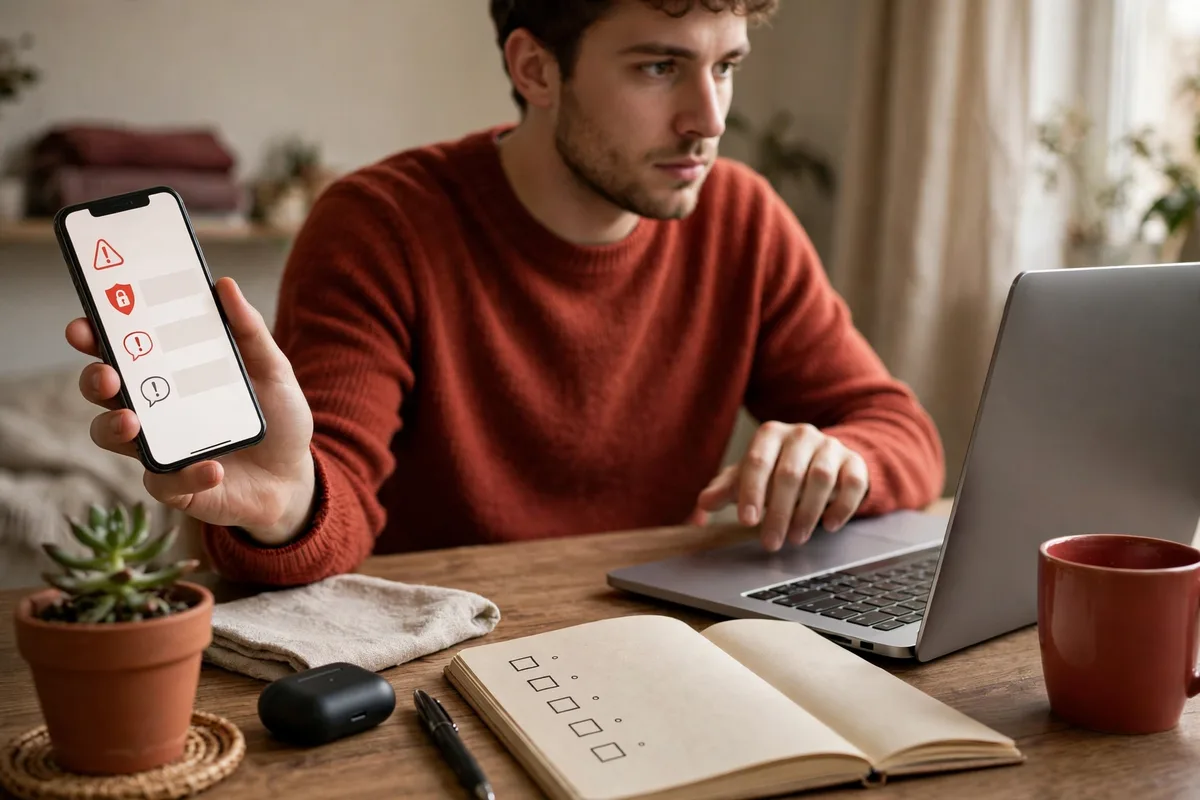
How Do You Spot a Crypto Scam Before You Pay?
You spot a crypto scam before you pay by checking 5 signals: a guaranteed return, a rushed deadline, a private key request, a stranger guide, and a fake app or fake support contact that pushes hard for an urgent transfer.
A real exchange never asks for a private key or a recovery phrase, and a real investment never guarantees a return.
Check these 7 scam signals before any payment:
- A promise of guaranteed, doubled, or risk-free returns.
- A message that demands an urgent transfer today.
- A “mentor”, a “broker”, or a new online friend who guides the buy.
- A link, a QR code, or an app from a chat, an email, or a social post.
- A request for a private key, a recovery phrase, or a remote-access app.
- A crypto ATM (automated teller machine) used at a stranger’s instruction.
- A coin promoted only by influencers, with no clear purpose or team.
Stop the process when any signal appears, and check the real exchange site by typing the address yourself.
How Much Should You Spend on Your First Crypto Purchase?
A first crypto purchase should use a small amount that fits a beginner budget, such as 25 dollars or 50 dollars for a test buy, and a first crypto purchase should never use rent money, bill money, or emergency fund money.
A small test buy teaches the order screen, the fee screen, and the wallet transfer.
A beginner plan has 4 money checks. Check that bills for the month are covered, check that high-interest debt is under control, check that a starter emergency fund exists, and check that the crypto amount is money the buyer can lose in full. Read our guide on how to start investing with 100 dollars to place a small crypto amount inside a plain beginner budget.
What Records and Taxes Apply After You Buy Crypto?
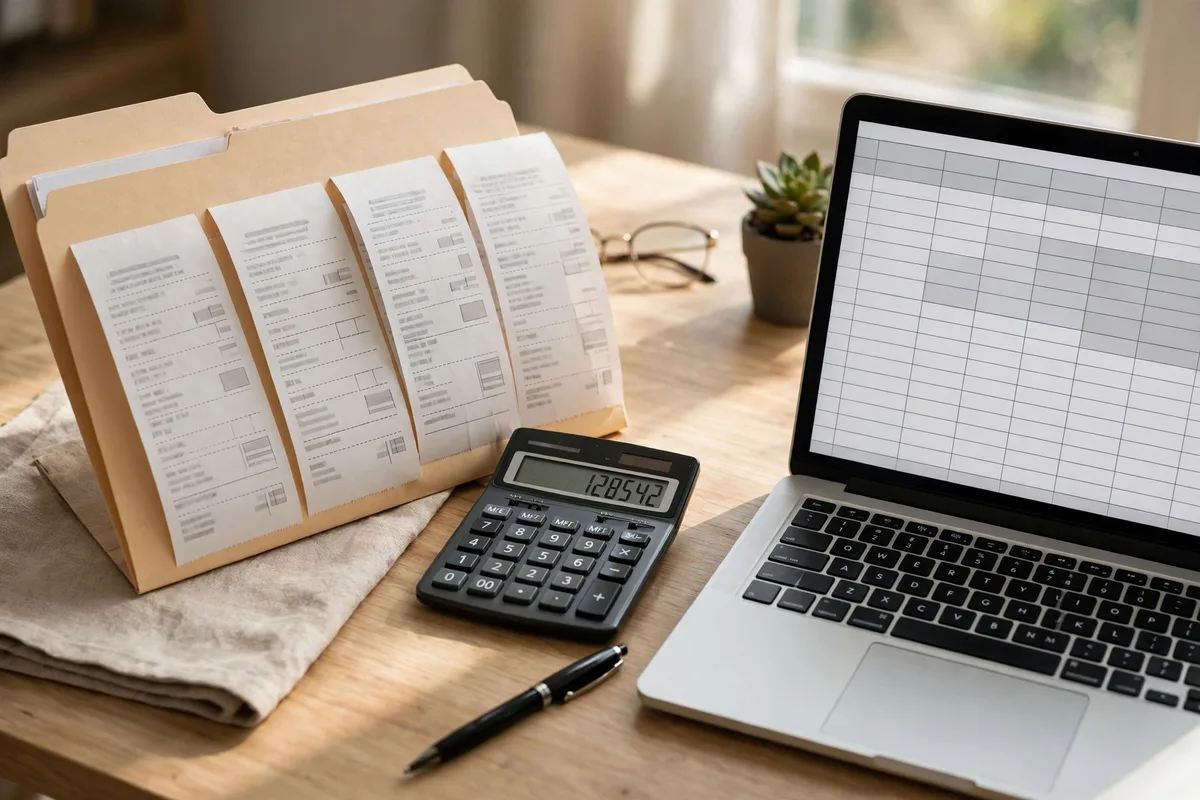
After you buy crypto, keep a record of each buy date, coin name, coin amount, dollar amount, fee, wallet address, and sale date, because a later sale, swap, or spend can count as a taxable event in the United States.
In the United States, the Internal Revenue Service (IRS) treats digital assets as property, not as currency, for tax purposes, and a sale can produce a capital gain or a capital loss.
Keep records from the first buy, because exchange records can change or lose old data. Save each receipt, each fee line, and each wallet transfer in one folder. Check the IRS digital assets guidance for the current tax return question and the record rules.
Frequently Asked Questions
Can I buy crypto with 50 dollars?
Yes, you can buy crypto with 50 dollars, because most regulated exchanges let beginners buy a fraction of one coin. A 50 dollar buy gives a small fraction of Bitcoin (BTC) or Ethereum (ETH), and a 50 dollar buy suits a test order.
Do I need an ID to buy crypto on a regulated exchange?
Yes, a regulated exchange requires a government photo ID and a KYC check before a first buy. A KYC check fights fraud and money laundering, and a platform that skips a KYC check is not a safe first choice for a beginner.
Is a hardware wallet required for a first crypto buy?
No, a hardware wallet is not required for a first small buy, and a hardware wallet suits larger long-term holdings. A larger amount should move to a wallet you control, with a paper recovery phrase backup stored in a safe place.
What is the safest coin for a beginner to buy first?
Bitcoin (BTC) and Ethereum (ETH) are the most common first coins for beginners, because both coins have long records, deep trading, and wide exchange support. A beginner should learn a coin purpose before any buy, and a beginner should avoid coins promoted only on social posts.
Can I lose all my money when I buy crypto?
Yes, you can lose all the money placed in crypto, because crypto prices can fall sharply, scams can drain a wallet, and a lost key can lock a wallet. A buyer must use only money that can be lost in full.
Should I buy crypto with a credit card?
No, a credit card is a weak choice for a first crypto buy, because a credit card buy often carries a high fee and can count as a cash advance. A bank transfer (ACH) costs less for most beginners and clears in a few days.
Conclusion
To buy your first crypto safely, follow the 5 steps in order: regulated exchange, identity check, account security, small test order, and safe storage.
Start with 25 dollars or 50 dollars, learn the order screen and the wallet transfer, and grow the amount only when the full process feels clear. Savvy Cash Flow covers crypto basics and beginner investing plans for readers who want a plain plan. This article gives general information only, and this article is not financial advice.
Explore more money guides on Savvy Cash Flow and build a plan that fits your budget, your goals, and your risk level.
[…] See also How to Buy Your First Crypto Safely in 5 Steps […]
[…] Ask one trusted person to read the offer, and pause when any step fails. For a safe first purchase, read how to buy your first crypto safely. […]
[…] how to buy your first crypto safely before you stake, so the buy step, the wallet step, and the safety checks are set before any coins […]
[…] Learn how to buy your first crypto safely before you act on any chart pattern, because chart reading is a study skill, and safe buying steps protect funds while the study continues: Learn how to buy your first crypto safely […]