
What Is the Software Error Rcsdassk?
Rcsdassk is a placeholder name that usually appears when an application or background service fails to start correctly, crashes mid-task, or triggers a security rule. It can show up as a popup, toast alert, tray notification, or a line inside logs.
Because the label does not match a standard system code, it often points to one of three things. A corrupted or missing program file. A conflicting startup item or driver. A fake alert created by adware or a browser notification site. Treat it like you would any unknown error. Verify first, then fix with a clean sequence.
Why This Error Appears
You will see rcsdassk when a process cannot access a required dependency or when a policy blocks that process. Typical roots include incomplete updates, damaged DLLs, registry entries left by uninstalled software, unsigned drivers, expired antivirus hooks, or browser extensions that inject scripts. Power loss during installation and low disk space during patching also cause partial writes that later trigger the alert.
How It Affects System Performance
Impact ranges from mild to severe. You might notice slow boot, spikes in CPU usage, short freezes as Windows retries a failing task, or repeated popups. If the source is a scheduled task that loops, battery life will drop on laptops. If a driver or antivirus filter is involved, file operations and network throughput can slow down. In rare cases, apps that depend on the same component will also crash.
Common Signs That Indicate the Error
Random notifications at login or after waking from sleep
A single app fails every time you open it
High disk or CPU when nothing heavy is running
New browser tabs with push-notification prompts or shady “cleaner” pages
Event Viewer shows application errors around the same time
Antivirus records “blocked” events that match the popups
Step-by-Step Troubleshooting
Follow these steps in order. Test after each step. Stop when the error no longer appears.
Step 1: Restart and Observe
Reboot once. Note the exact time the alert shows. Watch the tray icons that load just before it. If the message does not return after a restart, the cause may have been a temporary lock or a hung handle.
Step 2: Check for Pending Updates
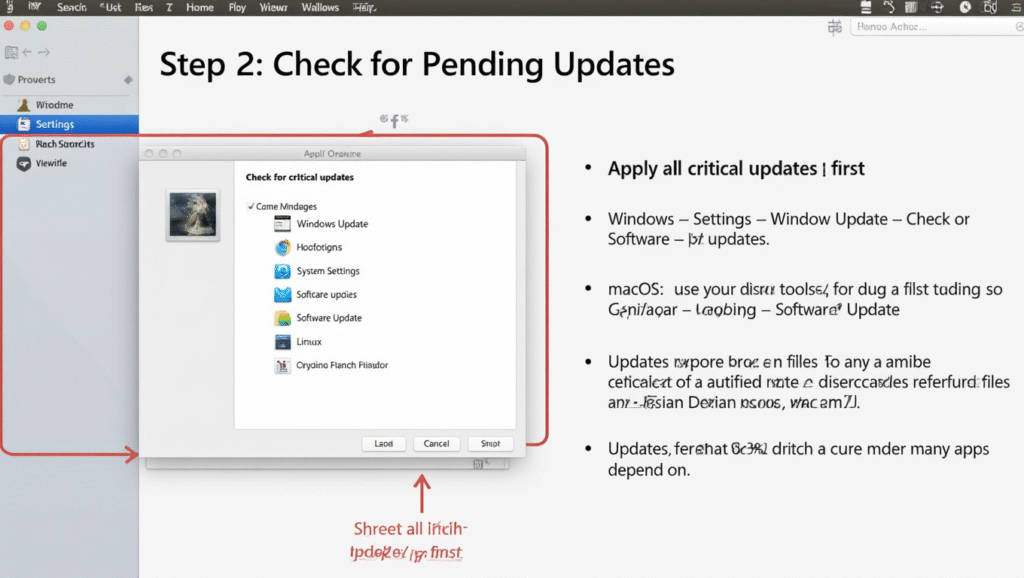
Apply all critical updates first.
Windows: Settings > Windows Update > Check for updates
macOS: System Settings > General > Software Update
Linux: use your distro tools, for example
sudo apt update && sudo apt upgradeon Debian-based systems
Updates replace broken files and refresh certificates that many apps depend on.
Step 3: Run a Malware and Security Scan
Use a reputable antivirus for a full scan. Follow with an on-demand second opinion scanner. On Windows you can also run Microsoft Defender Offline. This boot-level scan removes persistent adware that fakes alerts. On macOS use a trusted scanner and review Login Items. On Linux check recent packages and browser profiles for suspicious extensions.
Step 4: Verify Program Files
Identify which app triggers the error. Open it while watching Task Manager or Activity Monitor to see the process name. Reinstall that app from the official site. If it is already current, repair it.
Windows Store apps: Settings > Apps > Installed apps > Advanced options > Repair
Traditional installers: run the setup again and choose Repair if available
Step 5: Check Startup Programs
Disable unnecessary auto-starts.
Windows: Task Manager > Startup apps. Also run
msconfigthen the Services tab and tick Hide all Microsoft services before testing disables.macOS: System Settings > General > Login Items. Remove unknown helpers.
Linux: check your desktop session’s startup list and systemd user services.
Reboot and see if the error disappears. Re-enable items one by one to find the culprit.
Step 6: Inspect Event Viewer Logs
Windows: press Win+X then Event Viewer. Check Windows Logs > Application and System around the time the error appears. Look for red Error or yellow Warning entries. Note the Faulting application name, module, and exception code. Search your system for the path listed. If the same CLSID, GUID, or EXE repeats, you have a target for repair or removal.
Step 7: Perform System File Check
Windows: open Command Prompt as Administrator.
sfc /scannow
If SFC reports repairs or protection failures, run:DISM /Online /Cleanup-Image /RestoreHealth
Run SFC again after DISM.
macOS: restart into Recovery then run Disk Utility First Aid on the system volume.
Linux: verify packages with your package manager and checkdmesgfor file system warnings.
Advanced Solutions for Software Error Rcsdassk
1. Clean Boot the System
A clean boot loads only core services.
Windows: in
msconfigchoose Selective startup, disable non-Microsoft services, disable all Startup items in Task Manager, restart, test, then add items back in small groups.macOS: create a fresh user account and log in there to test. Safe Mode also reduces extensions.
Linux: boot into a basic session or add
systemd.unit=rescue.targetfor a controlled test.
2. Update Device Drivers
Outdated drivers cause repeated faults.
Windows: Device Manager > right-click device > Update driver. For GPUs and chipsets, install from the vendor site.
macOS: drivers arrive by system updates. Keep the OS current.
Linux: update kernel and firmware packages, then proprietary GPU drivers if used.
After updates, reboot and test.
3. Check System Integrity with Command Prompt
Windows advanced checks:
chkdsk C: /scanto look for file system issueseventvwr.mscto confirm no new disk or controller errorsverifierto start Driver Verifier only when you suspect a bad driver, and only if you know how to recover using Safe Mode
Linux: runjournalctl -p 3 -xbfor critical boot errors andsmartctl -a /dev/sdXto read drive health.
4. Restore System Settings
Windows: System Restore to a date before the problem began. Settings > System > About > Advanced system settings > System Protection.
macOS: restore from Time Machine if the issue started after a change.
Linux: roll back specific packages or snapshots if you use Btrfs or Timeshift.
5. Review Third-Party Plugins and Extensions
Browsers and creative apps load many add-ons. Disable all extensions in Chrome, Edge, Safari, or Firefox. Re-enable one at a time. For Adobe or IDEs, use their safe mode to start without external plugins. Many rcsdassk-style popups come from push notifications allowed on suspicious sites. Remove them:
Chrome and Edge: Settings > Privacy and security > Site settings > Notifications. Block unknown senders.
6. Inspect Temporary and Log Files
Corrupt caches can relaunch a bad task.
Windows: run Disk Cleanup or
cleanmgr, clear%TEMP%, the app cache, and browser cachesmacOS: clear user Library caches for the affected app
Linux: clear
~/.cachefor the user and rotate logs withsudo journalctl --vacuum-time=14d
After cleanup, restart and test.
7. Run Offline Diagnostics
Hardware faults can mimic software errors.
Use OEM diagnostics from your laptop or motherboard vendor
Run a RAM test with Windows Memory Diagnostic or
memtest86Monitor drive health using vendor SSD tools or
smartctl
If memory or storage errors appear, address hardware first.
Preventing Future Software Errors

Keep the Operating System Updated
Patch security holes and refresh system libraries on a regular schedule. Set updates to automatic where possible and plan a weekly manual check.
Install Apps from Trusted Sources
Use official stores and vendor sites. Avoid “cracked” installers, repackaged bundles, and random mirrors.
Maintain Regular Backups
Keep at least one offline backup and one cloud copy. Verify restores quarterly to ensure recovery works when you need it.
Clean System Files Monthly
Purge caches, rotate logs, and remove old installers. Free disk space prevents incomplete updates.
Monitor Startup Behavior
If boot time suddenly grows or new icons appear in the tray, review auto-starts and scheduled tasks.
Use Reliable Security Protection
Run one primary antivirus and keep SmartScreen or Gatekeeper active. Add a DNS filter to block known malicious domains.
Understanding Unknown Error Messages

Unknown labels appear when an app uses a custom error key or when adware fakes a warning. Genuine system errors have consistent formatting and appear in Event Viewer or Console logs. Fake alerts often include typos, demand immediate calls to a phone number, or open payment links. Never dial or pay based on a random popup.
How to Check If an Error Is Genuine or Fake
Search Event Viewer for a matching time stamp and source
Check the exact process path in Task Manager or Activity Monitor
Right-click the process and open file location then scan that folder
If the message opens in a browser tab from a random site, treat it as fake and close the tab
Use VirusTotal on the executable if you are unsure
When to Seek Professional Help
Get help when the error survives a clean boot, SFC or DISM finds unrepaired corruption, hardware diagnostics report faults, or the system crashes with blue screens. Professionals can image the drive, pull deep logs, and isolate drivers safely.
Safety Tips During Troubleshooting
Create a restore point before changes
Document every step and result
Disconnect external drives with important data while scanning
Do not run registry “cleaners” that promise miracle fixes
If you enable Driver Verifier, know how to revert in Safe Mode
Conclusion
Rcsdassk is a generic label, not a standard system code. Treat it as a symptom, not a diagnosis. Start simple with updates and a reboot. Verify authenticity through logs and process paths. Repair files with SFC and DISM. Strip back startup items until the trigger reveals itself. If needed, dig deeper with driver, disk, and memory checks. Once fixed, protect your system with routine updates, trusted sources, and healthy backups. A clear process turns a confusing popup into a short, solvable task.
FAQs
Is Rcsdassk a virus?
Not by definition. It is a label attached to a failure message. The source can be a real app problem or a fake popup made by adware. Scan first to be safe.
Can this error harm data?
If it is only a failed app launch, your data is safe. If storage errors or malware are involved, there is a risk. Back up important files before deep repairs.
Why do I keep seeing the same popup after fixing it once?
A scheduled task or extension may be relaunching the trigger. Review Task Scheduler, Startup apps, and browser notifications. Remove any unknown entries.
Is it safe to ignore this error?
If the alert repeats, do not ignore it. Confirm in logs and fix the root cause. Silent retries can waste resources and shorten battery life.
What if I use macOS or Linux?
The approach is similar. Update the system, verify app bundles, remove login items you do not trust, clear caches, and check logs. Use First Aid on macOS or distro tools on Linux.
How can I avoid such random error messages in the future?
Keep software updated, install only from trusted sources, maintain backups, review startup items monthly, and run a reputable security suite. Guard browsers against notification spam and remove dubious extensions quickly.